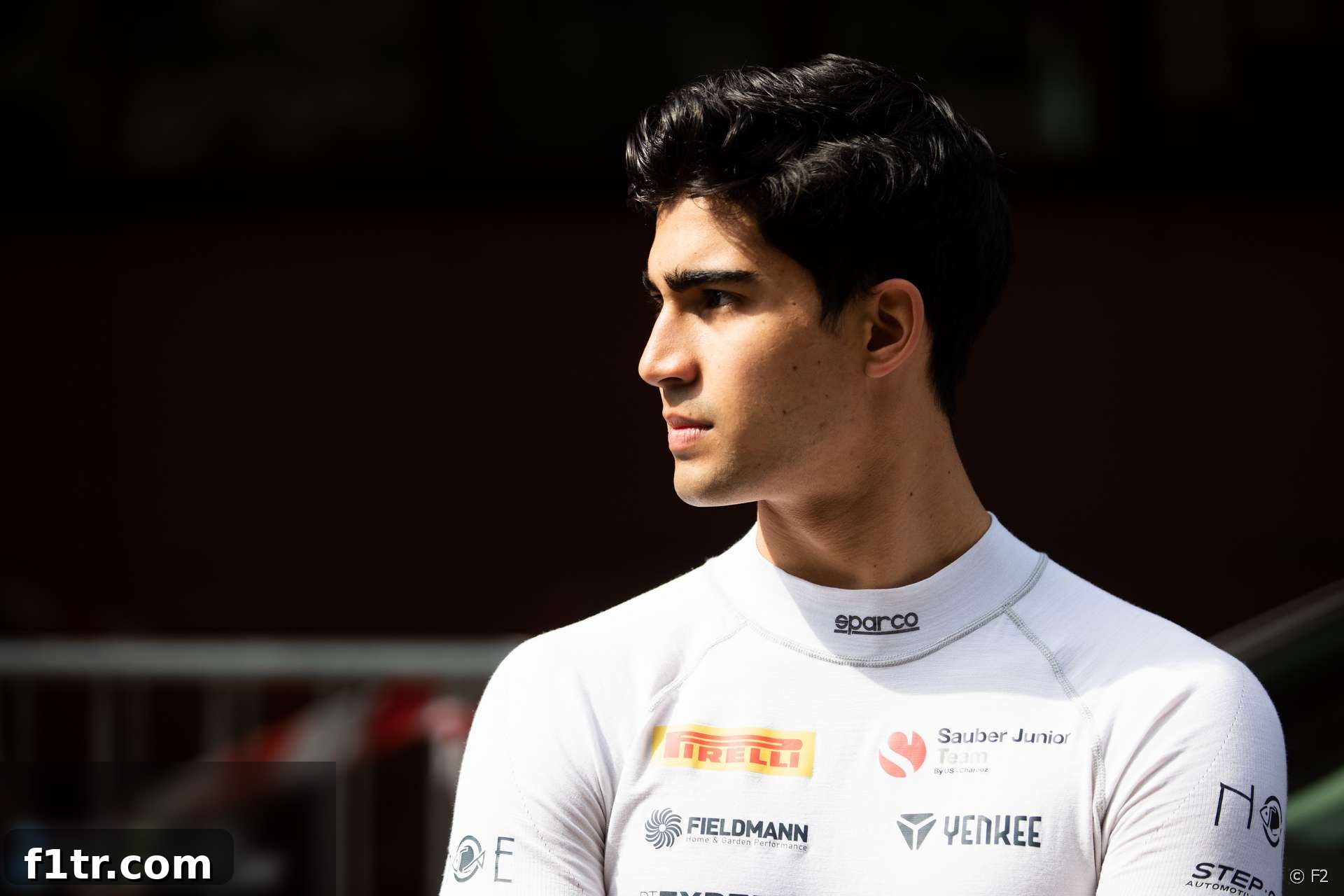
Juan Manuel Correa’s Spa Crash: Untangling Claims of Neglect vs. FIA Medical Response
The harrowing events at Spa-Francorchamps in 2019 left an indelible mark on the motorsport community, particularly after the tragic loss of Anthoine Hubert and the severe injuries sustained by Juan Manuel Correa. In the wake of his recovery, Correa voiced concerns regarding the support he received, or perceived lack thereof, from the sport’s governing body, the FIA, in the critical days following the incident. These claims have been met with a detailed counter-narrative from Dr. Christian Wahlen, the Chief Medical Officer at Spa, who meticulously outlined the immediate and continuous medical care provided to the young driver.
The Tragic Belgian Grand Prix Weekend: A Catastrophic Collision
The fateful crash unfolded on Saturday during the Belgian Grand Prix weekend at the iconic Spa-Francorchamps circuit, a track renowned for its high speeds and challenging elevation changes. It was a multi-car incident in the Formula 2 feature race that tragically claimed the life of Correa’s fellow competitor, Anthoine Hubert, sending shockwaves through the entire motorsport world. The severity of the impact was immense, with Correa’s car striking Hubert’s at an astonishing speed after Hubert had already collided with a barrier. The sheer force of the collision was testament to the extreme energies involved in top-tier single-seater racing.
Juan Manuel Correa himself sustained extensive, life-threatening injuries, primarily to his right leg and spine. He was subsequently placed in an induced coma for three weeks as doctors battled to stabilize his condition and address the immediate trauma. Upon regaining consciousness, Correa faced a daunting and uncertain future, grappling with the long-term implications of his injuries, particularly concerning his right foot, which required multiple complex surgeries and extensive rehabilitation. The incident served as a stark reminder of the inherent dangers of motorsport, even with the continuous advancements in safety technology.
Correa’s Heartfelt Claims: A Driver’s Perspective on Post-Crash Care
Months after the accident and during his arduous recovery, Juan Manuel Correa shared his personal account and perspective on the immediate aftermath of the crash in an interview with German television NTV. His words resonated deeply with many, as he described the profound seriousness of his condition and expressed a feeling that the extent of his injuries, and his subsequent critical state, had been overlooked by the FIA and other relevant bodies in the days following the incident.
“The day after the accident everybody travelled to Monza,” Correa recounted, conveying a sense of isolation. “But I stayed in hospital and almost died four days after the accident. Nobody from the FIA or elsewhere was concerned about me.” This sentiment highlighted his vulnerability and the perceived absence of support during what was undeniably the most challenging period of his life. He elaborated on the medical intricacies of his critical state, stating, “The reason I almost died was because of the enormous G forces that could only result from an accident of that severity. The doctors in the hospital in Belgium did not know what [the symptoms] were because they had never seen anybody who had survived such heavy forces.” This statement underscored the unprecedented nature of his survival and the complexities faced by local medical staff in treating injuries resulting from such extreme forces, which are rarely encountered outside high-speed motorsport.
Dr. Wahlen Responds: A Comprehensive Account of FIA’s Medical Protocols
In response to Correa’s claims, Dr. Christian Wahlen, a seasoned professional who has served as the chief medical officer at Spa since 1985 and a respected member of the FIA’s medical commission for 25 years, provided a detailed chronological account of the medical attention Juan Manuel Correa received. His comprehensive statement aimed to clarify the robust and coordinated response deployed immediately following the crash, emphasizing the rigorous protocols and dedicated personnel involved in motorsport emergency care.
Dr. Wahlen confirmed that “Juan Manuel Correa received immediate medical attention at the scene of the accident, administered by the circuit-appointed doctor who is an experienced anaesthetist.” This initial intervention at the very site of the incident is crucial, with highly specialized medical professionals trained to manage acute trauma in a high-pressure environment. The broader medical activities were meticulously coordinated by Dr. Ian Roberts, who serves as the FIA deputy F1 medical delegate and F1 rescue coordinator, a testament to the multi-layered leadership and expertise overseeing such critical situations.
Upon transport, “Juan Manuel received continuous care as he was transported by ambulance to the track medical centre.” This signifies an uninterrupted chain of care from the moment of impact to more specialized facilities. At the medical centre, “he was stabilised by the trauma team, who are under my responsibility as chief medical officer for this grand prix.” This team, highly trained in emergency trauma management, is equipped to assess, stabilize, and prepare patients for further treatment, underscoring the immediate deployment of advanced medical resources.
Strategic Transfer and Ongoing Family Liaison
The decision for Correa’s subsequent transfer was not taken lightly but was a strategic medical choice based on the severity and complexity of his injuries. Dr. Wahlen explained, “After consulting with doctor Alain Chantegret, FIA F1 medical delegate, it was clear from the nature of his injuries that Juan Manuel needed to be transferred immediately by helicopter to the care of the Center Hospitalier Universitaire Liège (CHU Liège) to receive more specialist medical and operative care.” This immediate transfer to a major trauma center by helicopter exemplifies the rapid response and specialist network available to drivers in critical condition, prioritizing access to the highest level of surgical and rehabilitative expertise.
Beyond the initial medical interventions, Dr. Wahlen underscored the continuous support and communication extended to Correa’s family. In his role as chief medical officer and an FIA medical delegate, he “remained in constant contact with the hospital and also visited Juan Manuel on Monday 2nd September, where he was recovering well from the surgery to his feet.” This direct involvement aimed to provide reassurance and transparency to the family during a deeply distressing time. Furthermore, illustrating a broader commitment from the highest levels of motorsport medical oversight, Dr. Wahlen noted, “That same day, Gérard Saillant contacted Juan Manuel’s father, Juan Carlos Correa, to assure them that he was at their disposal.” Gérard Saillant, president of the FIA Institute, is a world-renowned orthopaedic surgeon and a pivotal figure in motorsport safety, whose direct contact signifies the significant resources and human empathy extended to the Correa family.
Developing Complications and The Path to London
Despite the initial stabilization and surgical interventions, Correa’s condition took a concerning turn. Dr. Wahlen revealed, “On Tuesday morning Juan Manuel developed symptoms indicating a respiratory problem.” This complication, which can be critical for trauma patients, necessitated further specialized care. It was at this juncture that “the Correa family took the decision to transfer him to a specialist clinic at a hospital in London to receive orthopaedic treatment to his right foot at the earliest opportunity.” This move was a proactive step by the family, supported by medical advice, to access highly specialized orthopedic care focused on the complex reconstructive surgery required for his severe leg injuries. This period of his recovery journey highlighted the dynamic nature of critical care and the difficult decisions families must make in pursuit of the best possible outcome.
Following his transfer to London, Juan Manuel Correa underwent numerous surgeries and intensive rehabilitation. His dedication to recovery was unwavering, and he later moved to Miami to continue his extensive and challenging physical therapy. His journey back to health and eventually to the cockpit has been a source of inspiration, demonstrating immense resilience and determination.
FIA’s Unwavering Commitment to Motorsport Safety and Ongoing Investigations
The events at Spa-Francorchamps reignited discussions about motorsport safety, a topic to which the FIA has long been committed. The governing body continuously invests in research and development to enhance safety standards across all disciplines, from car design and circuit infrastructure to driver equipment and medical response protocols. The incident prompted a thorough investigation by the FIA, as is standard practice for all serious accidents. These investigations are critical for identifying potential areas for improvement and implementing new measures to prevent similar tragedies in the future.
RaceFans understands that the FIA will communicate its findings of the investigation into the Spa crash imminently. Such reports are vital for transparency, learning, and the ongoing evolution of safety within the sport. The comprehensive nature of the medical response detailed by Dr. Wahlen, coupled with the rigorous investigative process, underlines the FIA’s overarching dedication to driver well-being and the continuous striving for safer racing environments.
The narratives from Juan Manuel Correa and Dr. Christian Wahlen, while differing in perspective on the perception of support, both underscore the extreme medical challenges presented by high-speed racing accidents. They highlight the intricate, often unseen, network of medical professionals who stand ready to respond in an instant, and the personal battles drivers face in their long road to recovery. Ultimately, these accounts contribute to a broader understanding of the multi-faceted efforts involved in ensuring and improving safety in the exhilarating, yet inherently dangerous, world of motorsport.
Formula 2 Motorsport Insights
For more detailed articles and analyses concerning Formula 2 and other aspects of motorsport, you can explore our dedicated content.
Browse all Formula 2 articles