Ferrari’s Bitter Brazilian Aftermath: Ross Brawn Weighs in on Vettel-Leclerc Clash
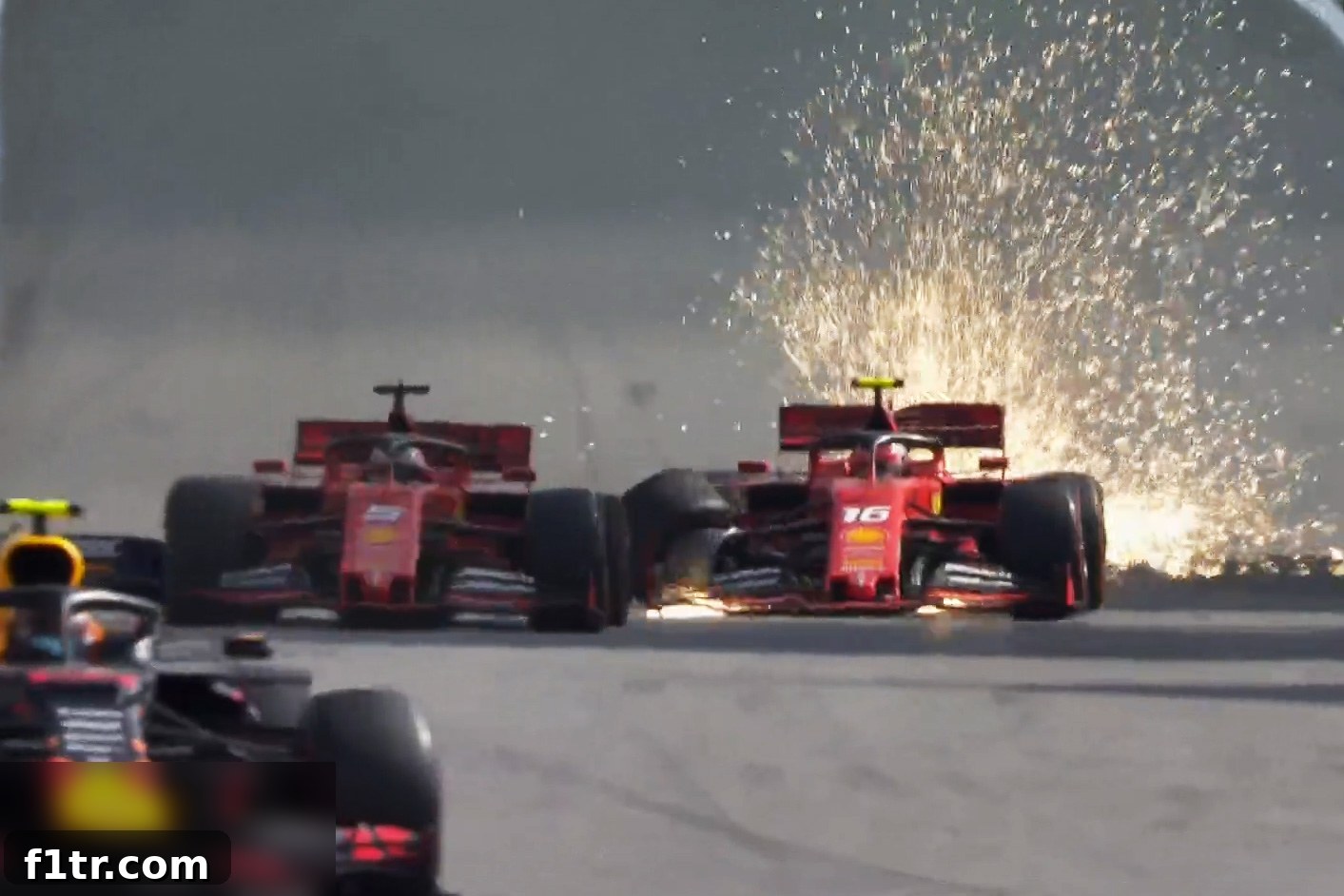
The 2019 Formula 1 season, while dominated by Mercedes, still provided its share of drama, not least within the ranks of Scuderia Ferrari. A pivotal moment of the season, and one that sent shockwaves through the paddock, occurred during the Brazilian Grand Prix. A late-race collision between Ferrari teammates Sebastian Vettel and Charles Leclerc not only wiped both cars out of contention but also reignited fierce debate about team management, driver responsibility, and the competitive ethos at Maranello. Amidst the immediate fallout, Formula 1 motorsport director Ross Brawn, a figure synonymous with Ferrari’s past glories, offered his insightful perspective on the incident, shedding light on the complexities and frustrations inherent in such a high-stakes team environment.
The unfortunate incident on lap 66 at Interlagos was more than just a racing mishap; it was a symptom of underlying tensions and a stark reminder of the delicate balance required to manage two highly competitive drivers. While the stewards ultimately deemed neither driver wholly responsible for the collision, the damage – both to the cars and to the team’s morale – was profound. Brawn’s comments, delivered with his characteristic blend of strategic insight and candid assessment, pointed towards a larger lesson for the Prancing Horse: the critical importance of unity and accountability, particularly when challenging for top honors in the cutthroat world of Formula 1.
The Interlagos Incident: A Costly Miscalculation for Ferrari
The Brazilian Grand Prix in 2019 was shaping up to be a tumultuous affair, with unpredictable weather and intense racing action defining much of the event. For Ferrari, however, the race ended in unmitigated disaster. With only a few laps remaining, Sebastian Vettel and Charles Leclerc, battling fiercely for third position, made contact, resulting in immediate retirements for both. This self-inflicted wound was not only a blow to their championship aspirations, which by then were largely academic for the drivers, but also a significant dent in the team’s pride and reputation.
Ross Brawn, a veteran of numerous championship campaigns and a former technical director at Ferrari during their dominant Schumacher era, was quick to address the incident. While he tactfully avoided directly assigning blame to either driver for their lap 66 collision, his subsequent remarks carried a clear message regarding driver conduct and responsibility. Brawn drew a poignant comparison to Lewis Hamilton, who, later in the very same race, immediately accepted responsibility for his own clash with Alexander Albon. Hamilton’s swift admission of culpability stood in stark contrast to the initial silence and apparent indecision from the Ferrari camp.
“I wouldn’t want to venture an opinion on who was most at fault for the collision,” Brawn stated post-race, maintaining a neutral stance on the immediate mechanics of the crash. However, he followed this with a crucial observation: “But in the cold light of day, maybe it would be good if one of them will follow Hamilton’s example and immediately admit culpability, as the champion did regarding his clash with Albon.” This statement underscored Brawn’s belief in the importance of transparent accountability, not just for individual drivers but for the overall health and morale of a racing team. In the intense world of Formula 1, where every decision is scrutinized, a direct and honest acceptance of fault can often de-escalate tensions and foster a more professional atmosphere within a team and across the paddock.
Stewards’ Verdict and the Deeper Frustration
The official investigation into the incident by the race stewards concluded that neither driver was wholly responsible for the collision, a ruling that often leaves more questions than answers in the highly competitive world of Formula 1. While such verdicts are common in racing, for a team like Ferrari, the implications of a mutual no-fault decision can be complex, sometimes making it harder for drivers to move past the incident without a clear resolution. This ambiguity can prolong internal debates and make it challenging for management to enforce disciplinary measures or establish clear guidelines for future scenarios.
For Brawn, the circumstances surrounding the crash made it even more galling for the Scuderia. As a former Ferrari technical director with a deep understanding of the team’s psyche, he articulated the profound frustration that grips a team when its drivers eliminate each other, especially when significant points, let alone a victory, are not on the line. “It’s never nice when team mates knock one another out of a race, even more so when it’s not even a particularly important result that goes begging, as in this case, third place in Brazil was the most they could aspire to,” Brawn explained. This wasn’t a battle for a championship or a race win, which might arguably justify greater aggression; it was a tussle for a respectable, but ultimately not game-changing, third position. This distinction amplified the sense of waste and strategic misjudgment, turning a potential double-points finish into a complete zero for the team.
The lack of a higher prize at stake underscored the perceived lack of judgment from both drivers. In a sport where every point counts towards the constructors’ championship, such an avoidable incident, especially from two seasoned competitors, becomes a severe blow. It raised questions about driver discipline and whether the pursuit of individual glory overshadowed the collective goals of the team, a theme that Brawn would later elaborate on as crucial for Ferrari’s future success. The shared responsibility for the outcome meant that both drivers would have to internalize the consequences and adapt their approach moving forward, under the firm guidance of their team principal.
Mattia Binotto’s Urgent Task: Restoring Order and Reinforcing Team Values
In the wake of this costly collision, the immediate burden of restoring order and rebuilding morale fell squarely on the shoulders of then-team principal Mattia Binotto. The incident was not an isolated flare-up; it occurred after a period where tensions between Sebastian Vettel and Charles Leclerc had already been palpably building, particularly in the races following the summer break. Instances of tactical disagreements, perceived unfairness in team orders, and competitive friction had begun to chip away at the fragile harmony within the Ferrari garage. While it seemed, to outsiders, that everything had somewhat calmed down, the Brazilian incident proved that the underlying issues were far from resolved, merely simmering beneath the surface.
Brawn clearly outlined the monumental task ahead for Binotto: “But now, Mattia Binotto faces the tough task of getting things back on track and indeed he said just that in his interviews after the race.” This wasn’t merely about mending fences between drivers; it was about re-establishing fundamental principles that are critical to Ferrari’s identity and success. Brawn emphasized that Binotto had to “get stuck in and tell the drivers to face up to their responsibilities, which in Maranello always means putting the interests of the team ahead of those of the individual, which was not the case in yesterday’s race.”
The phrase “in Maranello always means putting the interests of the team ahead of those of the individual” is particularly resonant. It speaks to the deeply ingrained philosophy at Scuderia Ferrari, a principle that has historically been the bedrock of their greatest successes. Ferrari, more than perhaps any other team in Formula 1, embodies a national pride and a collective ambition. For drivers to be seen prioritizing personal battles over the team’s points haul is not just a strategic error but, in the context of Maranello, almost an act of sacrilege. Binotto’s challenge was thus not only to prevent future collisions but to instill a renewed sense of collective purpose, ensuring that both Vettel and Leclerc understood that their roles, however prominent, were ultimately in service of the Prancing Horse. This would require frank discussions, clear boundaries, and potentially revised team protocols to ensure that such self-destructive incidents are never repeated.
Beyond Brazil: The Path to Ending Mercedes’ Dominance
The implications of the Brazilian collision extended far beyond the immediate disappointment of a double retirement. For Ross Brawn, the incident served as a stark reminder of the broader challenges Ferrari faced in its quest to reclaim Formula 1 supremacy. The team’s primary objective remained to end Mercedes’ long-standing dominance, a goal that required not just engineering brilliance but also impeccable team cohesion. Without a united front, even the most competitive car would struggle to consistently challenge for championships.
“If Ferrari really wants to put an end to Mercedes’ dominance, not only does it need to provide its drivers with a more competitive car next year, it must also ensure that incidents like this one are not repeated,” Brawn asserted. This statement encapsulated the dual nature of Ferrari’s challenge. While the technical prowess to develop a championship-winning car is paramount, even the fastest machine can be undermined by internal strife and driver-on-driver incidents. Formula 1, despite its focus on individual talent, remains fundamentally a team sport. This is particularly true for Ferrari, where the weight of history and expectation from Maranello demands a unified, disciplined approach that places collective triumph above individual glory. The harmonious integration of driver talent with engineering excellence is the ultimate formula for success in this demanding sport.
The legacy of Ferrari is built on legendary drivers, but also on the collective efforts of engineers, strategists, and a cohesive team spirit. Incidents like the one in Brazil demonstrate a fundamental breakdown in this collective ethos. For Ferrari to truly contend at the highest level, every component of the team, including its star drivers, must operate in perfect synergy. Binotto’s ability to foster this unity, coupled with the team’s efforts to build a truly competitive car, would ultimately define Ferrari’s prospects in the seasons to come. The lesson from Brazil was clear: individual ambition, when unchecked, can be the greatest obstacle to collective success, especially for a team with the storied heritage and global aspirations of Scuderia Ferrari.
Conclusion: A Defining Moment for Ferrari
The Brazil 2019 collision between Sebastian Vettel and Charles Leclerc was far more than a simple racing incident; it was a microcosm of the challenges facing Scuderia Ferrari. Ross Brawn’s measured but firm commentary highlighted the critical need for accountability, a team-first mentality, and effective leadership. Mattia Binotto’s subsequent actions in addressing the drivers and reinforcing Ferrari’s core values would be instrumental in determining the team’s trajectory and its capacity to grow from such a damaging experience.
Ultimately, for Ferrari to rise above its rivals and once again challenge for world championships, it must ensure that such avoidable self-sabotage becomes a relic of the past. The road to glory for Maranello is paved not only with technological innovation but also with unwavering team unity and a shared commitment to the Scuderia’s enduring legacy. The incident served as a potent reminder that success in Formula 1 is a complex tapestry woven from individual brilliance and collective harmony, a balance that Ferrari must master to reclaim its rightful place at the pinnacle of motorsport.
Related Formula 1 Articles from the 2019 Season
Delve deeper into the events and stories that shaped the 2019 Formula 1 season, exploring various aspects from driver reflections to team finances and technical innovations.
- Ocon: Crying in Melbourne Car Park at 2019 Grand Prix Was My Career Low
- McLaren Racing Reports Reduced £71 Million Loss in 2019
- Kvyat: Hockenheim Podium Last Year Was My Biggest Achievement So Far
- FIA’s New Encrypted Fuel Flow Meter Targets Ferrari’s Suspected ‘Aliasing’ Trick
- “He Smashed My Office Door”: 23 Must-See Moments From ‘Drive to Survive’ Season Two
Browse all 2019 F1 Season articles for more insights and updates.