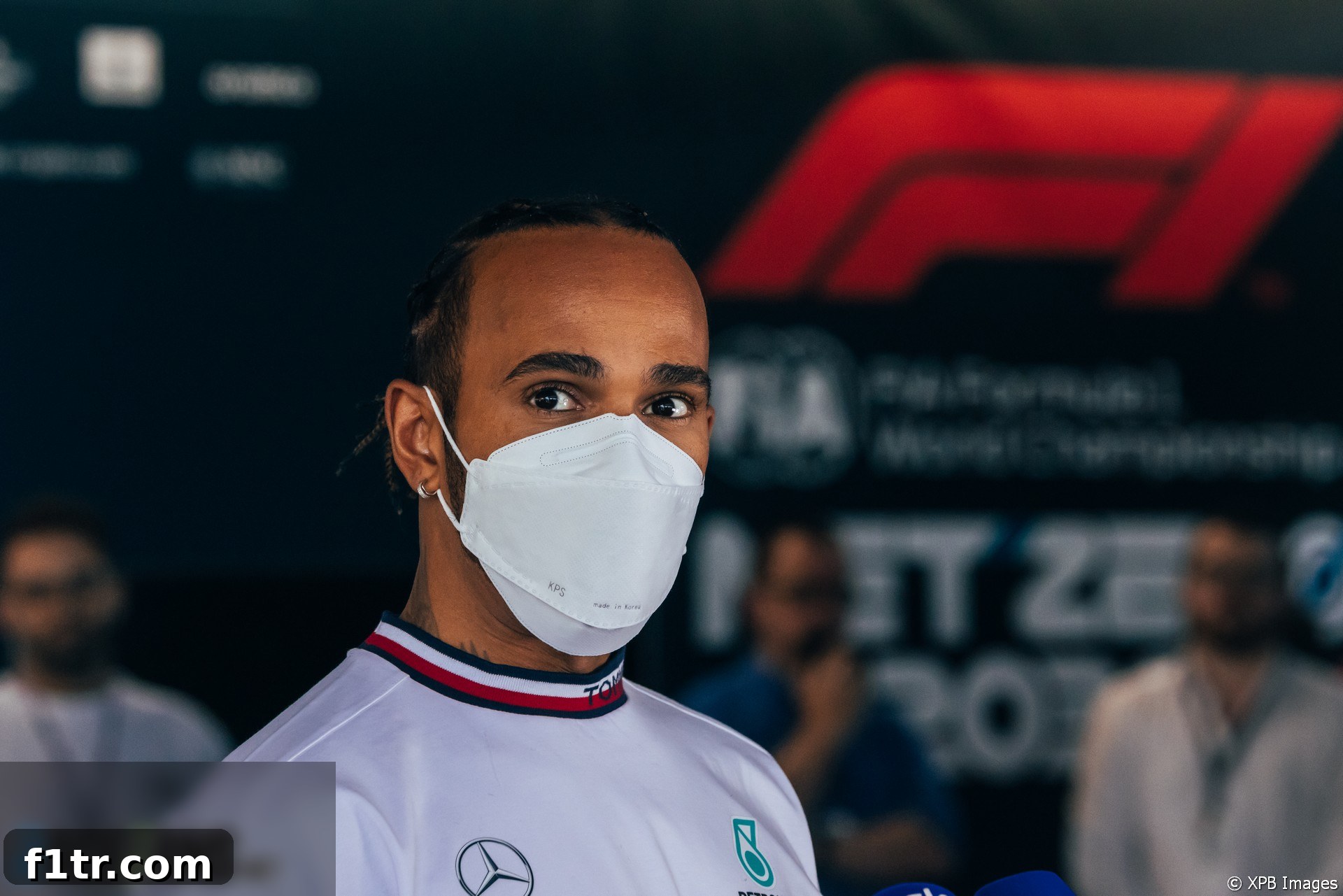
Lewis Hamilton Reinforces COVID-19 Precautions Amid Rising Cases: A Proactive Stance for Health and Performance
In a candid revelation that underscores the ongoing vigilance required in a post-pandemic world, seven-time Formula 1 World Champion Lewis Hamilton has confirmed his decision to resume wearing a protective mask. This proactive measure comes as he observes a noticeable increase in COVID-19 infections among his close circle and within the wider community. Hamilton’s choice, which he describes as a “personal” one, highlights a renewed focus on health and safety, not just for himself but for those around him, as the global landscape grapples with persistent viral challenges.
Prioritizing Personal Well-being: Hamilton’s Rationale
Hamilton’s decision to re-adopt mask-wearing during the Austrian Grand Prix weekend and in subsequent appearances is rooted in a deeply personal conviction to safeguard his health. The Mercedes-AMG Petronas F1 driver explained his motivation plainly: “I noticed a lot of people around me are getting sick and I definitely don’t want to get sick again.” For an athlete operating at the pinnacle of global sport, where physical and mental acuity are paramount, avoiding illness is not merely a preference but a professional imperative. His concerns extend beyond his own immediate health, encompassing his ability to maintain his rigorous training regimen and pursue the activities he loves, free from the debilitating effects of illness. Moreover, Hamilton emphasized a broader sense of responsibility, stating, “I try, if I can, to keep the people that I love around me also safe when I can, when I’m around them.” This reflects a compassionate approach to public health, setting an example that resonates far beyond the racetrack.
The sentiment expressed by Hamilton is particularly poignant given the current societal climate where mask mandates have largely been relaxed, and a sense of normalcy has returned for many. His individual choice serves as a powerful reminder that while collective restrictions may ease, the virus remains a significant presence. It underscores the importance of individual assessment of risk and the adoption of personal protective measures, especially in high-traffic, international environments like the Formula 1 paddock.
A History of Viral Encounters: Lewis Hamilton’s COVID-19 Journey
This isn’t Hamilton’s first encounter with the coronavirus, nor is it his first public statement on its profound impact. His personal history with COVID-19 provides crucial context for his renewed caution. In late 2020, Lewis Hamilton was forced to miss the Sakhir Grand Prix after testing positive for COVID-19. His absence from a race was a rare and significant event in his illustrious career, underscoring the severity of his infection. He described the experience at the time as “one of the hardest weeks I’ve had for some time.” The illness left him physically drained, requiring a period of recovery that impacted his preparation for the season finale.
Furthermore, in August 2021, Hamilton revealed that he suspected he was suffering from ‘Long Covid’ symptoms, experiencing lingering effects months after his initial infection. During the Hungarian Grand Prix weekend, he described “dizziness and extreme fatigue” following a race, prompting concerns about the long-term health implications of the virus, even for elite athletes. Long Covid, a condition where symptoms persist for weeks or months after the initial infection, can include fatigue, breathlessness, cognitive dysfunction (brain fog), and other debilitating issues. Hamilton’s openness about his struggles brought vital attention to a complex and often misunderstood condition, emphasizing that recovery isn’t always linear or complete. These deeply personal experiences undoubtedly shape his current vigilance and reinforce his commitment to preventing future infections.
The Paddock’s Prudence: Other F1 Personalities Adopting Precautions
Hamilton is not alone in his decision to take extra precautions. The highly mobile and international nature of the Formula 1 circus inherently carries a higher risk of viral transmission. As such, other prominent figures within the paddock have also been observed sporting protective face coverings in recent rounds of the championship. Daniel Ricciardo, another well-known driver, and Ferrari team principal Mattia Binotto are among those who have opted for masks, particularly in crowded areas or during media commitments. This collective adoption by various team members and drivers suggests a broader, albeit informal, acknowledgment of the prevailing health risks within the F1 environment. The constant travel across different countries and continents exposes individuals to diverse viral loads and varying public health landscapes, making personal protection a practical consideration for many.
The Formula 1 calendar demands relentless travel, long hours, and close interaction among hundreds of personnel from different teams, media, and support staff. This creates a challenging environment for disease containment. While official protocols have evolved, the personal discretion of individuals like Hamilton, Ricciardo, and Binotto highlights a pragmatic approach to safeguarding one’s health and, by extension, ensuring continuity in their highly demanding roles. Their actions serve as a visible indicator that the conversation around health and safety, especially concerning infectious diseases, remains relevant and active within the elite sporting arena.
Impact on Team Dynamics: The Absence of a Key Figure
The ripple effect of rising infections extends beyond individual health to impact team operations. A clear example of this came during the Austrian Grand Prix weekend, where Hamilton’s long-standing and highly respected race engineer, Peter Bonnington – affectionately known as “Bono” – was notably absent. His role was filled by Marcus Dudley, who had previously deputized for Bonnington at the 2019 Mexican Grand Prix. While Hamilton did not explicitly confirm that Bonnington’s absence was due to COVID-19, his comments during the weekend strongly implied a connection. He mentioned, “Obviously I didn’t have Bono with me this weekend,” immediately following his discussion about many people around him getting sick with the virus.
The relationship between a driver and their race engineer is critical, often described as one of the most important partnerships in Formula 1. Bono’s voice is a constant, reassuring presence in Hamilton’s ear, guiding him through strategy, car performance adjustments, and race conditions. His absence, regardless of the reason, undoubtedly presents an additional challenge for the driver, requiring swift adaptation to a new voice and slightly different communication style during the intensity of a race weekend. This incident further illustrates the tangible operational costs that even a temporary loss of key personnel due to illness can incur for a high-performance racing team, reinforcing the logical imperative for robust health precautions.
The Global Health Context and F1’s Ongoing Vigilance
Hamilton’s individual decision to reinforce his COVID-19 precautions aligns with a broader trend observed globally. Recent data from the World Health Organization (WHO) indicated a significant increase in global COVID-19 infections, with almost an 18% rise week-on-week towards the end of the previous month. This surge, fueled by new variants and a general relaxation of public health measures, signals that the pandemic is far from over. For an international sport like Formula 1, which traverses continents and interacts with diverse populations, these global trends are of particular relevance.
While strict “bubble” protocols and widespread testing characterized earlier phases of the pandemic in F1, the current approach relies more heavily on individual responsibility and evolving national guidelines. However, the rise in global cases serves as a critical reminder that complacency can be costly. For drivers and team personnel, maintaining optimal health is not just about personal comfort but about competitive advantage and consistent performance. Any illness, even a mild one, can hinder concentration, reaction times, and physical stamina – all critical elements for success in Formula 1. Hamilton’s public stance, therefore, acts as a salient reminder of the ongoing need for vigilance and adaptive health strategies within the highly competitive and globally connected world of motorsport.
The Athlete’s Imperative: Health as a Performance Edge
For an elite athlete like Lewis Hamilton, health is not merely an absence of illness; it is a fundamental component of peak performance. The demands of Formula 1 racing are immense, requiring extraordinary physical conditioning, mental fortitude, and unwavering focus. Even a seemingly minor illness can dull reflexes, impair judgment, and reduce stamina, thereby compromising performance on track. A driver’s ability to withstand extreme G-forces, maintain concentration for hours, and make split-second decisions is directly tied to their physiological well-being. Therefore, Hamilton’s emphasis on staying healthy is not just a personal preference but a strategic choice that underpins his pursuit of excellence.
His dedication to training and physical fitness is well-documented. Any interruption to this regimen, particularly due to illness, can have cumulative effects that are difficult to overcome in a championship battle where every point counts. By taking proactive steps like mask-wearing, Hamilton is demonstrating a commitment to maintaining his physical and mental edge, safeguarding his ability to compete at the highest level. This perspective underscores that in the world of professional sport, health management is an integral part of performance management, a lesson that the ongoing pandemic continues to highlight for athletes across all disciplines.
Conclusion: A Champion’s Call for Continued Vigilance
Lewis Hamilton’s decision to resume wearing a mask serves as a potent reminder of the persistent health challenges in our interconnected world, even as many aspects of life return to pre-pandemic norms. His personal experiences with COVID-19, coupled with the observed rise in infections among his peers and the wider global population, underscore the critical importance of individual responsibility and adaptive health strategies. For an athlete of his stature, prioritizing health is paramount for both personal well-being and sustained competitive excellence.
His public stance encourages a thoughtful consideration of personal health choices within the Formula 1 community and beyond. As the global health landscape continues to evolve, Hamilton’s actions champion a message of continued vigilance, proving that sometimes, the most powerful statement is a simple act of self-preservation that also benefits the collective.
Related Articles: 2022 Austrian Grand Prix Insights
- FIA affirms three sprint races on 2023 Formula 1 calendar
- “Oh, so unlucky!” How Alonso’s cursed Austrian Grand Prix unfolded on his radio
- Ferrari believe their performance deficit to Red Bull is now “negligible”
- Another fan’s experience of harassment last weekend – and why F1 must act
- AlphaTauri “desperately” need upgrades after “disaster” weekend, urges Gasly
Browse all 2022 Austrian Grand Prix articles