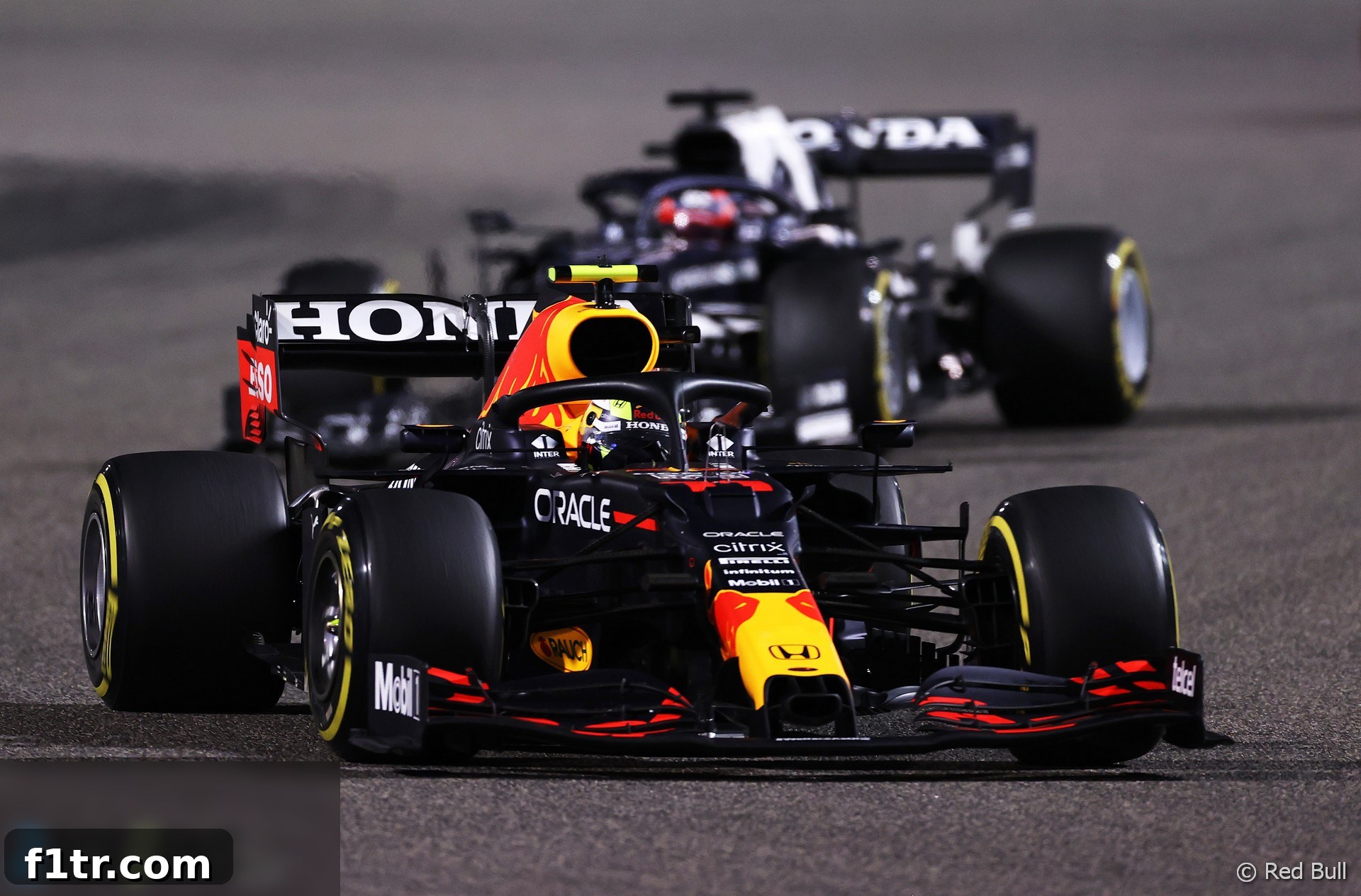
The exhilarating start to the 2021 F1 season witnessed a dramatic shift in the competitive landscape, with Red Bull Racing emerging as the team to beat in terms of raw speed. This significant power dynamic change can be attributed to a confluence of factors, not least of which were the modifications to the technical regulations enacted over the winter break. These changes, particularly those targeting the car’s floor and diffuser areas, disproportionately affected teams running a low-rake aerodynamic concept, such as reigning champions Mercedes-AMG Petronas F1 Team, who found themselves grappling with a loss of downforce and subsequent lap time deficit.
However, beyond the aerodynamic adjustments, there was another crucial element at play: a notable realignment in the performance hierarchy of Formula 1’s engine manufacturers. Mercedes team principal Toto Wolff candidly acknowledged this evolving situation, stating, “We’re losing a little bit on the engine side.” His remarks after qualifying in Bahrain underscored the impressive strides made by Honda, adding, “Honda has done a great job.” This admission from a direct competitor highlighted the scale of Honda’s achievement in what was set to be their final season as a Formula 1 power unit supplier, making their engineering advancements even more poignant.
The first glimpse of Honda’s progress came with the launch of AlphaTauri’s AT02, the inaugural Honda-powered machine unveiled for the 2021 campaign. During this event, technical director Toyoharu Tanabe hinted at the substantial performance gains they had achieved through comprehensive revisions to their engine, turbine, and sophisticated energy recovery system. Further intricate details surrounding these critical developments were later brought to light in a special program aired by NHK, Japan’s public broadcaster, which was granted unprecedented access to Honda’s revered F1 engine development facility in Sakura, Japan. This behind-the-scenes look offered a rare insight into the meticulous engineering and relentless dedication that fueled Honda’s resurgence.
Initially, in the wake of the global pandemic outbreak in 2020, Honda had made the pragmatic decision to defer the introduction of its next-generation power unit design until the 2022 season. This was a logical step given the widespread disruptions and logistical challenges faced by all teams and manufacturers. However, a significant strategic pivot occurred when the Japanese automotive giant subsequently announced its definitive intention to withdraw from Formula 1 at the conclusion of the 2021 season. This monumental decision acted as a powerful catalyst, prompting Honda’s engineering teams to re-evaluate their timeline and commit wholeheartedly to accelerating the development and introduction of their latest V6 hybrid turbo power unit for the 2021 campaign. The goal was clear: to exit the sport on a high, leaving an indelible mark on its final chapter.
Reliability had notoriously been a significant Achilles’ heel for Honda when they made their highly anticipated return to Formula 1 in collaboration with McLaren six years prior. Those early years were plagued by persistent mechanical failures, often leading to frustrating retirements and a severe dent in their reputation. However, the intervening years saw an unwavering commitment to improvement, and by 2020, Honda had remarkably transformed its fortunes, emerging as the sole manufacturer whose drivers successfully completed the entire season without incurring penalties for exceeding their allocated number of power unit elements. While a new power unit was briefly considered for Pierre Gasly’s car in Turkey, the change was ultimately abandoned, a testament to their refined reliability (despite Gasly later incurring a penalty for a different reason).
With the 2021 F1 calendar expanding to an unprecedented and record-breaking 23 races, the imperative for enhanced durability became even more critical. Honda, understanding the gruelling demands of such an extended season, set ambitious targets for further improvements in their power unit’s robustness. This focus on enduring performance was not merely about avoiding grid penalties; it was intrinsically linked to providing the opportunity for consistent, season-long performance gains. A reliable engine allows teams to push the limits without fear of premature failure, optimizing race strategies and extracting maximum potential from every component. The challenge was to marry this enhanced durability with the aggressive performance targets they had set for their swansong season.
To achieve this delicate balance of extreme durability and high performance, Honda engineers embarked on a journey of innovative material science and design. A key breakthrough came in the form of developing a novel coating specifically for the engine’s cylinder heads. This advanced coating was engineered to significantly enhance their resistance to the extraordinarily high temperatures and intense friction generated during the combustion process within the cylinders. The result was staggering: this innovation made the cylinders up to 10 times more resistant to wear and heat compared to those utilized in Honda’s high-revving motorcycle engines, showcasing a remarkable cross-pollination of technologies. This critical development was rigorously evaluated and validated under extreme conditions at the end of the year at Yas Marina, confirming its efficacy and readiness for competitive application in Formula 1.
With the robustness of the cylinders unequivocally validated, the pathway was cleared for the Honda team to aggressively pursue greater performance from its engine. This was meticulously achieved through a sophisticated redesign of the combustion chamber. By reducing the angle at which the valves are positioned, engineers were able to reshape the chamber in a manner that significantly increased the compression ratio. This development proved to be a remarkable “win-win” scenario: the revised valve angle allowed the camshafts to be moved closer together, leading to a more compact engine architecture. A more compact power unit not only contributes to a lower overall center of gravity but also offers invaluable packaging advantages within the tightly constrained confines of an F1 chassis, granting aerodynamicists more freedom to sculpt superior airflow channels around the engine bay.
However, these hard-won gains in internal combustion engine efficiency presented a new engineering challenge. As the engine operated more efficiently, a consequence was that less energy was dissipated and lost through the exhaust system. This reduction in exhaust energy directly impacted the MGU-H (Motor Generator Unit – Heat), which relies on exhaust gas flow to recover energy and spool the turbocharger. To counteract this potential deficit, Honda’s engineers ingeniously re-profiled the blades of the turbine. This intricate reshaping allowed the turbine to operate with enhanced effectiveness and efficiency, ensuring that it could still recover sufficient energy and maintain optimal performance levels despite the reduced volume and velocity of exhaust gas flow. This adaptation was crucial for maintaining the seamless integration and performance of the entire hybrid power unit system.
Further significant reductions in the overall size of the engine, alongside a crucial lowering of its center of gravity, were achieved through the strategic introduction of advanced new construction materials. These cutting-edge materials, likely lightweight alloys and composites, provided superior strength-to-weight ratios and thermal properties, enabling engineers to push the boundaries of design. Specifically, these material advancements allowed Honda to reduce the engine’s bore pitch—the precise gap between the centers of adjacent cylinders. A reduced bore pitch contributes directly to a more compact engine block, which in turn facilitates better packaging within the car’s tight aerodynamic envelope. The collective impact of these design choices on weight distribution and overall vehicle dynamics cannot be overstated, offering tangible performance advantages on track.
The culmination of these extensive technical developments resulted in the RA621H power unit – a demonstrably more powerful, significantly more compact, and notably lighter engine. This new Red Bull Power Unit therefore meticulously ticked a multitude of critical boxes for both Red Bull Racing and Scuderia AlphaTauri. Its formidable capabilities were immediately and emphatically demonstrated at the opening round of the season, where Max Verstappen powered his Red Bull to a dominant pole position, and Pierre Gasly secured an impressive fifth spot on the grid for AlphaTauri. These qualifying results signalled a clear and present threat to Mercedes’ long-held dominance, igniting excitement for the season ahead and validating Honda’s winter efforts.
While neither driver quite replicated their qualifying heroics in the race itself – Verstappen ultimately lost out to the strategic prowess and relentless pace of Lewis Hamilton’s Mercedes, and Gasly’s evening was unfortunately compromised by early car damage – the underlying performance of the Honda power unit was undeniable. Both drivers were quick to heap praise on the latest advancements from the Sakura development facility. Verstappen, in particular, lauded Honda’s engineers, remarking that they had enjoyed “a great winter”, an understatement considering the scale of the performance leap. The initial speed demonstrated provided a strong foundation for the remainder of the season, promising a fierce championship battle.
Despite the overwhelming positive performance in Bahrain, certain lingering concerns regarding reliability did emerge, casting a slight shadow over Honda’s achievements. Troubling signs in the telemetry data from Sergio Perez’s RB16B and Gasly’s AT02 during the Bahrain Grand Prix weekend prompted the preventative fitting of new electronics and batteries to both cars. This proactive measure, while necessary, raised questions about the ultimate robustness of the newly designed components. The critical question facing Honda and its partner teams was whether these significant performance gains had, perhaps, come at the expense of the exemplary reliability record established in 2020. Only the rigorous demands of a full 23-race season would truly reveal whether Honda had successfully engineered both blistering speed and bulletproof dependability for their final F1 hurrah. The balance between outright performance and enduring reliability remains a perpetual tightrope walk in Formula 1 engineering.
Thanks to Daniel Bialy for his contribution to this article.
2021 F1 season
- Masi ‘basically gifted the championship’ to Verstappen says 2021 FIA steward Sullivan
- Las Vegas race backers looking to extend F1 deal beyond 2025
- Why Mercedes put ‘a reminder of joy and pain’ on display in their factory lobby
- Verdict on error in GT race suggests Mercedes would have lost 2021 Abu Dhabi GP appeal
- Title ‘stolen’ from Mercedes made us ‘underdogs people cheer for’ – Wolff
Browse all 2021 F1 season articles