Formula 1 News Roundup: Williams’ Joy, Vasseur’s Radio Stance, and Ferrari’s Fading Fortunes
The dynamic world of Formula 1 is always in motion, offering a constant stream of breaking news, strategic debates, and thrilling insights into the pinnacle of motorsport. This comprehensive roundup brings you the most significant developments, capturing the essence of team morale, driver philosophies, and critical analyses of championship contenders.
Williams’ Bold Move: The Sainz Effect Ignites Grove for 2025
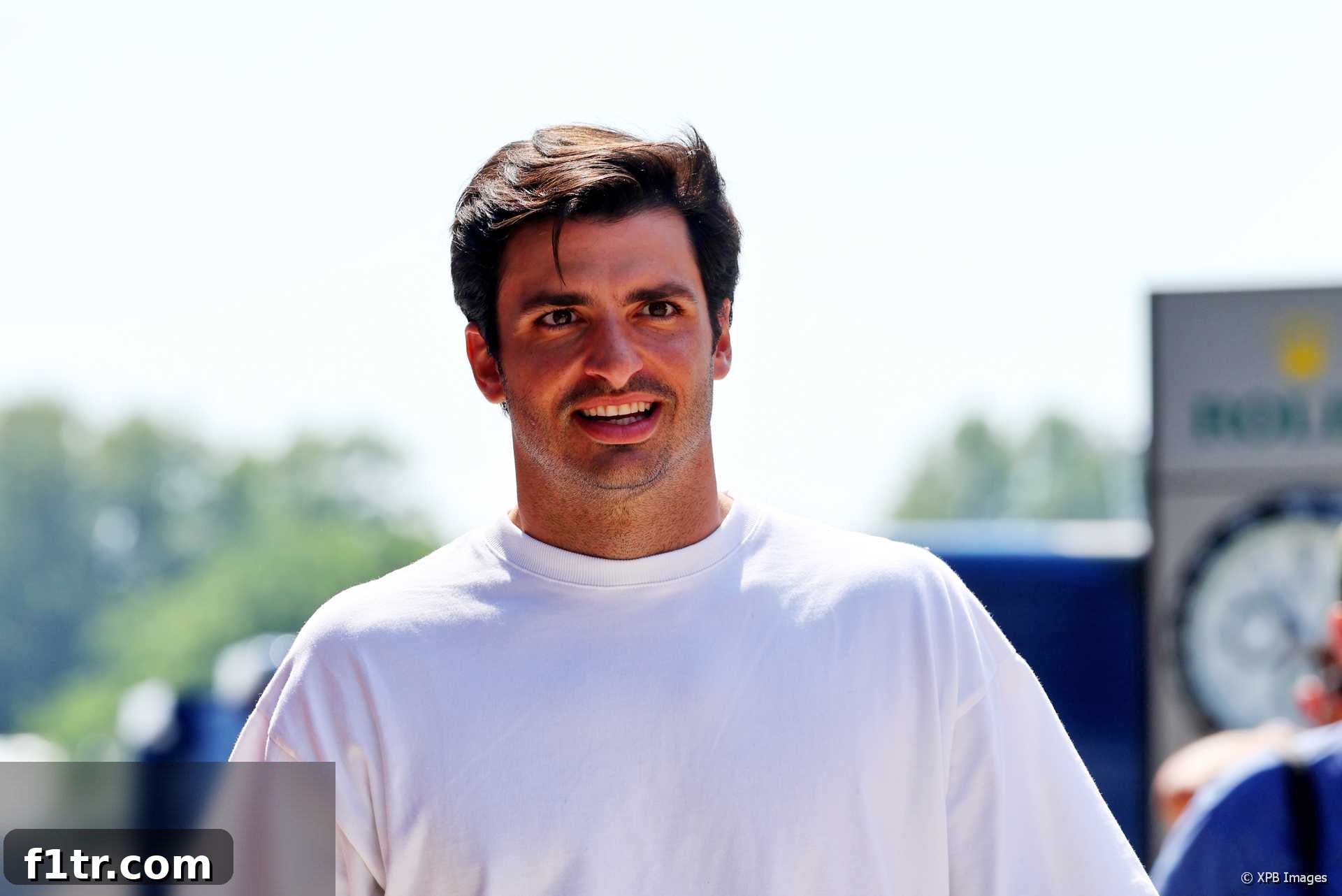
The highly anticipated announcement that Carlos Sainz Jnr will be joining Williams for the 2025 Formula 1 season has sent a powerful wave of excitement across the sport. However, the most profound reaction was observed within the Williams factory itself, where team principal James Vowles shared an extraordinary account of his staff’s overwhelming joy. This visceral outpouring underscores the immense significance of Sainz’s impending arrival and the renewed aspirations within the iconic British racing team.
A Roaring Welcome: Williams Staff’s Ecstatic Reaction to Sainz’s Announcement
James Vowles, a leader known for his strategic foresight and calm demeanor, recently revealed that the news of Carlos Sainz Jnr’s signing for the 2025 season sparked an unprecedented emotional response from the Williams factory workforce. Speaking on the F1 Nation podcast, Vowles meticulously described how he orchestrated the announcement. He gathered approximately 600 to 700 employees, accounting for various shift patterns, and projected a special video message from Sainz. What followed, he noted, transcended any emotional reaction he had ever witnessed throughout his extensive and successful Formula 1 career, which includes multiple race victories and championship triumphs.
“We set up a sort of projector screen with a TV in there,” Vowles explained. “I walked in – Netflix with me as well. There was about 600 to 700 people – because of shift patterns, you don’t get all one thousand in at the same time – and introduced him.” The atmosphere, initially charged with anticipation, swiftly erupted into an unbridled display of euphoria. Vowles continued, “Now, I’ve had the pleasure of winning races and being in part of the race bay element – winning a championship and being in the race bay. I promise you, the emotional reaction to this was the largest I’ve ever seen in my Formula 1 career. It was extraordinary. The shouting, screaming… Carlos did a piece to camera fundamentally that was about maybe a minute and a half – they missed the first minute. There was just screaming ongoing in that period of time. That alone told me what it meant to every one of those individuals in there.”
This powerful and collective reaction speaks volumes about the deep-seated aspirations within Williams Racing. After years of dedicated rebuilding efforts and a relentless pursuit of competitiveness, securing a driver of Sainz’s caliber is viewed as a monumental leap forward. Sainz, a proven race winner with extensive experience at top-tier teams, brings not only raw talent but also invaluable technical feedback and a winning mentality to Grove. His decision to join Williams, reportedly amidst other attractive offers, serves as a profound validation of the progress achieved under Vowles’ transformative leadership and the ambitious long-term vision being meticulously implemented. This signing is more than just a new driver; it’s a powerful statement of intent, igniting inspiration among the team members and resonating deeply with the global fanbase, signalling a new chapter for one of F1’s most historic outfits.
The Unfiltered Voice of F1: Vasseur on Preserving Team Radio Authenticity
In an era characterized by intense media scrutiny and instant public reaction, the debate surrounding the broadcasting of team radio messages continues to be a hot topic. While some voices advocate for greater censorship or limitations to shield drivers from unfair criticism, Ferrari team principal Frederic Vasseur has unequivocally expressed his strong stance against muting or limiting these crucial insights into the intense pressures of Grand Prix racing. For Vasseur, the raw, unedited nature of team radio represents a unique and invaluable element of Formula 1’s unparalleled appeal, offering a genuine glimpse into the heat of battle.
Preserving the Raw Emotion of the Race: Why Uncensored Radio Communication Matters
Frederic Vasseur compellingly highlighted a critical distinction that uniquely positions Formula 1 among other major global sports: the live, unfiltered communication between athletes and their respective teams during moments of peak performance and high-stakes competition. “We have also to keep in mind that we are the only sport in the world where the guys are speaking on the radio during the effort or the race,” Vasseur emphatically stated, underscoring the unparalleled access that fans are granted into the intricate inner workings and immense pressures inherent in F1 racing. He firmly posited that any attempts to sanitize or artificially refine these broadcasts would inevitably detract from the immersive and authentic experience that fans so deeply cherish.
“I’m not sure that if you put a microphone on a football player, it would be much better. Even on the referee sometimes. It means that we have also to calm down with this. Or we have to switch off the microphone, but I’m not sure that it will be a step forward for the show.” Vasseur’s articulate argument champions authenticity over contrived refinement. Drivers, like any elite athletes operating under extraordinary pressure, are bound to express themselves in ways that may not always be perfectly polished or politically correct. However, these candid and sometimes raw moments often provide the most compelling drama and profound human element to the sport, enabling fans to feel a closer, more personal connection to the action and gain a deeper understanding of the real-time challenges faced by their racing heroes.
The act of muting team radios would effectively strip away a significant and vital layer of storytelling, eliminating the immediate reactions to critical strategy calls, unexpected on-track incidents, or crucial performance feedback. It is precisely this unfiltered access that profoundly distinguishes F1’s broadcast from those of many other sports, offering a rare and genuine glimpse behind the curtain of intense competition. Vasseur’s perspective suggests that the sport should wholeheartedly embrace its unique transparency, trusting its global audience to comprehend the nuanced context of high-pressure communication rather than attempting to shield them from it. The entertainment value of Formula 1 is inextricably intertwined with its capacity to convey not merely the breathtaking spectacle of speed and engineering marvels, but also the rich human drama unfolding in real-time within the cockpit and on the pivotal pit wall, making every moment an integral part of the F1 narrative.
In Brief: Quick Takes on Key F1 Developments
Williams Staff’s Jubilation Over Sainz’s 2025 Arrival
James Vowles, the esteemed team principal of Williams, vividly recounted an extraordinary emotional reaction from his factory staff upon being informed that Carlos Sainz Jnr would be joining the team for the 2025 season. The announcement, which included a heartfelt video message from Sainz himself, culminated in widespread cheering and exuberant screaming. Vowles described this display as the most intense emotional response he has ever witnessed in his extensive F1 career, powerfully highlighting the team’s profound excitement and renewed belief in their future trajectory with the acquisition of a proven race winner.
Vasseur Advocates for Unfiltered Team Radio in F1 Broadcasts
Frederic Vasseur, the pragmatic team principal of Ferrari, has publicly voiced his strong opposition to any proposals suggesting the muting or limiting of team radio broadcasts during races. He passionately argued that Formula 1 holds a unique position in sports by offering such direct and immediate insight into the communications between drivers and their teams during the heat of competition. Vasseur suggested that censoring these raw exchanges would significantly diminish the sport’s innate showmanship and authenticity, drawing parallels to the candid remarks one might hear from athletes in other sports when placed under similar high-pressure circumstances.
Become a RaceFans Supporter: Unlock Ad-Free F1 Content
RaceFans operates and continues to flourish thanks, in large part, to the invaluable and steadfast support of its dedicated readers. To help us fund the continuous development, technological advancements, and overall growth of this platform, we extend a sincere invitation for you to consider becoming a RaceFans Supporter. Your generous contribution directly fuels our mission to deliver high-quality, comprehensive, and in-depth Formula 1 coverage, analysis, and exclusive content.
For a modest commitment of just £1 per month, or an annual payment of £12, your account will be upgraded to an exclusive ad-free status. This ensures an uninterrupted, seamless browsing experience, allowing you to immerse yourself fully in all our premium content without distractions. Becoming a Supporter not only significantly enhances your personal experience on the site but also plays a crucial and direct role in the long-term sustainability and continued evolution of RaceFans. Discover the full benefits and sign up to support independent F1 journalism today:
- Become a RaceFans Supporter
- RaceFans Supporter FAQ
F1 Insights & Latest Motorsport Videos from Around the Web
Stay comprehensively updated with additional analytical pieces, captivating motorsport content, and behind-the-scenes glimpses from various reputable sources across the web. Our curated selection ensures you don’t miss key discussions and thrilling on-track action.
Nico Rosberg’s Incisive Explanation of Ferrari’s Current Struggles
Former Formula 1 world champion and astute analyst Nico Rosberg offered a candid and piercing assessment of Ferrari’s recent performance dip, identifying critical missteps in their development strategy that have noticeably hindered their championship aspirations. In a revealing interview with The Independent, Rosberg precisely pinpointed a key, overarching issue:
“It’s got away from them a little bit because the upgrades introduced bouncing in high-speed corners, which is not the thing you want to have. They didn’t really understand why so they had to do a step back to understand, to then hopefully make progress again for the future. You cannot allow yourself to do that when someone like McLaren is just straight-lining the development curve at an amazing pace. And so that’s why now they find themselves where they are today, three, four or five-tenths behind. Let’s see if they can get closer.”
Rosberg’s sharp analysis illuminates the brutal and unforgiving reality of Formula 1’s relentless development race. Ferrari’s technical setback, specifically the unwelcome re-emergence of aerodynamic bouncing with their latest upgrades, forced the team to divert precious resources and invaluable time towards understanding and rectifying this complex issue, rather than consistently pushing forward with performance enhancements. This critical misstep, as identified by Rosberg, has been significantly magnified by McLaren’s exceptional and remarkably consistent development trajectory, which has allowed their Woking-based rivals to gain a substantial performance advantage. The notoriously tight margins in modern F1 mean that even a slight delay in progress or a minor technical miscalculation can result in a considerable performance gap on track, thereby exerting immense pressure on Ferrari to swiftly regain their understanding and momentum if they are to genuinely challenge at the front of the grid.
Read the full interview with Nico Rosberg on Ferrari’s technical challenges (Independent)
Behind the Wheel: Franco Colapinto’s FP1 Experience with Williams Racing
Witness the burgeoning talent of Franco Colapinto as he takes the wheel of the Williams FW46 during Free Practice 1 at the 2024 British Grand Prix. This captivating behind-the-scenes footage provides a unique and intimate perspective on a young driver’s journey in Formula 1, offering invaluable insights into the inherent demands, intense pressures, and exhilarating excitement of an official FP1 session, a crucial step in any aspiring F1 driver’s career.
‘Go behind-the-scenes with Franco Colapinto as he drives the FW46 during FP1 at the 2024 British GP.’
Watch Franco Colapinto’s full FP1 drive experience (Williams via YouTube)
Historical Thrills: POV of a Toro Rosso V10 at Assen Circuit
Immerse yourself in the raw, unadulterated power and incredible, spine-tingling sound of a Formula 1 Toro Rosso V10 engine, captured from a truly unique driver’s perspective. This remarkable onboard footage, meticulously recorded during a BossGP event at the iconic Assen circuit in the Netherlands, features the skilled driver Ingo Gerstl pushing the legendary Toro Rosso STR1 to its absolute limits, offering a visceral and nostalgic reminder of F1’s glorious high-revving past and the sheer exhilaration of a V10 era machine.
Experience the Toro Rosso V10 POV onboard at Assen (Rick van Barneveld via YouTube)
We consistently endeavour to credit original sources and acknowledge contributors. Should you have a valuable tip for a link relating to single-seater motorsport that you believe our readers would appreciate, please do not hesitate to send it to us via our dedicated contact form. Your contributions help enrich our content for the entire F1 community.
Social Media Buzz: The Pulse of F1’s Digital Community
Engage with a specially curated selection of notable posts and trending discussions from various social media platforms, including X (formerly Twitter), Threads, TikTok, and more. These snippets offer an immediate glimpse into the vibrant and dynamic social conversation surrounding Formula 1, capturing fan reactions, team updates, and engaging content that defines the digital pulse of the sport.
Post by @haasf1teamView on Threads
Post by @f1View on Threads
- Discover and follow more official F1 accounts and key motorsport personalities in our comprehensive F1 Twitter Directory.
Community Voice: Insightful Comment of the Day
The vibrant passion and incisive insights of the Formula 1 community form an indispensable part of the sport’s rich ecosystem. Today’s meticulously featured comment delves into the intriguing and rapidly evolving performance capabilities of rookie drivers, critically examining the profound impact of modern training methodologies, particularly inspired by Oliver Bearman’s truly standout debut performance.
Although he may not yet be prominently ranked in our mid-season driver assessments, Oliver Bearman’s extraordinary stand-in performance for Carlos Sainz Jnr at the Jeddah Grand Prix undoubtedly left an indelible impression on F1Frog, prompting a truly thought-provoking discussion on the remarkable readiness of contemporary rookies:
Finishing just 24 seconds off Charles Leclerc, one of the best on the grid, on your debut after just one hour of preparation does indeed seem like an extraordinary performance. But there has been a trend of this recently, most obviously with Nyck de Vries, but also Liam Lawson was brilliant at Zandvoort and then effectively remained at that level for the next four races. I think if Ollie Bearman’s performances at Haas next year make it seem like he would remain about 24 seconds off Leclerc all season then that is a sign drivers are too prepared for Formula 1 today and perhaps some new rules regarding simulator use would be food for thought. But it also makes you wonder why teams have been so afraid of taking on rookies recently when they seem able to be on it straight away.
F1Frog
The Rise of “F1-Ready” Rookies: A New Era in Driver Development?
F1Frog’s exceptionally insightful comment articulates a fascinating and perhaps paradoxical trend emerging in modern Formula 1: the remarkable readiness and immediate competitiveness of rookie drivers, juxtaposed with a perceived ongoing reluctance from established teams to consistently field them. Oliver Bearman’s stellar performance in Jeddah, stepping in for Carlos Sainz Jnr with exceptionally minimal notice, was unequivocally remarkable. To perform within 24 seconds of an established, top-tier driver like Charles Leclerc on debut, after receiving only an hour of practice time, suggests an unprecedented level of preparation that extends far beyond mere raw talent.
This compelling trend is far from isolated, as F1Frog astutely points out. Nyck de Vries previously showcased a similar immediate competitiveness, and Liam Lawson consistently impressed during his fill-in appearances, maintaining a strong performance level over multiple races. These compelling examples collectively raise pertinent and challenging questions about the overwhelming efficacy of modern driver development programs, and critically, the transformative role of advanced simulator training. While simulators undeniably hone a driver’s intricate skills and comprehensive track knowledge to an incredible degree, F1Frog’s provocative point about potential “over-preparation” and the suggested need for new regulations regarding simulator use offers substantial food for thought. It directly challenges the long-held traditional notion that rookies inherently require extensive and protracted adaptation periods, strongly suggesting that perhaps the barriers to entry for immediate competitiveness are now significantly lower due to profound technological advancements in driver training.
The core dilemma, therefore, remains stark: if young drivers are arriving in Formula 1 so exceptionally well-prepared and immediately capable, why do established teams often appear hesitant or reluctant to seize the opportunity and take a calculated chance on them? This dynamic frequently forces promising talents into prolonged waiting periods or into less competitive seats, despite their demonstrably proven ability to hit the ground running at the highest level. This nuanced discussion fundamentally underscores a potential paradigm shift in how teams evaluate, integrate, and nurture new talent, possibly necessitating a comprehensive re-evaluation of current practices to better align with the rapid developmental capabilities and impressive immediate impacts of the next generation of Formula 1 stars.
Happy Birthday!
A very special and heartfelt shout-out to F1Antics! We sincerely hope you have an absolutely fantastic day filled with joy, celebration, and everything you wish for. May your year ahead be brimming with exciting races, unforgettable motorsport moments, and continued passion for Formula 1!
On This Day in Motorsport History
- On this historic day in 1989, the legendary American open-wheel racing driver Michael Andretti achieved a commanding victory at the Michigan 500. This momentous win marked the 10th thrilling round of that year’s fiercely contested CART IndyCar series, adding another significant and prestigious achievement to Andretti’s already illustrious career and further cementing his formidable reputation as one of the most talented and competitive figures in the world of open-wheel racing.