Charles Leclerc’s Abu Dhabi GP Nightmare: Food Poisoning and Grid Penalty Threaten Ferrari’s Championship Bid
The highly anticipated final race weekend of the Formula 1 season at the iconic Yas Marina Circuit was already set to be an event of immense pressure and high stakes. However, for Scuderia Ferrari’s star driver, Charles Leclerc, the Abu Dhabi Grand Prix commenced with an unforeseen and arduous series of personal and technical setbacks. As the Monégasque ace prepared to spearhead his team’s charge for the constructors’ championship, he found himself battling not only formidable rivals on track but also debilitating food poisoning and a critical, costly grid penalty, casting a dark cloud over Ferrari’s aspirations.
A Grueling Start: Leclerc’s Unexpected Battle Against Food Poisoning
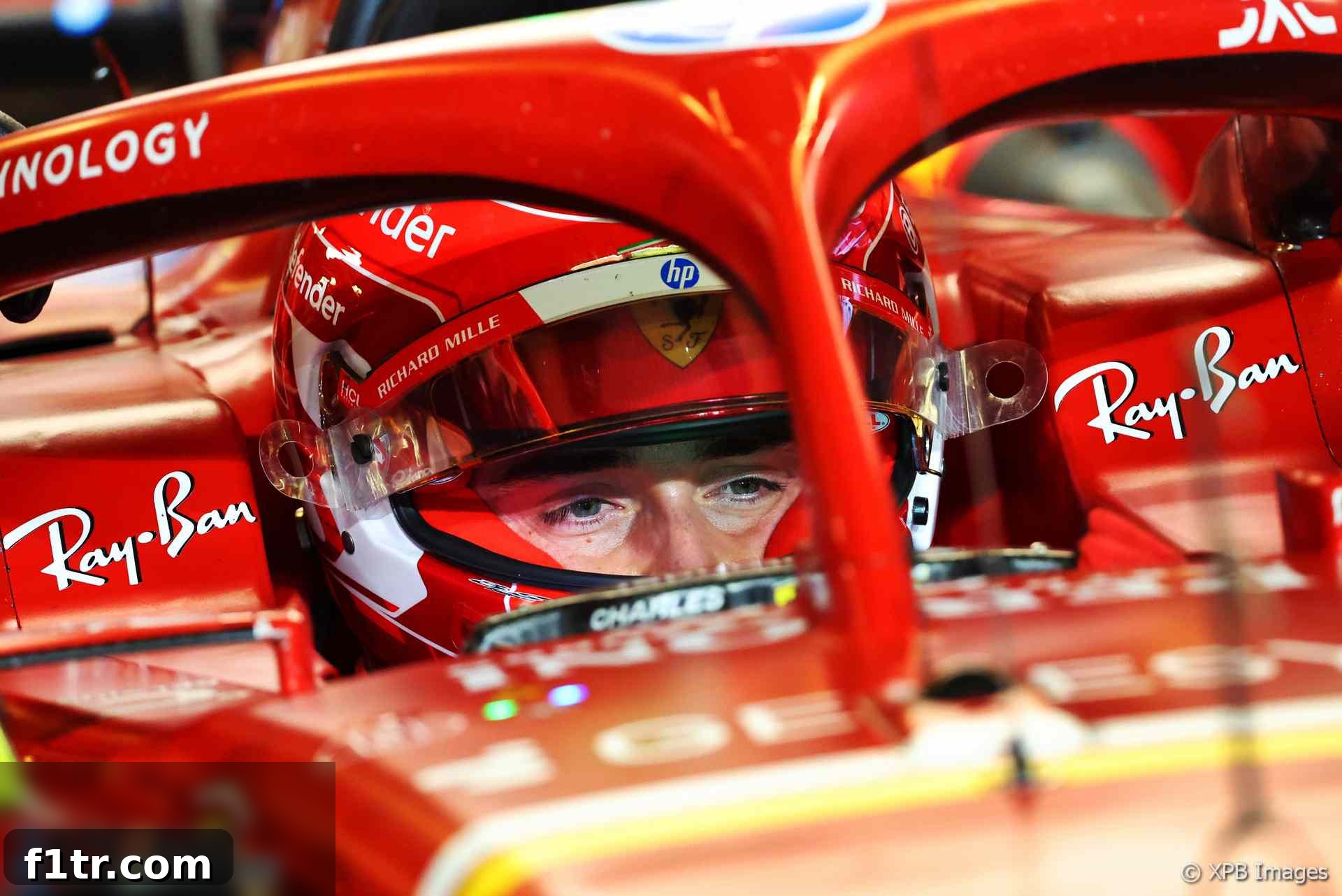
The troubles for Charles Leclerc manifested even before the tires hit the tarmac for Friday’s crucial practice sessions. Following a communal dinner shared with fellow drivers on Thursday evening, Leclerc was unexpectedly struck down by a severe bout of food poisoning. The illness triggered a night of profound discomfort and restlessness, depriving him of essential sleep and leaving him severely drained on the eve of what was arguably one of the most significant race weekends of his career.
“It all started, unfortunately, last night where I got food poisoned and couldn’t sleep all the night,” Leclerc candidly revealed to the official F1 channel, offering a glimpse into his challenging state. “I’m so tired, I just want to sleep now. So it wasn’t so easy.” This heartfelt admission painted a vivid picture of the sheer physical toll the illness had exacted, underscoring the immense difficulty of performing at the peak physical and mental levels demanded by Formula 1. In a sport where split-second decisions and razor-sharp reflexes are paramount, a night devoid of restorative sleep represents a monumental impediment to any driver’s performance, let alone one competing for championship glory.
The unexpected health issue meant that Leclerc’s initial preparations for the grand finale were far from ideal. Instead of focusing on track data and strategic planning, he spent precious hours battling nausea and exhaustion, a situation no athlete wishes to endure, especially when faced with the immense pressures of a season-ending championship battle.
An Emotional Moment: Sharing the Track with Brother Arthur
Despite his profound fatigue and discomfort, Charles Leclerc discovered an extraordinary wellspring of motivation that propelled him through the initial practice session (FP1). This particular session carried immense personal significance for him and his family, as he was scheduled to share the track with his younger brother, Arthur Leclerc. Arthur, a promising talent rising through the racing ranks, was poised to make his highly anticipated Formula 1 debut, taking over Carlos Sainz Jnr’s Ferrari for the opening hour of track action.
“This morning I didn’t feel like I wanted to drive,” Leclerc admitted, perfectly articulating the sheer exhaustion that gripped him. “But obviously the huge motivation of the day was doing the FP1 with my younger brother. This is a dream that came true today for both of us, for all of our family that travelled all the way from Monaco to see that. It was a very emotional moment. I definitely had to put the helmets on very early because I also was emotional.”
The opportunity to share an official Formula 1 session was a deeply personal and poignant milestone for the Leclerc brothers. It symbolized the culmination of their shared journey through junior categories, echoing countless hours spent on karting tracks and the unwavering support of their family, all while paying a heartfelt tribute to their late father and godfather’s racing legacy. This powerful emotional anchor provided Charles with the necessary impetus to temporarily set aside his physical ailments, highlighting the unbreakable bond within the Leclerc family and their profound, shared passion for motorsport. For a fleeting period, the personal triumph and sheer joy of this shared experience seemed to momentarily eclipse the immense competitive pressures of the constructors’ championship.
Technical Catastrophe: A Costly Grid Penalty for Ferrari’s Hopes
However, the emotional high of sharing the track with Arthur was tragically short-lived, quickly followed by a devastating technical blow that further compounded Leclerc’s woes. As soon as Charles Leclerc’s Ferrari SF-23 was fired up for FP1, a critical issue with the car’s energy storage unit (ESU) became distressingly apparent. “Unfortunately, as soon as we fired up the car, we saw that there was a problem with the energy storage,” he recounted, describing the immediate onset of this new, unwelcome challenge.
The Ferrari technical team swiftly identified the problem, determining that the energy storage component – a crucial and highly sensitive element of the hybrid power unit – needed an immediate replacement. This seemingly straightforward repair carried severe and instantaneous ramifications. According to the stringent Formula 1 regulations, drivers are permitted to use only a limited number of power unit components throughout a given season. Having already exceeded his allowance for the energy storage unit in previous races, the mandatory replacement for the Abu Dhabi Grand Prix triggered an automatic 10-place grid penalty for Leclerc in Sunday’s main event.
This penalty is a standard regulatory measure designed to deter teams from gaining a performance advantage by frequently swapping out components. However, its timing for Leclerc and Ferrari could not have been more detrimental. A 10-place grid drop at the final race of the season is a monumental setback, especially in a championship decider where every single point is invaluable. Starting ten positions lower than his qualifying performance demands an extraordinary recovery drive and places immense pressure on both the driver and the team’s strategists. This unforeseen technical failure not only abruptly dampened the personal joy of the FP1 session but also directly jeopardized Ferrari’s strategic objectives for the entire weekend, transforming an already challenging situation into a potential crisis for their constructors’ championship ambitions.
The Constructors’ Championship at Stake: Ferrari vs. McLaren
The grid penalty represents a deeply serious blow to Ferrari’s aspirations in the fiercely contested constructors’ championship. Heading into the Abu Dhabi Grand Prix, the Scuderia was embroiled in a nail-biting battle with McLaren for the coveted second place in the standings. Ferrari trailed their British rivals by a narrow margin of 21 points, a deficit they were intensely focused on overturning in the final race to secure a more prestigious finish, enhanced prize money, and invaluable bragging rights.
The loss of ten grid positions for Charles Leclerc significantly complicates Ferrari’s race strategy. Leclerc, renowned for his exceptional qualifying pace, would typically be expected to start near the very front of the grid, thereby maximizing his chances of scoring a substantial haul of valuable points. Now, even if he delivers a brilliant qualifying performance, he will be forcibly relegated much further down the order, compelling him to fight his way through the congested midfield in a desperate bid for points. This unenviable situation places enormous additional pressure on both Leclerc and his teammate, Carlos Sainz Jnr, to deliver truly exceptional performances under immense duress and without margin for error.
“Lots of things were going through my head,” Leclerc reflected on the profound moment he learned about the devastating penalty. “First, am I going to drive this FP1 with my brother, which is a unique opportunity. And obviously also the championship. That makes our weekend a lot more difficult.” The dual burden of personal illness and a team-critical technical failure at such a pivotal juncture unequivocally highlights the immense mental fortitude and resilience required to compete at the absolute pinnacle of motorsport, particularly when a crucial championship position hangs precariously in the balance. For Ferrari, every single point counts. To stand any chance of overcoming McLaren’s 21-point lead, they crucially need both cars to finish strongly, ideally ahead of their key rivals. Leclerc’s penalty means that Sainz will have to shoulder a significantly heavier load, while Leclerc himself must execute a flawless, aggressive recovery drive, potentially from the heart of the midfield – a monumental task made even more challenging by his ongoing physical recovery from illness.
Leclerc’s Unyielding Spirit: A Glimmer of Hope and Resolve for Recovery
Despite the cascade of accumulating misfortunes, Charles Leclerc’s inherent resilience and indomitable spirit shone brightly. By Friday evening, he reported a significant improvement in his physical condition, indicating a potential turning point in his personal battle against food poisoning. His unwavering determination to bounce back, both personally and professionally, remained unshaken, serving as a powerful testament to his competitive drive and profound mental strength.
“But that doesn’t demotivate me at all,” Leclerc affirmed with an impressive refusal to yield to adversity. “I feel a little bit better tonight already. I’ll have a good night’s sleep and I’ll come back tomorrow with the battery fully recharged – I’m not trying to play a game with the words! – and hopefully we’ll have a great day tomorrow and then have an amazing recovery on Sunday.”
This statement, delivered with a characteristic hint of wit and optimism, profoundly underscores his deep-seated commitment. The clever metaphor of his “battery fully recharged” deftly linked his improving physical state with the car’s freshly installed energy storage unit, symbolizing not just a fresh start but a renewed resolve to conquer the challenges ahead. The formidable task ahead is clear: navigating a significant grid penalty at a circuit where overtaking can prove notoriously tricky, all while still recovering from a debilitating illness. However, Charles Leclerc’s illustrious career is replete with examples of remarkable comeback drives and exceptional performances under pressure. His consistently positive outlook and unwavering fighting spirit provide a vital glimmer of hope for Ferrari fans worldwide, who will undoubtedly be rallying behind their star driver.
The remainder of the weekend at Yas Marina promises to be an extraordinary test of character, strategic brilliance, and sheer driving talent for Charles Leclerc and the entire Scuderia Ferrari team. As they meticulously navigate the intricate complexities of championship contention, mechanical reliability, and personal well-being, the world will be watching with bated breath to see if the Prancing Horse can ultimately transform this challenging early setback into a narrative of ultimate triumph and an unforgettable finish to the Formula 1 season.