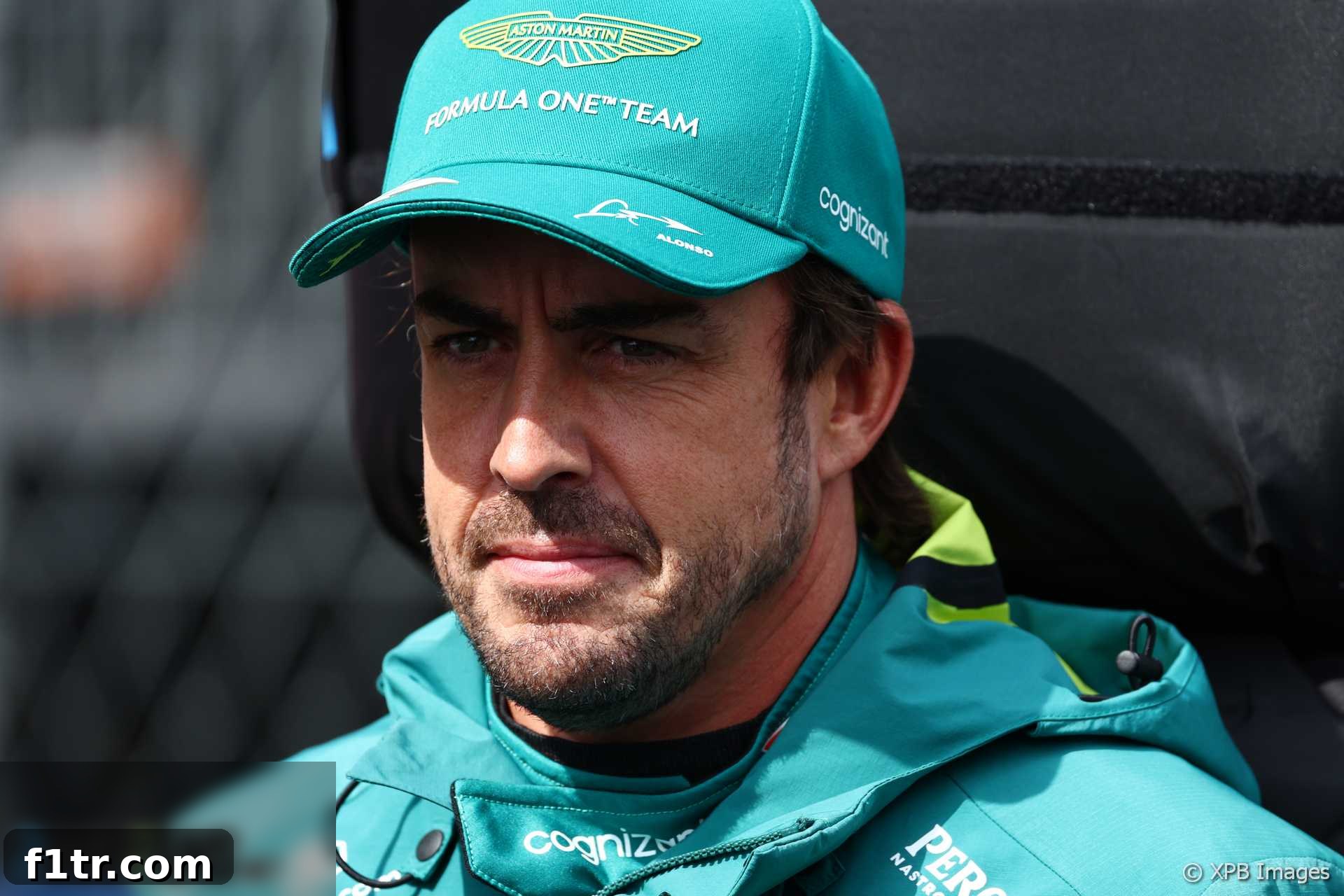
Aston Martin driver Fernando Alonso has offered a rare and significant endorsement of the FIA’s recent handling of critical safety and regulatory situations during the latest Formula 1 Grand Prix weekends. This praise comes amidst a period where the sport’s governing body and its race directors have frequently faced scrutiny and criticism from drivers, teams, and fans alike regarding decision-making and safety protocols.
For several seasons, the FIA has navigated a challenging landscape, balancing the spectacle of racing with the paramount importance of driver safety and consistent rule enforcement. Drivers have been particularly vocal about various incidents that have raised concerns, highlighting the ongoing tension between ensuring thrilling competition and maintaining uncompromising safety standards within the world of motorsport.
Advert | Become a Supporter & go ad-free
FIA’s Recent Challenges: A History of Scrutiny
The operational decisions of Formula 1’s governing body have been under an intense microscope for some time. One particularly contentious event that sparked widespread debate and alarm was the 2022 Japanese Grand Prix. During this race, former race director Eduardo Freitas made a series of decisions that drew significant condemnation. The Grand Prix began in appallingly wet conditions, with many drivers, including Alonso himself, expressing grave concerns that the track was too treacherous for safe racing, citing severely limited visibility and extreme aquaplaning risks.
Compounding this precarious situation, a recovery vehicle was deployed onto the track without clear communication or adequate warning to drivers, while cars were still circulating at speed under Safety Car conditions. This incident resonated deeply and disturbingly within the paddock, drawing a direct and chilling parallel to the tragic accident of Jules Bianchi at the very same circuit in 2014, where a similar deployment contributed to the fatal crash. The event sparked outrage, a profound sense of unease among the drivers, and a mandatory reassessment by the FIA of its safety car and red flag procedures, emphasizing the critical need for absolute clarity and strict adherence to protocols in hazardous situations.
Current race director Niels Wittich has also encountered his share of scrutiny and criticism. The 2023 Australian Grand Prix, for instance, saw its closing laps marred by an unprecedented sequence of multiple red flags. This created a chaotic and protracted finish, leaving many questioning the consistency and necessity of the interruptions. While driver safety is always the paramount concern, the manner in which the race was managed led to frustrations over fairness, the perception of inconsistent decision-making, and the overall flow of the event, with some arguing that decisions were overly cautious or poorly timed, thereby significantly impacting the race outcome and the competitive integrity of the final laps.
Furthermore, the persistent challenge of track limits has been a recurring headache for the FIA and a source of considerable frustration for teams and drivers. After efforts by Freitas and Wittich to simplify track limits rules at the beginning of the 2023 season, the Austrian Grand Prix became a notable flashpoint. An unprecedented number of penalties were handed out for exceeding track boundaries, many of which were only applied hours after the race had concluded, following a formal protest lodged by Alonso’s Aston Martin team. This scenario highlighted the inherent difficulties in consistently enforcing rules across all corners of a circuit, leading to widespread complaints about transparency, the lack of real-time enforcement, and the highly unsatisfactory retrospective nature of some penalties, which significantly impacted race results and championship standings.
Alonso Applauds Proactive Safety Measures and Consistency
Despite these past points of contention and the frequent criticism leveled at the governing body, Fernando Alonso’s recent comments suggest a discernible turning point in the FIA’s operational effectiveness and responsiveness. The two-time world champion specifically highlighted the governing body’s performance at two recent events – the Dutch Grand Prix at Zandvoort and the Italian Grand Prix at Monza – as exemplary demonstrations of improved safety management and regulatory foresight.
Zandvoort: Masterful Management in Adversity
At the Dutch Grand Prix, held at the challenging Zandvoort circuit, heavy rain descended dramatically in the closing laps, transforming the track into an exceptionally treacherous aquatic surface. Drivers were visibly struggling for grip, with several cars sliding off the circuit in alarming fashion. In this high-pressure and rapidly deteriorating environment, Alonso specifically praised the FIA’s decisive and timely intervention. “In Zandvoort, it was good timing on the Safety Cars, red flags, things like that,” Alonso stated. This swift and appropriate action to deploy safety cars and ultimately issue red flags prevented what could have been a far more dangerous and potentially accident-ridden situation. It demonstrated a clear ability to react effectively to rapidly deteriorating track conditions and, crucially, prioritized driver welfare above all else, indicating valuable lessons learned from past incidents.
Monza: Streamlining Qualifying with Maximum Lap Time Implementation
The Italian Grand Prix at Monza, revered for its high-speed characteristics and the strategic importance of slipstreaming (or “the tow”), has historically presented unique and often dangerous challenges during qualifying sessions. In recent years, qualifying sessions at Monza, across various feeder series including F1, F2, and F3 categories, have been plagued by dangerous near-misses. These incidents typically arise as drivers strategically slow down excessively on their out-laps to create optimal gaps for slipstreams or jostle aggressively for track position, leading to hazardous traffic situations and frustrating blockages. Recognizing this escalating risk to driver safety and the integrity of qualifying, Race Director Niels Wittich implemented a crucial and impactful change: the reintroduction and modification of the maximum lap time rule for qualifying.
This revised regulation mandates that drivers must complete their out-laps and in-laps within a specified time window, effectively preventing excessive slowing and significantly reducing the likelihood of dangerous congestion and high-speed near-misses on the circuit. Alonso, who qualified tenth at Monza despite losing his first flying lap in Q1 for exceeding track limits at the exit of the demanding second Lesmo corner, voiced his strong approval for this measure. While he admitted to a minor track limits infringement – “It is always the same rule,” Alonso affirmed with characteristic pragmatism. “You cannot change the rules weekend-to-weekend. It’s always the white line. I ran wide a little bit there, so I’ll take it. it was okay.” – his primary focus was on the overall improvement in qualifying safety and fairness. “And here after the F3 cars, F2, our free practice, they implemented the [maximum] time as a few years ago and I think it worked well in qualifying. There was still some traffic issues but much less than without any rules. So, as I said, sometimes they do good things, we have to say that as well.” This comprehensive endorsement underscores the tangible positive impact of the rule in mitigating the notorious “Monza train” phenomenon and ensuring a smoother, safer, and more equitable qualifying process for all competitors.
Advert | Become a RaceFans supporter andgo ad-free
Beyond Race Control: The Pervasive Impact of Technical Regulations
The praise for the FIA’s proactive approach extended beyond the immediate decisions made by the race director. Ferrari’s senior performance engineer, Jock Clear, offered additional appreciation for Wittich’s changes at Monza, but critically, also highlighted a more fundamental and beneficial shift driven by the sport’s overarching technical regulations. Clear believes that the revised technical regulations, which were meticulously introduced in 2022, have inadvertently played a significant and positive role in reducing the potential for near-misses in qualifying, particularly at unique circuits like Monza.
Historically, the aerodynamic advantage gained from a rival’s slipstream (commonly referred to as “the tow”) was so substantial at Monza that drivers would actively and often desperately seek it out. This frequently led to frantic and dangerous maneuvering, including extreme slowing on track, to position themselves correctly behind another car, resulting in chaotic and hazardous situations. The 2022 regulations, which were primarily designed to allow cars to follow each other more closely and improve wheel-to-wheel racing by reducing the disruptive impact of “dirty air,” have had a serendipitous and highly beneficial side effect for qualifying safety at Monza. “I think that was helped by the fact that people are deciding that actually the tow is not as critical as it’s been in previous years and that’s a testament to the regulation changes,” Clear explained, highlighting the reduced dependency on slipstream tactics.
These comprehensive regulatory shifts have effectively reduced the pronounced aerodynamic sensitivity that cars previously experienced when trailing another vehicle. Consequently, this has diminished the overwhelming necessity of securing a perfect slipstream for a competitive qualifying lap. Clear further emphasized the collaborative effort behind these pivotal changes, stating, “That’s the kind of thing that all the teams have worked with [FIA single seater director] Nikolas Tombazis particularly, on getting cars that aren’t so sensitive in the wake of other cars.” This collaborative and forward-thinking approach between the FIA and the teams aims to create a more robust, aerodynamically forgiving, and ultimately more raceable car design. While the primary goal was undeniably to enhance the on-track racing spectacle and excitement, a significant and positive consequence has been the marked improvement in safety during qualifying at high-speed tracks like Monza.
“Normally we hear about people complaining you can’t follow cars, but of course, it’s those very same characteristics that mean when you come to Monza, you have to follow a car. Well, we’ve got away from that. The cars follow each other better now and you don’t have to go to Monza two seconds behind the car in front to make sure you get a qualifying lap in and that makes life so much easier for everybody. So again, it’s a testament to the work the FIA have done,” Clear concluded. This insightful perspective from a senior team engineer provides a holistic view of how both immediate race control decisions and long-term, meticulously planned technical regulation adjustments collectively contribute to a safer, more streamlined, and ultimately more enjoyable Formula 1 experience for all involved.
Conclusion: A Path Towards Improved Governance and Enhanced Safety
Fernando Alonso’s unreserved praise for the FIA, a sentiment significantly echoed and elaborated upon by influential figures such as Ferrari’s Jock Clear, marks a pivotal moment in the ongoing dialogue surrounding Formula 1’s governance, safety protocols, and regulatory evolution. After a period characterized by intense scrutiny, valid concerns, and frequent criticism from the drivers, the recent, decisive interventions at Zandvoort and Monza demonstrate a clear, proactive, and commendable commitment from the FIA. This commitment involves learning from past mistakes, adapting regulations in real-time, and consistently prioritizing the safety and fairness of the sport above all else.
From the timely and expert deployment of safety cars and red flags in adverse, rapidly changing conditions at Zandvoort, to the proactive and effective rule changes addressing long-standing qualifying hazards at Monza, these recent examples collectively showcase a responsive, adaptive, and evolving approach by the sport’s governing body. This demonstrated willingness to listen attentively to driver and team feedback, to rigorously implement necessary changes, and to work collaboratively with teams and technical experts is absolutely crucial for the continued health, integrity, and future success of Formula 1. Such a responsive stance fosters greater trust, confidence, and respect within the highly competitive paddock and among its passionate global fanbase. As the pinnacle of motorsport continues to push the boundaries of speed, technology, and performance, the indispensable role of the FIA in ensuring a safe, equitable, and consistently fair environment remains paramount. Recent events strongly suggest that they are increasingly rising to meet that formidable and continuous challenge, charting a positive course for the future of Formula 1.
Advert | Become a RaceFans supporter andgo ad-free
2023 F1 season
- FIA president cleared of alleged interference in two 2023 races
- First week viewing figures for new Drive to Survive season fall again
- Max who? Drive to Survive season six prefers its favourite faces
- RaceFans’ complete 2023 season review
- The F1 drivers who pulled off the 10 biggest charges through the field in 2023
Browse all 2023 F1 season articles