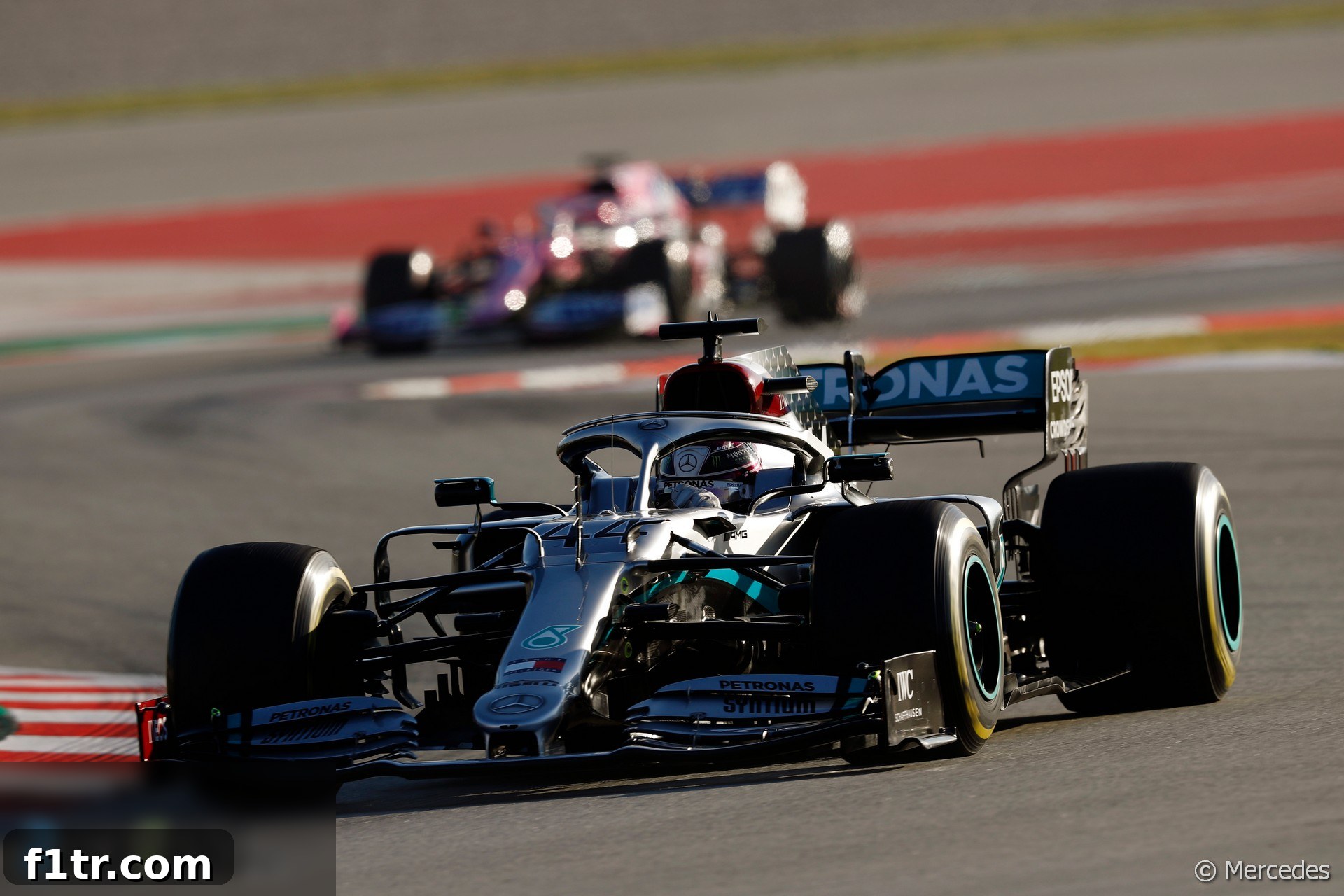
Formula 1’s ambitious plan to introduce experimental reverse-grid races at two of its revised 2020 championship rounds hangs precariously in the balance. The innovative proposal, designed to inject unpredictable excitement and fresh narratives into the season’s unique double-header events, requires the unanimous backing of all ten competing teams. However, two prominent outfits, Mercedes and Racing Point, are currently withholding their full support, casting significant doubt on the format’s implementation for the eagerly anticipated restart of the F1 season.
While initial reports suggested that the reigning champions, Mercedes, were the sole team holding out against the proposal, further information indicates that Racing Point has also yet to commit its endorsement. This situation places the independent team, a key customer of Mercedes’ formidable power units, in a delicate position. Its current stance is widely perceived within the paddock as a potentially strategic or political alignment with its engine supplier, highlighting the complex web of relationships and dependencies within the sport.
This is not the first instance of such a radical concept encountering resistance within Formula 1. Ross Brawn, the sport’s managing director for motorsports, openly acknowledged that a similar reverse-grid qualifying race plan failed to secure approval last year, again due to opposition from two teams. Despite this previous setback, F1’s leadership is once again actively campaigning for fresh support, believing that this alternative qualifying format could significantly enhance spectator interest and engagement, particularly for the second events in the planned double-header weekends amidst the extraordinary circumstances of the 2020 season.
The Reverse-Grid Proposal: A Deeper Dive into the 2020 Format
The revised 2020 Formula 1 calendar is currently expected to feature several back-to-back races at key circuits, with the iconic Red Bull Ring in Austria earmarked for an early July start, followed by Silverstone in the United Kingdom in August. Under the specific terms of the proposed format, the traditional Saturday qualifying session at the second of these two race weekends would be replaced by a concise, high-intensity 30-minute sprint race. The outcome of this shorter race would then directly dictate the starting grid positions for Sunday’s main Grand Prix, fundamentally altering the competitive landscape.
Crucially, the starting positions for this Saturday sprint race would not be determined by typical qualifying pace but rather by reversing the current order of the championship standings. This means that drivers currently at the bottom of the championship hierarchy would find themselves starting at the very front of the grid, while the championship leaders would be forced to battle their way through the field from the back. For example, a driver who unfortunately suffers an early retirement in the season-opening Grand Prix next month could, under this system, potentially secure pole position for the reverse-grid sprint race at the championship’s second round, creating an immediate and dramatic shift in dynamics and an instant opportunity for redemption.
This innovative setup would directly impact the grid formation for both the second and fifth rounds of the championship, promising an unprecedented level of unpredictability and strategic complexity for teams and drivers alike. Competitors would need to adapt rapidly to a completely different racing challenge, where navigating dense traffic, managing tyre wear over a shorter distance, and mitigating the risk of incidents would become paramount in a frenetic sprint to secure a favourable grid slot for the crucial main event on Sunday. Such a format is designed to produce compelling on-track action from the very first lap, compelling drivers to push to their limits without the usual strategic nuances of a longer Grand Prix.
Mercedes and Racing Point’s Stance: A Critical Juncture for F1
Reliable sources within the F1 paddock indicate that both Mercedes and Racing Point agreed over the past weekend to thoroughly re-evaluate the latest iteration of the reverse-grid proposal. A definitive decision on whether this radical plan will be adopted for the extraordinary 2020 season is now eagerly anticipated to be announced within the current week. The outcome of these deliberations will have significant ramifications for how the sport approaches its revised calendar and its ongoing attempts to maintain excitement and relevance amidst unprecedented global circumstances.
The resistance from Mercedes, the sport’s dominant force for the past six seasons, is particularly noteworthy and carries immense weight. While the core concept of reverse grids aims to level the playing field and introduce greater variability, Mercedes’ potential objection likely stems from a multifaceted set of concerns. These could include deep-seated concerns over maintaining sporting integrity and meritocracy, the inherent risks of increased on-track incidents in crowded sprint races with potentially disparate car performance, the heightened potential for costly damage to their intricately engineered components, and a general perception of artificiality in manufacturing a grid that deviates from pure performance. For a team that consistently excels and operates at the pinnacle of engineering, any measure that could disrupt their hard-earned competitive advantage without a clear and compelling sporting justification is understandably met with intense scrutiny and caution.
Racing Point’s apparent alignment with Mercedes’ hesitant stance could be interpreted in several ways. It might genuinely signal shared concerns within the team regarding the proposal’s practical implications, its impact on the constructor’s championship, or the financial burden of potential repairs. Alternatively, given their incredibly close technical partnership with Mercedes, this could also be a shrewd strategic or political move designed to support their engine supplier’s position. This highlights the intricate and often interdependent political landscape within Formula 1, where alliances and dependencies frequently play a critical role in shaping major decisions, especially when significant sporting or financial implications are on the table. The need for unanimous agreement underscores the power held by even a single team to veto significant changes, emphasizing the delicate balance between commercial interests and sporting regulations.
Driver Reactions and the Enduring Debate over F1’s Purity
The idea of reverse-grid races has historically not been met with universal enthusiasm, particularly by some of the sport’s most decorated and influential drivers. Both Lewis Hamilton and Sebastian Vettel vehemently derided the concept when it was first publicly floated last year. Vettel famously dismissed it with uncharacteristic bluntness as “complete bullshit,” a stark and unambiguous expression of his profound disdain for what he perceives as an artificial and contrived alteration to the sport’s fundamental principles of meritocracy and competition.
Hamilton echoed this sentiment, asserting that “The people that are proposing this don’t really know what they’re talking about.” These strong and unequivocal reactions from multiple world champions underscore a significant philosophical divide that runs through the very core of Formula 1. On one side are the traditionalists and many drivers who advocate for maintaining the sport’s established meritocracy, where the fastest and most skillfully driven car should always be rewarded with the best starting position. On the other side are those, including the sport’s commercial rights holders and segments of the fan base, who prioritize spectacle, unpredictability, and enhanced entertainment, especially in a condensed and unconventional season that demands novel approaches to fan engagement and compelling storylines.
The arguments put forth by the drivers often center on the idea that such formats fundamentally dilute the essence and prestige of Formula 1. They contend that the true challenge and allure of the sport lie in perfecting every single aspect of a race weekend, from meticulous preparation in practice sessions to the ultimate test of speed in qualifying. Artificially manipulating the grid, they argue, undermines this relentless pursuit of pure performance and the integrity of the results. Furthermore, drivers frequently highlight the increased risk of accidents and damage in highly congested sprint races, especially when cars with vastly different performance levels are forced into close quarters. Such incidents could lead to significant financial implications for teams, particularly smaller ones, and could compromise their ability to compete effectively in subsequent events on an already tight budget. The ongoing debate taps into the very identity of Formula 1: is it primarily a rigorous test of engineering prowess and driving supremacy, or is it an entertainment product that can benefit from strategic twists and manufactured excitement, even at the cost of its perceived purity?
The Quest for Excitement in an Unconventional Season
Formula 1 finds itself in an unprecedented and challenging situation, grappling with a severely truncated and rescheduled calendar due to the ongoing global health crisis. The renewed push for reverse-grid races is symptomatic of a broader, urgent effort by the sport’s management to maximize entertainment value and generate fresh narratives in a season that will inevitably look and feel very different from previous years. Ross Brawn and his team are under considerable pressure to deliver compelling content to a global audience of fans and broadcasters, and novel qualifying formats are often seen as a relatively straightforward and impactful way to achieve this objective, particularly when the number of races is limited.
While undoubtedly controversial, the immediate appeal of a reverse-grid format is undeniable for certain segments of the audience. It promises the kind of chaotic starts, thrilling overtakes, and the exciting sight of top drivers fighting their way heroically through the entire field – scenarios that are often celebrated when they occur naturally but are regrettably rare in the current era of Formula 1. The proposed short, 30-minute race length is also specifically designed to be a high-intensity spectacle, forcing drivers to push absolutely from the very first lap without the usual strategic considerations of prolonged tyre management or fuel saving that typically characterize a full Grand Prix, thus guaranteeing non-stop action.
The ultimate challenge for Formula 1, however, is to successfully strike a delicate and sustainable balance between enhancing entertainment value and fiercely preserving the integrity, prestige, and historical significance of a world championship that is widely regarded as the pinnacle of motorsport. Similar formats are used with considerable success in junior categories like Formula 2, which serve as feeder series, and in touring car championships, where the competitive ethos and expectations might be inherently slightly different. For Formula 1, with its incredibly rich history, unparalleled technological sophistication, and exalted status, any radical change to its competitive structure inevitably invites intense scrutiny, passionate debate, and often fervent opposition from purists and participants alike.
As the clock ticks relentlessly towards the much-anticipated restart of the 2020 F1 season, the fate of the reverse-grid race proposal hangs precariously. The stringent requirement for unanimous team consent means that the final decision of Mercedes and Racing Point carries immense weight and significance for the entire sport. Their ultimate verdict will not only determine the immediate future of this specific, groundbreaking proposal but will also send a clear and unequivocal message about the sport’s collective willingness to embrace truly radical change in pursuit of a more unpredictable, engaging, and captivating spectacle for its global fanbase, particularly in these extraordinary times.