Monaco Grand Prix Strategy: Mastering the Unpredictable Street Circuit
The Monaco Grand Prix stands as a singular event on the Formula 1 calendar, a true test of precision, courage, and strategic ingenuity. Its iconic street circuit, with an unforgiving layout of tight corners, narrow passages, and omnipresent barriers, renders conventional racing tactics largely obsolete. Here, the traditional pursuit of a one-stop strategy is not merely a preference but often the only feasible path to victory, primarily because the circuit’s notorious characteristics make on-track overtaking an almost impossible feat. Understanding the intricate dance between tire management, track position, and the ever-present threat of a Safety Car is paramount to success in the Principality.
The Overtaking Enigma: Why Monaco Defies Conventional Racing
In the world of Formula 1, drivers typically articulate the need for a performance advantage of one to two seconds per lap to stand a genuine chance of executing an overtake on most circuits. This significant margin provides the necessary speed differential, braking stability, and spatial allowance required to maneuver past a rival safely. However, at the Circuit de Monaco, this established metric of performance advantage, while still critical for outright lap times, loses much of its relevance when it comes to wheel-to-wheel combat. The sheer absence of space, combined with the relentless sequence of high-speed sections and minimal run-off areas, means that the physical opportunity for a car to make a pass is virtually non-existent.
This fundamental characteristic of the Monaco track profoundly influences race strategy. Strategists must operate under the explicit assumption that an overt pass on track is highly improbable. Consequently, race plans are meticulously crafted with track position as the ultimate priority, often superseding raw pace. The clear implication is that once a car secures a lead or a favorable position, it becomes exceptionally difficult for competitors to displace it, even if they possess superior pace. This places enormous pressure on qualifying performance, which sets the starting order, and, crucially, on the ability to manage tire degradation, even when the tires are well past their optimal performance window.
The Hyper-Soft Gamble: Navigating Tire Degradation on the Riviera
In the high-stakes environment of the Monaco Grand Prix, tire strategy ascends to the most critical element of any aspiring winning plan. The hyper-soft compound, known for its aggressive performance but inherently shorter lifespan, introduces a significant element of risk and reward. Initial forecasts regarding the hyper-soft’s durability often err on the side of caution, painting a pessimistic picture of its potential race stint. Yet, experience frequently shows that teams can stretch these tires for considerably longer durations during the actual race compared to their performance in practice sessions. This phenomenon is largely attributable to the evolving track surface. As more rubber is deposited onto the asphalt throughout the weekend, the circuit ‘greens up,’ and grip levels improve substantially, a particularly pronounced effect on Monaco’s famously low-abrasion tarmac.
Furthermore, the warmer ambient temperatures typically expected on race day, coupled with the cumulative rubbering-in of the track, tend to mitigate potential issues like tire graining. Graining occurs when the tire surface experiences microscopic tears and rolls up, leading to a significant reduction in grip and an acceleration of degradation. While these environmental factors offer a measure of hope, successfully managing the hyper-softs through a substantial portion of the race distance remains a formidable challenge. The delicate balance between extracting maximum outright pace and meticulously preserving tire life demands exceptional discipline from the drivers in the cockpit and astute, real-time decision-making from the pit wall.
Mercedes’ Unique Tire Dilemma: A Strategic Setback
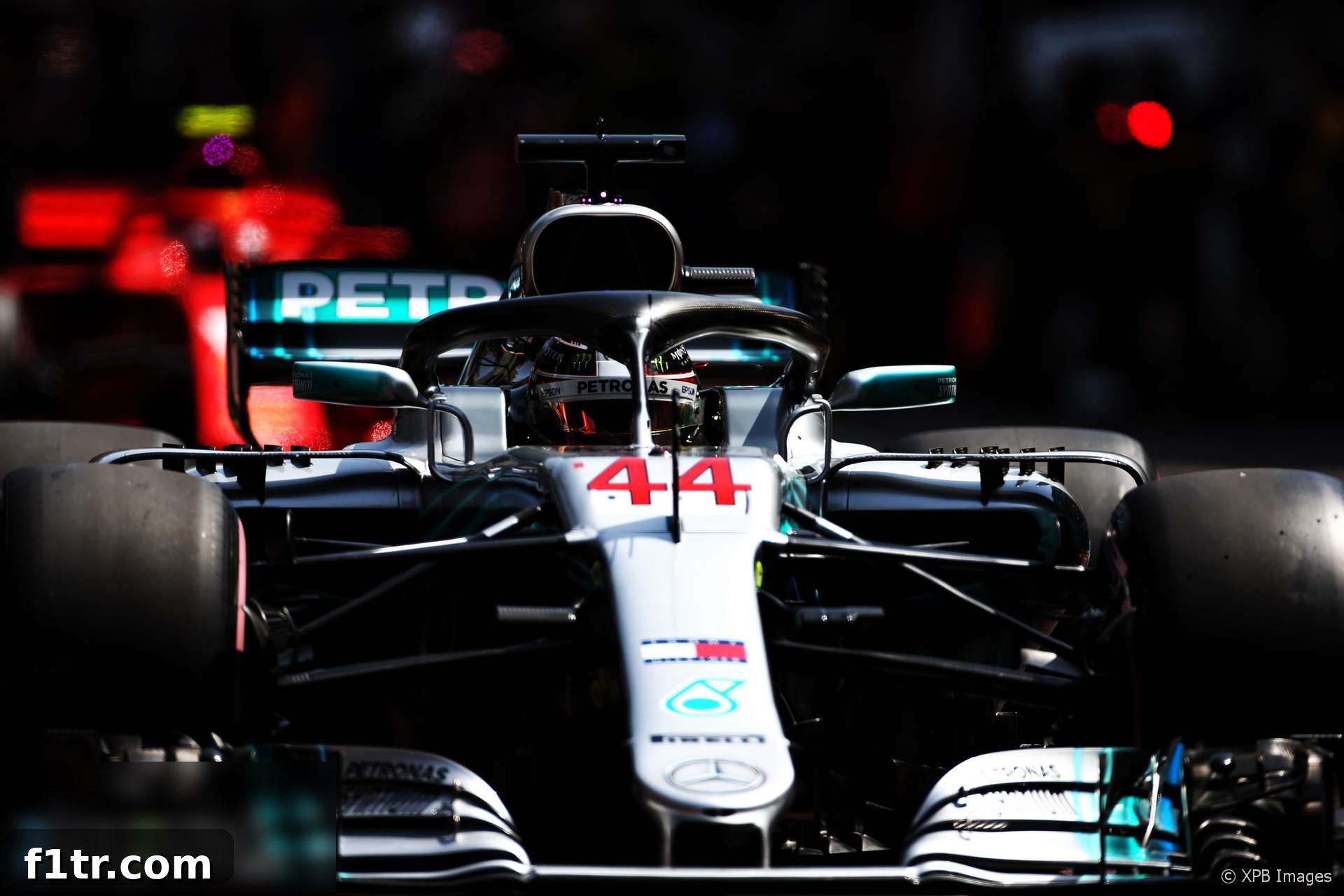
Among the front-running teams, Mercedes found themselves in a distinctly vulnerable strategic position concerning their tire allocation. Notably, they were the only team whose drivers, Lewis Hamilton and Valtteri Bottas, did not possess a fresh set of ultra-soft tires available for the race. This critical situation stemmed directly from their aggressive qualifying strategy in Q2, where they utilized their ultra-softs with the ambitious hope of not only qualifying but also commencing the race on this more durable compound. The strategic aim was to secure a tactical advantage by potentially extending their crucial first stint significantly, thereby creating a different pit window compared to their hyper-soft-shod rivals.
However, their audacious efforts proved unsuccessful in delivering the desired Q2 lap time on the ultra-softs, forcing them to abandon the plan and, consequently, to start the race on the hyper-softs, aligning them with the rest of the top ten qualifiers. Mercedes Team Principal Toto Wolff openly conveyed the team’s initial optimism and their subsequent concerns: “We were optimistic, keen to try to find out whether we could qualify on the [ultra-soft] because starting the race on the hyper will be tough.” He further elaborated on the observed tire behavior and the team’s apprehension: “We’ve seen a lot of graining on the front left and we’ve seen some degradation on the rear. Probably the one who is in the lead is going to manage the pace very carefully in the race tomorrow and still run out of tyre after a few laps. Insofar, it could be quite a tricky situation and you would want to avoid the hyper.”
Beyond the simple compound choice, a supplementary critical concern for Mercedes revolved around how their drivers managed their hyper-soft tires during their qualifying runs. Pushing the tires to their absolute limit, particularly on the edge of grip and inducing slight slides during a high-performance qualifying lap, can significantly pre-stress the tire structure. This aggressive usage, while necessary for extracting maximum qualifying performance, can manifest as accelerated graining or increased degradation during the race, potentially shortening the tire’s effective operational life and further complicating an already precarious one-stop strategy.
The “New Tire Pole”: A Strategic Advantage from P11 Backwards
While the top ten qualifiers are mandated to start the race on the hyper-soft tires they used to set their fastest Q2 times, drivers qualifying from 11th position backwards enjoy a considerable strategic advantage. This coveted position, often colloquially termed the “new tire pole,” grants these drivers the freedom to select any fresh tire compound for their race start. Nico Hulkenberg, starting from 11th, found himself in precisely this enviable situation, potentially affording him significantly greater flexibility in crafting his race strategy.
His teammate, Carlos Sainz Jnr, acutely recognized the substantial benefit this offered to both himself and the other drivers outside the top ten. Sainz elucidated, “Those starting from P11 backwards have a massive advantage with what they can do with the Safety Car windows. We just depend [on] a bit of luck to manage to stay ahead because their strategy as soon as a Safety Car comes out is a lot better.” This insight underscores how the ability to choose an alternative starting compound – such as opting for ultra-softs or even super-softs – provides more diverse options for managing tire wear and, critically, for capitalizing on Safety Car periods, which are a notorious and frequent feature of the Monaco Grand Prix.
The Unpredictable Hand of the Safety Car: Shifting Fortunes
The Monaco Grand Prix is uniquely characterized by its exceptionally high probability of Safety Car deployments. The unforgiving nature of the circuit, with its close proximity to barriers, narrow confines, and limited run-off areas, means that even minor incidents or small pieces of debris can necessitate a Safety Car period to ensure competitor safety and facilitate track clearance. These interruptions invariably act as a significant wild card, possessing the power to completely reshuffle the strategic deck and alter the race outcome dramatically.
For drivers and teams committed to a rigid one-stop strategy, the timing of a Safety Car can be either an immense blessing or a crippling curse. An early Safety Car deployment might present an opportune moment for a “cheap” pit stop, allowing drivers to switch to a more durable compound without incurring significant loss of track position, thereby optimizing their strategy. Conversely, a Safety Car deployed late in a tire stint could force drivers to pit prematurely, jeopardizing their ability to make their chosen tire compound last until the end of the race, leading to a difficult second stint or even an unplanned second stop. The opening laps of the Monaco Grand Prix are, therefore, typically a tentative affair, with leaders meticulously managing their hyper-softs, acutely aware that a Safety Car could emerge at any moment and present an entirely new set of complex strategic calculations.
Go ad-free for just £1 per month>> Find out more and sign up
Qualifying Breakdown: Daniel Ricciardo’s Dominance and Key Performances
Qualifying at Monaco is arguably the single most crucial session of the entire Grand Prix weekend, frequently predetermining the race outcome given the aforementioned profound difficulties in overtaking. The following table presents the full qualifying times, offering an insightful snapshot of raw pace, precision, and performance across the entire field. Daniel Ricciardo truly excelled, securing pole position with a commanding and flawless display of driving skill and speed. His exceptional performance unequivocally highlighted Red Bull’s strong chassis and optimized aerodynamic package, which are critically advantageous on the tight and demanding street circuit.
| Driver | Car | Q1 | Q2 (vs Q1) | Q3 (vs Q2) | |
| 1 | Daniel Ricciardo | Red Bull | 1’12.013 | 1’11.278 (-0.735) | 1’10.810 (-0.468) |
| 2 | Sebastian Vettel | Ferrari | 1’12.415 | 1’11.518 (-0.897) | 1’11.039 (-0.479) |
| 3 | Lewis Hamilton | Mercedes | 1’12.460 | 1’11.584 (-0.876) | 1’11.232 (-0.352) |
| 4 | Kimi Raikkonen | Ferrari | 1’12.639 | 1’11.391 (-1.248) | 1’11.266 (-0.125) |
| 5 | Valtteri Bottas | Mercedes | 1’12.434 | 1’12.002 (-0.432) | 1’11.441 (-0.561) |
| 6 | Esteban Ocon | Force India | 1’13.028 | 1’12.188 (-0.840) | 1’12.061 (-0.127) |
| 7 | Fernando Alonso | McLaren | 1’12.657 | 1’12.269 (-0.388) | 1’12.110 (-0.159) |
| 8 | Carlos Sainz Jnr | Renault | 1’12.950 | 1’12.286 (-0.664) | 1’12.130 (-0.156) |
| 9 | Sergio Perez | Force India | 1’12.848 | 1’12.194 (-0.654) | 1’12.154 (-0.040) |
| 10 | Pierre Gasly | Toro Rosso | 1’12.941 | 1’12.313 (-0.628) | 1’12.221 (-0.092) |
| 11 | Nico Hulkenberg | Renault | 1’13.065 | 1’12.411 (-0.654) | |
| 12 | Stoffel Vandoorne | McLaren | 1’12.463 | 1’12.440 (-0.023) | |
| 13 | Sergey Sirotkin | Williams | 1’12.706 | 1’12.521 (-0.185) | |
| 14 | Charles Leclerc | Sauber | 1’12.829 | 1’12.714 (-0.115) | |
| 15 | Romain Grosjean | Haas | 1’12.930 | 1’12.728 (-0.202) | |
| 16 | Brendon Hartley | Toro Rosso | 1’13.179 | ||
| 17 | Marcus Ericsson | Sauber | 1’13.265 | ||
| 18 | Lance Stroll | Williams | 1’13.323 | ||
| 19 | Kevin Magnussen | Haas | 1’13.393 | ||
| 20 | Max Verstappen | Red Bull |
Sector Times: A Deeper Look at Circuit Performance
Analyzing sector times provides invaluable insight into where each car and driver excels or struggles on the uniquely demanding Monaco circuit. While the overall lap time ultimately reigns supreme, strong individual sector performances often highlight specific car characteristics, such as aerodynamic efficiency through high-speed sections or exceptional mechanical grip in the slower, more intricate twisty bits. Ricciardo’s consistent performance across all sectors, particularly his fastest middle sector, served as a clear demonstration of the Red Bull’s exceptional balance and downforce, attributes absolutely critical for expertly navigating Monaco’s demanding and technical layout. Meanwhile, Hamilton’s fastest Sector 1 time underscored Mercedes’ potent power unit and their initial cornering prowess.
| Driver | Sector 1 | Sector 2 | Sector 3 |
|---|---|---|---|
| Daniel Ricciardo | 18.638 (2) | 33.392 (1) | 18.779 (1) |
| Sebastian Vettel | 18.674 (3) | 33.443 (2) | 18.922 (2) |
| Lewis Hamilton | 18.594 (1) | 33.446 (3) | 19.061 (5) |
| Kimi Raikkonen | 18.741 (5) | 33.508 (4) | 18.987 (3) |
| Valtteri Bottas | 18.716 (4) | 33.702 (5) | 18.994 (4) |
| Esteban Ocon | 19.063 (13) | 33.795 (7) | 19.203 (9) |
| Fernando Alonso | 18.780 (6) | 33.936 (10) | 19.198 (8) |
| Carlos Sainz Jnr | 18.929 (8) | 33.828 (8) | 19.290 (13) |
| Sergio Perez | 18.988 (9) | 33.906 (9) | 19.226 (10) |
| Pierre Gasly | 18.908 (7) | 33.789 (6) | 19.259 (12) |
| Nico Hulkenberg | 19.049 (12) | 33.941 (11) | 19.170 (7) |
| Stoffel Vandoorne | 19.008 (10) | 34.129 (14) | 19.141 (6) |
| Sergey Sirotkin | 19.039 (11) | 34.183 (15) | 19.229 (11) |
| Charles Leclerc | 19.113 (15) | 34.105 (13) | 19.340 (14) |
| Romain Grosjean | 19.160 (16) | 34.035 (12) | 19.373 (15) |
| Brendon Hartley | 19.250 (17) | 34.343 (17) | 19.532 (17) |
| Marcus Ericsson | 19.346 (18) | 34.324 (16) | 19.595 (18) |
| Lance Stroll | 19.106 (14) | 34.464 (19) | 19.631 (19) |
| Kevin Magnussen | 19.362 (19) | 34.441 (18) | 19.491 (16) |
Speed Trap: Unveiling Engine Performance and Aerodynamic Balance
While Monaco is not typically renowned for its blistering straight-line speeds, given its highly technical and twisty nature, the speed trap data nonetheless provides valuable insights into engine performance and the aerodynamic setup choices made by each team. Teams invariably opt for maximum downforce configurations here, prioritizing cornering grip and stability over outright drag reduction. Higher speeds recorded on the main straight, as demonstrated by the Ferraris of Kimi Raikkonen and Sebastian Vettel, typically suggest robust power units. Conversely, cars like Daniel Ricciardo’s Red Bull, despite achieving the fastest overall lap, registered slightly lower speed trap figures, indicating their immense strength lies in their exceptional aerodynamic efficiency and mechanical grip through the circuit’s numerous corners.
| Pos | Driver | Car | Engine | Speed (kph/mph) | Gap |
|---|---|---|---|---|---|
| 1 | Kimi Raikkonen | Ferrari | Ferrari | 289.6 (179.9) | |
| 2 | Sebastian Vettel | Ferrari | Ferrari | 288.9 (179.5) | -0.7 |
| 3 | Lewis Hamilton | Mercedes | Mercedes | 288.7 (179.4) | -0.9 |
| 4 | Carlos Sainz Jnr | Renault | Renault | 287.6 (178.7) | -2.0 |
| 5 | Nico Hulkenberg | Renault | Renault | 287.0 (178.3) | -2.6 |
| 6 | Charles Leclerc | Sauber | Ferrari | 287.0 (178.3) | -2.6 |
| 7 | Valtteri Bottas | Mercedes | Mercedes | 286.9 (178.3) | -2.7 |
| 8 | Esteban Ocon | Force India | Mercedes | 286.7 (178.1) | -2.9 |
| 9 | Romain Grosjean | Haas | Ferrari | 286.0 (177.7) | -3.6 |
| 10 | Sergio Perez | Force India | Mercedes | 285.7 (177.5) | -3.9 |
| 11 | Sergey Sirotkin | Williams | Mercedes | 285.5 (177.4) | -4.1 |
| 12 | Lance Stroll | Williams | Mercedes | 285.3 (177.3) | -4.3 |
| 13 | Daniel Ricciardo | Red Bull | TAG Heuer | 285.0 (177.1) | -4.6 |
| 14 | Kevin Magnussen | Haas | Ferrari | 284.9 (177.0) | -4.7 |
| 15 | Marcus Ericsson | Sauber | Ferrari | 284.8 (177.0) | -4.8 |
| 16 | Stoffel Vandoorne | McLaren | Renault | 284.2 (176.6) | -5.4 |
| 17 | Fernando Alonso | McLaren | Renault | 283.6 (176.2) | -6.0 |
| 18 | Brendon Hartley | Toro Rosso | Honda | 282.5 (175.5) | -7.1 |
| 19 | Pierre Gasly | Toro Rosso | Honda | 282.1 (175.3) | -7.5 |
Drivers’ Remaining Tyres: A Crucial Strategic Overview
The availability of fresh tire compounds is a profoundly critical factor that significantly influences strategic flexibility and the potential for alternative race plans in Formula 1, especially at a track like Monaco. This detailed table offers a comprehensive overview of each driver’s remaining tire sets, categorized by new and used, across the super-soft, ultra-soft, and hyper-soft compounds. As highlighted earlier, Mercedes’ conspicuous absence of new ultra-softs stands out as a significant strategic constraint, limiting their options. Conversely, drivers such as Max Verstappen, who started from the back of the grid after his qualifying incident, benefit immensely from a full complement of new hyper-soft tires, which paradoxically offers them numerous strategic possibilities for working their way through the field.
| Driver | Team | Super-soft | Ultra-soft | Hyper-soft | |||
|---|---|---|---|---|---|---|---|
| New | Used | New | Used | New | Used | ||
| Lewis Hamilton | Mercedes | 1 | 0 | 0 | 1 | 1 | 3 |
| Valtteri Bottas | Mercedes | 1 | 0 | 0 | 1 | 0 | 4 |
| Sebastian Vettel | Ferrari | 1 | 0 | 1 | 0 | 0 | 4 |
| Kimi Raikkonen | Ferrari | 1 | 0 | 1 | 0 | 0 | 4 |
| Daniel Ricciardo | Red Bull | 0 | 1 | 1 | 0 | 0 | 4 |
| Max Verstappen | Red Bull | 0 | 1 | 1 | 0 | 5 | 0 |
| Sergio Perez | Force India | 1 | 0 | 1 | 0 | 0 | 4 |
| Esteban Ocon | Force India | 1 | 0 | 1 | 0 | 0 | 4 |
| Lance Stroll | Williams | 0 | 1 | 1 | 0 | 3 | 2 |
| Sergey Sirotkin | Williams | 0 | 1 | 1 | 0 | 1 | 4 |
| Carlos Sainz Jnr | Renault | 1 | 0 | 1 | 0 | 0 | 4 |
| Nico Hulkenberg | Renault | 1 | 0 | 1 | 0 | 1 | 4 |
| Pierre Gasly | Toro Rosso | 1 | 0 | 1 | 0 | 0 | 4 |
| Brendon Hartley | Toro Rosso | 1 | 0 | 1 | 0 | 3 | 2 |
| Romain Grosjean | Haas | 0 | 1 | 1 | 0 | 1 | 4 |
| Kevin Magnussen | Haas | 0 | 1 | 1 | 0 | 3 | 2 |
| Fernando Alonso | McLaren | 1 | 0 | 1 | 0 | 0 | 4 |
| Stoffel Vandoorne | McLaren | 1 | 0 | 1 | 0 | 1 | 4 |
| Marcus Ericsson | Sauber | 1 | 0 | 1 | 0 | 3 | 2 |
| Charles Leclerc | Sauber | 1 | 0 | 1 | 0 | 1 | 4 |
Over to you: What Awaits on Race Day at Monaco?
While Daniel Ricciardo has undeniably dominated the proceedings and secured the highly coveted pole position for the Monaco Grand Prix, history at this iconic circuit suggests that starting from the very front doesn’t always guarantee victory. In a curious statistical anomaly, the pole sitter has not managed to convert their starting advantage into a triumphant win in the last three consecutive years, adding an intriguing layer of unpredictability to this already complex and high-stakes race.
Will Daniel Ricciardo be the driver to break this recent streak and finally convert his stellar pole position into a well-deserved Monaco Grand Prix victory? Or will the intricate strategic nuances, the formidable tire management challenges, or the inevitable and race-altering Safety Car periods once again shuffle the cards and crown an unexpected winner? The stage is meticulously set for what promises to be a thrilling, strategically fascinating, and utterly unpredictable race.
We invite you to share your predictions, insights, and strategic analyses on the upcoming Monaco Grand Prix in the comments section below. What do you think will be the key to victory?
Quotes: Dieter Rencken
More on the 2018 Monaco Grand Prix:
- Ricciardo’s win shows F1 is more competitive in 2018
- 2018 Monaco Grand Prix Star Performers
- Top ten pictures from the 2018 Monaco Grand Prix
- Ricciardo wins the great Monaco go-slow show
- Paddock Diary: Why the shine is coming off F1’s ‘jewel’
Browse all 2018 Monaco Grand Prix articles