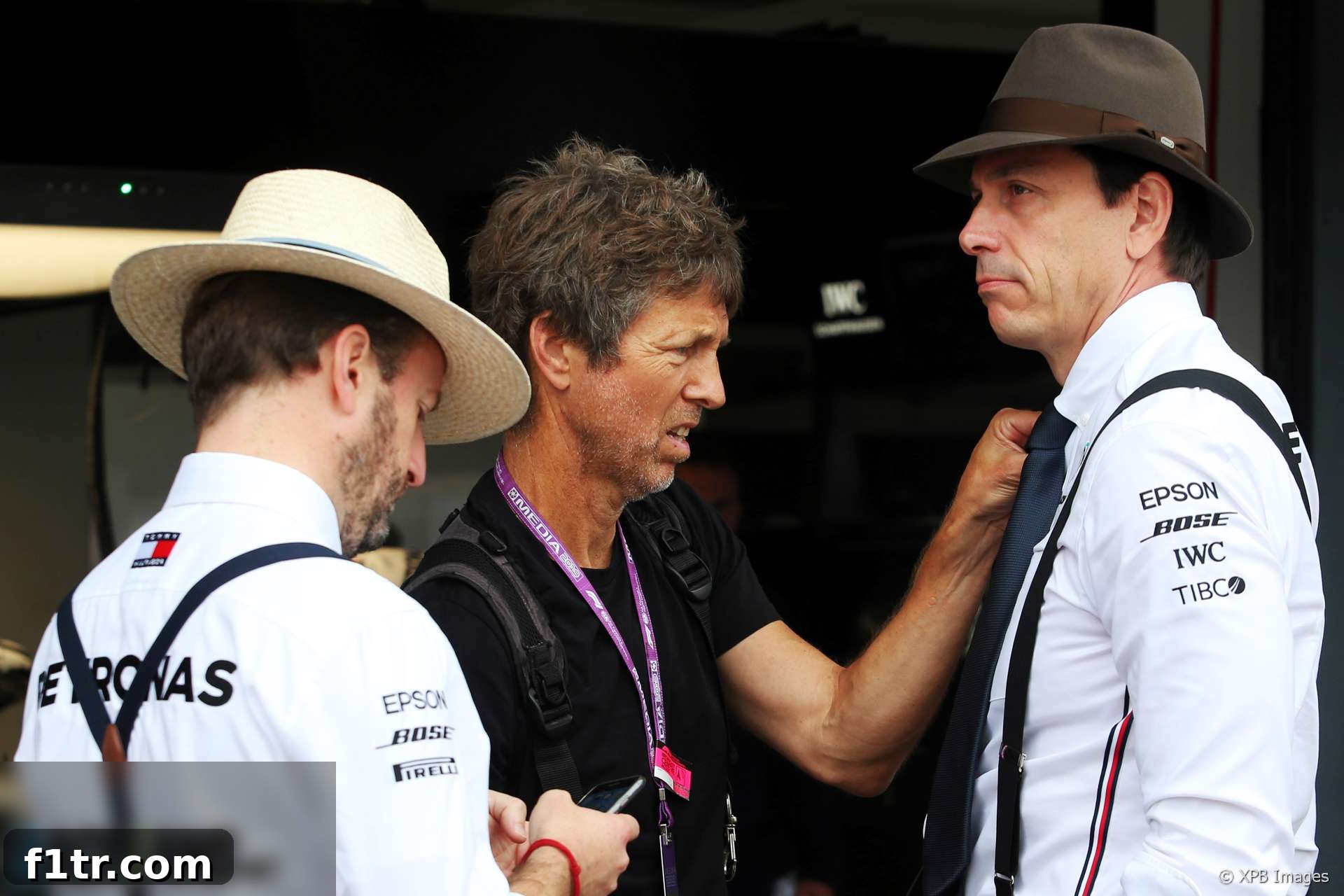
Mercedes’ Hockenheim Horrors: Toto Wolff Reflects on a Grand Prix to Forget
The 2019 German Grand Prix was meant to be a triumphant celebration for Mercedes. Marking 125 years in motorsport and running at their home circuit, the Hockenheimring, the team entered the weekend with immense pride and high expectations. Adopting a retro-inspired livery and throwback team kit, the stage was set for a memorable performance. However, what unfolded instead was a series of unfortunate events, strategic blunders, and driver errors that led to a shocking point-less finish for the reigning champions. Mercedes Team Principal Toto Wolff, visibly shaken by the outcome, later articulated the profound lessons learned from what he described as a day where “it simply cannot go much worse,” emphasizing the critical importance of unwavering focus and concentration.
A Home Race Celebration Turns Sour: The 2019 German Grand Prix Disaster
The atmosphere at the Hockenheimring was electric, charged with the dual significance of Mercedes’ heritage celebration and the high-stakes battle of the 2019 Formula 1 season. The retro livery, a nod to the iconic ‘Silver Arrows’ of yesteryear, added a unique visual flair to the weekend, promising a blend of history and contemporary dominance. Mercedes, having established itself as the sport’s powerhouse, was widely expected to perform strongly at their home event. The celebratory mood, however, quickly dissipated as the race conditions turned treacherous, transforming the circuit into a perilous challenge that would claim many victims, including both Mercedes drivers, Lewis Hamilton and Valtteri Bottas. The team’s meticulously planned celebration devolved into a stark reminder of Formula 1’s inherent unpredictability and the brutal consequences of even the slightest misstep.
Early Promise: Hamilton and Bottas Dominate Initial Stages
Despite the looming threat of rain and the challenging conditions, the race began promisingly for Mercedes. Lewis Hamilton, starting from pole position, asserted his authority early on, expertly navigating the initial laps to build a comfortable lead. His teammate, Valtteri Bottas, demonstrated strong pace as well, holding onto second place and ensuring a Mercedes 1-2 formation. For the first 26 laps, the team’s strategy appeared sound, and their drivers were performing at an elite level. The wet track, however, was a constant variable, testing the limits of grip and driver skill with every corner. This delicate balance meant that even the smallest lapse in judgment or an unforeseen external factor could dramatically alter the race’s complexion, a harsh reality Mercedes would soon confront.
Lewis Hamilton’s Unraveling: A Series of Costly Errors
The turning point for Lewis Hamilton, and indeed for Mercedes’ entire race, came during a crucial Safety Car period. Pushing hard in the treacherous conditions, Hamilton made a rare mistake, running wide and crashing into the barriers at the entry to the pit lane. This single incident triggered a cascade of errors. Forced to pit for repairs, Hamilton then faced the challenge of a chaotic pit entry, for which he received a five-second time penalty. To compound the misfortune, the Mercedes pit crew was visibly unprepared for his unscheduled stop, leading to a significant delay and further loss of track position. Wolff candidly described the situation: “It was unfortunate because crashing right at the entry of the pit lane, obviously you’re not prepared. And then we made the wrong calls also afterwards. It was all coming together.” The race, which had started with so much promise, quickly spiraled into a damage limitation exercise for the five-time world champion.
Valtteri Bottas’s Cruel Fate: A Double Blow for Mercedes
While Hamilton battled his way through the field after his incident, Valtteri Bottas carried the hopes of the team for a points finish. He had maintained a steady and competitive pace throughout the race, skillfully avoiding many of the pitfalls that had caught out other drivers. As the laps wound down, Bottas was running in a respectable fourth place, poised to salvage some crucial points for Mercedes. However, with less than ten laps remaining, the challenging conditions claimed another high-profile victim. Bottas, pushing to improve his position, lost control of his car and crashed out, bringing out yet another Safety Car and effectively sealing Mercedes’ fate for a point-less afternoon. This double retirement, particularly for a team renowned for its reliability and precision, was a rare and devastating blow, transforming a day of celebration into one of profound disappointment.
Toto Wolff’s Candid Assessment: “You Shouldn’t Fool Around”
In the aftermath of the disastrous Grand Prix, Toto Wolff’s comments provided a rare glimpse into the emotional and philosophical toll such a day takes on a team principal. His reflection on the outcome was remarkably candid, linking the team’s celebratory mood to their subsequent misfortune. “It shows that you shouldn’t fool around with stuff,” Wolff told Sky Sports, “You should concentrate on the job. We are not superstitious but we believe in karma. It’s a day to learn.” This poignant statement encapsulated the prevailing sentiment within the Mercedes camp – a mixture of self-reproach, a desire for introspection, and a firm resolve to learn from their mistakes. Wolff’s words underscored the idea that even the most dominant teams in Formula 1 cannot afford to lose focus, especially when the conditions are as demanding and unpredictable as they were at Hockenheim. The pressure of a home race, the anniversary celebrations, and the unpredictable weather all converged to create a perfect storm, serving as a stark reminder that in motorsport, success is never guaranteed, and complacency can be a costly adversary. His ultimate summation, “It simply cannot go much worse,” perfectly articulated the depth of their collective disappointment and the need for a fundamental reset.
The Broader Context: A Day of Chaos for Many
It is important to contextualize Mercedes’ struggles within the broader narrative of the 2019 German Grand Prix. While their missteps were particularly amplified due to their dominance and the celebratory nature of the weekend, they were by no means the only team to face significant challenges. The wet conditions at the Hockenheimring created an incredibly difficult race for the entire grid. High-profile incidents included Charles Leclerc’s crash, who was a strong contender for victory, along with several other drivers succumbing to the slippery surface and unpredictable grip levels. This widespread chaos highlighted the extreme demands placed on both drivers and strategists when racing in changeable conditions. While many others made mistakes, Mercedes’ failures stood out because of their customary perfection and the significance of the occasion. The general mayhem of the race did little to lessen the sting for Mercedes, but it did serve as a stark reminder that even the best in the business are not immune to the unforgiving nature of motorsport.
Learning from Adversity: Mercedes’ Road Ahead
For a team as meticulously organized and successful as Mercedes, a race like the 2019 German Grand Prix is not merely a setback but a profound learning experience. Wolff’s declaration that “it’s a day to learn” was not just a platitude but a genuine commitment to analysis and improvement. The team undoubtedly conducted an exhaustive post-mortem, scrutinizing every strategic decision, every pit stop operation, and every driver input. The errors made, particularly around Lewis Hamilton’s pit stop and the lack of readiness, would have been high on the agenda for review. Despite this monumental stumble, Mercedes demonstrated their resilience throughout the rest of the 2019 season, ultimately securing both the Constructors’ and Drivers’ Championships. Hockenheim 2019 became an anomaly, a blot on an otherwise spectacular season, yet it served as a powerful lesson in humility and the absolute necessity of maintaining relentless focus, regardless of external celebrations or challenging circumstances. It reinforced the notion that in Formula 1, every detail matters, and even the smallest deviation from perfection can lead to significant consequences.
The Legacy of Hockenheim 2019: A Scar in a Season of Triumph
The 2019 German Grand Prix will forever be remembered as one of Mercedes’ most challenging and humbling races in their dominant hybrid era. It was a stark juxtaposition of high hopes and crushing disappointment, a stark reminder that even the most well-oiled machines can falter under immense pressure and unforeseen circumstances. While the season ultimately ended in triumph for Mercedes, securing their sixth consecutive double championship, the Hockenheim debacle left an indelible mark. It serves as a testament to the unpredictable drama of Formula 1, where a celebratory home race can swiftly turn into a nightmare, underscoring the relentless pursuit of perfection required to succeed at the pinnacle of motorsport. Toto Wolff’s reflections from that day continue to resonate, highlighting the importance of unwavering dedication, strategic acuity, and the profound lessons that can be gleaned from even the most disastrous of outcomes. This race, despite its painful memory, undoubtedly contributed to the team’s ongoing resilience and their analytical approach to continuous improvement.
Related Articles from the 2019 F1 Season
Delve deeper into the events and analysis surrounding the 2019 Formula 1 season with these additional articles:
- Crying in the Melbourne car park at 2019 grand prix was my career low – Ocon
- McLaren Racing reports reduced £71 million loss in 2019
- Kvyat: Hockenheim podium last year was “my biggest achievement” so far
- How the FIA’s new encrypted fuel flow meter targets Ferrari’s suspected ‘aliasing’ trick
- “He smashed my office door”: 23 must-see moments from ‘Drive to Survive’ season two
Browse all 2019 F1 season articles