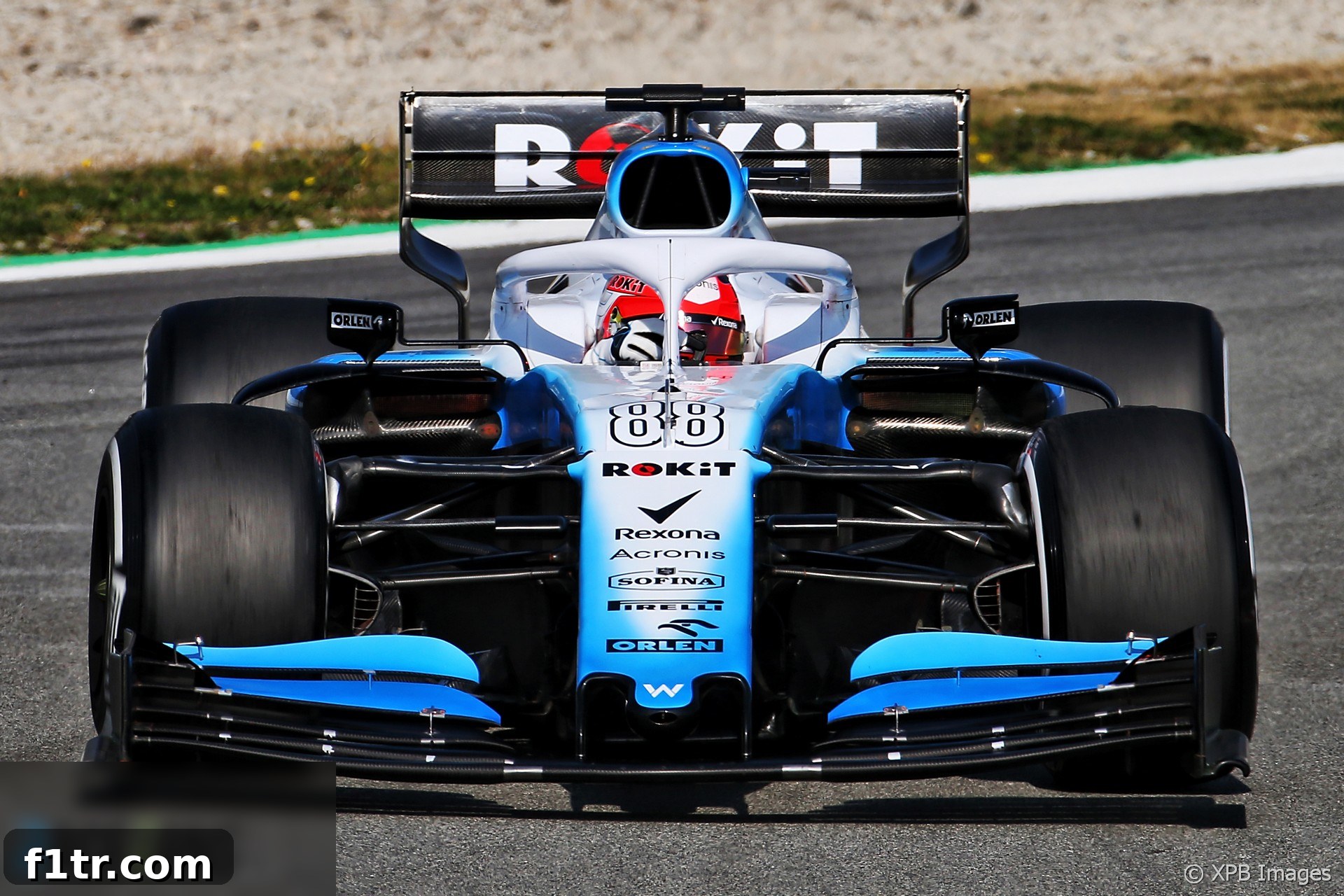
The gargantuan, two-metre-wide front wings on the 2019 Formula 1 cars are impossible to overlook. Designed with a clear objective, these prominent aerodynamic components were heralded as a significant step towards improving racing and increasing overtaking opportunities. But after initial testing and subsequent races, the critical question remains: are they truly delivering on their promise?
When the new front wing regulations were ratified by the FIA, the sport’s governing body, their accompanying research optimistically “indicated the strong likelihood of a positive impact on racing and overtaking within F1.” The intention was straightforward: by simplifying these crucial aerodynamic elements, drivers would theoretically be able to follow each other more closely, fostering tighter wheel-to-wheel battles and ultimately enhancing the spectacle for fans.
The core problem the FIA aimed to address was the detrimental effect of “dirty air” – the turbulent wake created by a leading car – on a following competitor. In previous seasons, complex front wing designs, coupled with other intricate aerodynamic devices, were incredibly efficient at managing airflow around the car. However, a significant byproduct of this efficiency was the creation of a wide, disruptive aerodynamic wake that severely hampered a trailing car’s ability to generate downforce, leading to reduced grip and making close pursuit, let alone overtaking, a formidable challenge.
The 2019 regulations sought to mitigate this by mandating a wider (two-metre) and significantly simplified front wing. The intricate cascades, slots, and turning vanes that characterized previous generations of F1 front wings were either heavily restricted or outright banned. The goal was to reduce the “outwash” effect – the phenomenon where air is aggressively pushed outwards from the front of the car, creating a wider turbulent wake. By making the wings less effective at generating outwash, the FIA hoped to create a cleaner air pocket behind the leading car, thereby allowing the following car to maintain more downforce and close the gap more effectively.
However, the initial feedback from the drivers during pre-season testing was, at best, cautiously optimistic and, in some cases, surprisingly ambivalent. While the visual change was stark, the immediate on-track impact wasn’t universally clear.
World champion Lewis Hamilton, for instance, expressed a degree of uncertainty. When asked if the wider wings would improve racing, he admitted, “I didn’t know that was the reason for the rule change.” This statement highlighted a disconnect between the regulators’ stated goals and the drivers’ immediate understanding or experience of the changes. He continued, “I’ve been behind one car out there and it seemed fine, didn’t seem different to last year in that respect. But I’m hopeful that it will be better for close-combat racing. Time will tell, I’ve not really been up behind too many cars.” Hamilton’s perspective underscored the limitations of testing, where drivers often run different programs, fuel loads, and rarely engage in sustained, race-like battles.
Other drivers echoed similar sentiments. Veteran Kimi Raikkonen, known for his directness, simply stated he “never really got to the position to say if it’s any different from last year.” This lack of definitive feedback from multiple experienced drivers suggested that any immediate improvements, if present, were not dramatically evident during the early stages of testing.
Despite the prevailing caution, there were glimmers of hope. Daniel Ricciardo, then with his new team Renault, offered a more encouraging initial assessment. “It actually seemed alright,” Ricciardo commented after his first experience running behind another car. However, he quickly added a crucial caveat: “but at the time I was lapping quite a bit quicker. I think the car – I don’t know what car it was but I assume they had more fuel – so maybe that’s why it was easier for me to follow.” This highlights the inherent variables in testing that make direct comparisons challenging. Ricciardo concluded, “But if that was a like-for-like it felt better. I don’t want to get too excited, we’re still going to feel it, don’t get me wrong, but I would like to think that was a sign that we will feel a bit less.” His measured optimism hinted at a potential, albeit subtle, improvement.
From the perspective of the teams and their technical directors, the new regulations presented a different set of challenges and priorities. While the FIA’s objective was to improve the show, teams are, by their very nature, singularly focused on maximizing the performance of their own car. This fundamental difference in objectives creates an interesting dynamic within Formula 1.
When pressed on whether the simplified wings had successfully eliminated “outwash,” Racing Point’s technical director, Andrew Green, provided a revealing insight: “I have absolutely no idea whether they do that or not.” His honesty underscored the teams’ internal focus. “We only look at the performance of our car,” he clarified, “Not the car behind our car.” This statement perfectly encapsulates the relentless competitive drive in F1. Teams are not designing their cars to make it easier for rivals to follow; they are designing them to be as fast as possible, within the confines of the regulations.
Green also confirmed a universal challenge faced by all teams: the new, simplified front wing designs resulted in a significant loss of downforce. Downforce is crucial for cornering speed and overall grip, and its reduction immediately translates to slower lap times. “We’re still down,” he admitted, referring to downforce levels. “We’ve still got a bit to go.” This “bit to go” represents countless hours of computational fluid dynamics (CFD) simulations, wind tunnel testing, and design iterations as teams tirelessly work to recuperate the lost performance.
The inherent drive to regain lost downforce inevitably leads teams to explore every avenue, often pushing the boundaries of the regulations. As Renault’s technical director, Nick Chester, succinctly explained, “Front wings is going to be a big one [for development]. There’ll be a lot of work on front wings.” This prediction proved accurate, as the front wing quickly became a primary battleground for aerodynamic innovation throughout the 2019 season and beyond.
Chester elaborated on the specific objectives for front wing designers in this new era: “trying to get outwash, trying to stop the wheel wakes coming back under the floor and trying to generate more performance that way.” This statement highlights the ingenuity of F1 engineers. Even with simplified rules, the objective remains to manipulate airflow to their advantage. “Getting outwash” in this context doesn’t mean recreating the wide, detrimental turbulent wake of old, but rather cleverly managing the airflow off the front wing to interact beneficially with other aerodynamic elements further down the car, thereby enhancing overall downforce and stability.
Another critical area of focus is managing “wheel wakes.” The spinning front wheels generate significant aerodynamic turbulence, which can disrupt the smooth flow of air beneath the car’s floor – a crucial area for generating ground effect downforce. Teams spend enormous resources designing elements that guide this turbulent air away from the underside of the car, ensuring the diffuser and floor can operate as efficiently as possible.
The variety of approaches taken by different teams to front wing design, such as those observed from Alfa Romeo and Ferrari, further underscored the complexity. These variations suggested different interpretations of the regulations or alternative aerodynamic philosophies to achieve similar goals. Some designs might indeed generate different patterns of outwash, not necessarily to harm following cars, but to optimize the airflow for their own car’s unique aerodynamic package.
Ultimately, pre-season testing, while indicative, offers only a glimpse into the true impact of such significant regulatory changes. The controlled environment of testing, with varying fuel loads, engine modes, and limited direct combat, cannot fully replicate the intensity and variables of a full-fledged Grand Prix weekend. The final days of testing offered some more insights, particularly as teams began attempting race simulation runs, but even these are an approximation.
For a truly accurate assessment of whether the 2019 front wing regulations delivered a “positive impact on racing and overtaking,” the motorsport world needed to wait for the season to unfold. The nuances of different circuits, varying weather conditions, and the strategic complexities of actual races are what would ultimately reveal the effectiveness of the FIA’s bold aerodynamic gamble. As with all F1 innovations, the proof is not in the design, but in the dynamic, unpredictable ballet of competition on track.
2019 F1 season
- Crying in the Melbourne car park at 2019 grand prix was my career low – Ocon
- McLaren Racing reports reduced £71 million loss in 2019
- Kvyat: Hockenheim podium last year was “my biggest achievement” so far
- How the FIA’s new encrypted fuel flow meter targets Ferrari’s suspected ‘aliasing’ trick
- “He smashed my office door”: 23 must-see moments from ‘Drive to Survive’ season two
Browse all 2019 F1 season articles