Lewis Hamilton’s Strategic Masterclass at Spa: How Wind and Wits Secured Victory at the 2020 Belgian Grand Prix
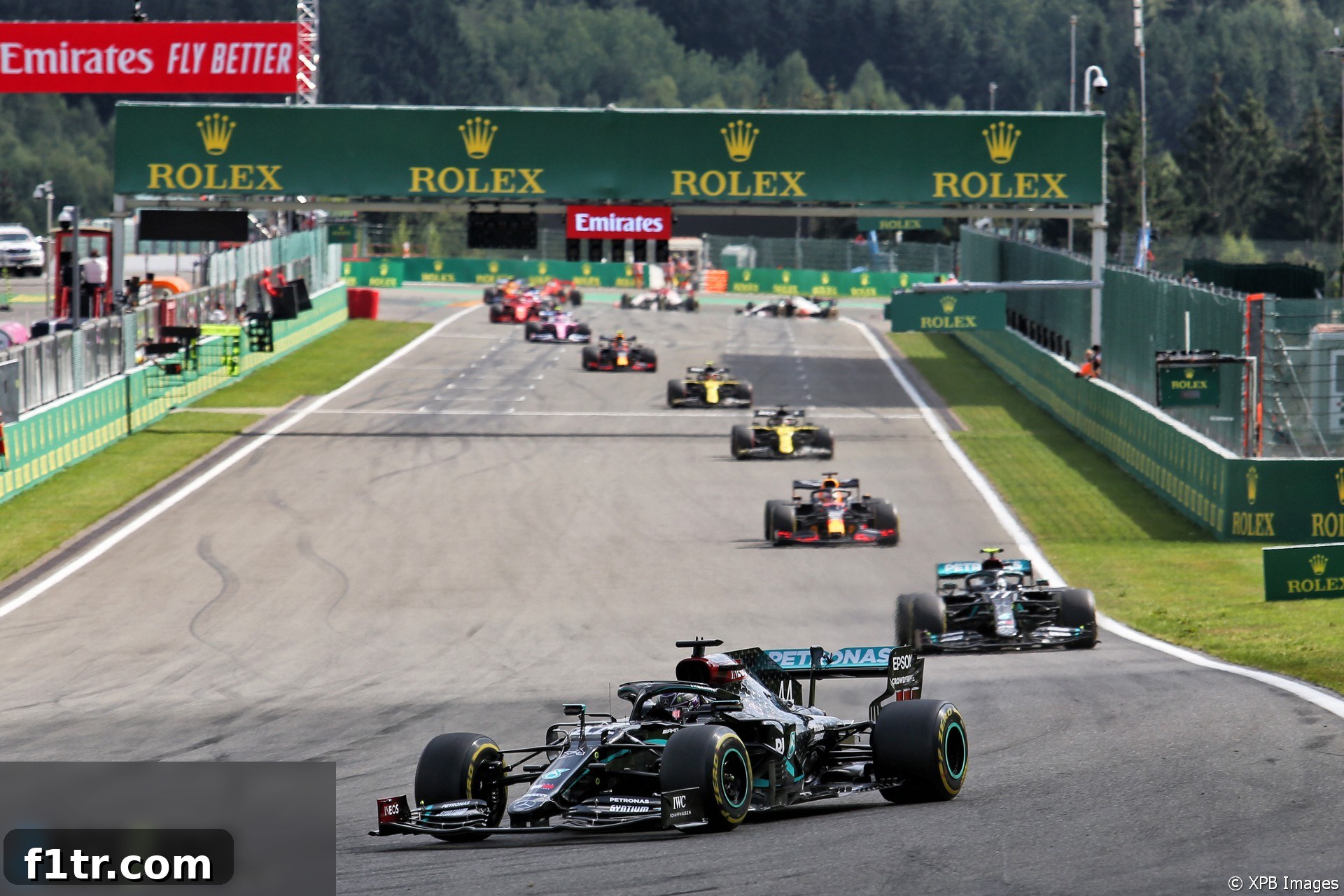
The unforgiving circuit of Spa-Francorchamps, nestled in the Ardennes forest, has long been a crucible for Formula 1 talent, demanding precision, bravery, and tactical acumen. In the 2020 Belgian Grand Prix, it was precisely these qualities, combined with a fortuitous gust of wind, that allowed Lewis Hamilton to maintain his lead against a formidable challenge from his Mercedes teammate, Valtteri Bottas. Hamilton, renowned for his exceptional race craft and ability to seize every available advantage, revealed the subtle factors that played into his hands, enabling him to cross the finish line first in a race that was far from straightforward.
The 2020 season saw Hamilton in a commanding position, cementing his legacy with each passing race. The Belgian Grand Prix was another testament to his dominance, yet it highlighted the microscopic margins that often separate victory from second place in elite motorsport. Hamilton’s analysis of the race start and the subsequent Safety Car restart offers a rare glimpse into the mind of a champion, where environmental variables and split-second decisions dictate destiny on track.
The Crucial Start: Navigating the Dynamics of Spa-Francorchamps
The start of any Grand Prix is a moment of immense tension, but at Spa, with its long run to Les Combes, the stakes are exceptionally high. Drivers launch themselves into a high-speed ballet, jockeying for position as they navigate the iconic La Source hairpin before unleashing the full power of their machines up the Raidillon and Kemmel Straight. Slipstreaming, where a car benefits from reduced drag by following closely behind another, is a critical weapon in this initial skirmish. However, on this particular Sunday, the usual playbook was upended by an unexpected element: the wind.
The Unseen Ally: Wind Direction and Slipstreaming Dynamics
Hamilton’s strategic advantage was significantly bolstered by the prevailing wind direction. He candidly explained, “Today we were lucky because in previous years we’ve had a headwind into Turn Five [Les Combes]. So you were obviously more draggy, the car behind gets a better tow. This weekend there’s a tailwind so that really helped in keeping Valtteri behind.” This subtle yet critical meteorological detail dramatically altered the slipstream effect. In a headwind scenario, the leading car experiences greater air resistance, creating a larger, more effective vacuum for the car behind, enabling a stronger tow. Conversely, a tailwind reduces drag for the leading car, diminishing the effectiveness of the slipstream for those following. This environmental twist turned what could have been a prime overtaking opportunity for Bottas into a less potent threat, allowing Hamilton to defend his position more comfortably.
The Kemmel Straight, leading into Les Combes, is one of the longest flat-out sections on the Formula 1 calendar, making it a prime location for overtakes. Typically, a driver exiting La Source cleanly and getting a good tow can challenge the leader. However, the tailwind meant that the energy saved by Bottas in Hamilton’s slipstream was less substantial than usual. This reduced aerodynamic advantage meant that Bottas had less momentum to slingshot past Hamilton before the braking zone for Les Combes, effectively neutering one of Spa’s most potent overtaking zones for the opening lap. Hamilton’s quick assessment of this factor underscored his deep understanding of race dynamics and environmental influences, showcasing a level of detail often overlooked by spectators but absolutely crucial for drivers.
Navigating La Source: A Moment of Truth and Unintended Advantage
Adding another layer to his complex start, Hamilton admitted to a slight misstep coming out of the La Source hairpin on lap one. This wasn’t a textbook exit, yet, paradoxically, it worked to his advantage. “On the start itself I had a big snap out of turn one and Valtteri was all over me. And as I had wheelspin I had a de-rated shift as well. So that wasn’t particularly exciting,” Hamilton recalled. A “snap” refers to a momentary loss of rear grip, causing the car to twitch, while “de-rated shift” indicates a situation where the car’s power delivery is momentarily cut back, usually to prevent excessive wheelspin or to manage energy, resulting in a less optimal acceleration.
This sequence of events – the snap, the wheelspin, and the de-rated shift – meant Hamilton didn’t rocket out of La Source with perfect momentum. Bottas, sensing an opportunity, was “all over” him, looking to exploit any crack in Hamilton’s defense. However, the slightly less aggressive acceleration from Hamilton meant that Bottas couldn’t quite build up the necessary speed differential to perform a decisive “slingshot” move. Hamilton elaborated, “So I already had to block coming out of turn one. The goal is to go in in the lead and then bridge a gap to the car behind. But in this instance it worked out to my benefit, to be honest, the mistake – well, not a mistake, the snap, it’s just the tyres, the way they are. It meant that Valtteri didn’t have a gap behind to slingshot alongside me. That was definitely a stressful moment of the race.” This candid admission highlights the fine line between error and strategic brilliance in Formula 1. What might appear as a momentary imperfection ultimately denied Bottas the crucial window he needed to mount a challenge, allowing Hamilton to retain the track position that would prove vital throughout the race.
Advert | Become a Supporter & go ad-free
The Peril of the Safety Car Restart: A Test of Nerve and Strategy
Just when Hamilton seemed to have settled into a rhythm, commanding the race from the front, a Safety Car period injected a fresh wave of tension and uncertainty. Safety Cars are notorious for erasing any hard-won gaps, bunching the entire field and offering rivals a renewed chance to attack the leader. For the driver at the front, it’s a period of immense pressure, balancing the need to warm tires, manage brake temperatures, and perfectly time the restart to maximize their advantage and minimize the slipstream effect for those behind.
Hamilton vividly described the feeling: “At the restart, it’s horrible when you get the Safety Car. I’m glad that everyone’s safe but controlling it at the front, trying to bridge the gap on the restart to the car behind – because that’s another opportunity for them to slipstream you – is not easy.” The leader must dictate the pace of the Safety Car train, maintaining a slow speed to keep the field tightly packed, then accelerating precisely at the optimal moment before the start/finish line to prevent rivals from getting a jump or a powerful tow. Misjudging this critical phase can instantly undo all previous efforts, turning a comfortable lead into a scramble for position.
The strategic chess match during a Safety Car restart is a masterclass in psychological warfare. The leading driver must be acutely aware of the cars in their mirrors, anticipating their moves while executing their own perfectly. Hamilton’s ability to manage this pressure, restart the race flawlessly, and once again deny Bottas any genuine overtaking opportunity was another demonstration of his unparalleled race craft. It solidified his control over the Grand Prix, illustrating that even with the field compressed and the threat of slipstream looming, his composure and strategic execution remained unyielding.
Advert | Become a RaceFans supporter andgo ad-free
Beyond the Wind: Hamilton’s Dominance and Race Craft
While the tailwind and the initial snap at La Source provided unique advantages, Hamilton’s victory at the 2020 Belgian Grand Prix was ultimately a culmination of his extraordinary talent, adaptability, and relentless pursuit of perfection. His nuanced understanding of aerodynamics, tire behavior, and track conditions, combined with his mental fortitude under pressure, allowed him to capitalize on every shred of opportunity. He didn’t just win; he strategically outmaneuvered his closest competitor, not through raw pace alone, but through an intricate dance of physics and psychology.
The race at Spa was a microcosm of Hamilton’s dominant 2020 season. It showcased his ability to extract maximum performance from the formidable Mercedes W11, a car that was already a benchmark in its own right. However, it also underscored the critical role of the driver in fine-tuning those advantages and responding to the unpredictable nature of Grand Prix racing. Valtteri Bottas, despite being in the same machinery, simply couldn’t find the same strategic openings, a testament to Hamilton’s impenetrable defense and astute race management.
The Legacy of the 2020 Belgian Grand Prix
The 2020 Belgian Grand Prix will be remembered not just for Lewis Hamilton’s victory, but for the intricate details and strategic nuances that contributed to it. It serves as a reminder that Formula 1 is a sport of incredibly fine margins, where a change in wind direction, a momentary loss of traction, or a perfectly timed restart can be the difference between standing on the top step of the podium and watching from second place. Hamilton’s candid reflections offer invaluable insight into the mind of a seven-time world champion, demonstrating that even at the pinnacle of motorsport, success is often woven from a tapestry of skill, strategy, and sometimes, a little bit of luck from the wind.
His performance at Spa was a masterclass in control, showcasing how a driver can leverage every variable, both within and outside their direct control, to achieve their goals. It cemented his position as one of the sport’s greatest tacticians, capable of not just driving fast, but driving smart, adapting to challenges, and turning potential weaknesses into strengths.
2020 Belgian Grand Prix
- 2020 Belgian Grand Prix Star Performers
- Ricciardo believes Renault’s Spa set-up breakthrough will work on other tracks
- ‘He should have let me pass’: How Raikkonen saw Giovinazzi’s crash
- Sub-54 second laps will produce a “big mess” in qualifying on Bahrain Outer circuit
- McLaren expect Ferrari will “strike back” after Monza
Browse all 2020 Belgian Grand Prix articles