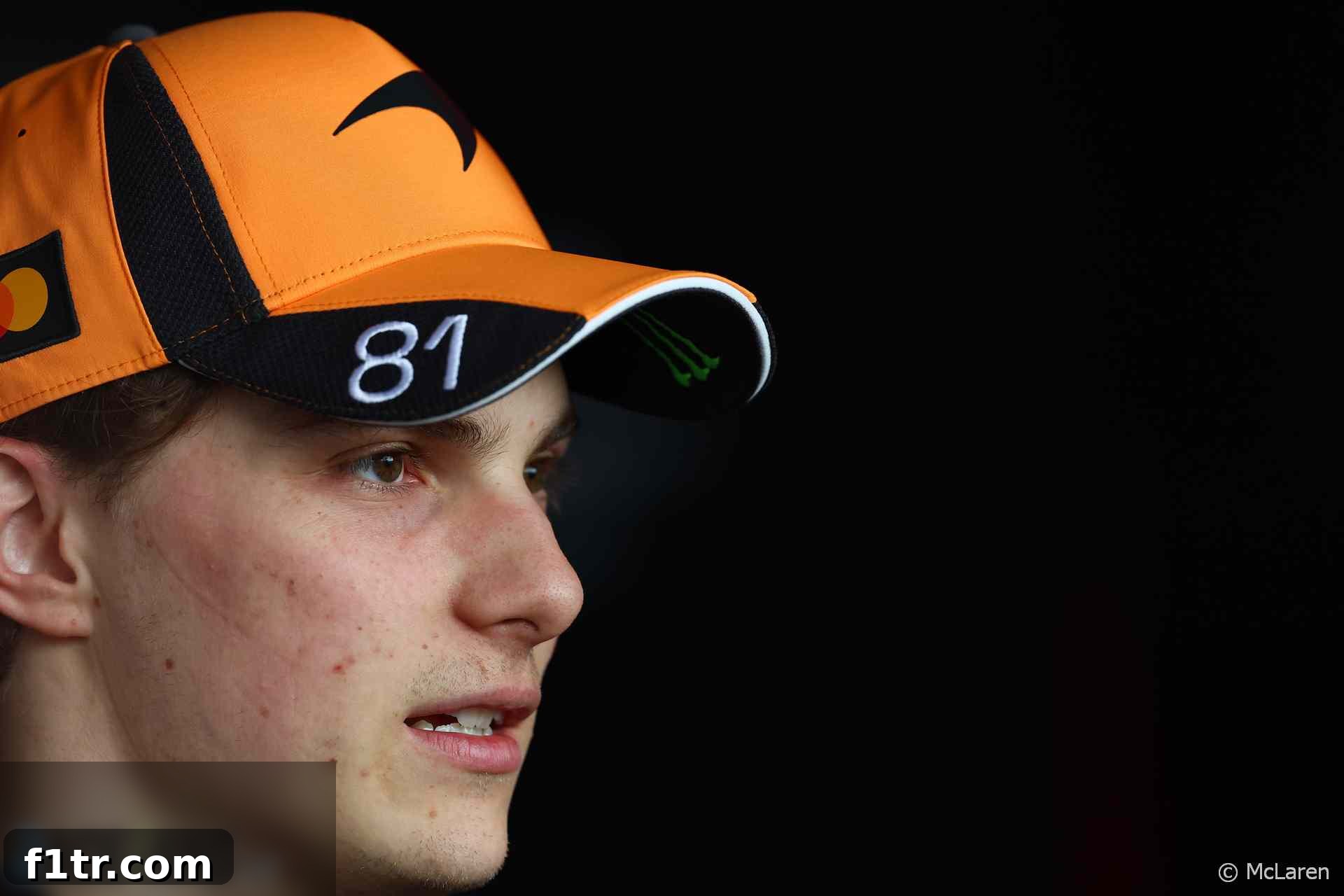
F1’s Looming Safety Challenge: Oscar Piastri Warns of Inherent Dangers in High Closing Speeds
The exhilarating world of Formula 1, a pinnacle of speed and technological innovation, is currently grappling with a critical safety dilemma: the alarming phenomenon of high closing speeds between cars on track. This issue was dramatically brought to the forefront by the harrowing 50G impact sustained by Oliver Bearman during an incident at the challenging Spoon curve. In the wake of this event, Oscar Piastri, a prominent figure in the paddock, has voiced significant doubt regarding the FIA’s ability to easily implement measures that could prevent such potentially dangerous situations from recurring.
Piastri’s apprehension is deeply rooted in the fundamental characteristics of Formula 1’s modern power unit regulations, suggesting that the problem of rapidly converging cars might be an unavoidable consequence of the sport’s cutting-edge engineering. His insights ignite a broader discussion within the motorsport community about the delicate balance between technological advancement, maintaining a thrilling race spectacle, and the paramount importance of driver safety.
The Bearman Incident: A Stark Reminder of F1’s Perils
The high-profile incident involving rising star Oliver Bearman and Franco Colapinto served as a stark, frightening illustration of the profound dangers posed by unexpected high closing speeds. As Bearman approached the notorious Spoon curve, a section of the track known for its technical demands and high velocity, he experienced a sudden and significant gain in speed relative to Franco Colapinto. Despite Bearman’s immediate reaction and efforts to avert a direct collision with Colapinto, the extreme differential in velocity led to an unavoidable loss of control. The car veered, subsequently impacting a formidable barrier on the outside of the corner with a force measured at an astounding 50G.
The FIA, as Formula 1’s governing body, promptly acknowledged “the contribution of high closing speeds in the accident” in their preliminary assessment. This swift recognition underscores the severity and urgency with which the issue is being treated. The governing body has publicly committed to utilizing the upcoming five-week inter-race period to conduct a comprehensive and thorough investigation into the concerns that have emerged from the initial three rounds of the championship under the sport’s current regulations. This dedicated interval highlights the complexity of the problem and the FIA’s determination to enhance driver safety without compromising the core competitive spirit and appeal of Formula 1 racing.
Piastri’s Skepticism: A Challenge Rooted in Regulations
Despite the FIA’s prompt and proactive response, Oscar Piastri maintains a degree of skepticism concerning the ease with which effective solutions to mitigate high closing speeds can be implemented. His reservations are not arbitrary; they are deeply entrenched in the foundational design principles that govern the current and future eras of Formula 1 machinery.
“We’ve spoken about that being a possibility since these cars were conceptualised,” Piastri revealed, recalling discussions that date back several years to the formative stages of the new regulations. These F1’s current engine regulations were approved in 2022 and are meticulously planned to remain in force until at least 2030. This extended timeline implies that any fundamental alterations would necessitate a monumental paradigm shift in the sport’s established long-term strategic planning and its intricate technological roadmap, making quick fixes highly improbable.
Piastri further elaborated on what he perceives as the unyielding nature of this engineering challenge: “It’s what we’re stuck with, with the power units. There’s no easy way of getting around it.” This definitive statement encapsulates a central dilemma facing the sport. Modern Formula 1 power units are extraordinarily sophisticated hybrid systems, integrating traditional internal combustion engines with powerful electric motors and advanced energy recovery systems (ERS). These systems enable dynamic energy deployment and harvesting strategies, which can inherently lead to significant and rapid variations in speed. Such variations are particularly noticeable when one car is optimally deploying its electrical energy for maximum performance, while another might be conserving energy, harvesting it, or operating under different performance maps. The resulting dramatic differences in energy management strategies between various drivers and teams frequently manifest as these sudden, high closing speeds on track, catching competitors unaware.
The Intricacies of “Super-Clipping” and Energy Management
A specific technical aspect that Piastri highlighted was the concept of “super-clipping.” This term describes the maximal deployment of electrical power from a car’s ERS, allowing it to achieve its highest potential speed at a given moment. It is typically employed during crucial overtaking maneuvers or in specific critical sectors of the lap. Piastri observed that, based on available footage of the Bearman crash, Colapinto’s car did not appear to be actively in this “super-clipping” mode at the time of the incident.
“From what I saw there was no flashing light from Colapinto [on the back of his car], so I don’t even think he was super-clipping either, which is obviously a bit of a concern,” Piastri noted. This particular observation is especially troubling. If such dangerously high closing speeds can occur even when a leading car is not intentionally maximizing its power for an overtake, it suggests that the issue extends beyond aggressive racing tactics. It points towards a more fundamental and systemic problem related to how energy is managed and how these complex cars behave under various routine scenarios. This implies that these significant speed differentials are not solely a consequence of drivers pushing for an aggressive attack but can arise from more commonplace energy management cycles, potentially catching following drivers completely off guard.
Drivers on the Front Line: Navigating Unforeseen Speed Differentials
Piastri’s personal experiences further corroborate the unpredictable and startling nature of these speed differentials within Formula 1. He recounted a particularly close call he had during a free practice session, an environment where drivers are typically less aggressive and more focused on data collection.
“I had a pretty close call in free practice with Nico [Hulkenberg] because he caught me about three times as quickly as I expected on the straight, and we were both at full throttle.”
This incident, involving two drivers both operating at maximum throttle, is significant because it illustrates that the issue extends beyond simply slower cars impeding faster ones. It highlights the intrinsic variability in how cars accelerate, maintain speed, and utilize their hybrid systems due to factors such as precise ERS deployment strategies, the powerful effects of slipstream, and fluctuating tire conditions. Such dynamic variability makes it exceptionally challenging for drivers to accurately judge closing rates, particularly in blind spots, through fast corners, or on long, high-speed straights where reaction times are minimal.
In the immediate term, Piastri acknowledged that a considerable portion of the responsibility would inevitably fall upon the drivers themselves to adapt their approach and exercise heightened caution to prevent similar incidents. “I think there’s clearly an element of learning for us as drivers, and where the accident happened it’s not a place where you expect someone to come from so far behind and have such a big speed difference,” he articulated. However, this imperative for a “learning curve” for drivers carries inherent risks, as vividly demonstrated by the severity of Bearman’s recent accident.
Charting a Safer Future: The Call for Urgent Tweaks
While recognizing the indispensable role of driver adaptation, Piastri firmly believes that the sport itself bears a profound responsibility to address these systemic issues. “And whilst we’re learning that, unfortunately things like this are probably going to happen, which is a shame. But, you know, I think we understand as a sport there’s a lot of things we need to tweak, a lot of things we need to change, and especially on safety grounds, yes, there’s some things that need to be looked into pretty quickly.”
This urgent call for “tweaks” and “changes” points towards a broader, necessary discussion within Formula 1, encompassing revised safety protocols, potential refinements in car design, and even possible modifications to circuit layouts. What specific interventions might the FIA’s extensive investigation explore? Several crucial avenues will undoubtedly be examined:
Potential Solutions and Considerations for F1 Safety:
- Enhanced Warning Systems: A significant improvement in real-time communication channels between race control, individual teams, and drivers concerning critical speed differentials or the presence of significantly slower cars on track. This could involve more sophisticated dashboard warnings, advanced audio alerts, or even predictive AI-driven notifications.
- Review of Energy Deployment Rules: While the foundational power unit regulations are legislated until 2030, minor, strategic adjustments to energy deployment strategies could be explored. This might include specific restrictions or guidelines in certain track zones, particularly under yellow flag conditions or in areas prone to high closing speeds, aiming to smooth out extreme speed deltas without altering the core engine concept.
- Blue Flag Protocols and Enforcement: A comprehensive re-evaluation of how and when blue flags are issued and enforced. The objective would be to ensure that slower cars are given clear, timely directives to move aside efficiently and, most importantly, safely, especially in critical high-speed sectors or complex overtaking zones.
- Track Design and Safety Barrier Review: A meticulous assessment of specific corners or sections of circuits where these high closing speeds demonstrably pose the greatest risk. While extensive track redesigns are costly and time-consuming, smaller, targeted modifications to run-off areas, gravel traps, or the strategic placement of safety barriers could be examined to mitigate impact severity.
- Driver Education and Advanced Simulation: An increased and dedicated focus on simulating extreme closing speed scenarios within driver training programs and advanced simulator sessions. This proactive approach would aim to better prepare drivers for unexpected situations and enhance their predictive capabilities in high-pressure, high-speed environments.
Formula 1’s safety record has undergone a dramatic and continuous improvement over many decades, primarily attributed to unwavering innovation and a relentless pursuit of risk reduction. From the mandatory introduction of essential safety equipment like the HANS device and the HALO cockpit protection system, to continuous upgrades in circuit design and emergency medical response, F1 has consistently set and elevated benchmarks for safety within motorsport. The current challenge posed by high closing speeds represents the latest frontier in this ongoing and vital battle for enhanced safety.
Conclusion: A Shared Responsibility for a Safer Future
The profound concerns articulated by Oscar Piastri in the aftermath of Oliver Bearman’s high-impact crash highlight a complex and urgent safety challenge that Formula 1 must confront. While the sport inherently thrives on innovation and the pursuit of extreme performance, the unpredictable nature of closing speeds, significantly influenced by sophisticated hybrid power units, demands immediate and thorough attention.
The FIA’s commitment to conducting a comprehensive investigation during the forthcoming five-week hiatus is an encouraging and essential first step. However, as Piastri insightfully suggests, genuinely “easy” or rapid solutions may prove elusive, given the deeply entrenched nature of the 2026 power unit regulations and the long-term strategic planning involved. This complex situation necessitates a multi-faceted and collaborative approach, one that integrates not only regulatory tweaks and careful technological considerations but also a heightened sense of awareness and critical adaptation from the drivers themselves.
Ultimately, ensuring the continued safety of its elite competitors while simultaneously preserving the thrilling spectacle that defines Formula 1 requires a concerted and unified effort from all key stakeholders – the FIA, the competing teams, and the drivers alike. The invaluable lessons gleaned from incidents such as Bearman’s crash must serve as a powerful catalyst for proactive and meaningful change, guaranteeing that the relentless pursuit of speed and technological excellence never compromises the fundamental well-being of those who race at the absolute pinnacle of motorsport.
Stay Connected with Our Motorsport Insights
Get daily updates with our latest stories and analysis directly to your inbox. No spam, just pure motorsport content.
Related Motorsport Articles
- Deep Dive: Understanding F1 Power Unit Regulations and Their Impact
- Historical Perspective: Evolution of Safety Innovations in Formula 1
- Driver Spotlight: The Rising Stars and Challenges in Modern F1
- Analysis: How Aerodynamic Rules Influence F1 Racing Dynamics and Overtaking
- Race Review: Key Moments and Strategic Battles from the Latest Grand Prix
Browse all F1 Safety & Technical Articles