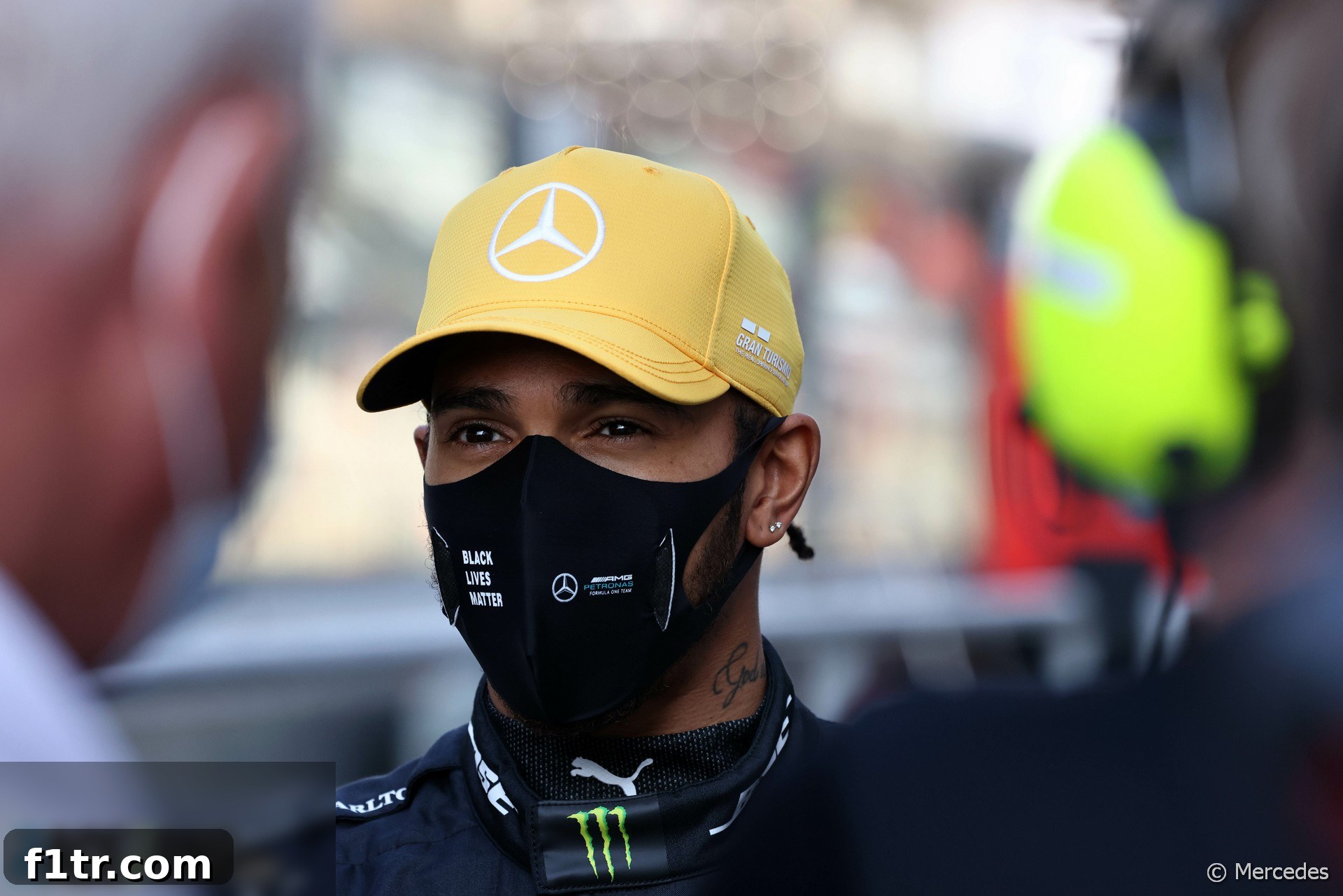
In the fiercely competitive world of Formula 1, where peak physical condition and unwavering mental resilience are prerequisites for success, even the greatest athletes face unprecedented challenges. Seven-time World Champion Lewis Hamilton of Mercedes-AMG Petronas F1 Team recently shed light on his personal battle with COVID-19, revealing that his journey back to full fitness after contracting the virus in late 2020 was far from a swift process. His candid remarks underscore the profound impact of the pandemic, even on elite sportsmen, and offer a glimpse into the demanding recovery period required to reclaim top form.
Hamilton’s infection forced him to miss the penultimate round of the 2020 season, the Sakhir Grand Prix – a rare and significant absence for the usually indefatigable champion. While he courageously returned for the season finale in Abu Dhabi, it was evident, by his own admission, that he wasn’t operating at 100%. This period marked a crucial turning point, prompting an intense focus during the off-season on regaining his formidable physical and mental edge, a task made even more complex by the lingering effects of the coronavirus.
The Road to Recovery: A Champion’s Unseen Battle
Speaking at the much-anticipated launch of Mercedes’ new F1 car, the W12, Hamilton articulated the arduous nature of his post-COVID recovery. “The shut-off at the end of the year, taking time away from myself, wasn’t the easiest of breaks,” he confessed. For an athlete whose life revolves around precision and relentless preparation, the forced slowdown and subsequent battle with illness presented a unique hurdle. His recovery wasn’t merely about recuperating from a common cold; it involved overcoming a virus known for its varying and often prolonged symptoms, even in healthy individuals.
The physical demands placed on a Formula 1 driver are immense, requiring a combination of extraordinary cardiovascular endurance, muscular strength, and razor-sharp reflexes. A full recovery from COVID-19 for someone like Hamilton meant meticulously rebuilding his stamina, ensuring his lung capacity was uncompromised, and sharpening the cognitive functions essential for split-second decision-making at speeds exceeding 200 mph. “I was focussed on my recovery, because it wasn’t a quick situation, and getting myself back to full strength,” he explained, highlighting the dedicated regimen he undertook to restore his body to its championship-winning condition.
Beyond the Track: Empathy in a Pandemic World
Beyond his personal health struggles, Hamilton also offered a poignant insight into his mindset during a global crisis. Despite signing a new contract with Mercedes, securing his future with the dominant team, he chose to maintain a low profile on social media. This deliberate decision stemmed from a profound sense of empathy for the countless individuals suffering the devastating effects of the pandemic worldwide. “I continue to be conscious of what’s happening in the world and [so] posting pictures and celebrating things such as a contract being signed is kind of not really important to me,” he stated.
This nuanced perspective underscores Hamilton’s growth as a public figure, moving beyond purely sporting achievements to embrace a broader humanitarian awareness. “That’s not really a message that I want to be sending out to people who are losing families, who are losing relatives still, who are struggling in a pandemic. That’s just not where I’m at. So I just kind of kept to myself,” he elaborated. His focus shifted inwards, not just on his physical recovery but also on nurturing “personal relationships” and “getting the deal done” – likely referring to the complex and highly anticipated contract negotiations that extended well into the off-season. This period of reflection and re-evaluation cemented his commitment not only to his racing career but also to his role as a compassionate global citizen.
Navigating the 2021 Season: A Continued Focus on Safety
As Formula 1 prepared for another season amidst the ongoing pandemic, questions naturally arose about revised safety protocols and the longevity of immunity for those who have recovered from COVID-19. Hamilton acknowledged the uncertainty surrounding reinfection, emphasizing that the team’s approach to health and safety would remain as stringent, if not more so, than the previous year. “That’s not really been discussed and I don’t really know what I will be doing differently,” he said, indicating that a collective strategy would be paramount. “Of course safety is going to be key and, of course, I do not want to miss a single race this year.”
The 2020 F1 season successfully navigated a challenging calendar with rigorous testing and bubble protocols, a testament to the sport’s commitment to safety. Hamilton credited this success: “I think we did 99.8% of the time right, whatever it was, last year. It was pretty spot-on in terms of how we conducted ourselves. We just were really, really unlucky. It’s difficult to be 100% safe.” His own infection, despite meticulous adherence to guidelines, served as a stark reminder of the virus’s pervasive nature and the inherent risks of global travel and competition.
Looking ahead to the 2021 calendar, which promised to be another demanding schedule, Hamilton anticipates continuity in the protective measures. These would likely include “reduced travelling,” minimizing non-essential contact, and maintaining strict “small bubble” environments for team personnel, mirroring the practices adopted by many elite sports. “But it’ll be, I would imagine, reduced travelling, it will be a lot of time at home in a small bubble like everyone else is working on. And that’s kind of it for now. But I will coordinate with the team what is the best way forward,” he confirmed, underscoring the collaborative effort required to ensure a safe and uninterrupted championship.
Chasing History: Fully Prepared for the W12 Era
With the launch of the Mercedes-AMG F1 W12 E Performance car, Lewis Hamilton’s focus firmly shifted to the impending 2021 F1 season. His recovery from COVID-19 was not just a personal triumph but a critical component of his preparation to chase an unprecedented eighth World Drivers’ Championship. The intricate dance of driver and machine, the relentless pursuit of perfection, demands a driver at their absolute best. His dedication to overcoming the virus’s lingering effects ensured he would be ready to extract every ounce of performance from the new challenger.
Hamilton’s journey back to full strength exemplifies the resilience and determination that define him as a sporting icon. It’s a testament to his professionalism that he prioritized his health and well-being, both for his own sake and for the competitive integrity of the sport. As he steps into the cockpit of the W12, fully recovered and mentally sharpened, he carries not only the hopes of his team and fans but also the quiet strength forged in the crucible of a global pandemic, ready to once again defy expectations and rewrite the history books of Formula 1.
2021 F1 season
- Masi ‘basically gifted the championship’ to Verstappen says 2021 FIA steward Sullivan
- Las Vegas race backers looking to extend F1 deal beyond 2025
- Why Mercedes put ‘a reminder of joy and pain’ on display in their factory lobby
- Verdict on error in GT race suggests Mercedes would have lost 2021 Abu Dhabi GP appeal
- Title ‘stolen’ from Mercedes made us ‘underdogs people cheer for’ – Wolff
Browse all 2021 F1 season articles