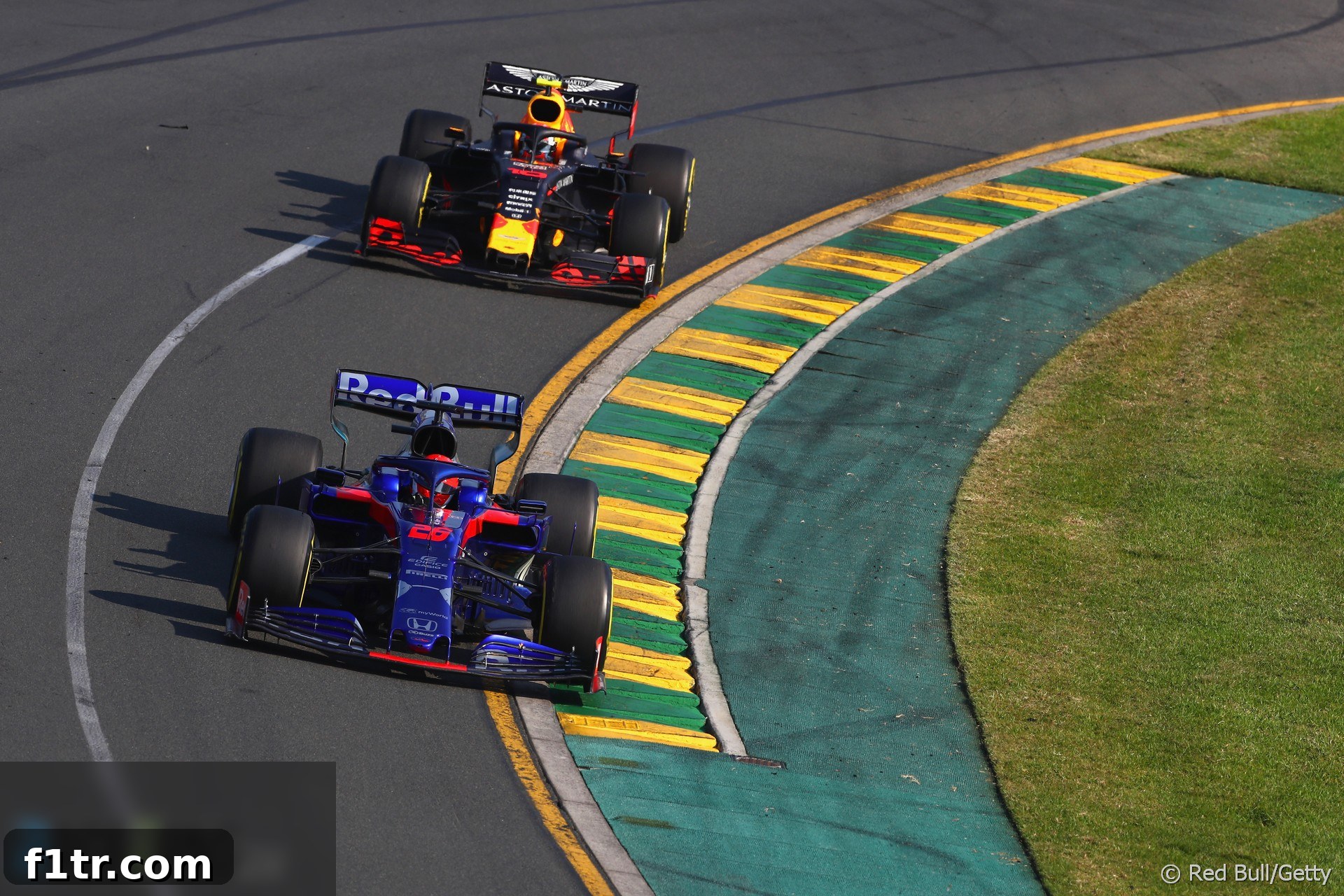
In this comprehensive round-up, we delve into significant talking points from the early stages of the 2019 Formula 1 season, focusing on critical race strategies, driver feedback, and the evolving landscape of motorsport regulations. A prominent issue highlighted by Pierre Gasly concerns the newly enforced lower rear tyre blanket temperatures, a factor he directly attributed to losing a crucial position to Daniil Kvyat during the highly anticipated 2019 Australian Grand Prix.
Driver Insights: The Impact of Tyre Temperatures
The 2019 Formula 1 season introduced new regulations, including a reduction in the maximum temperature for tyre blankets, a measure aimed at promoting cost-efficiency and potentially adding an extra layer of challenge to race strategy. This change, however, immediately sparked debate among drivers and teams regarding its real-world impact on performance and safety. Following a challenging race in Melbourne, Pierre Gasly offered candid feedback on how these cooler tyre temperatures directly affected his ability to compete:
“Basically, I braked and I could feel already in Turn One like I almost locked up. And then coming into Turn Three, I tried to brake a bit later and I locked a bit the front. With warmer tyres for him, Kvyat could make the move. I think it clearly impacted me because I could feel coming out of the pits that the first two or three corners were clearly more snappy. I think it makes it a bit difficult. Even though today was hotter, I think in cold conditions it’s not going to be easy.”
Gasly’s remarks underscore a critical aspect of modern Formula 1: the delicate balance required to manage tyre performance. The difference of just a few degrees in tyre temperature can dramatically alter grip levels, braking stability, and overall car handling. When a driver exits the pit lane on cooler tyres, they are at a distinct disadvantage until the tyres reach their optimal operating window. This ‘warm-up’ phase can be perilous, increasing the risk of lock-ups, understeer, or oversteer, and making drivers vulnerable to competitors already up to speed on warmer rubber. For Gasly, this proved costly, allowing Kvyat, who presumably had more heat in his tyres or a better warm-up strategy, to capitalize and regain a position.
The implications of such regulations extend beyond individual battles. They force teams to innovate in pit stop strategy, car setup, and even driving style. While the intent might be to level the playing field or reduce costs, the immediate consequence can be increased uncertainty and potentially more dramatic swings in performance during crucial race moments. Gasly’s concern about colder conditions further emphasizes the potential for these new rules to significantly alter racing dynamics throughout the season, especially at tracks known for their chilly ambient temperatures or long pit lanes. This ongoing challenge of tyre management remains a fascinating variable in the quest for Formula 1 supremacy.
Quotes: Dieter Rencken
Advert | Become a RaceFans supporter andgo ad-free
Social Media Pulse: Connecting with the F1 World
Social media platforms have become an integral part of the Formula 1 experience, offering fans an unparalleled glimpse into the lives of their favorite drivers and teams, as well as providing immediate reactions and insightful statistics from the racing world. Here’s a look at some notable posts that resonated with the F1 community:
Going to the races, celebrating together, pushing each other playing golf and padel… Always great to share a plan with you. Happy Father’s Day! @CSainz_oficial pic.twitter.com/lIhfi3TCn5
— Carlos Sainz (@Carlossainz55) March 19, 2019
This heartwarming tweet from Carlos Sainz offers a personal side of the F1 star, celebrating Father’s Day with his father, Carlos Sainz Sr., a motorsport legend in his own right. It highlights the strong family bonds that often underpin a driver’s career and resonates with fans who enjoy seeing the human element behind the helmet. The shared activities like golf and padel also paint a picture of their competitive, yet supportive relationship, extending beyond the racetrack.
Last weekend @ValtteriBottas became the first driver in @F1 history to bookend a win-less season with two victories.
2017: Won final race at @ymcofficial
2018: No wins
2019: Won first race at @ausgrandprix #F1 #AusGP pic.twitter.com/HOxPbahZGX— RaceFans (@racefansdotnet) March 19, 2019
This fascinating statistic shared by RaceFans highlights Valtteri Bottas’s unique achievement, bookending a challenging win-less 2018 season with victories at the very end of 2017 (Abu Dhabi) and the very beginning of 2019 (Australia). This historical note perfectly encapsulates the narrative surrounding Bottas’s career at Mercedes, often dubbed “Bottas 2.0,” where he showed renewed determination and performance. Such specific data points are invaluable for fans tracking driver careers and historical milestones within the sport, setting the tone for what promised to be an intriguing season.
- For more official F1 accounts and a comprehensive guide to following the sport on social media, explore the F1 Twitter Directory.
Further Reading: Diverse Perspectives from the Motorsport World
Beyond the immediate race action, the world of motor racing offers a constant stream of intriguing stories, technical analyses, and passionate debates. Here’s a selection of noteworthy articles and discussions from around the globe:
Advert | Become a Supporter & go ad-free
Ricciardo ’50-50′ on Bathurst 1000 bid (Supercars)
As one of Formula 1’s most charismatic drivers, Daniel Ricciardo’s potential future in other motorsport disciplines often comes into focus. His comments regarding a “50-50” chance of competing in the iconic Bathurst 1000 endurance race shed light on the demanding nature of F1. Ricciardo candidly expressed, “When I first got into F1 a few years ago, I was like ‘yeah, that’d be awesome, I’d love to’. But the more years I do this, it kind of wears you out. And I thought ‘once I’m done (in F1), I think I’ll be done (with driving)’.” This offers a rare glimpse into the mental and physical toll top-tier motorsport takes on its athletes, and the difficult choices they face regarding their post-F1 careers.
OTT subscribers struggle to see Bottas victory (Sports Pro media)
The advent of dedicated streaming services like F1 TV has been a game-changer for Formula 1’s global reach, but not without its teething problems. This report highlighted significant challenges faced by subscribers during the 2019 Australian Grand Prix, including “crashing streams, buffering and failure to even initialise across the service.” Such technical glitches underscore the immense pressure on modern sports broadcasters to deliver seamless, high-quality content, and the frustration experienced by dedicated fans when these services fall short. Reliability remains paramount for the success of any OTT platform, especially in a fast-paced sport like F1 where every moment counts.
Ricciardo ‘drained’ by home GP promo workload (Autosport)
The life of an F1 driver, particularly at their home race, involves more than just driving. Daniel Ricciardo’s comments about being “drained” by his promotional workload during the Australian Grand Prix offer a stark reminder of the extensive media and sponsor obligations that come with being a global sports icon. His reflection, “I just try to please everyone this week and don’t look after myself. We’ll change it for next year,” provides valuable insight into the constant balancing act between sporting performance and commercial responsibilities. Managing these demands effectively is crucial for a driver’s well-being and peak performance.
Was Mercedes aware of a risk of floor damage on Hamilton’s W10 beforehand? (F1i)
Technical intricacies are at the heart of Formula 1, and this article delves into the highly sensitive aerodynamics of the Mercedes W10. The discussion around potential floor damage on Lewis Hamilton’s car and its impact highlights the precision engineering involved in F1 design. As the article explains, “The specific part, and its associated slot in the floor, helps channel an energized flux of air that mitigates the effect of the turbulence produced by the tyre’s rotation and helps combat ‘tyre squirt’.” Even minor damage to these highly tuned components can have a significant effect on downforce and stability, underscoring the razor-thin margins that separate victory from defeat at the pinnacle of motorsport.
New season starts with mixed emotions (Sky)
The start of the 2019 season was tinged with sadness following the unexpected passing of Charlie Whiting, the long-serving F1 Race Director. This piece beautifully captures the “mixed emotions” surrounding the new season, paying tribute to a man who was the bedrock of F1’s operational integrity. As noted, “That was what was unique about Charlie (Whiting) – he had a genuine hands-on involvement in every part of the sport. An extraordinary man who will be missed, especially by his young family, but by the motorsport world at large.” Whiting’s absence left a significant void, and his legacy continues to influence the sport’s safety and procedural standards.
Formula 1 in town but sponsor recall higher for V8 Supercars (Roy Morgan)
Despite the global spectacle of Formula 1, local motorsport series can sometimes hold a stronger connection with regional audiences. This intriguing study from Roy Morgan found that “when it comes to motorsports Australian fans have a far higher recall for V8 Supercars sponsors than for the Formula 1 sponsors.” This highlights the importance of local appeal and grassroots connection for sponsor engagement, even in markets that host Grand Prix events. It prompts questions about how F1 can further localize its marketing efforts to deepen its impact in specific regions and compete with established national racing categories.
We always endeavour to credit original sources. If you have a tip for a link to feature in the next RaceFans round-up please send it in via the contact form.
Advert | Become a RaceFans supporter andgo ad-free
Fan Forum: Debating the Fastest Lap Point
The introduction of a bonus point for the fastest lap in a Grand Prix, a decision spearheaded by Ross Brawn, was one of the most talked-about regulation changes for the 2019 season. The aim was to inject more excitement and strategic depth into the closing stages of races. However, not all fans were convinced, as articulated by @Stefmeister in a thought-provoking comment:
“The fight to claim that one extra point, in the knowledge that it could be vitally important in the closing stages of the championship.”
Which is exactly why I don’t like it.
The championship should not come down to something as arbitrary or as largely irrelevant as bonus points the fastest lap given how many factors can play into who actually gets the fastest lap and how many silly games can be played with it.
It’s shortsightedness at it’s worse, five minutes of potential artificial spice at the end of a race at the expense of the sporting integrity of the championship standings and eventually it’s going to come back to bite them… I hope this year so we can be rid of as soon as possible.
@Stefmeister
@Stefmeister’s critique encapsulates a significant portion of the fan base’s concern: the potential for the fastest lap point to unduly influence the integrity of the championship. While Brawn’s intention was to add “artificial spice” and encourage drivers to push harder, the argument against it hinges on several points. Firstly, the fastest lap can often be set by a driver on fresh tyres who is not directly involved in the main race battle, potentially skewing the championship standings away from pure race performance. Secondly, it can lead to “silly games,” such as a team pitting a driver purely for a tyre change to chase the fastest lap, which might be entertaining but not necessarily reflective of genuine racing prowess. The debate highlights the ongoing tension between enhancing spectacle and preserving the core sporting principles of Formula 1. Whether this rule ultimately proves to be a success or a regrettable experiment remains a key point of discussion among F1 enthusiasts.
From the Forum: Community Discussions
- Engage with fellow fans and share your experiences: Have you used F1 TV? Have you experienced any of the problems others have reported?
Happy Birthday!
A special happy birthday to our esteemed readers, Girts and West Pearson! We hope you both have a fantastic day celebrating.
If you’d like a birthday shout-out in a future round-up, please let us know when yours is via the contact form or by adding it to our community list here.
On This Day in F1 History
- 25 years ago today, Michael Andretti made a triumphant return to IndyCar after a challenging season with McLaren in F1. He secured a memorable victory in the season-opener at Surfers’ Paradise, marking the first win for Ganassi and Reynard in the series. This victory served as a powerful testament to Andretti’s enduring talent and adaptability, showcasing his ability to rebound from a difficult F1 stint and immediately reclaim his competitive edge in American open-wheel racing.