Monaco Grand Prix 2022: Unpacking the Challenges of a Transformed Circuit
The iconic streets of Monte Carlo, having hosted the Formula 1 World Championship an impressive 67 times, once again set the stage for one of motor racing’s most prestigious events: the Monaco Grand Prix. Renowned globally as the jewel in F1’s crown, this race is celebrated for its unforgiving nature and unparalleled glamour. While the circuit layout itself remains largely unchanged through the years, the formidable machinery brought by teams for the 2022 season marked a significant evolution, fundamentally altering the driving experience.
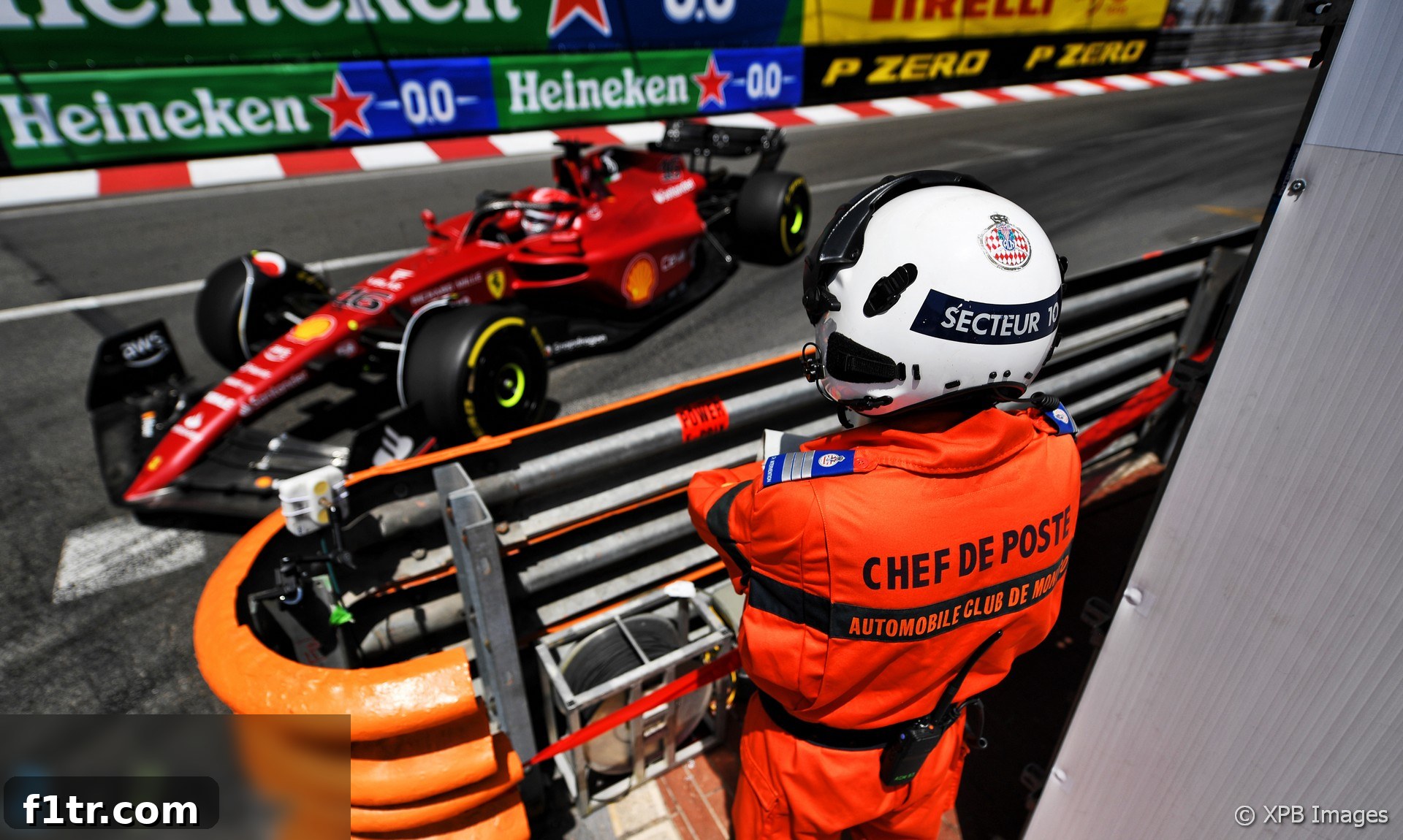
Since pre-season testing, many drivers had voiced concerns that the rigid, low-slung ground effect cars, characteristic of the 2022 regulations, would present unique and profound challenges on the tight, bumpy confines of the Monaco street circuit. After two intense hours of practice sessions navigating the narrow confines of the Principality, even some of the most seasoned and successful Formula 1 drivers admitted to feeling as though they were encountering an entirely new track. The profound differences introduced by this new generation of cars redefined the traditional approach to Monaco.
Drivers Confront the Transformed Monte Carlo Circuit
The sentiment across the paddock was clear: the 2022 cars demanded a recalibration of approach, even for veterans. Sebastian Vettel, a multiple world champion and a driver with extensive experience on the Monte Carlo circuit, articulated the dramatic shift in perception. “Although I have raced here many times, this circuit feels a lot different in these new cars,” Vettel remarked. His observations highlighted critical changes impacting driver visibility and car handling, two paramount factors on such a demanding street circuit.
Vettel’s Vivid Experience of the New-Era F1 Car
Vettel elaborated on the specific challenges: “The main difference is that the tyres are much bigger so it is more difficult to see the track around you.” This reduced visibility, coupled with the cars’ significantly stiffer suspension, transformed familiar sections of the circuit. “The cars are also much stiffer and going through the tunnel is not as easy as it used to be,” he added, referring to the high-speed, curving tunnel section where precision is paramount. His firsthand account underscored the fine line drivers walked, recounting a near-miss: “I was lucky to save the car during a mistake at the Swimming Pool, despite my heart rate definitely going up.” This vivid description serves as a stark reminder of the heightened risks and physical demands placed upon drivers in these powerful, yet unforgiving, machines on the world’s most famous street circuit.
Russell Highlights Stiffness Challenges on Bumpy Streets
Vettel’s experience was echoed by many of his competitors, including Mercedes driver George Russell. The Mercedes team, in particular, had grappled with the uncomfortable ride quality of their W13 throughout the early stages of the 2022 season. Russell’s comments illuminated the amplified difficulties on Monaco’s uneven surfaces. “These cars are very, very stiff,” Russell stated. “Around a bumpy street circuit, it’s not easy to put it on the limit. I think that’s one of the biggest difficulties.” His remarks highlighted how the inherent stiffness, designed to maximize aerodynamic performance, became a significant liability on the undulating and unforgiving tarmac of Monte Carlo, making the pursuit of the absolute limit a precarious undertaking.
The Ferrari vs. Red Bull Showdown: Early Indications in Practice
As has been the prevailing narrative of the 2022 season, the burning question heading into the Monaco Grand Prix was which of the two championship frontrunners – Red Bull or Ferrari – would seize the crucial advantage on the circuit’s notoriously tight and twisty layout. The battle for supremacy in Formula 1 had been intensely fought, with both teams demonstrating periods of dominance. However, after the initial two practice sessions on Friday, the early indications from the Red Bull garage suggested a significant challenge ahead.
Red Bull’s Struggle to Match Ferrari’s Pace
Sergio Perez, who finished Friday’s sessions behind both Ferrari cars, candidly expressed his team’s position. “All-in-all, we seem to be lacking a bit compared to the Ferraris,” Perez admitted. “They seemed very strong today. We were expecting a bit of a gap, but not so much of a gap. So plenty of work to do.” His assessment underscored the unexpected margin that Ferrari appeared to hold. Reigning world champion Max Verstappen concurred with his teammate’s analysis, emphasizing the need for improvement. “Clearly compared to Ferrari, we have to find a little bit more,” Verstappen stated. He further explained, “Overall we’ve been trying a few things around here to see how the car was behaving. I was a little bit happier in FP1 than FP2. If you have a little bit of a better balance, you can attack a bit more and then of course your lap time comes out a bit better. Now it’s all about just trying to fine-tune my balance as well.” This quest for optimal balance would be critical for Red Bull, especially with qualifying, the most important session at Monaco, looming on Saturday.
Leclerc’s Controlled Dominance and Cautious Optimism
Despite topping both practice sessions convincingly, local hero Charles Leclerc wisely tempered expectations regarding his prospects of becoming the first Monegasque driver in decades to win his home race. His assessment of his day’s work was simply “okay,” reflecting a mature understanding that Friday pace is not always indicative of weekend success. “It was not great in FP1, a bit better in FP2 but I really think that we need to do another step for tomorrow,” Leclerc commented, highlighting the relentless pursuit of perfection required in Formula 1.
Leclerc’s caution stemmed from the common F1 practice of teams holding back performance on Fridays. “I’m pretty sure that everyone has got quite a bit of margin on a Friday and also as drivers, so it’s a bit of the unknown for now,” he explained. Nevertheless, the underlying performance of his Ferrari F1-75 offered strong encouragement. “But the car looks strong. Also in the race pace, we seem to be very good even though there was quite a bit of traffic here and there. So the initial feeling is good. So hopefully we can do the step that we want to do from today to tomorrow and have a great weekend from that.” For Leclerc, the dream of a home victory was palpable, but the focus remained squarely on extracting every ounce of performance from his car for the crucial qualifying session.
Mixed Fortunes in the Midfield: McLaren’s Day of Contrasts
Behind the dominant Ferrari and Red Bull machines, the midfield battle proved equally compelling, with two Mercedes-powered cars making a strong impression. Interestingly, only one of these was a factory Mercedes chassis. Lando Norris, piloting his McLaren-Mercedes, managed to secure an impressive fifth position behind the top two teams in both practice sessions. His performance was particularly commendable given that he was still battling the lingering effects of tonsillitis, underscoring his exceptional talent and determination.
Norris Shines Despite Health Setback, Ricciardo’s Costly Error
Norris’s strong showing contrasted sharply with the fortunes of his McLaren teammate, Daniel Ricciardo. Ricciardo’s day took a dramatic turn when he crashed into the TecPro barriers on the exit of the Swimming Pool section, prematurely ending his FP2 session. This incident not only cost him valuable track time but also raised further questions about his ongoing struggles to adapt to the McLaren MCL36.
McLaren’s executive director of racing, Andrea Stella, provided an update on the contrasting performances. “Lando’s sessions today were relatively clean, while Daniel lost most of FP2 with a crash at the Swimming Pool, the causes of which we are still investigating,” Stella explained. Reassuringly, he added, “The most important thing is that Daniel is okay, and the team are now working hard to ensure we are ready to go for FP3. Overall, it seems like the car has decent potential this weekend, and our job this evening is to make sure we can exploit that pace and be competitive in qualifying and the race.” The incident served as a stark reminder of Monaco’s unforgiving nature and the fine margins separating success from setback.
Mercedes Grapples with Unique Bouncing Issues
Mercedes had arrived in Monaco with renewed hope following a significant upgrade package introduced in Spain, which appeared to have alleviated their persistent porpoising issues and brought them closer to the front-runners. This turnaround sparked optimism that the reigning champions could re-enter the fight against Ferrari and Red Bull. However, Friday’s practice sessions in Monte Carlo quickly tempered those expectations. George Russell, the team’s faster driver in sixth position, acknowledged after practice that challenging for victory this weekend would likely be out of reach, while Lewis Hamilton found himself further down in 12th.
Russell’s Realism and Hamilton’s Struggles
Russell openly assessed the situation: “I think we’re seeing Ferrari flourish again. We’ve seen how good they’ve been over kerbs. We saw in Imola – they were just smashing over them with relative ease and it’s obviously playing into their hand at the moment.” This observation pointed to a fundamental advantage Ferrari held on circuits requiring robust kerb riding, a crucial element in Monaco. He concluded, “So we’ve got a lot of work to do overnight. I’m not too sure we can really close that gap, but nevertheless, it’s always good fun driving around here.” The gap to the front, particularly for Hamilton, seemed significant, suggesting a tough weekend for the Silver Arrows.
Understanding Mercedes’ High-Frequency Vibration Problem
The biggest limiting factor for Mercedes on Friday was a form of bouncing, though notably different from the familiar porpoising phenomenon that plagued them earlier in the season. As Andrew Shovlin, Mercedes’ Director of Trackside Engineering, explained, the issue was more akin to higher-frequency vibrations stemming from the car’s inherently stiff suspension. This unique challenge posed a significant threat to their performance in Saturday’s all-important qualifying session.
“We’re struggling with the ride here and that’s preventing us attacking the lap, especially on low fuel,” explained Shovlin. The stiffness, coupled with the bumpy nature of the street circuit, meant drivers couldn’t confidently push the car to its limits. He added, “We made a bit of progress between the sessions, but we need to pick through the data and understand whether we can achieve more. We didn’t get the most out of the soft tyre, it was difficult with traffic and Lewis had few occasions where he was blocked so there’s more to come but everyone will be finding a bit of time overnight so we’ll work to make sure we can move forward.” This particular bouncing issue highlighted the nuanced engineering challenges posed by the 2022 regulations, demanding an intricate balance between aerodynamic performance and mechanical ride quality, especially on a track as unforgiving as Monaco.
The Road Ahead: Qualifying’s Ultimate Test in Monaco
Charles Leclerc, having famously secured pole position for his home Grand Prix last year—albeit partially due to his own crash bringing out a red flag—would wake up on Saturday morning knowing that he possesses the raw pace to repeat that feat. The Ferrari driver has demonstrated his exceptional speed on the challenging Monaco circuit, and his performance in practice suggested he could be a formidable contender for pole position. However, he is acutely aware that extracting maximum performance in qualifying requires absolute precision and commitment.
“I took it step by step and for now it’s all going well,” Leclerc reflected on his measured approach during practice. Yet, he knows the stakes for qualifying are immensely higher. “But once you put the last step in that’s where the risks are becoming higher and this we will only do in qualifying tomorrow.” This ‘last step’ involves pushing the car to its absolute ragged edge, brushing the barriers, and taking calculated risks that define a Monaco pole lap. With overtaking notoriously difficult on the narrow Monte Carlo streets, qualifying is paramount, making Saturday’s session arguably the most critical of the entire weekend for all drivers, but especially for Leclerc, who carries the hopes of a nation on his shoulders.
Combined Practice Times: A Snapshot of the Field
| Position | Number | Driver | Team | FP1 time | FP2 time | Gap | Laps |
|---|---|---|---|---|---|---|---|
| 1 | 16 | Charles Leclerc | Ferrari | 1’14.531 | 1’12.656 | 59 | |
| 2 | 55 | Carlos Sainz Jnr | Ferrari | 1’14.601 | 1’12.700 | 0.044 | 60 |
| 3 | 11 | Sergio Perez | Red Bull | 1’14.570 | 1’13.035 | 0.379 | 61 |
| 4 | 1 | Max Verstappen | Red Bull | 1’14.712 | 1’13.103 | 0.447 | 59 |
| 5 | 4 | Lando Norris | McLaren-Mercedes | 1’15.056 | 1’13.294 | 0.638 | 55 |
| 6 | 63 | George Russell | Mercedes | 1’15.211 | 1’13.406 | 0.750 | 65 |
| 7 | 10 | Pierre Gasly | AlphaTauri-Red Bull | 1’15.083 | 1’13.636 | 0.980 | 65 |
| 8 | 14 | Fernando Alonso | Alpine-Renault | 1’15.749 | 1’13.912 | 1.256 | 59 |
| 9 | 5 | Sebastian Vettel | Aston Martin-Mercedes | 1’15.387 | 1’14.059 | 1.403 | 64 |
| 10 | 22 | Yuki Tsunoda | AlphaTauri-Red Bull | 1’15.536 | 1’14.134 | 1.478 | 63 |
| 11 | 20 | Kevin Magnussen | Haas-Ferrari | 1’15.806 | 1’14.239 | 1.583 | 61 |
| 12 | 44 | Lewis Hamilton | Mercedes | 1’15.499 | 1’14.267 | 1.611 | 58 |
| 13 | 77 | Valtteri Bottas | Alfa Romeo-Ferrari | No time | 1’14.468 | 1.812 | 30 |
| 14 | 23 | Alexander Albon | Williams-Mercedes | 1’16.110 | 1’14.486 | 1.830 | 72 |
| 15 | 24 | Zhou Guanyu | Alfa Romeo-Ferrari | 1’16.417 | 1’14.525 | 1.869 | 49 |
| 16 | 18 | Lance Stroll | Aston Martin-Mercedes | 1’15.539 | 1’14.623 | 1.967 | 55 |
| 17 | 47 | Mick Schumacher | Haas-Ferrari | 1’18.636 | 1’14.894 | 2.238 | 44 |
| 18 | 3 | Daniel Ricciardo | McLaren-Mercedes | 1’15.157 | No time | 2.501 | 35 |
| 19 | 31 | Esteban Ocon | Alpine-Renault | 1’16.315 | 1’15.216 | 2.560 | 57 |
| 20 | 6 | Nicholas Latifi | Williams-Mercedes | 1’17.714 | 1’16.276 | 3.620 | 63 |
More on the 2022 Monaco Grand Prix
- Whatever triggered it, Verstappen’s defiance of his own team makes little sense
- Transcript: How Red Bull seized a win that ‘Ferrari looked like they had in the bag’
- Verstappen now has as many poles as Leclerc – but six times as many wins
- Schumacher’s chassis-splitting crash shows effects of rising car weight – Alonso
- Norris still can’t drive McLaren the way he wants to, despite strong results
Browse all 2022 Monaco Grand Prix articles