The Grand Return: Formula 1 Roars Back Amidst Unprecedented Challenges
After an agonizing wait of 217 days, the moment Formula 1 fans across the globe have yearned for is finally here. As the five red lights extinguish on Sunday, the F1 field will once again be unleashed, signaling not just the start of a new season but a monumental triumph over adversity. This hiatus marks the longest fans have had to endure between races since 1962, a stark reminder of the extraordinary circumstances surrounding the 2020 championship. Adding to the unprecedented nature of this return, not a single fan will be present in person to witness the spectacle unfold, transforming the vibrant atmosphere of the Grand Prix into a more subdued, yet intensely anticipated, affair.
The journey to restart the 2020 Formula 1 season has been fraught with challenges, a testament to the sport’s resilience and determination. The knock-on effects of the initial, unprecedented delay, coupled with the immense lengths F1 has gone to ensure the championship can safely begin, are set to create numerous talking points and narratives throughout this long-awaited weekend. Beyond the immediate logistical hurdles and safety protocols, there remains the usual excitement surrounding the competitive order, driver dynamics, and the pursuit of historic milestones that a new Formula 1 season invariably brings. This weekend promises to be truly fascinating, blending the thrill of racing with the weight of global events.
Will F1’s Return to Racing Run Smoothly Under Strict Protocols?
The ghost of Melbourne still lingers, a vivid reminder of how quickly plans can unravel. The 2020 season-opening race was dramatically called off after a McLaren team member tested positive for Covid-19, triggering a domino effect that saw nine further races postponed or canceled. Learning from that critical experience, Formula 1 has since implemented an extensive and rigorous set of precautions, meticulously designed to minimize the possibility of a similar occurrence and safeguard the health and safety of everyone involved. These measures are central to the sport’s ambitious plan to navigate the pandemic and deliver a compelling championship.
At the heart of these precautions is a drastic reduction in personnel attending each event. Spectators are entirely absent, and the paddock itself has been trimmed to the bare minimum of essential staff. Crucially, teams will operate within their own highly defined “bubbles,” with strict guidelines preventing any mingling of staff members between different organizations. This commitment to isolation extends to the drivers themselves, who will be required to wear masks whenever they are not inside their helmets or actively competing on track. These visible changes, from reduced crowds to masked faces, underscore the gravity of the situation and the sport’s unwavering commitment to safety.
In essence, the entire operational framework of a Grand Prix has been re-engineered to facilitate the bare minimum of social interaction required for a race weekend to proceed. Every possible precaution has been taken, from regular testing regimes to designated isolation zones, all aimed at creating a bio-secure environment. The success of these stringent measures is paramount, not just for the immediate Austrian Grand Prix, but for the viability of the entire revised calendar. With seven more races scheduled to follow in the intense nine-week period after the opener, the stakes couldn’t be higher. The world of motorsport will be watching closely to see if Formula 1 has truly gotten this right, paving the way for a full, albeit condensed, championship season.
- Deep Dive: Bubbles within Bubbles – How F1 Aims to Prevent Covid-19 Halting Another Race
Different Times, Different Results? Unpacking the Competitive Order
The prolonged delay to the start of the 2020 season, coupled with the unprecedented layers of health and safety precautions, and the relocation of the opening round from the street circuit of Melbourne to the flowing, purpose-built Red Bull Ring in Spielberg, inevitably begs a crucial question: Will these significant changes lead to a shake-up in the competitive order we anticipated in pre-season testing? While it’s difficult to predict the exact impact, it’s equally hard to imagine these factors won’t influence performance dynamics.
The enforced break presented teams with an unexpected opportunity, or challenge, depending on their state of development. Some may have used this time to refine car designs, push through significant upgrade packages, or simply regroup and analyze data more thoroughly. Others might have struggled with resource allocation or supply chain issues. Without seeing the cars in full competitive flight since the curtailed pre-season testing, discerning the precise extent of any shifts in performance will be a key storyline of this opening weekend.
Max Verstappen and Red Bull arrive at their home circuit with immense confidence and a clear objective: to secure a third consecutive victory at the Red Bull Ring. Their car has demonstrated exceptional competitiveness on this track in recent years, often punching above its weight. With the unique arrangement of two back-to-back races at the same venue – another unprecedented development for Formula 1 – Red Bull has legitimate reasons to be optimistic about their early championship chances. Consistency and mastery of this circuit could give them a significant advantage in the initial phase of the season.
Meanwhile, other major contenders are known to be bringing substantial upgrades to Austria. Ferrari, despite a somewhat challenging pre-season, is expected to introduce developments aimed at improving their SF1000. Renault also arrives with a strategic advantage, having recently conducted private testing at the Red Bull Ring, albeit with a two-year-old car. This track time, invaluable for driver fitness and operational practice, could give them a better chance of starting the year strongly and challenging for points. The intricate dance of development, driver skill, and strategic execution will define who emerges as the early pace-setters in this truly unique season.
The Tumultuous 2020 Driver Market: A Pre-Season Shake-Up
Remarkably, before the 2020 season even saw its first competitive lap, the driver market exploded with more significant activity than throughout the entirety of the previous year. This early flurry of announcements means that three prominent drivers will commence the championship knowing full well it will be their last with their current teams. This unusual scenario adds another layer of intrigue and potential internal dynamics to several outfits, as drivers navigate the complexities of securing their future while remaining fully committed to their present employers.
The domino effect began with Daniel Ricciardo’s high-profile decision to depart Renault at the end of the year, signing a deal to replace Carlos Sainz Jnr at McLaren. This move, in turn, opened up a coveted seat at Ferrari for Carlos Sainz Jnr, who will be leaving the Woking-based squad. The most seismic shift, however, was the announcement that Sebastian Vettel, a four-time world champion, would be leaving Ferrari after the 2020 season, with his future plans remaining a matter of intense speculation. Will he find a new home at Renault, or potentially a re-branded Aston Martin team? Or could the illustrious career of one of F1’s most successful drivers unexpectedly conclude with retirement?
Such significant driver changes, especially when announced so early in a season, invariably affect the dynamic within a team, despite protestations to the contrary from those involved. The circumstances surrounding Vettel’s exit from Ferrari are particularly poignant and emotionally charged. He arrived at Formula 1’s most iconic team five years prior, already a quadruple world champion, with the fervent dream of emulating his hero, Michael Schumacher, and bringing championship glory back to Maranello. Yet, he now finds himself heading for the exit, having been overshadowed and ultimately beaten by his younger teammate, Charles Leclerc, in the previous season. It would be naive to suggest that Vettel isn’t burning with a fierce desire to emphatically put one over Charles Leclerc before his departure, making their internal battle one of the most compelling narratives to watch on track.
Hamilton Leads F1’s Pivotal Anti-Racism and Diversity Agenda
For one major global event to profoundly impact Formula 1 is rare; for two such events to converge simultaneously is truly extraordinary. Yet, amidst the unprecedented upheaval caused by the global pandemic, a revolution of a different kind is powerfully underway within the sport. The tragic death of George Floyd and the subsequent worldwide anti-racism protests have compelled Formula 1 to confront its own long-standing issues concerning diversity and inclusion, leading to the rapid acceleration of a critically needed program to promote diversity among participants at all levels of motorsport.
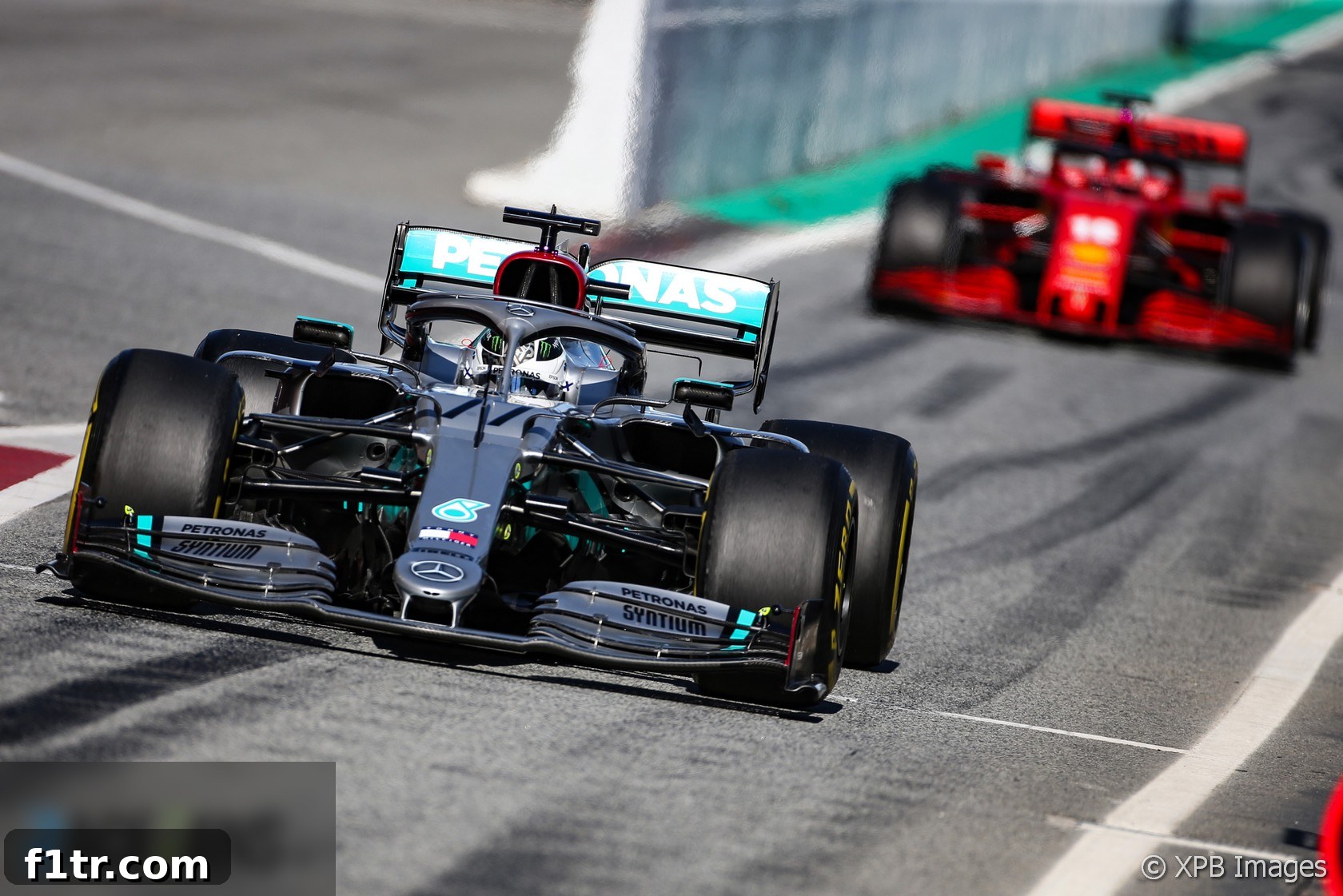
No driver has championed this crucial agenda more vocally or effectively than Lewis Hamilton. As the sport’s only Black driver and a global icon, Hamilton has leveraged his platform to bring unparalleled attention to these issues. He has taken concrete steps, including the launch of his own Hamilton Commission, specifically aimed at promoting diversity within motorsport. In a stunning and powerful demonstration of solidarity and commitment, his Mercedes-AMG Petronas F1 team yesterday made the surprise announcement that they would race in an all-black tribute livery for the entire 2020 season, a bold visual statement to symbolize their stance against racism and their dedication to fostering a more inclusive environment.
Change is not just coming to Formula 1; it is actively being embraced. While some may cling to the outdated cry of “stick to racing” and “keep politics out of sport,” these voices are increasingly being marginalized. Formula 1, under the leadership of figures like Hamilton and with initiatives like the F1 Diversity Foundation, is making a clear declaration that it is part of the wider world and has a responsibility to use its global platform for positive social change. If those resistant to this evolution are offended by it, then they will simply have to be offended, as the sport moves forward with a renewed purpose and a commitment to a more diverse and equitable future.
But what of the driver at the very epicenter of these transformative developments? In recent years, Lewis Hamilton has repeatedly demonstrated that his extensive extra-curricular activities – from fashion shows to recording sessions and now, his profound social activism – are no impediment whatsoever to his unparalleled performance on track. Armed with what is highly anticipated to be another devastatingly fast Mercedes W11, a car that looked formidable in testing, expect Hamilton to be the driver to beat once again. His ability to compartmentalize and channel his focus into supreme racing prowess remains one of his most remarkable attributes, making his pursuit of a seventh world title even more compelling.
What Will the Rest of the Unfolding 2020 F1 Calendar Look Like?
While the excitement for the initial eight European races of the 2020 season is palpable and these rounds are now officially confirmed, the path beyond this initial cluster remains shrouded in significant uncertainty. The process of constructing a viable and extensive global calendar amidst a dynamic global health crisis presents an unprecedented logistical puzzle for Formula 1 management. Each potential venue must navigate its own national health regulations, travel restrictions, and local conditions, making long-term planning incredibly challenging.
Several key questions loom over the latter half of the season. Will the postponed inaugural Vietnam Grand Prix, a highly anticipated addition to the calendar, be reinstated at a later date? Could the sport realistically hold events in the Americas, particularly in regions like Texas, which at the time of writing has seen a concerning rise in Covid-19 cases, or Brazil, one of the worst-affected countries globally? The complexities of international travel, quarantine requirements, and local health advisories create formidable barriers to returning to traditional flyaway races. This deep uncertainty means it is highly likely that Formula 1 will commence its 2020 season without a fully confirmed schedule, and perhaps even without a definitive target for the total number of races it intends to hold, or precisely where they will take place. Flexibility and adaptability will be paramount in shaping the remainder of this truly unique championship year.
Beyond the Pandemic: Unfolding Narratives and On-Track Battles
Even with the overarching narrative of the pandemic and its profound impact, the 2020 Formula 1 season still carries a wealth of compelling storylines and intriguing questions that fascinated us long before the global crisis began. These are the elements that fuel the pure sporting excitement and continue to captivate fans beyond the headlines.
On the technical front, one of the most talked-about innovations remains Mercedes’ Dual Axis Steering (DAS) system. Will this ingenious, albeit controversial, system provide the reigning champions with a tangible advantage on track, allowing their drivers to optimize tire performance and potentially extend their already formidable lead? Its legality has been scrutinized, but its operational effectiveness is yet to be truly tested in a race environment.
From a historical perspective, all eyes will be on Lewis Hamilton as he continues his relentless pursuit of Formula 1’s most revered records. Can he break Michael Schumacher’s all-time wins record and, perhaps even more significantly, match his incredible tally of seven world championship titles? Achieving either, let alone both, would cement his status as the undisputed greatest of all time, adding another indelible chapter to the sport’s rich history.
The midfield battle also promises to be exceptionally fierce. Racing Point, with their much-discussed ‘pink Mercedes’ – a car widely believed to be heavily influenced by last year’s championship-winning W10 – appears to have vaulted to the front of the midfield. This raises questions of fair play and competitive integrity, but undoubtedly sets them up for a potentially dominant season among the secondary teams. Will they truly challenge the established front-runners, or merely consolidate their position as ‘best of the rest’?
And then there’s the plight of Williams. After several challenging seasons marred by financial difficulties and a lack of pace, are Q2 appearances in qualifying and, more importantly, a realistic possibility of scoring championship points, finally within their grasp? A change in form would be a significant morale booster for the storied British outfit, symbolizing a potential turnaround.
Off-track, other significant matters will unfold. The contentious secret engine deal between Ferrari and the FIA continues to linger, with many rival teams still pushing for transparency and potential retribution over what they perceive as an unfair advantage. This saga could reignite heated debates in the paddock. Furthermore, the negotiation and eventual signing of the new Concorde Agreement are critical for the sport’s long-term stability and financial health. Will all 10 teams commit to racing again next year under the revised terms, ensuring a full grid for the future?
These myriad stories, from the technical marvels to the pursuit of greatness, from midfield upsets to behind-the-scenes political maneuvering, will all begin to unfold as the 2020 Formula 1 championship commences in these truly unprecedented circumstances. With an onslaught of eight races packed into just 10 weeks, the intensity will be immediate and unrelenting, promising a season unlike any other in Formula 1’s storied history.
Related Reading: 2020 Austrian Grand Prix
- FIA Issues New Austrian GP Results After Correcting Kvyat Error
- Russell Sees Mercedes as Only Possible Alternative to Williams in 2021
- Hamilton: No “Bad Blood” With Albon After Second Collision in Three Races
- 2020 Austrian Grand Prix Interactive Data: Lap Charts, Times and Tyres
- 2020 Austrian Grand Prix Star Performers
Browse all 2020 Austrian Grand Prix articles