2025 Mexican Grand Prix Free Practice 1: Leclerc Claims Top Spot as Rookies Impress in Mexico City
The high-octane excitement of the 2025 Mexican Grand Prix weekend officially kicked off with a captivating Free Practice 1 session at the formidable Autodromo Hermanos Rodriguez. This initial hour of track action was particularly noteworthy, not only for the inherent challenges posed by Mexico City’s extreme altitude but also for the mandatory inclusion of nine promising rookie drivers. While Ferrari’s Charles Leclerc ultimately set the fastest time, it was the stellar performances and intriguing incidents involving these young talents, especially Andrea Kimi Antonelli and Arvid Lindblad, that truly captivated the attention of fans and the Formula 1 paddock.
The Rookie Showcase: A Glimpse into Formula 1’s Future Talent Pool
Formula 1 regulations mandate that each team must field a rookie driver in at least two Free Practice 1 sessions throughout the season. This rule serves a dual purpose: it offers invaluable experience to aspiring young drivers on a Grand Prix weekend and allows teams to rigorously evaluate emerging talent in a highly competitive environment. The 2025 Mexican Grand Prix FP1 session became a prime stage for this initiative, seeing an unprecedented nine established drivers temporarily step aside to hand over their coveted cockpits to the next generation of motorsport stars. For these rookies, it represented a golden opportunity to demonstrate their skill, adaptability, and composure under immense pressure on one of the calendar’s most unique circuits.
The roster of talented newcomers and the experienced campaigners they temporarily replaced for this session included:
- Arvid Lindblad, taking the wheel of Max Verstappen’s championship-winning Red Bull
- Pato O’Ward, entrusted with Lando Norris’s McLaren
- Antonio Fuoco, driving Lewis Hamilton’s iconic Ferrari
- Frederik Vesti, piloting George Russell’s Mercedes
- Jak Crawford, stepping into Lance Stroll’s Aston Martin
- Luke Browning, behind the wheel of Carlos Sainz Jr.’s Williams
- Ayumu Iwasa, joining Liam Lawson’s Racing Bulls
- Paul Aron, in Pierre Gasly’s Alpine
- Ryo Hirakawa, driving Oliver Bearman’s Haas
For each participant, the stakes were incredibly high. Not only were they tasked with mastering a notoriously tricky circuit, but they were doing so in cutting-edge machinery usually piloted by the world’s elite. Their performance data, feedback, and overall demeanor would be meticulously analyzed, potentially paving the way for future F1 opportunities or highlighting areas for further development.
Autodromo Hermanos Rodriguez: Conquering the Altitude and Dust
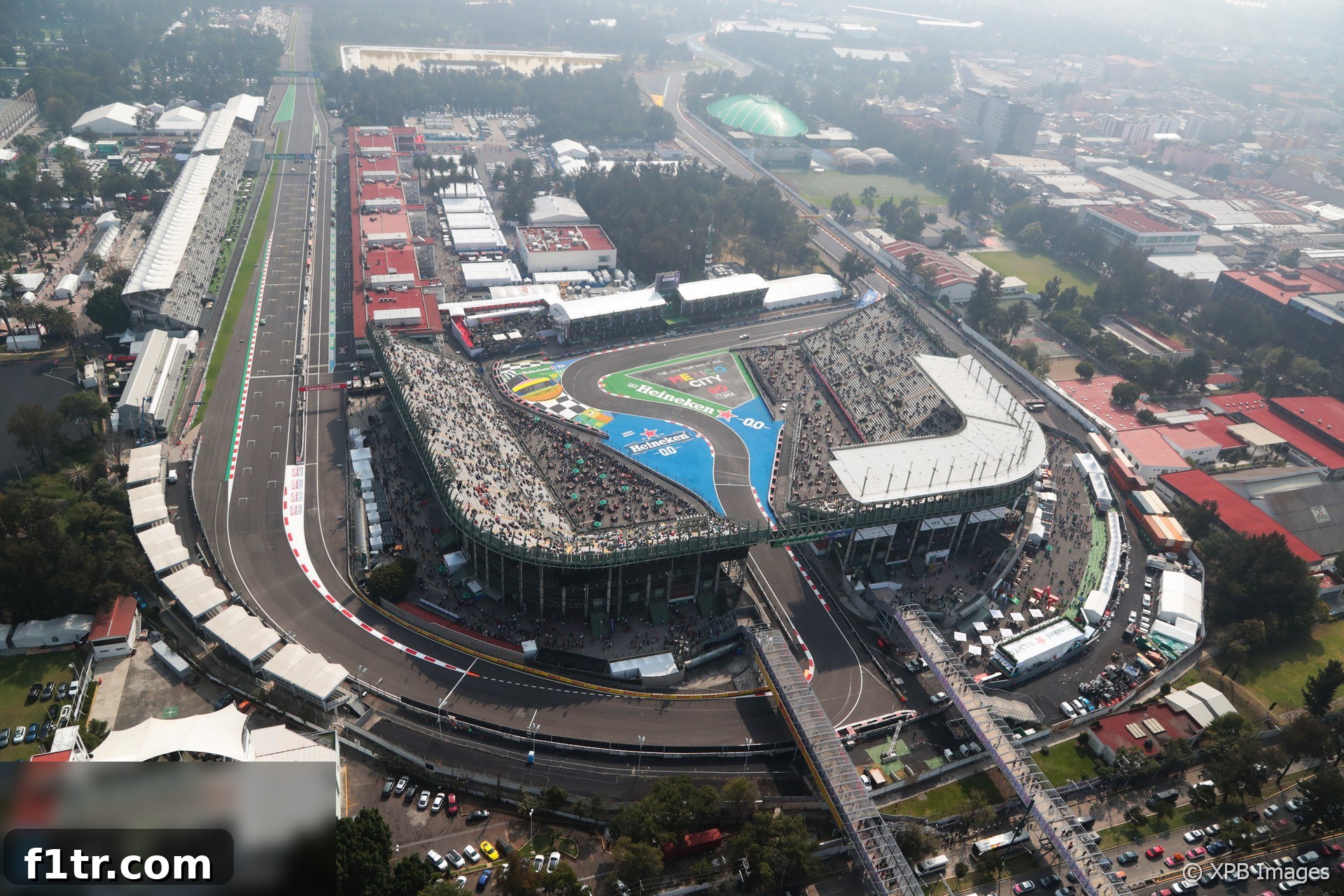
The Autodromo Hermanos Rodriguez is unique on the Formula 1 calendar, primarily due to its staggering elevation. Situated over 2,200 meters (7,200 feet) above sea level, the thin air profoundly impacts every aspect of car performance. Engines struggle for power, aerodynamic downforce is significantly reduced despite maximum wing settings, and cooling systems are pushed to their absolute limits. This combination leads to a distinct handling characteristic, where cars feel lighter and more prone to sliding, demanding exceptional precision from drivers, particularly under braking and through high-speed corners.
Adding to the challenge, the session commenced with a blistering track temperature of 49°C, and, as is typical for the opening sessions in Mexico City, the circuit was notably dusty and ‘green’. This low-grip environment meant drivers had to cautiously build up their pace, gradually exploring the limits of adhesion as the track surface accumulated rubber. Engineers, meanwhile, faced the complex task of optimizing car balance, tire management, and cooling strategies to combat these strenuous conditions.
Initial Exchanges: Hard, Medium, and the Evolving Track
As the pit lane opened, many teams initially opted for the harder compound tires, primarily for data gathering, scrubbing in new sets, and allowing their drivers to acclimate to the dusty, low-grip environment. Isack Hadjar, one of the few drivers to venture out on the medium compound tires early on, swiftly made his presence felt. He registered an initial time of 1’22.001, setting the early benchmark and demonstrating the immediate pace advantage of the softer rubber, even on a circuit still lacking optimal grip. This early benchmark, however, was starkly illustrative of the challenging conditions, sitting over six seconds off the previous year’s pole position time.
As the session progressed and the track began to clean up, Oscar Piastri, on the hard compound, managed to better Hadjar’s time, recording a 1’21.570. This indicated a steady improvement in track conditions, allowing drivers to extract more performance from their machinery. Not to be outdone, Hadjar soon reclaimed the top spot with a quicker 1’20.128, further emphasizing the dynamic nature of the session and the critical role of tire selection and track evolution. The early showing of medium-shod drivers, particularly Hadjar, underlined a common theme observed at circuits like Austin and Mexico: the hard compound can feel significantly more challenging to extract performance from compared to the medium, demanding a very different driving style.
Seasoned driver Yuki Tsunoda then showcased his experience and adaptability, recording the fastest lap among those running on the hard tires with a 1’20.495. This was a strong testament to his ability to manage the delicate balance of grip on the more durable compound, providing crucial data for his team regarding long-run potential and race pace.
Mid-Session Excitement: Near Misses and Limit Pushing
As the drivers gained confidence and began to push the limits, the session offered its share of dramatic moments. Oscar Piastri, demonstrating the sheer challenge of the Autodromo Hermanos Rodriguez, had a significant moment at Turn 7. This high-speed, sweeping corner demands absolute commitment on entry, and Piastri found himself wrestling with a massive snap of oversteer. Displaying incredible car control, he caught an armful of opposite lock, narrowly avoiding a spin and saving what could have been a costly excursion. Such instances are a vivid reminder of the fine margins and the raw talent required to compete at the pinnacle of motorsport.
Similarly, rookie sensation Arvid Lindblad, during his impressive stint, momentarily ran wide at the exit of Turn 12, scraping the floor of his Red Bull along the unforgiving exit kerb. While often appearing minor, such contact can subtly affect a car’s aerodynamic integrity and serves as a testament to the aggressive lines drivers must take to extract every millisecond. Earlier in the session, Isack Hadjar also had his own challenging moment, briefly going up the escape road at Turn 12 before carefully reversing and rejoining the track, highlighting the delicate balance between ambition and caution required on such a demanding circuit.
The Soft Tire Sprint: A Scramble for the Fastest Lap
As the Free Practice 1 session entered its decisive final phase, teams began to equip their cars with the softest compound tires, signaling a concerted push for ultimate qualifying-style pace. Oscar Piastri was among the first to switch to the red-walled softs, instantly improving his time from a 1’20.704 on hards to a scorching 1’19.035. This significant leap underscored the performance advantage of the soft compound and the continued evolution of the track conditions. While still over three seconds off Carlos Sainz Jr.’s pole position time from the previous year, it was a crucial indicator of the emerging pecking order.
The battle for the top spot then intensified, becoming a thrilling exchange between several frontrunners. Charles Leclerc briefly seized the fastest lap with a strong effort, only for Piastri to swiftly reclaim it. However, it was the Mercedes junior driver, Andrea Kimi Antonelli, who truly electrified the timing screens. On a fresh set of soft tires, Antonelli unleashed a stunning 1’18.487, momentarily eclipsing both Leclerc and Piastri. His performance was a bold statement, firmly placing him among the session’s elite and reaffirming why he is widely regarded as one of motorsport’s brightest future stars, delivering an exceptionally mature and quick lap.
Yuki Tsunoda, demonstrating his growing confidence and speed, also opted for the soft compound, propelling himself into a highly respectable fifth place. His time placed him strategically behind Antonelli, Nico Hulkenberg, Piastri, and Leclerc, just under eight tenths of a second off the leading pace. Tsunoda’s consistent performance across different tire compounds and his ability to extract speed from the softs underlined his increasing prowess and value to his team.
In the closing moments of the session, Charles Leclerc recaptured the top spot, demonstrating the raw, unadulterated pace of the Ferrari with a dominant 1’18.380. This final flourish cemented his position at the head of the pack as the chequered flag waved, bringing an end to an intense, informative, and highly entertaining opening practice session.
Rookie Report Card: Standout Performances and Investigations
Beyond the headline lap times, the performances of the rookie drivers provided a compelling narrative. Arvid Lindblad’s astonishing ascent to second place in the Red Bull was undoubtedly the standout rookie performance. To be within a mere tenth of a second of an experienced F1 campaigner like Yuki Tsunoda, especially on a track as uniquely challenging as Mexico City, is a truly remarkable feat. While the precise impact of Red Bull’s potential aerodynamic updates on his car remains a subject of speculation, Lindblad’s raw speed, composure, and quick adaptation were undeniable, marking him as a formidable talent with a bright future.
Among the other rookies, Frederik Vesti emerged as the quickest, securing an impressive 11th place. He was closely followed by Ryo Hirakawa, Ayumu Iwasa, Luke Browning, and Paul Aron, all of whom successfully navigated the demanding conditions, completed valuable running, and provided crucial data for their respective teams. These young drivers faced a steep learning curve, not only in mastering the car and the circuit but also in seamlessly integrating with their teams and delivering precise, coherent feedback to their engineers.
However, the session was not entirely without its controversies, even among the rookie participants. Pato O’Ward, driving for McLaren, found himself under investigation for potentially impeding Arvid Lindblad. This incident added another layer of intrigue and intensity to the already fierce rivalry between Red Bull and McLaren, proving that even with new faces in the cockpit, the competitive fire continues to burn brightly. The full details of this investigation and its potential implications will be vital in completing the comprehensive picture of this opening session.
Conclusion: Setting the Stage for an Electrifying Mexican Grand Prix
As the chequered flag descended and the dust began to settle on Free Practice 1 for the 2025 Mexican Grand Prix, Charles Leclerc’s commanding performance at the top of the timing sheets reaffirmed Ferrari’s early strength. Yet, the true essence of this session was the captivating synergy between established F1 prowess and the exhilarating emergence of a new generation of talent. Andrea Kimi Antonelli’s stunning pace, coupled with Arvid Lindblad’s exceptional performance in the Red Bull, underscored the remarkable depth of talent poised to make its mark in Formula 1.
The challenging conditions of the Autodromo Hermanos Rodriguez provided a rigorous litmus test for both veterans and rookies, offering invaluable insights into car performance, tire degradation, and driver adaptability. The significant on-track moments, from Piastri’s heroic save to the ongoing rookie investigation, injected layers of intrigue into what was already a compelling opening chapter of the weekend. While no further updates will be posted regarding this specific session, the stage is now perfectly set for an electrifying weekend of racing, with qualifying and the main event promising even more drama, breathtaking speed, and strategic battles at this truly unique high-altitude venue.
2025 Mexican Grand Prix
- F1 fans shocked as ferry company screens “adult film” by mistake
- Russell: Lack of penalties over corner-cutting was ‘especially unfair for Lewis’
- Williams aim to give Albon more “consistent” car after consecutive Q1 exits
- Lawson “not at fault” for marshal incident says FIA following criticism from Mexico’s OMDAI
- Stats: Norris takes F1’s biggest win for two years as Ferrari go win-less for 12 months
Browse all 2025 Mexican Grand Prix articles