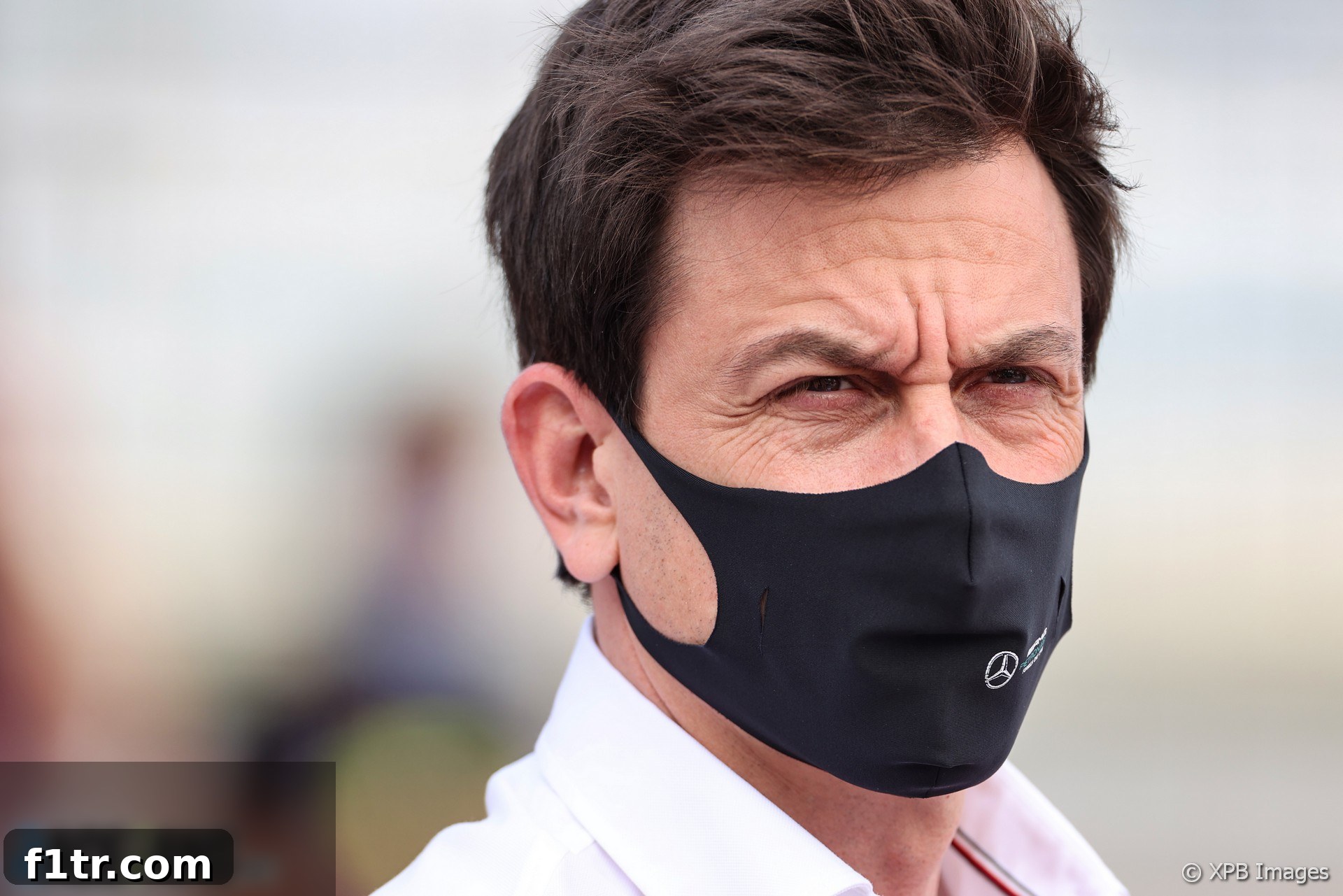
Lewis Hamilton’s decision to continue his illustrious career in Formula 1 was not merely a reaction to the FIA’s recent announcement regarding changes to its race director structure, according to Mercedes team principal, Toto Wolff. Amidst widespread speculation about the seven-time world champion’s future, Wolff has offered a clear perspective, asserting that Hamilton’s motivation stemmed from a deeper personal and professional need.
The motorsport world was rocked yesterday by the FIA’s confirmation that F1 race director Michael Masi would no longer serve in his role. This significant shake-up in officiating followed the deeply controversial conclusion to last year’s championship, which left many questions unanswered and sparked intense debate across the sport. The structural overhaul, designed to enhance the integrity and consistency of race management, includes the appointment of two new race directors who will rotate roles, supported by a virtual race control room akin to football’s VAR system, and a permanent F1 sporting director.
Hamilton found himself at the heart of the 2021 Abu Dhabi Grand Prix controversy, ultimately losing the championship title to rival Max Verstappen. The pivotal moment occurred during a final-lap restart, orchestrated by Masi, which was widely perceived to have contravened established sporting regulations. Since that dramatic and heartbreaking day, Hamilton has maintained a public silence, only breaking it today as Mercedes-AMG Petronas F1 Team unveiled their new car for the highly anticipated 2022 F1 season.
The Unwavering Conviction: Wolff on Hamilton’s Inevitable Comeback
Despite pervasive concerns and intense media speculation that Hamilton might choose to retire from the sport after such a crushing and controversial defeat, Toto Wolff revealed that he “was never worried” about such an outcome. Wolff, a long-time associate and close confidante of Hamilton, understood the emotional toll but remained confident in his driver’s resilience and dedication to the sport. He acknowledged the profound disillusionment that Hamilton, and indeed the entire team, experienced in the aftermath of the Abu Dhabi Grand Prix.
“Although you have to respect the driver is disillusioned after such events, we have a strong team and a great support system,” Wolff explained to the BBC. “So I knew that he’s going to come back.” This statement underscores the deep bonds and mutual trust within the Mercedes camp, highlighting that their collective strength was a crucial factor in Hamilton’s eventual decision to continue. The support network surrounding Hamilton provided the necessary space and encouragement for him to process the events and reaffirm his commitment.
Wolff firmly insisted that Hamilton’s return to competitive racing was not conditional on any personnel changes within the FIA or the removal of Michael Masi. His comeback, Wolff stressed, was predicated on an internal reconciliation, a personal journey to come to terms with the manner in which the 2021 season finale unfolded. This distinction is crucial, as it shifts the narrative from a reactive decision to a proactive resolution on Hamilton’s part.
Beyond Personnel Changes: The True Driver of Hamilton’s Return
“I think it was not about the race director or anybody else,” Wolff clarified, dismantling the notion that the FIA’s administrative reshuffle was the primary catalyst. “It was about Lewis making peace with how the race ended.” For a competitor of Hamilton’s stature, with a career defined by an unyielding pursuit of excellence and fair play, the events of Abu Dhabi represented a fundamental challenge to his core values. The integrity of the sport and the principles of fair competition are paramount to him, and the controversial final laps significantly undermined these tenets.
“For him, it’s all about justice, sporting fairness, and that wasn’t the case,” Wolff emphasized. This profound sense of injustice required more than just an external solution; it demanded internal processing and a restoration of faith. Hamilton, known for his meticulous preparation and mental fortitude, needed time to reflect deeply on the events, to navigate the emotional turmoil, and to find a way to move forward without compromising his deeply held beliefs about how the sport should be governed and contested. “He needed some time to reflect, he comes back, he’s strong, I see he’s in good spirits,” Wolff added, painting a picture of a refreshed and resolute champion.
The Echoes of Abu Dhabi: A Collective Disillusionment
The profound dejection Hamilton experienced after the race was not an isolated sentiment; it permeated the entire Mercedes team, as Wolff recounted. “Like all of us in the team, there was an initial shock. I mean, it’s Formula 1, we must not forget it’s not global politics. But for us to be living in that microcosm it was absolutely shocking. We’ve never seen anything like that.” This highlights the intensity of the F1 environment and the unique emotional investment that individuals within the sport dedicate to their craft.
The collective feeling of being wronged, particularly after what they perceived as a dominant performance by Hamilton, was difficult to digest. “He had to walk away and he had to walk away and free his mind and think about something else and then start in a way working on those events and trying to find a solution, a mental solution for himself,” Wolff explained, describing the necessary period of detachment for Hamilton to regain his equilibrium. The emotional and psychological toll extended beyond the driver, affecting every member of the team who had poured their energy into the championship campaign.
“We all were [disillusioned] because why we love this sport is that the stopwatch never lies and the honesty about it,” Wolff articulated, touching upon a fundamental principle of motor racing. The purity of competition, where raw speed and talent dictate the outcome, was, in their view, compromised. “And he was clearly the best guy on track on Sunday, not even the best, he was dominating the whole race. And then that’s been taken away by a decision of a single individual against all rules. So, in a way, to kind of digest that is very difficult.” This candid assessment underscores the deep-seated frustration and the sense of having victory unjustly snatched away.
Rebuilding Trust: Mercedes Welcomes FIA’s Officiating Reforms
Amidst the introspection and recovery, the Mercedes team, through Wolff, conveyed their support for the comprehensive changes to F1’s officiating announced by FIA President Mohammed Ben Sulayem. These reforms represent a concerted effort to prevent a recurrence of the controversies that marred the 2021 season finale and to restore confidence in the integrity of race control decisions.
“I think most important is that we move on,” Wolff stated, signalling a desire to shift focus from past grievances to a more robust and transparent future for the sport. “There was so much discussion about the Abu Dhabi event, for the right reasons, because how the grand prix ended is not how a Formula 1 world championship should end. But the FIA has put in some good new structures and we are happy about that.” The new framework, which includes a remote support facility and clearer communication protocols, aims to provide greater clarity and accountability, ensuring that decisions are made consistently and in strict adherence to the regulations.
The welcoming of these changes by a key stakeholder like Mercedes is vital for the sport’s healing process. It suggests a collaborative path forward, where lessons learned from past controversies are actively integrated into new operational procedures. The collective goal is to safeguard the sporting integrity of Formula 1, ensuring that the spectacle and the championship fight are decided fairly on the track, by the drivers, and not by disputable interpretations of regulations in critical moments.
A New Chapter: The Road Ahead for Hamilton and Mercedes in 2022
With Lewis Hamilton’s decision confirmed and the FIA’s reforms in motion, the focus now squarely shifts to the upcoming 2022 F1 season. This year marks a significant overhaul of technical regulations, promising a fresh slate for all teams and a potential reshuffling of the competitive order. For Hamilton and Mercedes, it represents an opportunity to channel the disappointment of 2021 into renewed drive and determination. Hamilton’s appearance at the W13 launch, radiating strength and good spirits, is a testament to his mental resilience and his enduring passion for racing.
His return is not merely about winning another championship, but about upholding the very principles he believes in: justice and fair competition. It’s a statement of defiance against adversity and a renewed commitment to prove his mettle on the track. Mercedes, a team synonymous with excellence and innovation, will undoubtedly be as motivated as their star driver to reclaim the Constructor’s Championship and support Hamilton in his quest for an unprecedented eighth drivers’ title.
Ensuring Sporting Integrity: The Long-Term Impact of the 2021 Finale
The events of the 2021 Abu Dhabi Grand Prix sparked a broader, crucial conversation about the governance and integrity of Formula 1. Such incidents, when handled inadequately, can erode fan confidence, diminish the perception of fairness, and even impact driver morale. Hamilton’s initial period of silence underscored the severity of the psychological impact, not just on him, but on anyone who believes in the sanctity of sporting rules.
The reforms introduced by the FIA are a necessary step towards rebuilding trust. They send a clear message that the sport is committed to learning from its mistakes and to ensuring that future championships are decided unequivocally by on-track performance, free from the shadow of questionable decisions. The role of the FIA as the sport’s governing body is paramount in upholding the spirit of competition and in fostering an environment where all participants feel confident in the application of regulations.
Anticipation Builds: The 2022 F1 Season Dawns
As the 2022 Formula 1 season approaches, the excitement is palpable. The combination of radical new car designs, the return of a rejuvenated Lewis Hamilton, and a reformed officiating structure sets the stage for what promises to be an enthralling year. Fans across the globe eagerly await the first race, eager to witness the battles unfold on track, confident that the focus will be squarely on the racing itself.
Hamilton’s decision to continue racing is a powerful affirmation of his love for the sport and his unwavering pursuit of excellence. It signals that even after facing the most profound professional disappointment, the desire to compete at the highest level, to champion justice, and to drive with unbridled passion remains his ultimate motivation. The collective sigh of relief from the F1 community is almost audible, as one of its biggest stars prepares to embark on another challenging, yet potentially triumphant, chapter.
Related 2022 F1 Season Articles
- Mercedes told me “you’re wrong” about 2022 car’s problems – Hamilton
- FIA confirms all 10 F1 teams complied with 2022 cost cap
- Steiner “not ashamed” of panning “slow” Schumacher in Drive to Survive
- Albon believes year out of F1 improved him as a driver
- Hamilton sees diversity gains in F1 years on from his ‘traumatising’ experience of racism
Browse all 2022 F1 season articles