Formula 1’s Tyre Conundrum: Balancing Performance, Safety, and Spectacle with Pirelli
Formula 1, often dubbed the pinnacle of motorsport and a cutting-edge technological platform, attracts global companies for a multitude of strategic reasons. Primarily, these partnerships serve to elevate brand recognition and product perception. Beyond marketing, a significant draw lies in the sport’s unique attributes and advanced technologies, offering invaluable lessons that can be applied to product development, system optimization, manufacturing techniques, and stringent quality control. This dynamic exchange of innovation and exposure forms the bedrock of F1’s commercial landscape.
Pirelli’s Return to F1: A Strategic Imperative
When Pirelli made its return to Formula 1 in 2011, taking over from Bridgestone – which had become F1’s first officially appointed sole tyre supplier after Michelin’s departure in 2006 – the Italian giant had clear objectives. Executives at the time articulated a vision of enhancing road tyre technologies through rapid prototyping, streamlining manufacturing processes, and significantly boosting global brand awareness. F1 provided the ultimate crucible for testing and developing these ambitions, promising a unique platform for both technological advancement and unparalleled marketing reach.
However, this exclusive appointment came with a distinct set of challenges and a unique operational dynamic. F1 and its constituent teams effectively became Pirelli’s primary customers, dictating the terms and parameters of tyre supply. This relationship is often formalized through a ‘target letter,’ a crucial document that outlines specific lap time ‘deltas’ or differences between various tyre compounds. The primary aim of these specifications is to engineer tyre degradation that encourages varying race strategies, thereby enhancing “the show” for fans by creating more unpredictable and exciting competition.
The Customer-Supplier Dynamic: A Complex Relationship
Understanding this intricate customer-supplier relationship is paramount to comprehending the fundamental dynamics of Formula 1 tyres. Pirelli, as the supplier, is contractually obligated to deliver precisely what its customer, Formula 1, demands. This fundamental principle was candidly explained by Pirelli’s then-motorsport director, Paul Hembery, in one of his first in-depth interviews following their 2011 re-entry.
During a 2012 test at Mugello, as criticisms from drivers, notably seven-time world champion Michael Schumacher, began to surface regarding tyre performance, Hembery clarified the situation. He stated, “We were asked to come up with a certain approach, and that was agreed with the teams.” He further elaborated that Ross Brawn, a pivotal figure who then served as Mercedes F1 team principal and concurrently as a technical delegate and spokesperson for the (now defunct) Formula One Teams Association, was instrumental in shaping these demands. Brawn, acting on behalf of all teams, had articulated a desire to replicate the thrilling and unpredictable racing seen at the 2010 Canadian Grand Prix, a race where unexpected tyre performance led to multiple pit stops and lead changes. “Canada 2010 was the model they wanted, and that is what we worked on,” Hembery confirmed.
Hembery further expounded on the philosophy behind these choices: “What do we want? One car to disappear into the distance? The public turned away from the sport when that happened, so there was a very clear decision made by the sport to address the racing.” This strategic decision underscored F1’s commitment to entertainment, even if it meant engineers and drivers sometimes grappled with challenging tyre characteristics.
Adaptation vs. Absolute Performance
He emphasized that Pirelli’s role required them to adapt to F1’s demands, rather than unilaterally pursuing maximum performance or durability. “We can supply tyres that don’t degrade and allow [drivers] to push, as we did [in 2011] when the hard and medium tyres had negative degradation, [when] the loss of performance from the tyre was less than the loss of fuel.” This statement highlights Pirelli’s technical capability to produce highly durable tyres, yet their mandate prioritized degradation for strategic variety.
Hembery concluded by stressing the collective decision-making process: “We would [be open to change] for the sport, but it’s not just the drivers [who decide] – it’s the teams, the promoter (F1). The team principals tend to be quite pragmatic and look at the bigger picture, and I would be very surprised if they asked us to do anything different. At the end of the day, we do what they want and also the right thing for the sport: it is not us on our own deciding a direction, you have to work together as a partnership.”
Evolution of Oversight and Persistent Safety Concerns
Following Hembery’s departure from Pirelli and F1, his former lieutenant, Mario Isola, assumed the role of car racing manager. A significant development in recent years has been the increased involvement of the Grand Prix Drivers Association (GPDA) in the tyre specification process, particularly since 2019, at the instigation of the FIA. Notably, drivers like Lewis Hamilton, a frequent critic of Pirelli’s compounds, have directly influenced the ‘target letter’.
Despite this expanded input, the GPDA has often remained cautious in its public statements regarding spectacular tyre failures, typically only commenting when directly prompted. During the lead-up to the French Grand Prix, when RaceFans questioned GPDA director George Russell about the recent Baku incidents, his response underscored the drivers’ primary concern: “Definitely, safety is first and foremost in our sport paramount. I think it is the duty of all of us to try and put an end to all these issues.”
Ultimately, Pirelli bears the fundamental responsibility to provide safe products capable of withstanding the immense 5G forces and sustained energy levels generated by modern F1 cars. To ensure this, Pirelli has stipulated specific operating parameters, some of which are now enforced through daily race director notes issued by the FIA during race weekends and comprehensive technical directives outlining detailed operating procedures, with one such directive recently spanning 12 pages.
The Tyres Under Scrutiny: Over-Regulation or Capability Gap?
This extensive regulatory framework prompts some critical questions: Why would a supplementary 12-page document be necessary to ensure that highly qualified engineers, acutely aware of the safety implications of any missteps, adhere to prescribed tyre pressures and camber angles? Why should a seemingly minor variance of 1 psi be the difference between a successful lap and a barrier collision?
Has Formula 1 become overly regulated, or has Pirelli, in its continuous pursuit of meeting customer demands for specific tyre characteristics, introduced such complex technologies that increasingly stringent operating procedures are now unavoidable? Or, as its most vocal critics suggest, is Pirelli genuinely struggling to deliver tyres capable of consistently withstanding the immense performance demands of current F1 cars, which are undoubtedly the heaviest and most powerful in the sport’s history?
Pirelli’s Pedigree and a Troubling Incident Record
Addressing the latter point first, Pirelli is undeniably a world-class company with a considerable and successful history in motorsport. They famously shod the 1950 world championship-winning Alfa Romeo 158, a car weighing 710kg – not far off the 740kg of current F1 cars. There is absolutely no doubt that Pirelli possesses the competencies required to design and manufacture safe, fast, and durable tyres. Had there been any fundamental doubts about Pirelli’s integrity or capability, the FIA would not have approved them as the sole tyre supplier for Formula 1.
Nevertheless, the tyre supplier’s incident record since re-entering a sport where safety is absolutely paramount has raised significant concerns. Below is a list of notable tyre failures that have occurred under Pirelli’s tenure, excluding incidents demonstrably caused by team or car-related issues:
- 2013 British Grand Prix – Lewis Hamilton, Felipe Massa, Jean-Eric Vergne and Sergio Perez (the latter also in final practice)
- 2013 Korean Grand Prix – Sergio Perez
- 2015 Belgian Grand Prix – Nico Rosberg (second practice), Sebastian Vettel (race)
- 2016 Austrian Grand Prix – Sebastian Vettel
- 2020 British Grand Prix – Valtteri Bottas, Carlos Sainz Jnr, Lewis Hamilton
- 2020 Tuscan Grand Prix – Lance Stroll
- 2020 Emilia-Romagna Grand Prix – Max Verstappen
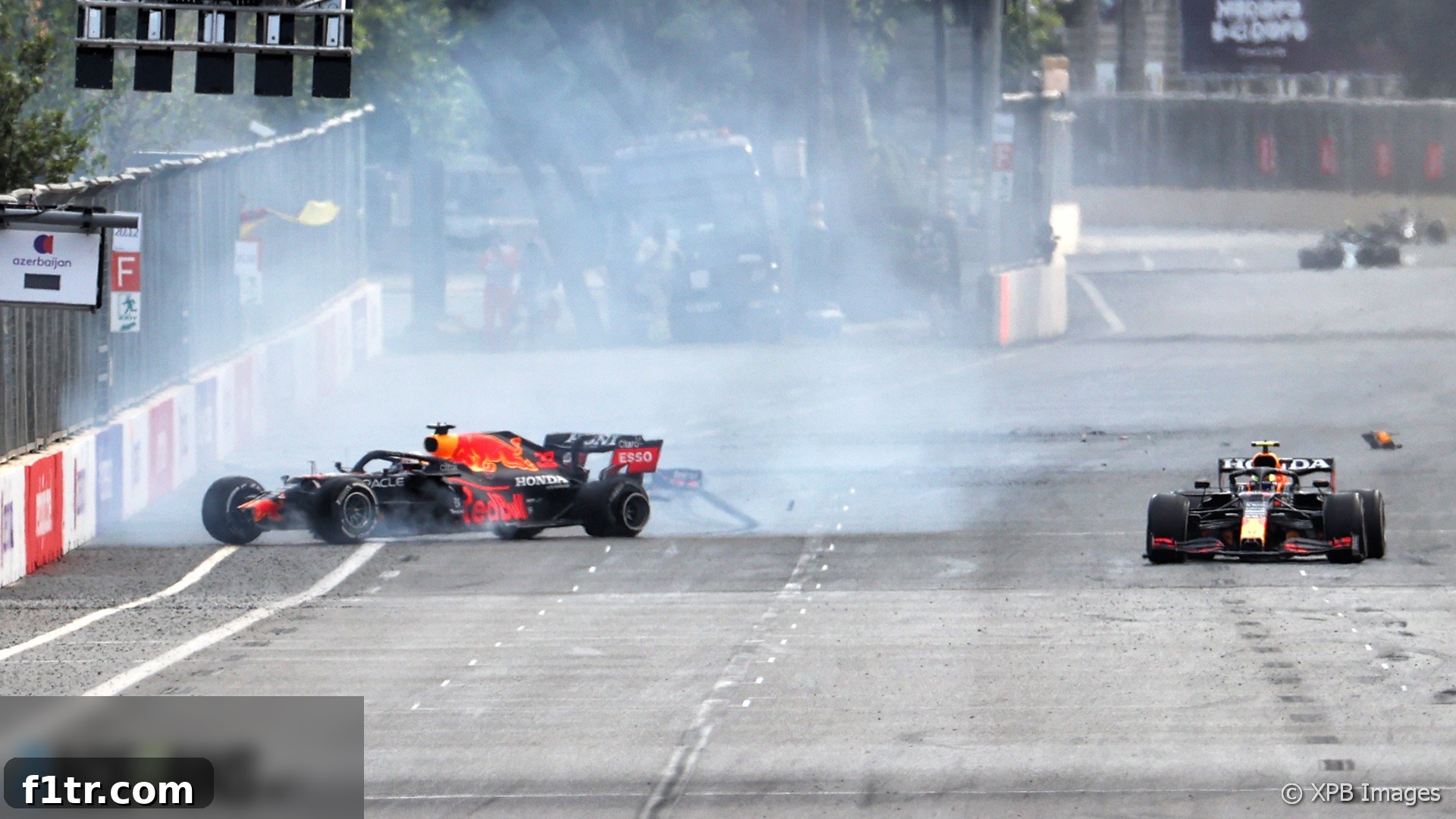
- 2021 Azerbaijan Grand Prix – Max Verstappen, Lance Stroll (Hamilton also had a cut)
While kerb damage or debris are frequently cited as causes for tyre issues, it’s noteworthy that such explanations are rarely emphasized in other motorsport categories that compete on the same circuits and utilize similar car construction materials. Although component failures are an expected reality in F1 due to the extreme demands placed on all its technologies – with ‘long-lifing’ and advanced simulation techniques having significantly reduced incidents to the point where retirements are now the exception rather than the rule – there remains a strong perception in the paddock that Pirelli has been disproportionately affected by unfortunate coincidences when it comes to kerb and debris damage.
These perceptions were significantly amplified following the seventh such failure within a 12-month period. Max Verstappen voiced these concerns in the aftermath of his 320kph crash in Baku, which robbed him of victory, remarking, “It will be related to debris, it’s like that.” However, Pirelli identified other, unspecified causes, indicating that Red Bull’s tyres were operating outside prescribed pressure parameters.
During the French Grand Prix weekend, Mario Isola emphasized that all components have operating parameters that must be respected. He stated: “I think tyres are not different to engines, wings, suspensions, just to respect the parameters they are designed to work in with so we have a very clear set of parameters that we need to respect on the tyres, they could be pressure, temperatures, camber, whatever.” He makes a valid point. Yet, the teams that suffered failures in Baku – Red Bull and Aston Martin – were alleged to have raced with lower than prescribed pressures despite passing stationary checks, implying they somehow circumvented the regulations. However, using 100rpm more on an engine is typically not a safety-critical issue, nor is an additional one degree of wing angle. In contrast, one or two psi variance in tyre pressure appears to have made all the difference, leading to catastrophic failure.
Historical Context and Testing Limitations
An analysis of major tyre incidents in F1 this century recalls only one outside of those listed above: the infamous 2005 United States Grand Prix, where Michelin candidly admitted to having misjudged the demands of the re-surfaced banked portion of the Indianapolis track. Notably, no major incidents immediately spring to mind from Bridgestone’s tenure (1997-2010), despite the two brands being embroiled in intense tyre battles during 1997-98 and 2001-06. During that era, numerous lap and top speed records were set, some enduring for a decade or more.
Today, Pirelli operates without direct competition from other tyre manufacturers, meaning it cannot attribute failures to the pressures of a ‘tyre war’. However, at the height of those intense battles, teams tested virtually non-stop – sometimes seven days a week – with many of their costs underwritten by their respective tyre suppliers. This relentless testing allowed suppliers to gather mountains of invaluable data, refining their products under real-world conditions.
Under F1’s current draconian test restrictions – for example, this season teams had only three days of pre-season testing, with in-season testing banned save for tightly controlled tests of the upcoming 2022 18-inch rubber – Pirelli does not enjoy such luxuries. While simulation tools and tyre modeling programs have advanced significantly, ostensibly reducing the need for intensive physical testing, a critical balance between on-track validation and virtual development has yet to be found in F1, and Pirelli often carries the burden of this shortfall.
The Economics of F1 Tyre Supply: Marketing vs. Performance
Testing costs money – substantial amounts of it. However, the fact that Pirelli undertakes less physical testing than its predecessors does not necessarily mean it spends less on F1 overall. In fact, a compelling case could be made that Pirelli spends more in a season than either Bridgestone or Michelin did, even when adjusting for economic factors. The budgets of previous suppliers primarily funded research and development, along with the actual costs of racing, with little to no contributions paid to F1 for marketing programs.
Today, to secure the coveted sole supply contract, the successful tenderer is expected to contribute substantially to F1’s coffers. While exact figures remain confidential, Pirelli is believed to allocate approximately half of its estimated $100 million annual F1 budget to title sponsorship and trackside ‘bridge and board’ advertising. The remaining balance covers development, manufacturing, and race operations. This means a staggering $50 million is dedicated purely to marketing, with the equivalent amount left for all other crucial aspects of tyre supply and innovation.
A quick review of 2006 trackside and podium photographs reveals not a single visual of either tyre supplier acting as a race or billboard sponsor. In stark contrast, recent footage shows various Grand Prix races prominently sponsored by Pirelli. One can only imagine how much better F1 tyres could be if another $50 million annually were diverted from marketing directly into research and development. During the 2014 tender round, a Michelin insider confided that his company was willing to match any competitor’s spend, provided the full amount flowed into the F1 technical program, with the brand’s on-track performance serving as its primary marketing. Clearly, such a proposal would not align with F1’s commercial objectives; hence, Michelin did not proceed with the tender, instead turning (very successfully) to the World Endurance Championship (WEC) with Porsche.
Lessons from WEC and the Promise of Smart Tyres
Consider the Porsche 919 LMP1 car, which is approximately 100kg heavier than current F1 cars and similarly powered. Yet, WEC drivers routinely remarked that they were able to push for the full duration of their stints, even “double-stinting” on occasion. Indeed, a WEC car can consistently cover around 300km – roughly a Grand Prix distance – on a single set of medium compound tyres, even when driven aggressively. While WEC cars generally feature four-wheel-drive, which helps distribute traction and thus tyre wear, it raises questions about whether F1 has genuinely reached the limits of adhesion for its 1,000bhp, two-wheel-drive machines. This critical situation is currently under review for the 2025-onwards regulations, as F1 technical director Pat Symonds exclusively told RaceFans when he shared his plans for F1’s future.
There is, however, good news on the horizon. The 2022 regulations mandate the introduction of “smart tyres” equipped with integral sensors. These advanced sensors will monitor critical parameters such as tyre pressure, and three vital temperature metrics: air, carcass, and rim. This technology will not only enable the tyre supplier and governing body to monitor tyres on-track for compliance but, crucially, will provide early warnings of potential failures. These 19-inch tyres, originally slated for this year as part of F1’s ‘new era’ package, were unfortunately delayed due to the COVID-19 pandemic.
Conclusion: A Shared Responsibility for Safety and Performance
Ultimately, every stakeholder in Formula 1 – from drivers and teams to the FIA, F1 management, Pirelli, and even circuit designers – is, to some degree, implicated in the events witnessed in Baku and other similar incidents. Engaging in “blame games” over safety-critical components and pointing fingers will not resolve the underlying issues. That said, there is no escaping the fundamental fact that ultimate responsibility for the integrity and safety of Pirelli’s tyres rests squarely with Pirelli.
F1’s impending ‘new era’, with its significant regulatory shifts and the mandatory adoption of advanced sensor technologies, is likely to represent Pirelli’s final opportunity to demonstrate its capabilities. These integrated sensor systems will leave the company – or any future replacement supplier – with nowhere to hide if the tyres fail to meet the rigorous performance and safety standards demanded by Formula 1. The future of F1’s tyres hinges on a collaborative effort to merge cutting-edge technology, robust testing, and transparent communication, all while maintaining the thrilling spectacle that defines the sport.
RacingLines
- The year of sprints, ‘the show’ – and rising stock: A political review of the 2021 F1 season
- The problems of perception the FIA must address after the Abu Dhabi row
- Why the budget cap could be F1’s next battleground between Mercedes and Red Bull
- Todt defied expectations as president – now he plans to “disappear” from FIA
- Sir Frank Williams: A personal appreciation of a true racer
Browse all RacingLines columns