Pierre Gasly Explains Stance on Controversial AlphaTauri Collision with Yuki Tsunoda at British Grand Prix
The exhilarating world of Formula 1 often brings thrilling battles, but none are quite as scrutinised as those between teammates. Such was the case at the 2022 British Grand Prix, where AlphaTauri drivers Pierre Gasly and Yuki Tsunoda found themselves in a highly debated collision. Gasly, speaking after the incident, clarified his perspective, stating he afforded his teammate more room than he initially believed, underscoring the complexities of on-track etiquette within a team.
The Silverstone Showdown: A Teammate Tangle at Village Corner
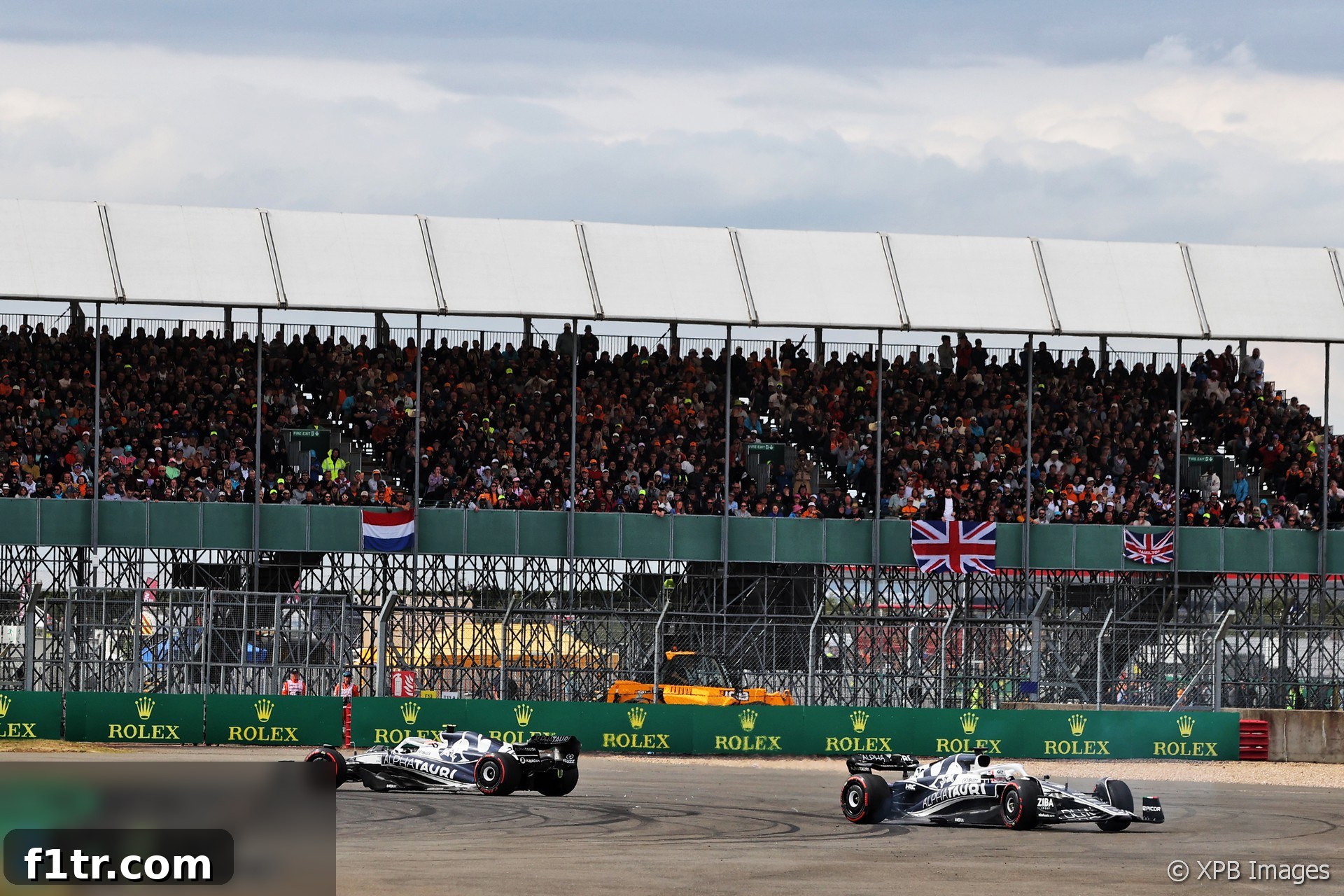
The contentious moment unfolded on lap 11 of the Silverstone race at the challenging Village corner. Tsunoda, in a spirited attempt to overtake Gasly for a commendable seventh place, made a move down the inside. However, the manoeuvre went awry, leading to Tsunoda spinning and subsequently colliding with Gasly. The impact sent both AlphaTauri cars into a spin, severely compromising their races and causing a significant drop down the order for both competitors.
The race stewards swiftly intervened, adjudging Tsunoda to be primarily at fault for the incident. He was handed a five-second time penalty, which, combined with the damage sustained, saw him finish the race in the unenviable last position. Gasly, on the other hand, was forced to retire from the British Grand Prix shortly after, shown the black-and-orange warning flag due to extensive damage that rendered his car unsafe to continue.
Gasly’s Call for Control: “He Lost Control, He Spun, and Then He Hit Me”
In the aftermath, Pierre Gasly did not mince words regarding his younger teammate’s responsibility. While acknowledging the competitive nature of Formula 1, Gasly stressed the paramount importance of maintaining control, especially when battling a fellow team member. “I’m doing my race for the team and for myself,” Gasly asserted, reflecting the inherent drive of any F1 competitor. “I fight for any position. He’s my team mate. I fight my position.”
Revisiting the fateful corner, Gasly expressed surprise upon reviewing the incident footage. “I gave him plenty of space – even more than I thought. When I looked at the camera, there was even more space than I thought.” This statement highlights Gasly’s belief that he had provided ample room for Tsunoda to execute the overtake cleanly. The Frenchman further elaborated on a crucial pre-race understanding within the team: “The funny thing is that has been said before the race, we can fight. And if ‘we can fight’, it means we can fight as long as we have control of what we are doing.” This clarification serves as a fundamental principle for teammate racing – aggressive yet controlled. Gasly concluded his account of the immediate incident with a clear explanation of the cause: “Unfortunately he lost control, he spun, and then when he spun he hit me.”
Broader Repercussions: The Ripple Effect on the Red Bull Family
The ramifications of the AlphaTauri collision extended beyond just the two drivers and their immediate team. In an unfortunate twist of fate, Max Verstappen, the reigning world champion from the senior Red Bull Racing team, also suffered indirect consequences. Verstappen’s car collected some of the debris scattered from the Gasly-Tsunoda incident, which significantly compromised the handling of his car. This unforeseen damage impacted Verstappen’s performance, costing him precious pace and potentially influencing the outcome of his race, preventing what could have been a dominant victory.
Gasly acknowledged the broader negative impact, stating, “It had a pretty bad impact because it affected three cars of the four Red Bull cars.” This comment underlines the interconnectedness within the Red Bull motorsport family, where incidents involving one junior team car can have cascading effects on the others, including the flagship team. While acknowledging that mistakes are an inherent part of racing, the scale of this particular error, affecting multiple cars within their broader organisation, undoubtedly led to internal discussions and reflections.
Trust and Tactics: The Unspoken Rules of Teammate Racing in F1
Despite the heated moment and the unfortunate outcome, Gasly maintained a professional stance on future battles with Tsunoda. When questioned about his ability to trust his teammate in subsequent on-track encounters, Gasly’s response was pragmatic yet nuanced. “I mean, I should trust him – we’re F1 drivers, so we know what we are doing inside the car,” he said, reflecting the inherent confidence and skill expected of Grand Prix drivers.
However, this trust comes with a crucial caveat, particularly when a teammate is involved. Gasly articulated a vital principle: “As I said, I think it’s fine to race hard. When it’s on your team mate, I think you should just take that 1% extra caution not to have such a big consequence.” This “1% extra caution” is a profound insight into the delicate balance Formula 1 drivers must strike. While competition is fierce, the collective good of the team, and avoiding unnecessary damage or lost points, often necessitates a slightly more measured approach when facing a driver from the same garage.
Learning from the Best: Examples of Clean Teammate Battles
To illustrate his point about how teammates can and should race each other effectively and respectfully, Gasly referenced other notable intra-team battles witnessed on the grid. He pointed to the intense, yet ultimately clean, skirmishes between Alpine drivers Fernando Alonso and Esteban Ocon. Their duels, often characterised by aggressive overtaking and spirited defence, rarely result in contact or compromise the team’s overall performance. Another prime example cited by Gasly was the thrilling battle for the lead at Silverstone itself, between Ferrari teammates Carlos Sainz Jnr and Charles Leclerc. This duel, despite its high stakes, showcased professional and controlled racing, where both drivers pushed the limits without jeopardising their cars or each other’s races.
“You see Ocon and Alonso fighting harder than ever between each other, Carlos and Charles fight each other fine as well,” Gasly continued, reinforcing his argument. He further elaborated on the parameters of such battles: “I think it should happen as long as it doesn’t affect the whole performance of the race. We were fighting only for a couple of corners – I think this is fine. If it’s a 10-lap battle and you ruin your tyres, it’s a bit silly. I think you should be able to fight, but just as long as you don’t take each other out.” This highlights the strategic aspect of teammate racing: short, sharp battles are acceptable, but prolonged, destructive duels that degrade tyres or cause damage are counterproductive to the team’s objectives.
AlphaTauri’s Path Forward: Lessons from Silverstone
The Silverstone collision served as a stark reminder of the fine line between aggressive racing and costly mistakes, especially within the confines of a Formula 1 team. For AlphaTauri, the incident resulted in a lost opportunity for valuable championship points and significant car damage, placing additional strain on resources. While team orders are often a contentious topic, incidents like these can lead team principals to re-evaluate their ‘let them race’ philosophy, particularly if repeated errors threaten the team’s standing in the Constructors’ Championship.
The dynamic between Pierre Gasly and Yuki Tsunoda will undoubtedly be under increased scrutiny moving forward. While Gasly’s words reflect a desire for continued trust, the onus is now on Tsunoda to demonstrate greater control and a refined understanding of teammate racing etiquette. Formula 1 is a sport where every point matters, and preventing such incidents is crucial for a smaller team like AlphaTauri to maximise its potential against formidable competitors.
Conclusion: A Crucial Lesson in F1 Teammate Dynamics
Pierre Gasly’s candid reflections on the British Grand Prix collision with Yuki Tsunoda offer valuable insights into the intricate world of Formula 1 teammate dynamics. The incident at Silverstone underscores that while the spirit of competition is vital, it must always be tempered with control, awareness, and a degree of caution when battling a driver sharing the same garage. The “1% extra caution” principle articulated by Gasly is a powerful message, advocating for hard but clean racing that prioritises the collective success of the team without stifling individual competitive instincts. As AlphaTauri continues its season, the lessons learned from this contentious moment will undoubtedly shape the future interactions between its two talented drivers, reminding everyone that in the pursuit of glory, sometimes the greatest rival is also your closest ally.