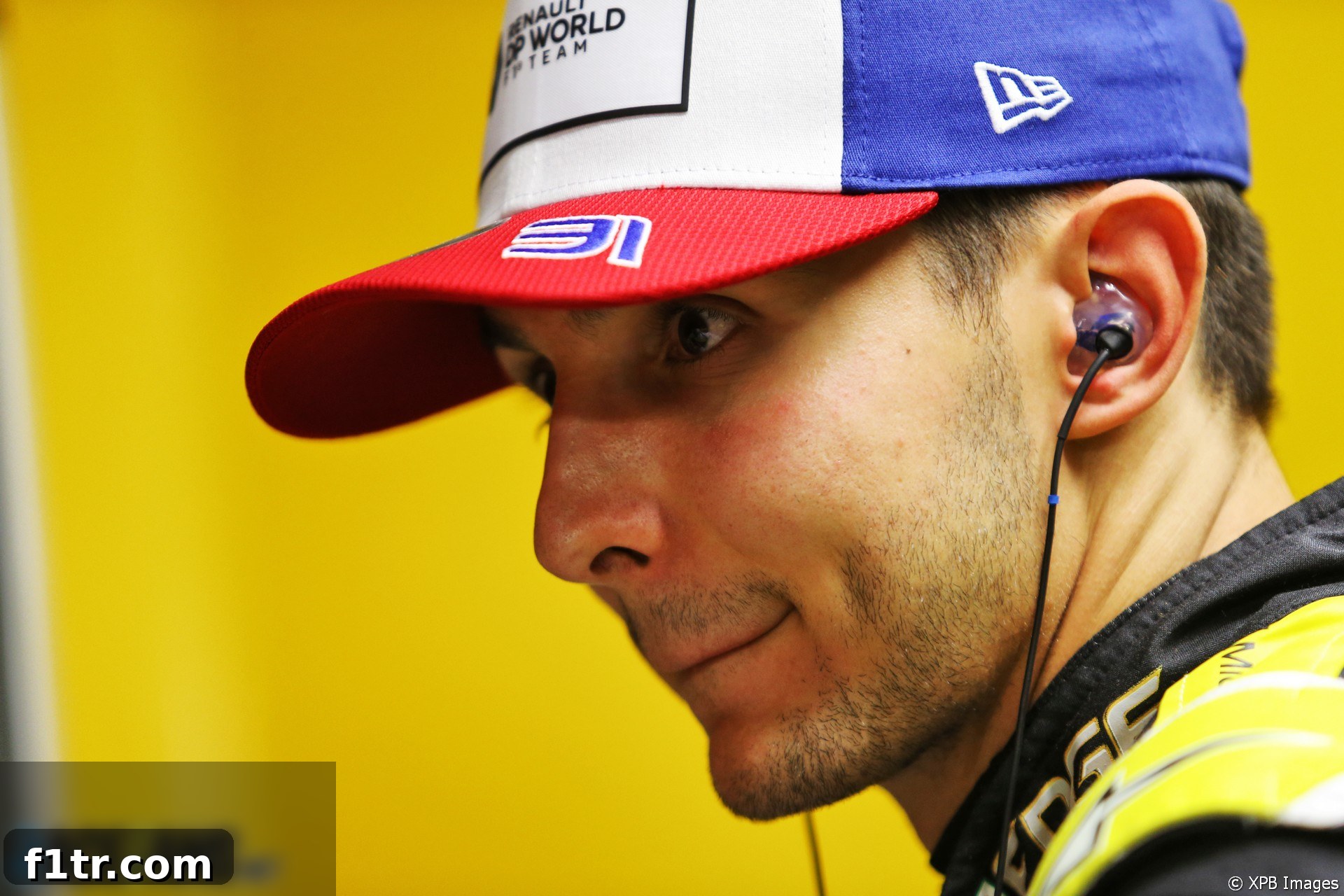
The 2020 Formula 1 season marked the much-anticipated return of Esteban Ocon to the grid after a year spent on the sidelines as a reserve driver. Joining the Renault F1 team, he faced the monumental challenge of partnering with the highly acclaimed and experienced Daniel Ricciardo. From the outset, Ocon’s comeback trail proved to be a steep one, as he initially found himself clearly outclassed by his teammate’s formidable pace and consistency. This period was not just about getting back into the rhythm of competitive racing but also about adapting to a new car philosophy and integrating into a team dynamic with a well-established leader.
The initial phase of the season highlighted the natural rustiness that comes with a year away from the cutthroat environment of Formula 1. While Ricciardo consistently delivered strong performances, Ocon wrestled with finding his footing. However, to his credit, the young Frenchman demonstrated remarkable resilience and a commendable learning curve. He made consistent improvements throughout the year, steadily closing the gap to Ricciardo. This progress, though not always immediately discernible in his race-by-race results due to a string of unfortunate incidents, laid the groundwork for a stronger second half of the season.
One of the early highlights for Ocon was his qualifying performance at the Styrian Grand Prix, where he secured a season-best fifth place in a rain-affected session. This result offered a glimpse of his raw speed and potential, suggesting that he possessed the intrinsic talent to compete at the sharp end. Despite this flash of brilliance, out-qualifying Ricciardo remained a significant hurdle, which he didn’t achieve again until the very last race of the season in Abu Dhabi. Yet, the statistics don’t always tell the full story; the gap between the two Renault drivers in qualifying was frequently marginal, often less than a tenth of a second, underscoring Ocon’s growing proficiency over a single lap.
In race conditions, however, Ricciardo typically held the upper hand, often showcasing superior race craft, tyre management, and outright pace. More than once, Ocon was instructed by the team to allow his faster teammate to pass, a clear indication of the pecking order and a frustrating reality for any competitive driver. This dynamic, while necessary for the team’s overall points haul, undoubtedly added to the pressure on Ocon to elevate his race performance.
Beyond the inherent challenge of matching a top-tier teammate, Esteban Ocon’s 2020 campaign was plagued by an extraordinary run of bad luck and technical woes. These issues significantly hampered his ability to accumulate points and truly showcase his improved pace. Following his excellent qualifying at the Red Bull Ring, a radiator problem forced him into retirement during the race, costing him valuable points. Later in the season, during the Tuscan Grand Prix at Mugello, overheating brakes ended his challenge prematurely on a day where several retirements could have propelled him to a strong finish, a feat Ricciardo capitalized on by securing an impressive fourth place. Further faults led to retirements at both the Nürburgring and Imola, painting a grim picture of mechanical reliability that disproportionately affected Ocon’s side of the garage.
While many of his retirements were beyond his control, Ocon was also involved in one of the year’s more bizarre incidents. During final practice at the Circuit de Catalunya, he swiped a barrier while attempting to avoid Kevin Magnussen’s Haas ahead of him. Fortunately, this peculiar crash ultimately proved inconsequential in terms of race results, as both Renaults finished out of the points that weekend, continuing a generally disappointing start to the season for both drivers.
Strategic missteps and team communication issues further compounded Ocon’s challenges. At the Hungaroring, he lost positions at the start, then pitted too late for slick tyres, which resulted in him being passed by Lando Norris on the very final lap, costing him a potential points finish. Monza brought a particularly frustrating experience. After a red flag period, Ocon was unable to take the restart on his preferred set of tyres because the team had failed to keep them warm. This oversight by the team represented a significant missed opportunity for points and led to palpable disappointment from the young driver.
Despite these setbacks, glimpses of Ocon’s potential and renewed confidence began to emerge. A fifth-place finish at the Belgian Grand Prix, achieved right behind Ricciardo and following a crucial late pass on Alexander Albon, was a strong indication that better times were indeed ahead. This performance showcased his improved race craft and his ability to execute under pressure, providing a much-needed boost in morale for both Ocon and the team.
However, misfortune continued to stalk Ocon, manifesting in what might have been his most costly retirement of the season at Istanbul. After a brilliant start saw him climb to third place, Ocon was involved in an unfortunate tangle with his teammate. Ricciardo, in turn, had Valtteri Bottas on his inside, leading to a chain reaction that resulted in Ocon being knocked into a spin and forced to retire. This incident was particularly bitter, as it robbed him of a very strong points finish, potentially even a podium, and underscored the fine margins and unpredictable nature of Formula 1 racing.
Esteban Ocon |
|
|---|---|
| Beat team mate in qualifying | 2/17 |
| Beat team mate in race | 3/12 |
| Races finished | 13/17 |
| Laps spent ahead of team mate | 209/806 |
| Qualifying margin | +0.20s |
| Points | 62 |
Then, at the second race held at the Bahrain International Circuit – the Sakhir Grand Prix – Ocon’s luck finally took a dramatic turn for the better. In a chaotic race marked by drama and unexpected twists, a perfectly timed Safety Car period played directly into his hands. Coupled with the retirements of several front-running drivers, this allowed Ocon to climb through the field. He executed a brilliant and decisive pass on Lance Stroll to secure a stunning second place, crossing the chequered flag just behind the other Racing Point. This remarkable podium finish was not only his first in Formula 1 but also a significant emotional and psychological breakthrough, a just reward for his persistent efforts throughout a challenging season.
Ocon carried this momentum into the final race of the season in Abu Dhabi. In a symbolic act of his season’s progression, he once again passed Lance Stroll on the final lap, solidifying a strong finish to his 2020 campaign, which had begun so disappointingly. His total of 62 points, while less than Ricciardo’s tally, represented a solid foundation built on resilience and adaptation, especially considering the misfortunes he endured. The statistical breakdown reveals a qualifying margin of +0.20s to Ricciardo, and he spent 209 out of 806 laps ahead of his teammate. While these numbers illustrate the dominance of Ricciardo, they also subtly reflect Ocon’s consistent improvement, particularly in the latter half of the season when the gaps narrowed considerably.
As the curtains closed on 2020, Esteban Ocon had demonstrated his mettle, transforming a difficult start into a triumphant end. However, the road ahead promises an even greater challenge. With the formidable two-time world champion Fernando Alonso replacing Daniel Ricciardo for the upcoming season, Ocon now faces arguably the toughest test of his Formula 1 career to date. The experience gained and the improvements made during his demanding 2020 comeback will undoubtedly be crucial as he prepares to battle one of the sport’s all-time greats.
2020 F1 season review
- 2020 F1 season driver rankings #1: Lewis Hamilton
- 2020 F1 driver rankings #2: Max Verstappen
- 2020 F1 driver rankings #3: Charles Leclerc
- 2020 F1 driver rankings #4: Carlos Sainz Jnr
- 2020 F1 driver rankings #5: Daniel Ricciardo
Browse all 2020 F1 season review articles