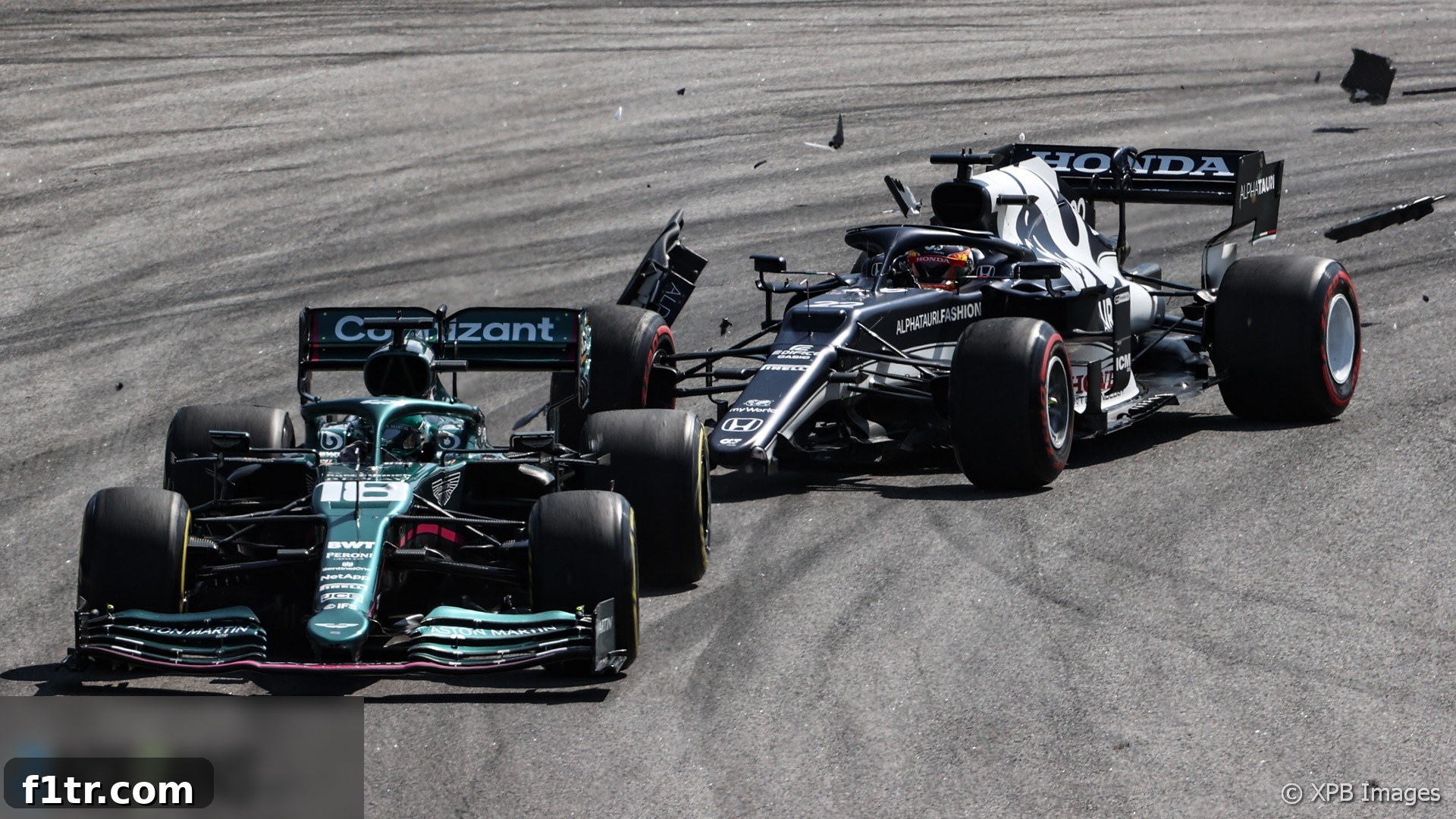
Welcome to our comprehensive Formula 1 news round-up, delving into the latest controversies, technical debates, and driver perspectives that are shaping the current season. In focus today is AlphaTauri driver Yuki Tsunoda, who recently highlighted how Lewis Hamilton’s exemplary driving could have provided a blueprint for Lance Stroll to prevent their collision at the Sao Paulo Grand Prix. This incident, along with other high-profile events, has sparked considerable debate across the paddock regarding stewarding consistency and the intense pressure of elite motorsport.
In Focus: Unpacking the Latest F1 Controversies and Insights
Tsunoda Critiques Penalty, Citing Hamilton’s Avoidance in Stroll Collision
Advert | Become a Supporter & go ad-free
The recent Sao Paulo Grand Prix was a race packed with incident and drama, and one particular clash between AlphaTauri’s Yuki Tsunoda and Aston Martin’s Lance Stroll drew significant attention and differing opinions. Tsunoda was handed a 10-second time penalty by the stewards for the collision, a decision that the Japanese driver vehemently disagreed with, finding widespread support from his fellow competitors. During Friday’s drivers’ briefing, Tsunoda openly expressed his frustration, revealing that “a couple of drivers agreed with what I’m saying” and confirmed that many peers felt the 10-second penalty was “definitely too harsh.”
Tsunoda drew a compelling parallel between his incident and the much-debated on-track skirmish involving seven-time world champion Lewis Hamilton and championship rival Max Verstappen during the same race. He emphasized Hamilton’s proactive approach, stating, “Lewis was watching the mirror and avoided the crash.” This deliberate action by Hamilton, observing his surroundings and taking evasive measures, stood in stark contrast to what Tsunoda perceived as Stroll’s lack of awareness. Tsunoda argued that had Hamilton not been as vigilant, a collision with Verstappen would have been inevitable, yet no penalty was issued in that instance.
The AlphaTauri driver’s frustration stems from what he sees as a clear inconsistency in stewarding decisions. “If he was not looking like Stroll, definitely they would have had a crash,” Tsunoda asserted, highlighting that despite a similar potential for incident, Hamilton avoided it without sanction, while he himself incurred a significant time penalty. “And they didn’t give any penalty and I get 10 seconds penalty, which is a massive difference, so it’s quite inconsistent, to be honest.” This sentiment resonates with many in the F1 community who frequently question the varying interpretations and applications of racing rules, leading to perceived injustices and calls for greater clarity and uniformity from the FIA stewards. The incident undoubtedly ignited further debate on driver responsibility versus racing incidents, and the ongoing challenge of applying consistent penalties in the heat of F1 competition.
Verstappen Expresses Lingering Doubts Over Mercedes’ Car Legality
In the intense crucible of a championship battle, every advantage, perceived or real, becomes a subject of scrutiny. Max Verstappen, currently locked in a fierce fight for the Formula 1 title, has openly voiced reservations about the legality of his championship rival Mercedes’ car. When directly questioned about his complete faith in the Silver Arrows’ compliance with regulations, both in the present and past races, Verstappen’s response was notably circumspect. “It’s difficult to know, of course, fully,” he remarked, reflecting a cautious skepticism rather than outright accusation.
His doubts extend beyond the immediate performance of the Mercedes vehicle, suggesting a broader concern about historical advantages. Verstappen added, “Also, not only what is moving forwards but of course what has been already done and raced with in the previous races.” This statement implies that Red Bull Racing, Verstappen’s team, has been closely monitoring Mercedes’ car design and performance throughout the season, compiling evidence that could point to potential regulatory breaches. “We have footage from it so these things can get highlighted,” he confirmed, hinting at the detailed analysis and strategic intelligence gathering that characterizes modern F1. Such comments fuel the ongoing technical and political battles that often rage behind the scenes, especially when championships are decided by fine margins.
The Red Bull team had, earlier in the weekend, explicitly threatened to protest the legality of Mercedes’ rear wing, a component that has been a focal point of technical debate and speculation. These public statements and implied threats underscore the high-stakes nature of the championship, where any perceived technical advantage can become a battleground. While Verstappen concluded by expressing a desire for a fair fight – “But let’s just hope that we’re going to have a good battle to the end” – his underlying concerns highlight the intricate balance between innovation, regulation, and competitive integrity that defines Formula 1 at its highest level. The implications of such doubts can cast a shadow, however slight, over the legitimacy of rival performances, adding another layer of intrigue to an already thrilling season.
Mazepin’s Qualifying Woes: Just Five Minutes of Running in Practice
Nikita Mazepin faced an incredibly challenging qualifying session, severely undermined by an almost complete lack of track time during the preceding practice sessions. For any Formula 1 driver, accumulating sufficient mileage in Free Practice 1, 2, and 3 is absolutely crucial. These sessions are vital for familiarizing oneself with the circuit, understanding tire degradation and performance, and, most importantly, dialing in the car’s setup to suit both the track conditions and the driver’s preferences. Without adequate practice, a driver is essentially going into qualifying blind, making it nearly impossible to extract the maximum performance from the car and achieve a competitive lap time.
Mazepin’s weekend was plagued by an unfortunate cascade of mechanical issues and damage. He recounted having “about five minutes in a space of two hours” of running, a paltry sum for a professional racing driver preparing for one of the most demanding qualifying formats in motorsport. His struggles began in the first practice session, where his car sustained damage. This necessitated a chassis change, forcing him to sit out the entirety of the second practice session. The problems didn’t end there; in the crucial final practice session, a power unit problem prevented him from even getting further than the pit lane exit, effectively ending his preparation before it had even begun.
A weekend so thoroughly compromised leaves a driver with virtually no room for error or experimentation. Mazepin candidly admitted that such circumstances “doesn’t leave you very much time to play with.” The reality was stark: “I made like 10 laps this weekend. Not all of them were push laps and no time to set down the car before quali. It was just tough.” This limited running meant no opportunity to fine-tune the car’s aerodynamics, suspension, or engine settings, let alone gain confidence through consistent laps. Consequently, his qualifying performance was a testament to the monumental difficulties presented by such a compromised preparation, underscoring just how dependent F1 drivers are on extensive practice time to perform at their peak. It was a stark reminder of the fragile balance between engineering, luck, and driver skill in the world of Formula 1.
Advert | Become a RaceFans supporter andgo ad-free
Social Media Highlights from the F1 Paddock
Catch up on some of the most notable discussions and updates from Twitter, Instagram, and other social media platforms, offering unique insights and breaking news directly from the heart of motorsport.
|@LewisHamilton says he will also wear the ‘Progress Pride’ helmet he’s using at the Qatar Grand Prix for the next round, the Saudi Arabian Grand Prix, and possibly the season finale as well:https://t.co/olBhN6LYK #F1 #QatarGP
— RaceFans (@racefansdotnet) November 20, 2021
Lewis Hamilton continues to use his platform to advocate for social causes, confirming he will wear his distinctive ‘Progress Pride’ helmet not only at the Qatar Grand Prix but also for the upcoming Saudi Arabian Grand Prix and potentially the season finale. This gesture, aimed at raising awareness and promoting inclusivity, highlights Hamilton’s commitment to human rights and equality in countries where these issues are often under scrutiny. His choice to carry this message through prominent motorsport events underscores his role as a leading voice for change within F1.
Pretty exasperated after another day of FIA delays. How can you justify putting off such a crucial decision until the following day when the evidence is so clear at the time? If ever there was a reason for a paid body of professional stewards, now is the time. #F1
— Ben Hunt (@benjhunt) November 20, 2021
Journalist Ben Hunt voiced significant exasperation regarding persistent delays from the FIA in making crucial decisions during race weekends. His tweet questions the justification for postponing rulings, especially when the evidence appears clear in real-time. This frustration highlights a broader sentiment within the F1 community concerning the efficiency and consistency of stewarding. Hunt’s call for “a paid body of professional stewards” reflects a desire for a more streamlined, impartial, and expert approach to race control, aiming to avoid scenarios where decisive moments are left hanging until the following day, impacting the flow and integrity of the sport.
Lucas Romanek is the new Champion of Brands!
The Oldfield Motorsport driver passed poleman Morgan Quinn on lap one and led the distance, resisting a lot of pressure in the race’s final third.
British karter Ben Cox made his single-seater debut ahead of a 2022 #FF1600 campaign. pic.twitter.com/RRlTi7bODX
— Formula Scout 1600 (@ff1600website) November 20, 2021
Beyond the Formula 1 headlines, the grassroots of motorsport continue to thrive and produce future talent. Lucas Romanek has been crowned the new Champion of Brands in a thrilling display of skill and determination. Driving for Oldfield Motorsport, Romanek executed a brilliant move on lap one to overtake poleman Morgan Quinn and subsequently held the lead for the entire race distance, skillfully fending off intense pressure in the final stages. This victory marks a significant milestone in his emerging career. Additionally, the event saw British karter Ben Cox make his single-seater debut, signaling his intent to launch a full #FF1600 campaign in 2022. These junior categories are crucial breeding grounds for future F1 stars, showcasing raw talent and intense competition.
- Find more official F1 accounts to follow in the F1 Twitter Directory
Essential Motorsport Links and Insights
Explore a selection of compelling articles and reports from across the motor racing world, offering deeper dives into sustainability, driver activism, junior category triumphs, and cross-discipline commitments.
Pirelli Awarded FIA’s Prestigious Three-Star Environmental Accreditation (Pirelli)
Pirelli, the sole tire supplier for Formula 1, has achieved the highest recognition for its environmental commitment by being awarded the FIA’s coveted three-star environmental accreditation. This esteemed certification highlights Pirelli’s robust and comprehensive approach to sustainability across its global operations. The company has set ambitious environmental sustainability objectives, including a significant 25% reduction in overall CO2 emissions by 2025 (compared to 2015 levels) and an impressive goal of sourcing 100% of its electricity from renewable sources. Notably, Pirelli has already achieved the latter target for all of its European manufacturing plants, setting a benchmark for environmental stewardship within the automotive and motorsport industries. This demonstrates a deep commitment not just to performance on track, but to a greener future off it.
Hamilton: F1 Needs to Address Big Issues – Praised for Rainbow Helmet (Sky Sports)
Lewis Hamilton has been widely lauded by Racing Pride and numerous human rights organizations for his courageous decision to wear a rainbow-coloured helmet at the Qatar Grand Prix. This powerful visual statement is part of Hamilton’s broader advocacy, as he asserts that Formula 1 must actively address significant global issues, particularly human rights. The seven-time world champion hopes his actions will not only raise awareness but also spark positive and constructive conversations around the world about inclusivity, equality, and the treatment of marginalized communities in F1 host nations. Hamilton’s willingness to use his global platform to highlight these critical matters reinforces his role as an influential figure both within and beyond the sport.
Overcoming the Odds and Making History: Pourchaire’s Monaco Triumph (Formula 2)
Formula 2, often considered the primary feeder series for Formula 1, consistently showcases incredible talent and inspiring stories of perseverance. A recent feature highlighted drivers’ favourite moments from the season, with Theo Pourchaire’s victory at the Monaco Grand Prix standing out. Pourchaire reflected on the profound impact of his historic win: “I could see a lot of people looking at me differently, which was quite strange. I am still the same Theo Pourchaire.” Despite the newfound attention, he emphasized the personal significance of the achievement. He fondly recalled, “I will remember that weekend all of my life, it was amazing to win in Monaco. The best moment of my life, so the best moment of the year so far.” This triumph in one of motorsport’s most iconic venues is a testament to his burgeoning talent and a pivotal moment in his journey towards potentially reaching Formula 1.
Notes: Helio Castroneves Embraces Double Duty in 2022 (IndyCar)
Veteran racer Helio Castroneves, renowned for his four Indy 500 victories, is set to embark on an exciting dual-discipline campaign in 2022. He will be competing in both the NTT IndyCar Series and the IMSA WeatherTech SportsCar Championship with Meyer Shank Racing. Castroneves expressed immense enthusiasm for his expanded role, stating, “I’m super excited to be a part of Meyer Shank Racing’s IMSA team next year.” His passion for sports car racing is evident: “I really love IMSA racing, so I am very lucky to be able to do both IMSA and IndyCar next year.” The Brazilian driver is particularly looking forward to a strong start, noting, “I’m looking forward to starting off with Daytona in just two months time now, and it gives me a little extra confidence going into it as the reigning champion.” This commitment showcases his enduring competitive spirit and versatility across different forms of top-tier motorsport.
We always endeavour to credit original sources. If you have a tip for a link relating to single-seater motorsport to feature in the next RaceFans round-up please send it in via the contact form.
Advert | Become a RaceFans supporter andgo ad-free
Comment of the Day: The Brutal Realities of F1 Driver Uncertainty
Reflecting on Antonio Giovinazzi’s recent performances and his impending departure from Alfa Romeo, long-time F1 observer Luc Vanderheyden offers a poignant analysis, suggesting that insecurity can be as significant a barrier to a driver’s performance as any inherent lack of speed or talent in the high-pressure world of Formula 1. This perspective delves into the psychological toll of an uncertain future.
I believe it is not easy for a driver to perform at this level when your future is uncertain. Antonio did an excellent job in the second half of the season and deserves a seat in F1.
Perhaps the biggest mistakes were made by the team’s strategy. When good finishes are thrown away because of bad strategy, it becomes a charge for the driver to stay strong knowing he does every thing he can to perform and knowing it’s not in his hands, and knowing he can’t say anything to keep politically credible.
The best previous example in F1 was Stoffel Vandoorne who suffered from Fernando’s inside team dominance and ruined his F1 career. F1 can be a talent-killer.
Luc Vanderheyden
Vanderheyden’s comment underscores the immense mental burden placed on drivers whose contracts are nearing an end or whose seats are under threat. He argues that Antonio Giovinazzi, despite showing significant improvement in the latter half of the season and arguably deserving to retain his place in F1, was hampered not just by his own performance but also by external factors. A critical point raised is the detrimental impact of flawed team strategy. When a driver delivers strong performances only to see potential points slip away due to poor strategic calls, it creates an almost unbearable pressure. The driver is forced to maintain a facade of strength and professionalism, knowing their efforts are being undermined by decisions beyond their control, yet remaining silent to preserve their political standing within the team and the paddock.
This situation is exemplified by the case of Stoffel Vandoorne, who, according to Vanderheyden, suffered significantly from Fernando Alonso’s dominant presence and influence within the McLaren team. Vandoorne, a highly-rated talent coming from junior categories, found his Formula 1 career effectively derailed by the internal dynamics and the sheer weight of expectation and comparison. This historical parallel serves as a powerful reminder that F1 is not solely a meritocracy of raw speed; it is also a demanding environment where team politics, strategic missteps, and the psychological burden of insecurity can brutally extinguish promising careers. Indeed, as Vanderheyden concludes, “F1 can be a talent-killer,” a harsh truth for many aspiring and current drivers.
Happy Birthday to Our Motorsport Community Members!
A very happy birthday goes out today to Polishboy808, Piyush Arya, and Square Route! We hope you all have a fantastic day celebrating, filled with joy and perhaps a little bit of motorsport excitement.
On This Day in Motorsport History: Jacques Laffite
- Born on this day in 1943 was the legendary French Formula 1 driver Jacques Laffite. A formidable competitor of his era, Laffite achieved six world championship race victories, all of them during his tenure with the Ligier team. He notably led the points standings at the start of the 1979 season, showcasing his incredible pace and consistency. Laffite’s career spanned a significant period in F1, marking him as one of France’s most successful Grand Prix drivers and a beloved figure in the sport’s history.