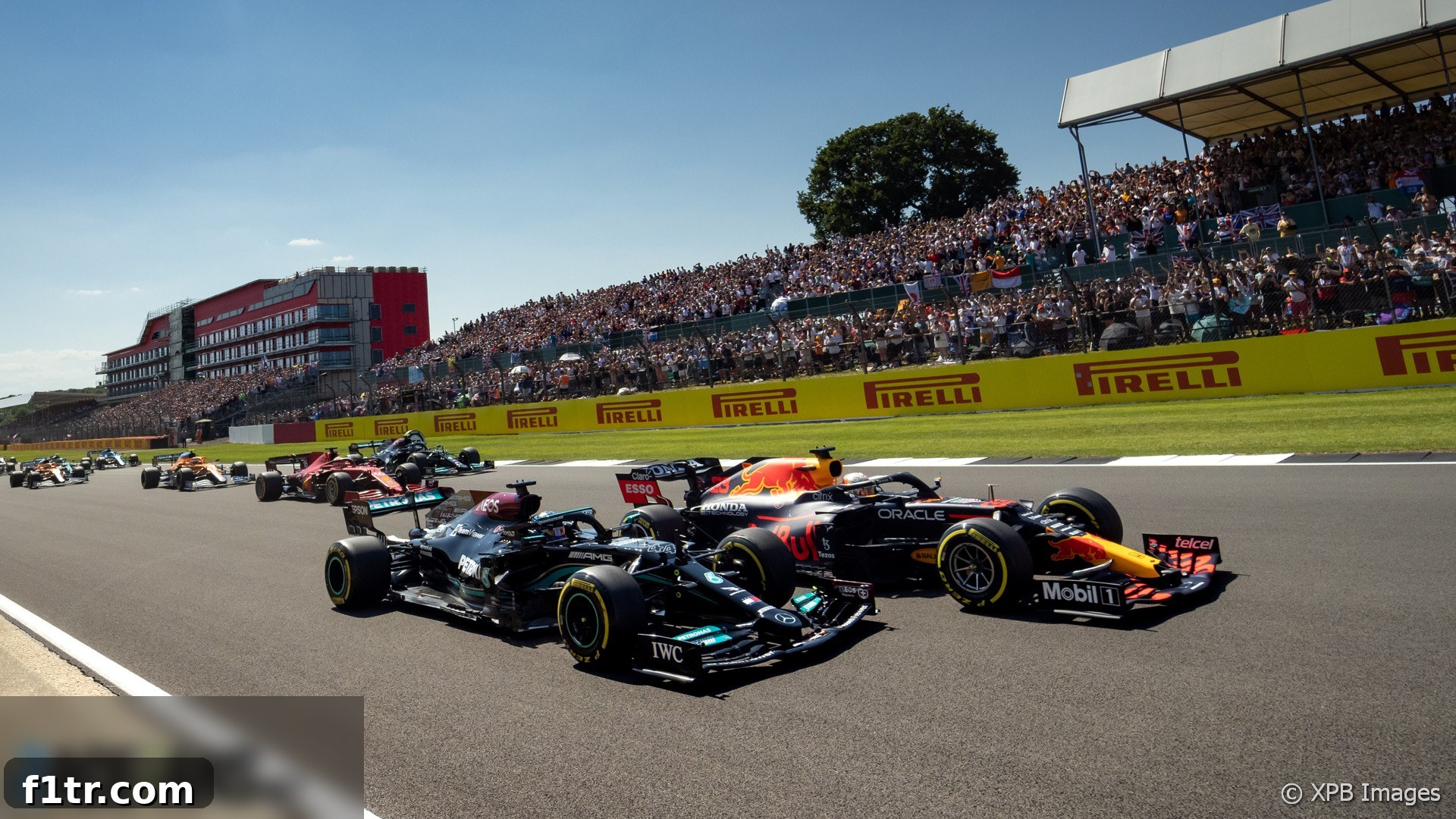
The 2021 Formula 1 season delivered unparalleled drama, and no event encapsulated this more intensely than the high-stakes collision between championship protagonists Lewis Hamilton and Max Verstappen at the British Grand Prix. This pivotal incident didn’t just reshape the championship narrative; it profoundly escalated one of the sport’s most captivating rivalries, sending shockwaves through the paddock and igniting passionate debate among fans worldwide. The raw emotion, the aggressive driving, and the controversial aftermath all combined to create a defining moment that will be remembered for years to come.
Advert | Become a Supporter & go ad-free
Beyond the Asphalt: Confronting Racism in Formula 1
While the on-track battle commanded headlines, the fallout from the Silverstone crash regrettably exposed a darker side of some Formula 1 followers. The racist comments and abuse directed at Lewis Hamilton on social media were utterly reprehensible and rightly met with swift, unequivocal condemnation. Both Mercedes and Red Bull Racing, along with numerous other teams and rival drivers, swiftly issued statements denouncing the abuse, highlighting the sport’s collective stance against discrimination. This incident served as a stark reminder that while the intensity of competition is encouraged, it must never descend into bigotry or hatred. Formula 1, through initiatives like “We Race As One,” strives to foster an inclusive environment, and those who claim to be its fans must uphold these values or find another arena for their passions.
It is crucial to differentiate between legitimate criticism of a driver’s performance or actions and unacceptable personal attacks, especially those rooted in racism. Being a public figure, even a celebrated champion, does not exempt anyone from scrutiny. However, such criticism must remain within respectful bounds. Equally, it is misguided to accuse Mercedes of “playing the race card” when they rightly object to the abhorrent abuse Hamilton received. Standing against racism is a fundamental moral imperative, not a tactical maneuver. The sport’s competitors consistently demonstrate their commitment to opposing racism before every Grand Prix, setting an example that all fans should aspire to follow.
Christian Horner’s Fiery Retort: Red Bull’s Unfiltered Perspective
In the immediate aftermath of the collision, Red Bull team principal Christian Horner was, by all accounts, understandably furious. His raw emotion was palpable as he delivered scathing criticism of Hamilton on television and to the gathered press. Horner viewed the incident not merely as a racing error but as a “desperate move” by Hamilton, arguing that it was a culmination of aggressive maneuvers that pushed beyond acceptable limits. The stakes were incredibly high, with the championship lead hanging in the balance, and the emotional investment of team principals is immense.
Horner’s primary contention revolved around the perceived inadequacy of Hamilton’s 10-second penalty. Despite the sanction, Hamilton ultimately recovered to win the race, a result that further inflamed Red Bull’s frustration. “Receiving a menial penalty [and] still winning the grand prix doesn’t feel like much of a penalty,” Horner fumed, articulating a sentiment shared by many within the Red Bull camp. This perspective underscored their belief that the punishment did not fit the severity of the offense, especially given the catastrophic impact on Verstappen’s race and the team’s championship aspirations.
Ironically, this sentiment echoed comments made by Hamilton himself three years prior, following an incident where his then-teammate Valtteri Bottas was eliminated from the French Grand Prix by Sebastian Vettel. Hamilton had stated, “When someone destroys your race through an error and it’s kind of a tap on the hand really – they’re allowed to come back and still finish ahead of that person he took out – it doesn’t weigh up.” This historical parallel adds a layer of complexity to the debate, highlighting the subjective nature of judging such incidents and how perspectives can shift depending on which driver or team is affected.
The Stewards’ Verdict: “Predominantly” to Blame
The FIA stewards’ decision to deem Hamilton “predominantly” to blame for the Silverstone collision was central to the controversy. This specific wording is critical in motorsport officiating. In the language of the stewards, a driver is described as “wholly” responsible if the collision is entirely their fault. The distinction between “wholly” and “predominantly” explains why Hamilton did not receive a more severe sanction, such as a drive-through penalty or a 10-second stop-and-go penalty, either of which would almost certainly have prevented him from winning the race. A “predominantly” responsible verdict suggests that while Hamilton was largely at fault, there might have been other contributing factors or that Verstappen himself was not entirely without any minimal contribution to the incident, however small.
The stewards’ official report shed light on their reasoning: “Car 44 [Hamilton] was on a line that did not reach the apex of the corner, with room available to the inside.” This assessment indicated that Hamilton’s execution of the maneuver at Copse corner was flawed, as he failed to hug the apex as tightly as he could have, thereby running wider and initiating contact with Verstappen. This critical detail underpinned their decision to assign him the majority of the blame, without entirely absolving other factors that might have been at play during such a high-speed, close-quarters battle.
Advert | Become a RaceFans supporter andgo ad-free
Deconstructing the Copse Corner Incident: A Battle of Perspectives
Horner’s Argument: A “Desperate Move”
Christian Horner’s analysis of the incident painted a clear picture of Hamilton as the aggressor, pushing beyond acceptable limits. From Red Bull’s perspective, Hamilton’s attempt at Copse was a “desperate move” born out of frustration from a suboptimal start. Horner highlighted a sequence of events: “You’ve lost the start. You’ve had a go down the Wellington Straight. He started wheel-banging with Max down there.”
The climax of Horner’s argument focused on the Copse corner itself: “Then to stick a wheel up the inside of Copse corner, one of the fastest corners in this world championship, a corner that’s pretty much flat out and 180 miles an hour – there’s only ever going to be one consequence from that.” This statement emphasized the extreme speed and high risk associated with the maneuver, suggesting that any attempt to pass on the inside at such a point was inherently reckless and bound to end in disaster for one of the cars.
Counterpoints and Driver Insights
While Horner’s criticism was intense and unwavering, several counter-arguments and expert opinions emerged, challenging the notion that Hamilton was solely or entirely to blame. In the preceding tussle on the Wellington Straight, for instance, Verstappen had moved to the left and then steered back towards his rival. While permissible within racing rules, this action undeniably diminished the gap between the cars, suggesting that the shrinking space was not solely Hamilton’s doing.
More critically, the accusation of Hamilton “sticking a wheel up the inside of Copse corner” seemed to overlook a crucial fact: the Mercedes was significantly alongside the Red Bull as they approached the apex. Multiple observers, including two-time world champion Fernando Alonso, argued that Hamilton had earned the right to contest the corner. “Lewis had more than half a car alongside the Max,” observed Alonso. “So in a way, Lewis could not disappear from that inside line. It’s not that you can vanish.” This perspective suggests that Hamilton, having established a significant overlap, was entitled to space, and Verstappen, in turn, needed to acknowledge his presence.
Horner, however, dismissed these counter-arguments, reiterating his conviction: “He didn’t, he ran wide into Max. I think if you look at the overhead [view] he’s run wide into the corner, he’s carried too much speed.” This firmly held belief highlighted the fundamental disagreement on the incident’s dynamics, with Red Bull maintaining that Hamilton was solely responsible for the collision by failing to control his car’s trajectory.
Advert | Become a RaceFans supporter andgo ad-free
The stewards’ findings align with Horner’s point about Hamilton running wide. They noted, as mentioned earlier, that Hamilton’s “line did not reach the apex of the corner, with room available to the inside,” which formed the basis for him being considered “predominantly” responsible. However, this does not negate the fact that Hamilton was far enough alongside Verstappen to have earned the right to stay on that line as they turned in. The stewards’ initial description also stated: “Cars 33 [Verstappen] and 44 entered turn nine with car 33 in the lead and car 44 slightly behind and on the inside.” This wording implies that Hamilton was already in a contesting position, challenging Horner’s absolute claim that Hamilton simply “stuck a wheel up the inside” without having a legitimate right to be there.
The Leclerc Pass: A Crucial Comparison
Further challenging Horner’s insistence that “there’s only ever going to be one consequence” from Hamilton’s move at Copse was Hamilton’s own successful pass on Charles Leclerc at the very same corner later in the race. This demonstrated that a pass on the inside of Copse was indeed possible and could be executed safely if done correctly. FIA F1 Race Director Michael Masi subsequently clarified the stewards’ viewpoint, stating that their objection wasn’t whether Hamilton *should* have attempted the move in the first place, but rather that he didn’t *execute* it well enough. In essence, Hamilton was far enough alongside to attempt the pass, but by running wider than was necessary, he inadvertently caused an avoidable accident.
“The big part was similar to what happened with Charles later on,” Masi explained in response to a query from RaceFans. “He could have stayed tucked in closer to the apex, and that was where they found that – I think the wording was quite clear as per the regulations – that he was ‘predominantly to blame’.” Masi further elaborated: “He wasn’t seen as wholly to blame for it but seen as predominantly to blame. He could have tucked in further and that may have changed the outcome, but we don’t know, we judge it on the incident itself.” This nuanced perspective confirms that the move itself was deemed legitimate, but its execution was flawed, leading to the collision.
Red Bull’s Recourse: Seeking a Review and Past Precedents
Christian Horner’s “eye-popping fury” at Hamilton’s actions was easy to comprehend, extending beyond just the immediate loss of points. The crash carried significant financial implications for Red Bull. Under the sport’s tightly limited budget cap, an incident causing extensive damage could easily cost the team a seven-figure sum, impacting development resources for future races and seasons. This economic burden amplified their frustration and desire for a more severe consequence for Hamilton.
Furthermore, while Lewis Hamilton doesn’t have a lengthy history of collisions, his more recent incidents have disproportionately involved Red Bull cars. He was responsible for tipping Alexander Albon into spins at Brazil in 2019 and Austria in 2020. On both occasions, Hamilton went on to score points after knocking a Red Bull off the track, fueling a perception within Red Bull that Hamilton repeatedly escaped adequate punishment when clashing with their drivers.
In light of these factors, Red Bull were known to have engaged legal counsel to thoroughly examine the incident and assess whether they possessed sufficient grounds to request a review from the FIA. To succeed in such a review, they would need to present “compelling new evidence” – information not available to the stewards at the time of their original decision. Reports emerged of telemetry data from Hamilton’s car allegedly indicating he carried excessive speed into the corner. However, this could prove a challenging argument, especially considering Hamilton was approaching the bend off the optimal racing line and with a maximum fuel load, which naturally affects braking points and cornering speed.
Adding another layer of complexity, Christian Horner’s own past verdict on a similar incident involving one of his drivers could potentially resurface to haunt him. At the same track a year prior, Albon had knocked Kevin Magnussen out of the British Grand Prix at Club Corner. Horner’s assessment then was: “For me that was a racing incident. If you look at it from the beginning, Kevin made a mistake, he got out wide, Alex put his nose in there and then he sort of backed out of it a little bit. It was one of those things.” This historical statement raises questions about the consistency of Red Bull’s judgment when their own drivers are involved in similar racing incidents.
The Championship Stakes and Lasting Impact
The stewards’ initial decision made it clear they did not consider Hamilton entirely at fault for the Silverstone collision, assigning him “predominant” but not “whole” responsibility. However, Red Bull’s stance clearly indicated they believed otherwise, suggesting a fundamental disagreement on the apportionment of blame. The question then became whether Red Bull would formally seek to prove their interpretation through an FIA review process, driven by their conviction and the financial and championship implications.
Ultimately, the British Grand Prix collision served as a powerful catalyst, propelling the Hamilton-Verstappen rivalry into an even more intense and personal domain. It was an incident that transcended a mere racing skirmish, embodying the fierce competition, the high stakes, and the complex human emotions at the pinnacle of motorsport. The aftermath underscored the challenges of officiating in such a fast-paced environment and the subjective interpretations that inevitably arise when two titans clash. The ripples of this incident undoubtedly influenced team strategies, driver mindsets, and the overall trajectory of what became one of Formula 1’s most memorable and contested seasons.
Quotes: Dieter Rencken
2021 F1 season
- Masi ‘basically gifted the championship’ to Verstappen says 2021 FIA steward Sullivan
- Las Vegas race backers looking to extend F1 deal beyond 2025
- Why Mercedes put ‘a reminder of joy and pain’ on display in their factory lobby
- Verdict on error in GT race suggests Mercedes would have lost 2021 Abu Dhabi GP appeal
- Title ‘stolen’ from Mercedes made us ‘underdogs people cheer for’ – Wolff
Browse all 2021 F1 season articles