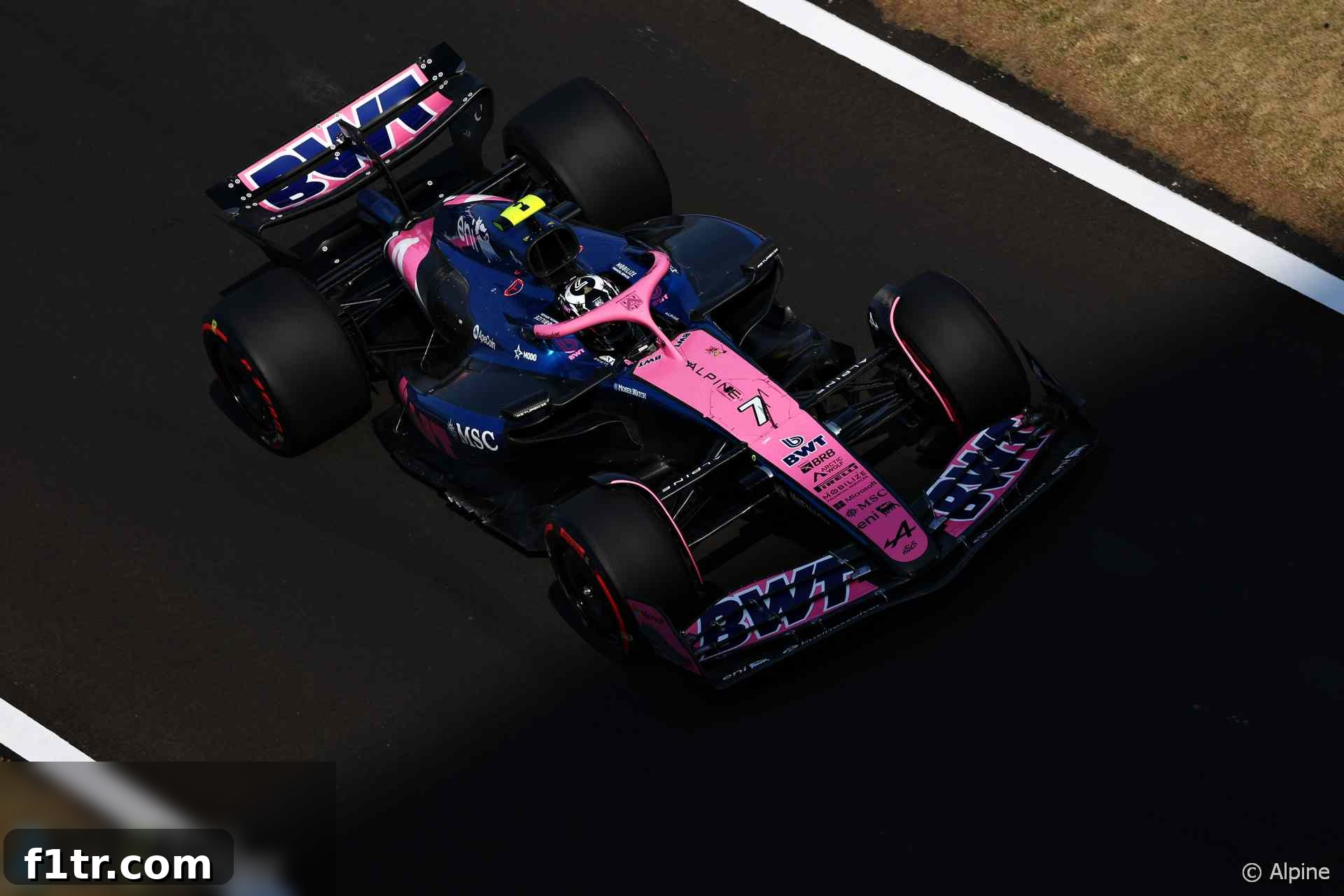
Franco Colapinto Faces Uphill Battle with Alpine’s Five-Race Ultimatum
Franco Colapinto, the rising star in the world of Formula 1, finds himself at a critical juncture in his budding career as he steps into the Alpine F1 Team for the Emilia-Romagna Grand Prix. Replacing Jack Doohan, Colapinto has been handed a challenging five-race deadline by the French constructor, a period he candidly admits might be insufficient to fully acclimatize to an unfamiliar car and extract its maximum potential. This high-stakes return to the pinnacle of motorsport casts a bright spotlight on the immense pressure and rapid adaptation required of young drivers in the modern F1 era.
The Steep Climb: Insufficient Time for Adaptation in F1
The announcement from Alpine last week set a clear, albeit tight, timeframe: Colapinto’s performance will be rigorously reviewed ahead of the British Grand Prix, marking the end of his initial five-race stint. Such an aggressive evaluation period raises questions about the practicalities of a driver integrating into a new team and car mid-season, especially one with limited prior Formula 1 experience.
Colapinto’s Stance on the Tight Deadline
Despite the looming deadline, Colapinto projects a calm and focused demeanor, emphasizing his determination not to be overwhelmed by external pressures. “I have a great opportunity ahead,” he stated, underlining his gratitude for being back in Formula 1. “I don’t even think in terms of five races — I’m just in a happy place and I’m dealing with it very well. At the moment I just want to get back in the seat and drive.” This mindset reflects the mental resilience crucial for navigating the cutthroat environment of F1, where maintaining composure under immense scrutiny is as vital as on-track performance.
However, Colapinto also voiced a pragmatic concern, drawing parallels with more seasoned drivers. He highlighted comments made by Carlos Sainz Jnr, who, upon taking over his former seat at Williams, suggested that a minimum of ten races is often needed to truly adapt to a new car’s nuances. “You heard Carlos saying that he needs like 10 races to get used to a car,” Colapinto explained. “I think five is not enough for me. I’ve only driven nine in my life in F1. So it probably takes me a couple more than five to get up to speed and maximise everything out of the car. But it is what I have and I just want to maximise it, enjoy it and try to do the best for the team.” This honest assessment underscores the profound challenge of mastering a complex F1 machine, which goes beyond mere driving mechanics to encompass intricate systems, tire management, and strategic understanding – all unique to each team and chassis.
Navigating the F1 Landscape: A Recurring Narrative of Mid-Season Changes
Colapinto’s return to Formula 1 marks a unique, and somewhat familiar, pattern in his young career. This is not the first instance of him securing an F1 seat mid-season by replacing another driver. His initial Formula 1 debut last year saw him promoted by Williams in place of Logan Sargeant, providing valuable, albeit brief, experience at the highest level of motorsport.
The Dynamics of Mid-Season Driver Changes
Reflecting on the circumstances of his return, Colapinto admitted to experiencing “mixed feelings.” While the opportunity to compete in Formula 1 is undoubtedly thrilling, the context of stepping into another driver’s seat mid-season carries a degree of emotional complexity. “I’m really excited,” Colapinto affirmed, acknowledging the fresh start. “Everything is new again, we start from zero.” He elaborated on the difficult nature of such transitions: “Of course, it wasn’t the nicest [situation]. After being in the last nine races of the last year, having to step out was not what I wanted. But it was a good time to reflect on what happened last year and to learn from it. So I’m happy to be back.”
This candidness highlights a common reality in Formula 1: opportunities often arise in unpredictable ways. “It’s never nice circumstances when it happens like this, when you step into another driver’s seat,” he conceded. “But you never really choose the moment you get in Formula 1. I just take it, try to do my best and try to maximise the team for the job.” This pragmatic approach underscores the necessity for young drivers to seize every chance, regardless of how it presents itself, and to demonstrate immediate impact to secure their future in the sport. His repeated experience with such changes, first with Williams and now Alpine, speaks volumes about his adaptability and readiness to step up when called upon.
Behind the Scenes: Intensive Preparation and Integration with Alpine
Colapinto’s current opportunity with Alpine is not a sudden, unprepared leap. He joined the team as a reserve driver earlier in the season, a role that has provided him with invaluable preparatory experience, both in the simulator and behind the wheel of older machinery. This groundwork is critical for any driver, but particularly for one facing such a tight evaluation window.
Harnessing Simulator and Track Experience for Seamless Integration
The extensive background work has been a cornerstone of Colapinto’s integration into the Alpine setup. “There has been a lot of work in the background,” he revealed. “Apart from the last couple of days, also before.” This preparation has primarily involved rigorous simulator sessions, allowing him to familiarize himself with the team’s specific car characteristics, operational procedures, and engineering philosophy without the immediate pressure of track-side competition. “I’ve been doing a lot of sim work for the team, of course [not] track-side, but still helping the team to try to develop the car a little bit during race weekends.”
Beyond the simulator, Colapinto has also had the chance to test Alpine’s older cars at various circuits, offering a crucial bridge between virtual and real-world driving. This physical experience with the team’s machinery helps to develop muscle memory and a tactile understanding of the car’s behavior. “It has been good, it helped me a bit as well to kind of learn the car, the tools, the different settings that the team is running that I was not very used to. It’s quite a big switch from one team to another, so it has been helpful.” The transition between different F1 teams is significant, as each constructor develops its car with unique design philosophies, driving characteristics, and operational nuances. Understanding these distinctions, from steering wheel functions to brake bias settings, is essential for a driver to perform optimally.
Alpine announced Colapinto’s return to F1 just a week ago, intensifying the final phase of his preparation. “Of course the prep since it got announced was very strong and we’ve been doing a lot of days in the sim,” he confirmed. While acknowledging a degree of rustiness after a break from competitive race weekends, he remains optimistic about his ability to quickly regain peak form. “So I’m happy. Again it’s a pretty long time since I’ve been in a race weekend so I’m a bit rusty, maybe, but I think it’s going to come off very quickly.” This confidence, backed by diligent preparation, will be vital as he faces the immediate challenge of the Emilia-Romagna Grand Prix.
The Physical and Mental Trial of Imola
Colapinto’s return to Grand Prix racing at Imola presents a particularly demanding physical and mental test, starkly different from his initial F1 debut.
A Demanding Return to an Iconic Track
Eight months after his debut with Williams at Monza, Colapinto expects a significantly tougher physical challenge at the Autodromo Enzo e Dino Ferrari. Imola, with its high-speed chicanes, rapid changes of direction, and demanding braking zones, is renowned as one of the most physically strenuous circuits on the Formula 1 calendar. The sustained G-forces through corners like Acque Minerali and Rivazza, combined with the undulating nature of the track, put immense strain on a driver’s neck and core strength.
“Imola is a tough track, physically. It’s not like my start in Monza, that is the easiest one of the year,” he commented, drawing a clear contrast between the two Italian venues. Monza, known for its long straights and relatively fewer corners, offers a more forgiving introduction to F1 racing. Imola, conversely, demands precision, stamina, and an immediate command of the car’s dynamic capabilities. Despite the inherent difficulties, Colapinto expresses genuine enthusiasm for racing at such a historic venue. “But it’s great to be back. It’s great that it happens in Italy as well. I have really good memories here and in Monza too.” The emotional connection to racing in Italy, a country steeped in motorsport heritage, adds another layer of significance to this pivotal moment in his career.
Alpine’s Strategic Play and the Road Ahead
Alpine’s decision to bring Colapinto in with a five-race deadline reflects the intense scrutiny and pressure that F1 teams operate under, particularly when results are not meeting expectations. While the team’s specific motivations are internal, it’s clear they are looking for immediate feedback and performance to inform their long-term driver line-up strategy. Colapinto’s role extends beyond simply driving fast; he will also be expected to provide valuable technical feedback to aid the car’s development, all while navigating the complexities of a new environment and high expectations.
Conclusion: A Career-Defining Challenge Awaits Colapinto
Franco Colapinto’s return to Formula 1 with Alpine is a story of immense opportunity coupled with daunting challenges. Faced with a tight five-race window to prove his worth in an unfamiliar car, he embodies the relentless pursuit of excellence that defines F1 drivers. His calm demeanor, combined with a realistic assessment of the task ahead, showcases a maturity beyond his limited F1 experience. The extensive preparation, though primarily virtual, provides a foundation, but the true test begins on the physically demanding asphalt of Imola. As the motorsport world watches, Colapinto must harness his talent, adapt at an accelerated pace, and deliver a performance that not only satisfies Alpine’s expectations but also solidifies his place in the competitive landscape of Formula 1. The next five races will undoubtedly be career-defining for the young Argentine.
2025 Emilia Romagna Grand Prix
- Antonelli was tiring from home race at Imola attention by Friday – Wolff
- Ferrari struggling to recreate set-up which “worked well” in Shanghai – Hamilton
- Verstappen told Red Bull to use Tsunoda before “hold him up” call
- ‘Saturdays have been mine for years but for some reason it’s drifted away’ – Norris
- “Plan C?”: Why McLaren only got their strategy right for one driver at Imola
Browse all 2025 Emilia Romagna Grand Prix articles