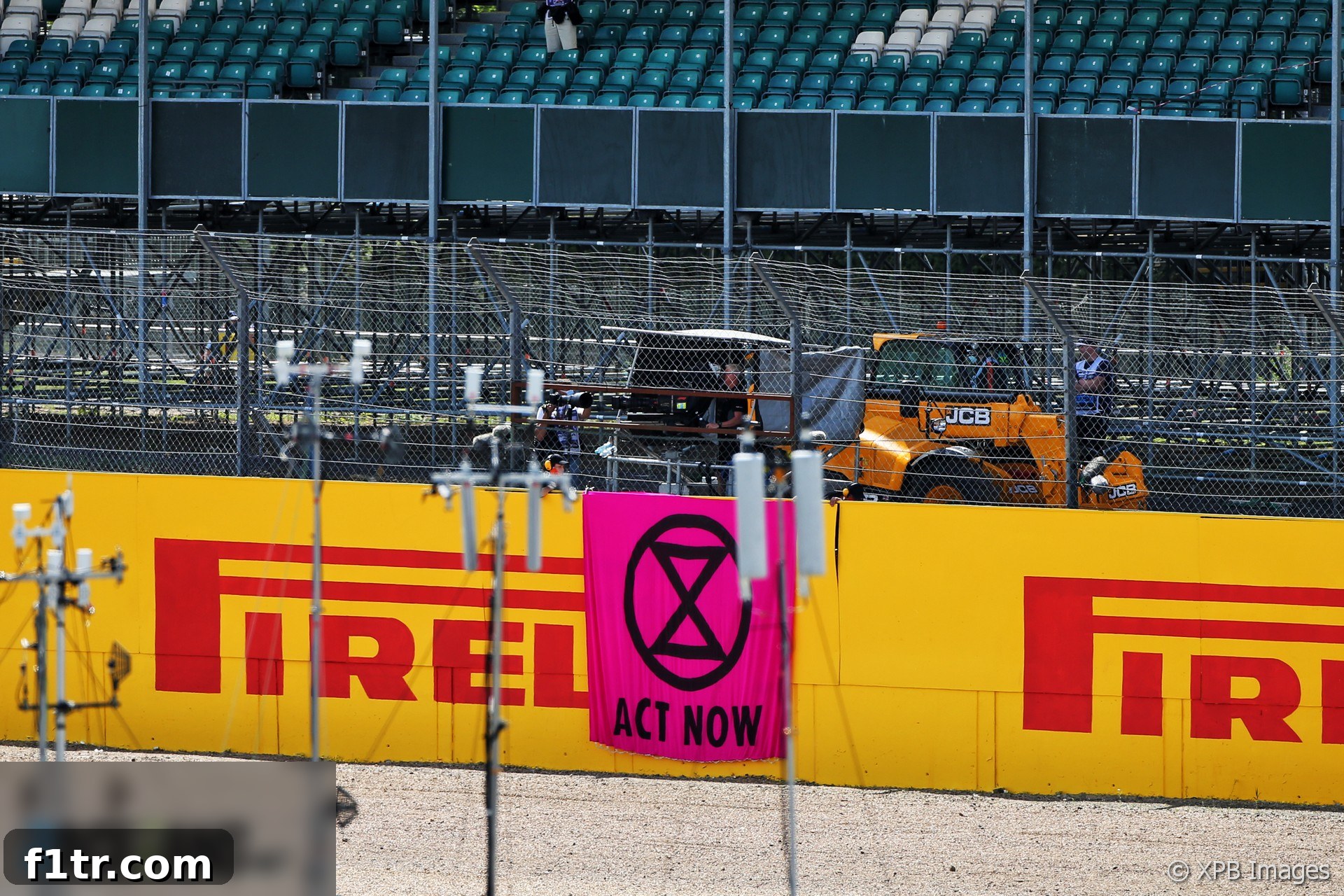
In a significant moment for the intersection of sport and environmental activism, four-time Formula 1 world champion Sebastian Vettel openly endorsed Extinction Rebellion’s (XR) planned protest at the Dutch Grand Prix. This declaration from a prominent figure in motorsport amplifies the ongoing global discussion surrounding climate change and the environmental footprint of major sporting events.
Extinction Rebellion, a group known for its disruptive but non-violent direct actions, had indicated its intention to use the high-profile race at Zandvoort to spotlight the substantial emissions produced by motorsport. Their objective is to draw international attention to the urgent need for climate action, using the global platform of Formula 1 as a backdrop.
This isn’t XR’s first foray into the world of F1. During the British Grand Prix held behind closed doors in 2020 due to pandemic restrictions, XR members successfully infiltrated Silverstone. They unfurled a banner that gained worldwide television coverage, leading to four arrests. This earlier action underscored their determination to bring their message directly to the sport’s audience and stakeholders.
Sebastian Vettel’s support for such activism is not out of character. The German driver has increasingly become a vocal advocate for environmental causes, actively participating in initiatives aimed at reducing environmental impact. His actions speak volumes: from helping clean up rubbish left by spectators at the British Grand Prix to constructing a ‘bee hotel’ shaped like a Formula 1 car with schoolchildren in Austria. These personal commitments provide context to his public statements, illustrating a deep-seated belief in ecological responsibility.
Sebastian Vettel’s Candid View on Climate Action and F1’s Role
Speaking ahead of the Dutch Grand Prix, Vettel addressed XR’s protest plans directly, offering his full support. “I think in general we are living in a time where it is important to raise attention and I think that’s what they’re doing,” Vettel stated. “So I think that’s good.” His remarks highlight a growing sentiment among public figures that direct action is necessary to galvanize a response to the climate crisis.
Vettel did not mince words when discussing Formula 1’s and society’s broader responsibility to tackle waste and carbon dioxide emissions. While acknowledging F1’s nascent efforts, he firmly believes they are insufficient. “If you ask me what I would respond with Formula 1 is doing, I think there’s a lot of things that Formula 1 is planning to do, some small things that Formula 1 is taking action on, which is good. But is it enough? No, it’s not enough,” he asserted, challenging the sport to go further and faster.
Extending his critique beyond motorsport, Vettel questioned humanity’s overall response to the climate emergency. “Is it enough what we are doing as a society? Obviously it’s very different in every single country and some countries are further along than others. Some people are further along in their heads addressing this topic than others. But as a whole of humanity, are we doing enough? Probably not.”
His perspective is stark but ultimately hopeful. “So I think it is vital that we understand what is at stake and if we don’t get it, then I think there is no future. It sounds very dark, but equally on the bright side, there’s a lot of things that we can do.” Vettel believes there is a place for Formula 1 in this future, provided it “is addressing the right things and making the right moves. Now, as I said, there can always be more that is done. The small things that are taken action on is good is a first step, but not more than the first step yet.” This nuanced view champions both the potential for positive change within F1 and the imperative for more comprehensive action.
Formula 1’s Commitment to Sustainability and the Broader Environmental Debate
Vettel’s comments provide a potent backdrop to Formula 1’s own declared environmental goals. The sport has publicly committed to becoming Net Zero Carbon by 2030, a target that encompasses everything from the cars themselves to logistical operations, event management, and broadcast infrastructure. This ambitious target aims to revolutionize how one of the world’s most technologically advanced sports operates, striving for sustainability without compromising its core identity of speed and innovation.
The roadmap to Net Zero Carbon by 2030 involves several key pillars. A significant focus is on sustainable fuels, with Formula 1 pushing for the development and adoption of 100% sustainable fuels in its power units. This shift, set to be introduced in the coming years, has the potential to drastically reduce the carbon emissions from the racing cars themselves. Beyond the track, F1 is also looking at optimizing freight and travel logistics, transitioning to renewable energy sources at circuits, and promoting sustainable materials and practices throughout its supply chain and events. The goal is not just to offset emissions but to fundamentally change the operational DNA of the sport.
However, despite these commitments, environmental groups like Extinction Rebellion argue that the pace of change is too slow and that the very nature of motorsport, with its reliance on global travel and high-performance engineering, remains inherently at odds with true ecological sustainability. Their protests serve as a constant reminder of the urgency of the climate crisis and the public’s expectation for all industries, including sports, to significantly accelerate their environmental efforts.
Lewis Hamilton’s Perspective: A Champion for Change, Through Different Lenses
Lewis Hamilton, another titan of the sport and a fierce advocate for social and environmental causes, offered a slightly different, though equally committed, perspective when asked about XR’s protest plans. While sharing Vettel’s passion for environmental protection, Hamilton emphasized Formula 1’s institutional efforts and the complexities of implementing large-scale change.
“Ultimately it’s not my responsibility to go and do a presentation to them telling them what Formula 1 is doing. But Formula 1 has already expressed the steps in which they want to take by 2030,” Hamilton stated. His response highlights the distinction between individual advocacy and the collective responsibility of the sport’s governing bodies and teams. Hamilton acknowledges the magnitude of F1’s undertaking, recognizing that systemic change does not happen overnight.
“Naturally things don’t change overnight and I think it’s great that Formula 1 are accepting and holding themselves responsible and realising that they do need to make changes moving forwards,” he continued. “And then ultimately us drivers we rely on Formula 1 and the organisers to make sure that we’re trying to have as positive an impact on the places we go to.” Hamilton’s comments underscore a belief in the established framework of F1’s sustainability goals while also placing responsibility on the sport’s leadership to deliver on these promises.
The contrasting approaches of Vettel and Hamilton—one endorsing direct protest, the other highlighting institutional commitment—illustrate the multifaceted nature of environmental advocacy within Formula 1. Both drivers, however, share a fundamental belief in the necessity of action and the responsibility of their sport to contribute positively to global sustainability efforts. Their high profiles ensure that these discussions resonate far beyond the paddock, reaching millions of fans worldwide.
The Impact of Driver Advocacy on Motorsport and Beyond
The vocal stances of drivers like Sebastian Vettel and Lewis Hamilton hold immense power. As global icons, their words and actions carry significant weight, influencing public opinion and pressuring both the sport and broader industries to address environmental concerns. When a four-time world champion like Vettel publicly supports a climate protest group, it forces a conversation that might otherwise be dismissed. It legitimizes the concerns of activists and places the onus on Formula 1 to demonstrate tangible progress.
Moreover, driver advocacy can inspire fans and followers to consider their own environmental impacts. By seeing their heroes engage with these critical issues, a new generation of motorsport enthusiasts may become more environmentally conscious. This shift in cultural perception is vital for the long-term sustainability not only of Formula 1 but for all global industries navigating the climate crisis.
The Extinction Rebellion protest at the Dutch Grand Prix, amplified by Sebastian Vettel’s endorsement, serves as a poignant reminder that no global sport, regardless of its economic or entertainment value, can remain isolated from the pressing environmental challenges facing the planet. It calls for continuous self-assessment, innovation, and an unwavering commitment to sustainability from all stakeholders, from organizers and teams to drivers and fans. The dialogue sparked by such events is crucial, pushing Formula 1 to evolve from being merely a spectacle of speed into a leading force for sustainable innovation and environmental responsibility.
2021 Dutch Grand Prix
- “So many people love him”: Raikkonen’s rivals pay tribute to retiring champion
- Alonso studied junior series, not IndyCar, for Zandvoort banking clues
- 2021 Dutch Grand Prix Star Performers
- Paddock Diary: Dutch Grand Prix part two
- Verstappen makes the Netherlands 12th country to produce a home F1 winner
Browse all 2021 Dutch Grand Prix articles