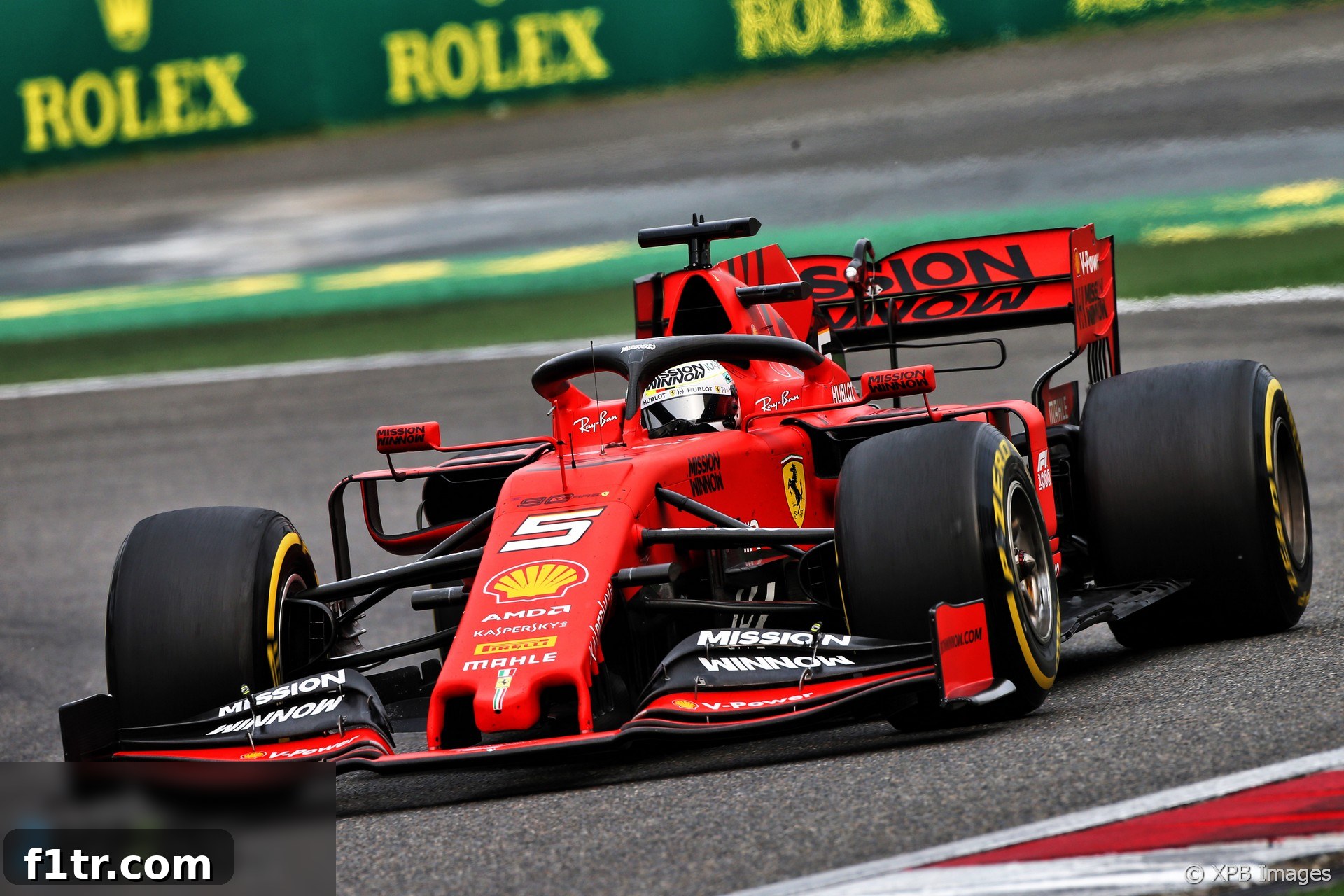
Scuderia Ferrari’s formidable SF90 possesses “very strong” capabilities, yet the Italian racing giant is still grappling with how to consistently “unlock” its immense potential, according to four-time Formula 1 world champion Sebastian Vettel. His candid assessment sheds light on the complexities faced by one of Formula 1’s most storied teams in the crucial early stages of the 2019 season, as they strive to consistently translate raw speed into race-winning performance against fierce competition.
Advert | Become a Supporter & go ad-free
The journey of the Ferrari SF90 in the 2019 F1 season has been a perplexing one for fans, pundits, and indeed, the team itself, marked by a frustrating inconsistency that has seen its performance fluctuate wildly across the initial races. Hailed as a potential championship contender after an overwhelmingly dominant display during pre-season testing in Barcelona, the car appeared poised to challenge for outright supremacy. However, the reality of the season opener in Australia painted a starkly different picture, with Mercedes-AMG F1 delivering a decisive blow, comprehensively beating Ferrari and leaving the Scuderia with many questions. This initial setback was followed by a glimmer of hope in Bahrain, where Ferrari showcased impressive raw pace, securing a front-row lockout before encountering race-day challenges that prevented them from converting potential into a victory. The oscillating trend continued into the Chinese Grand Prix, where Mercedes once again asserted its authority, leaving Ferrari to ponder the elusive nature of their car’s true performance window and the steps required to achieve consistent top-tier results.
Sebastian Vettel’s Search for Harmony with the SF90
Vettel himself openly acknowledged his ongoing struggle to find complete harmony and comfort with the SF90 during the recent race, a sentiment that resonates deeply with the team’s broader challenges. “We have a very strong car, there’s nothing wrong with it, but I think we’re not able to yet put it in the window,” he stated, highlighting the critical importance of optimizing the car’s setup for specific conditions and track layouts. This ‘operating window’ refers to the narrow operational range where a Formula 1 car performs at its absolute peak, encompassing everything from tire temperatures and pressures to aerodynamic balance, suspension settings, and engine mapping. Finding this sweet spot is paramount for extracting maximum performance from any modern F1 car, and Vettel’s comments suggest Ferrari is still actively searching for that perfect, consistent equilibrium across different Grand Prix weekends.
“Especially for myself, here and there, I’m not entirely happy yet compared to where we started off,” Vettel elaborated, reflecting on his personal adaptation to the SF90. A driver’s comfort level and confidence are inextricably linked to their ability to push a Formula 1 car to its absolute limits. When a driver feels uncomfortable or lacks full confidence, even by the smallest margin, it can translate into significant lap time losses and a reduced capacity to extract the car’s inherent speed over a full race distance. The distinct characteristics across the early tracks – Australia’s bumpy street circuit layout, Bahrain’s smoother, more technical desert track, and China’s high-speed straights coupled with demanding corners – have further complicated this quest for a consistent and adaptable setup, presenting varied challenges for the Ferrari engineers to overcome.
Unlocking the Ferrari SF90’s True Potential: A Critical Development Phase
The nuanced variations in track characteristics and atmospheric conditions across the season’s opening triple-header have provided Ferrari with a wealth of crucial data. Vettel believes this data is now starting to form a discernible “pattern,” which is an invaluable asset for the team’s development trajectory. This pattern is crucial for understanding what the SF90, and more specifically, what he as a driver, needs to truly “unlock this car” and maintain peak performance over a full Grand Prix distance. The task is not merely about achieving bursts of raw pace in qualifying but about demonstrating consistent, race-long performance that can withstand the intense pressures and strategic demands of Formula 1 competition.
“I think these couple of weeks and the next weeks will be very important for us to understand where we need to go in the next months,” Vettel emphasized, underscoring the urgency and significance of their analytical efforts. Formula 1 is an incessant development race, where every team is constantly evolving their machinery. Early season data analysis is pivotal for guiding the car’s evolutionary path, as the insights gleaned from these initial races will dictate aerodynamic updates, chassis refinements, suspension modifications, and engine mapping adjustments. All these developments are meticulously aimed at expanding that elusive operating window and making the Ferrari SF90 more adaptable and competitive across a diverse range of circuits on the F1 calendar.
While acknowledging the clear performance deficit against Mercedes in China, particularly in the later stages of the race, Vettel remained pragmatic and focused on optimizing their current package. “Clearly today we were not as fast as Mercedes. Bit of a shame we couldn’t get third and fourth but overall I think we optimised.” This statement suggests that despite not being able to match their rivals’ outright pace, Ferrari believes they maximized their result given the circumstances, indicating a strong focus on operational efficiency and strategic execution even when raw speed is lacking. He further noted, “There were stages in the race where we were strong, and stages of the race where we were weaker compared to where we wanted to be,” highlighting the transient nature of their performance within a single Grand Prix, a challenge they are actively working to mitigate through continuous analysis and development.
The Mercedes Challenge: Analyzing a Familiar Rivalry
The performance gap between Mercedes and Ferrari in China, while undeniably significant, was perceived by Vettel as less formidable than the chasm witnessed during the season opener in Australia. This observation offers a crucial ray of hope for the Scuderia, suggesting that they are making tangible inroads into understanding and improving their car’s overall package. “Obviously Mercedes had a good run with the first three races,” Vettel conceded, acknowledging the rival team’s exceptional start and their impressive consistency. Yet, he added confidently that Ferrari had seen “nothing that shocks us” from their competitors, implying that Mercedes’ advantage, while strong, isn’t based on an entirely unknown or unreplicable technological edge. This perspective suggests Ferrari believes they possess the fundamental tools and understanding to bridge the gap, provided they can consistently harness the SF90’s inherent strengths and refine its operational efficiency.
Vettel reflected on the initial struggles in Australia: “I think in Australia we struggled with the conditions, and probably set-up. I think we learned our lessons for Bahrain, it was a lot better.” This demonstrates a clear learning curve and adaptability within the team, indicating their ability to analyze problems and implement improvements. However, the subsequent races still revealed lingering weaknesses that require further attention. “Still, here and there, there are some parts of the race where we are too weak and I think it showed again this weekend,” he admitted, pinpointing specific areas that demand immediate focus and continuous development from the team’s technical departments.
Engine Prowess: A Foundation for Ferrari’s Championship Ambitions
One aspect where Ferrari feels particularly confident and believes they hold a significant advantage is in their power unit. “I think we can be very happy with where we are on the engine side. It seems to be strong,” Vettel affirmed. In the highly competitive hybrid era of Formula 1, engine performance is a critical differentiator, often dictating outright top speed and acceleration. Ferrari’s confidence in their robust power plant provides a strong foundation for their championship aspirations. This strength in the engine department allows the team to focus their development efforts more intensely on other crucial areas, such as chassis dynamics, aerodynamic efficiency, and suspension tuning, which are currently perceived as the primary areas requiring optimization to find the car’s elusive overall operating window and unlock its full potential.
“I think overall our car is working and there’s nothing wrong with it – but I think it’s just about placing it in the right window and then being able to extract the performance that the car has,” Vettel reiterated, emphasizing that the problem is not a fundamental design flaw but rather one of optimization. The inherent potential is undoubtedly there, a fact perhaps best exemplified by his highly talented teammate, Charles Leclerc, who, according to Vettel, “was able to show in Bahrain more than myself.” Leclerc’s strong performance in Bahrain, where he led parts of the race and demonstrated exceptional speed, offered tantalizing hints at the SF90’s true capabilities when properly configured and driven to its limits. This internal comparison provides valuable data and benchmarks for the team, demonstrating that the ultimate performance lies dormant within the machine, waiting to be consistently summoned and unleashed by both drivers.
The challenge for Scuderia Ferrari, therefore, is not about a fundamentally flawed design but about precision engineering, meticulous setup, and continuous refinement. “It seems to be there somewhere but at the moment seems to be a bit more difficult to find where it is, to be able to be a fair match to Mercedes at this point,” Vettel concluded, articulating the core of their current dilemma. The quest for consistency and the elusive “right operating window” remains Ferrari’s biggest hurdle in their pursuit of the 2019 Formula 1 Constructors’ and Drivers’ Championships. The coming races will be a true test of their analytical prowess, their ability to implement effective upgrades swiftly, and their capacity to turn raw speed into sustained championship contention. The passionate tifosi eagerly await the moment when the Ferrari SF90 finally reveals its full, undeniable might, allowing the Prancing Horse to launch a consistent and formidable challenge against their rivals for the coveted Formula 1 crown.
Advert | Become a RaceFans supporter andgo ad-free
2019 F1 season
- Crying in the Melbourne car park at 2019 grand prix was my career low – Ocon
- McLaren Racing reports reduced £71 million loss in 2019
- Kvyat: Hockenheim podium last year was “my biggest achievement” so far
- How the FIA’s new encrypted fuel flow meter targets Ferrari’s suspected ‘aliasing’ trick
- “He smashed my office door”: 23 must-see moments from ‘Drive to Survive’ season two
Browse all 2019 F1 season articles