Unveiling Identity: Special Helmet Designs and Logistical Hurdles at the 2020 Turkish Grand Prix
The highly anticipated return of the Formula 1 Turkish Grand Prix in 2020 brought more than just thrilling on-track action; it also served as a canvas for drivers to express themselves through unique helmet designs. While Sebastian Vettel successfully showcased a powerful message of unity, Lando Norris unfortunately faced an unforeseen logistical challenge that prevented him from donning his specially designed headgear for the weekend at Istanbul Park.
Sebastian Vettel’s 2020 Turkish Grand Prix Helmet: A Message of Unity and Horizon
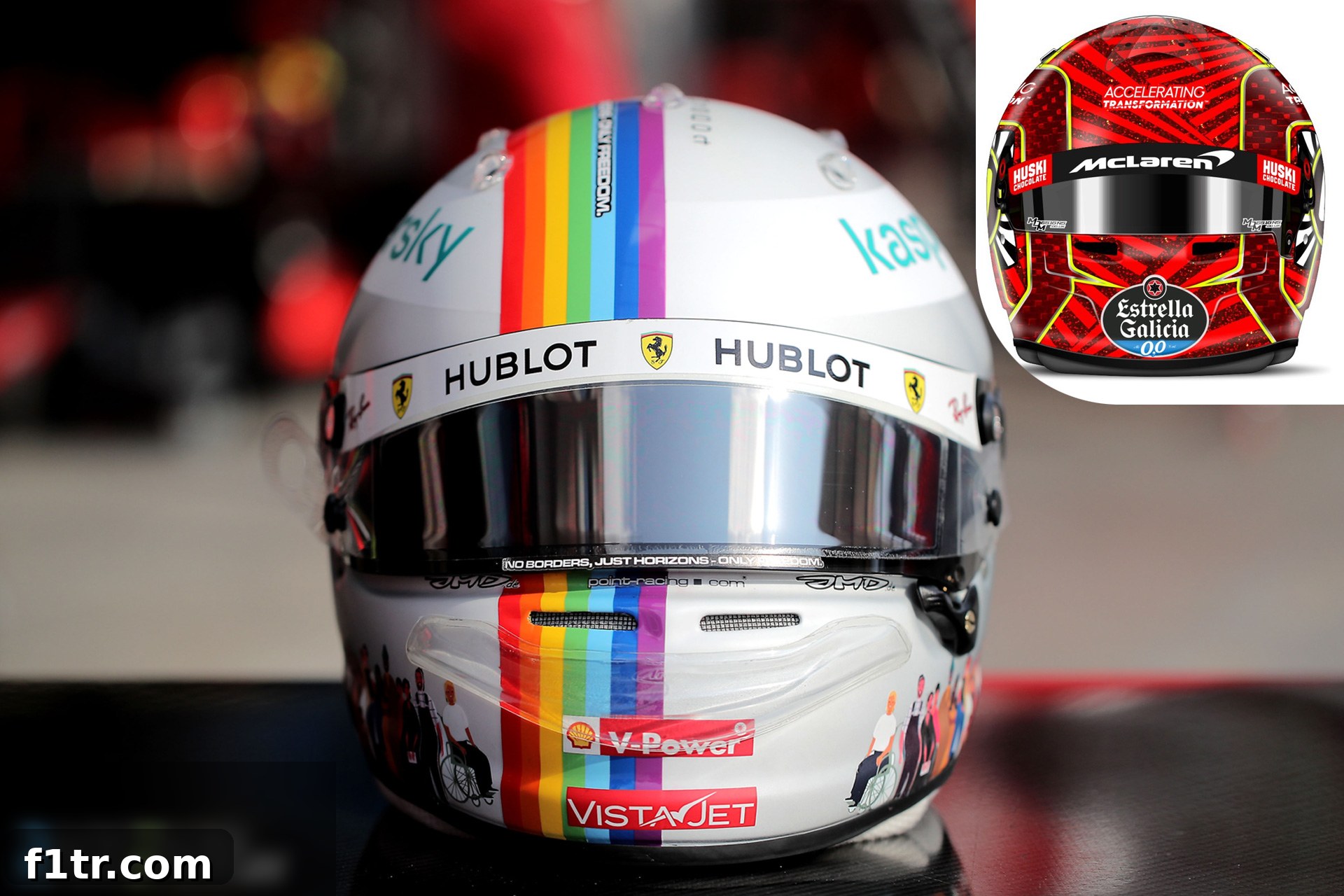
Ferrari’s four-time world champion, Sebastian Vettel, is renowned for his thoughtful and often symbolic helmet designs, and the 2020 Turkish Grand Prix was no exception. For this momentous event, Vettel traded his customary German tricolour for a vibrant rainbow motif, a striking visual departure that immediately drew attention and positive acclaim. This colorful display was more than just aesthetic; it carried a profound message of solidarity and inclusivity, resonating deeply with fans and observers alike.
Adorning the apex of Vettel’s helmet was the powerful slogan “together as one,” reinforcing the overarching theme of unity. This simple yet profound phrase underscored a desire for collective harmony and mutual respect, values that transcend the competitive world of Formula 1. In a sport that often emphasizes individual brilliance, Vettel’s choice to highlight collaboration and togetherness offered a refreshing perspective.
Further enriching the helmet’s narrative was a compelling quote from the legendary American aviation pioneer, Amelia Earhart: “No borders, just horizons, only freedom.” This quote, carefully selected by Vettel, added another layer of meaning to his design. Amelia Earhart, celebrated for her groundbreaking achievements, including being the first woman to complete a solo flight across the Atlantic Ocean in 1928, embodied a spirit of exploration, defiance of limitations, and the pursuit of ultimate freedom. Her eventual disappearance nine years later during an attempt to circumnavigate the globe only solidified her status as an enduring icon of courage and adventure.
By integrating Earhart’s words, Vettel’s helmet became a statement on global interconnectedness, challenging the notion of artificial divisions and advocating for a world without boundaries. The metaphor of “horizons” beautifully aligns with the forward-looking, boundary-pushing nature of Formula 1 itself, where technological and human limits are constantly being redefined. This thoughtful blend of personal expression, social commentary, and historical tribute made Vettel’s 2020 Turkish Grand Prix helmet one of the most memorable of the season, showcasing the driver’s character both on and off the track.
Lando Norris’s Unraced 2020 Turkish Grand Prix Helmet: A Victim of Logistics
In contrast to Vettel’s seamless display of personal expression, McLaren’s rising star, Lando Norris, faced a disappointing setback with his intended special helmet design for the 2020 Turkish Grand Prix. Norris had planned to debut a vibrant red helmet, marking the first time in nine years that Formula 1 was returning to the iconic Istanbul Park circuit. The helmet was predominantly red, a bold choice, and prominently featured the name of his burgeoning Esports team, Quadrant, across the back. This design aimed to celebrate his personal brand and engage with his growing fanbase in the gaming community, reflecting the modern intersection of motorsport and digital entertainment.
However, the highly anticipated helmet never made it to the track. The custom-designed piece encountered significant delays in transit from his helmet supplier, Bell. The intricate process of helmet preparation often involves multiple stages, including design, painting, and final clear-coating, frequently performed at specialized facilities. In this instance, the final touches were being applied at a facility located in Belgium. Unfortunately, the helmet became entangled in customs clearances, a common but frustrating hurdle in international shipping, especially for time-sensitive, high-value goods like a Formula 1 racing helmet.
The complexities of international logistics, particularly when dealing with customs regulations, can pose significant challenges for even the most meticulously planned operations. For Formula 1 teams and drivers, who operate on extremely tight schedules and often transport equipment across multiple borders weekly, such delays can be particularly disruptive. The inability to wear a special helmet not only disappoints the driver but also misses a valuable opportunity for brand promotion and fan engagement. This incident highlighted the often-overlooked logistical intricacies that underpin the seemingly glamorous world of Formula 1.
This marked the second instance in 2020 where Norris was unable to wear a specially designed helmet for a race. Earlier in the season, at the Belgian Grand Prix, he had opted against using a helmet featuring a Flemish flag. This decision was made due to concerns that it might be misinterpreted as a political statement, showcasing the delicate balance drivers must maintain between personal expression and avoiding controversial or politically charged imagery in a global sport like Formula 1. While the Belgian incident was a conscious choice driven by geopolitical sensitivities, the Turkish Grand Prix situation was a stark reminder that external, unforeseen factors can also thwart a driver’s plans for personal expression on the track.
Norris helmet images via MDM Designs on Twitter
The Significance of Helmet Designs in Formula 1
Beyond their primary function as critical safety equipment, Formula 1 helmets have evolved into powerful canvases for drivers to showcase their personality, beliefs, and allegiances. Each helmet design is a unique blend of artistry and personal branding, allowing drivers to tell a story or make a statement to a global audience. These designs often reflect significant moments in their careers, pay homage to heroes, support charitable causes, or simply express their creative flair. The vibrant colors, intricate patterns, and personalized symbols make each helmet a miniature work of art, cherished by fans and collectors alike.
The advent of custom helmet painting has transformed the visual landscape of Formula 1. What was once a relatively simple design now involves specialist artists and designers, like MDM Designs, who work closely with drivers to bring their visions to life. This collaborative process ensures that each helmet is not only aesthetically pleasing but also perfectly encapsulates the driver’s current mood, message, or partnership. The expectation of seeing a new, special helmet for major or returning Grands Prix, such as the 2020 Turkish GP at Istanbul Park, has become a tradition, adding an extra layer of excitement for fans.
Furthermore, helmet designs serve as valuable marketing tools for drivers and their sponsors. Brands often feature prominently, while personal brands, like Lando Norris’s Quadrant Esports, can gain significant exposure. The helmet is arguably the most visible part of a driver when they are outside the car and certainly the most unique piece of their race kit, making its design a crucial element of their overall public image. Therefore, the successful debut of a new design, as with Vettel’s, is a triumph, while an unfortunate delay, like Norris’s, is a genuine loss for all involved.
Conclusion: Expression, Challenges, and the Spirit of F1
The 2020 Turkish Grand Prix offered a compelling microcosm of the Formula 1 world – a blend of high-octane racing, personal expression, and the often-unseen logistical challenges that underpin the sport. Sebastian Vettel’s rainbow-themed helmet, adorned with Amelia Earhart’s inspiring words, served as a poignant reminder of unity, freedom, and the endless horizons that F1 drivers constantly chase. His ability to deliver such a powerful message through his design highlighted the profound impact that visual storytelling can have in sport.
Conversely, Lando Norris’s experience with his customs-delayed Quadrant helmet brought to light the intricate web of international logistics and unforeseen bureaucratic hurdles that can prevent even the most carefully planned endeavors. It was a stark reminder that despite the glamour, Formula 1 operates in a complex global environment where factors beyond the racetrack can significantly influence events. Both incidents, though contrasting in their outcomes, underscored the significance of helmet designs as a vital avenue for driver identity and storytelling, enriching the fan experience and adding a unique layer to the narrative of each Grand Prix. While one driver’s message soared, another’s was grounded by the realities of global transport, encapsulating the unpredictable nature of F1 both on and off the circuit.
2020 Turkish Grand Prix
Browse all 2020 Turkish Grand Prix articles