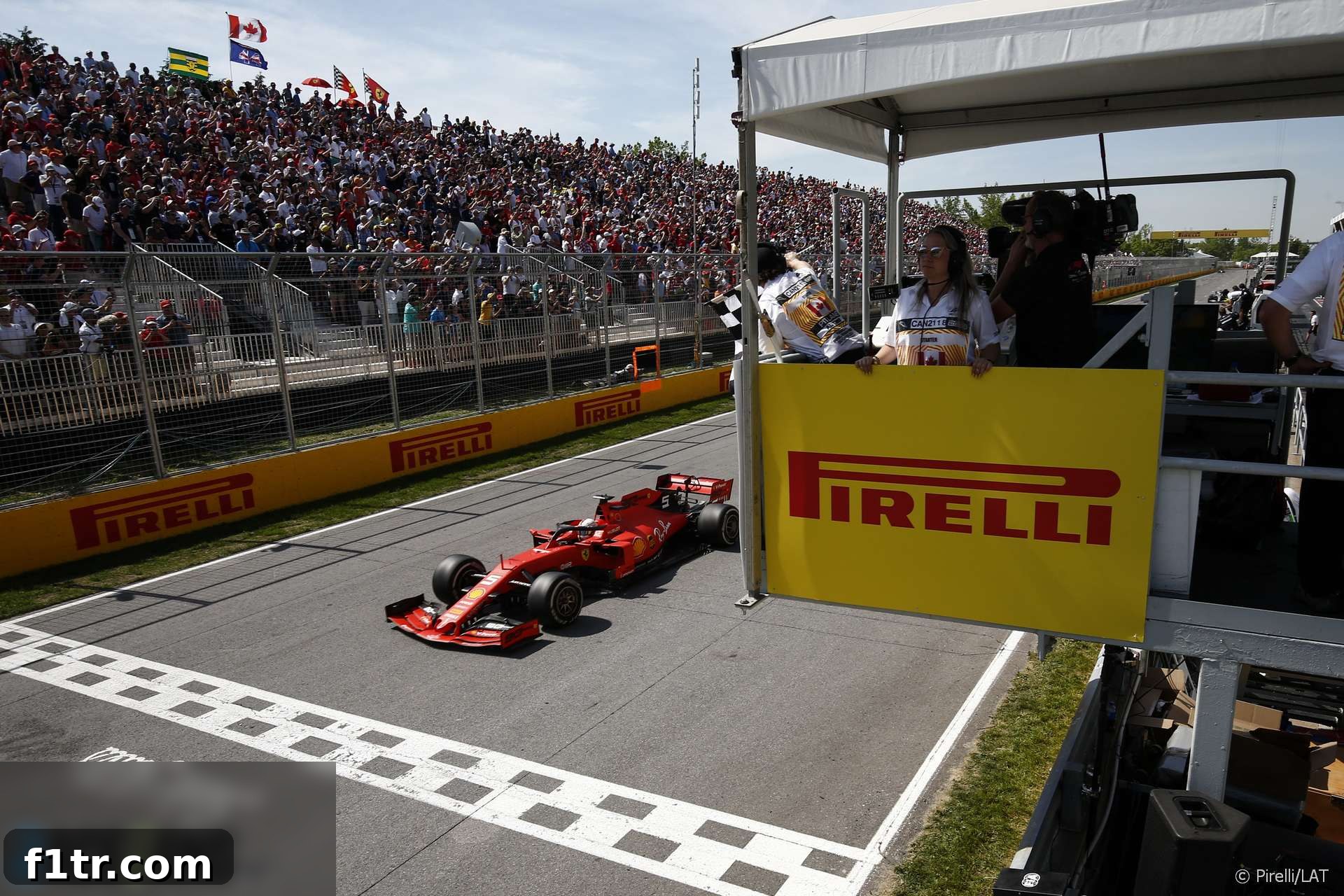
Sebastian Vettel, a four-time Formula 1 World Champion, recently addressed mounting speculation regarding his mindset amidst a challenging period marked by a prolonged winless streak. The German driver, currently with Ferrari, unequivocally denied any burgeoning frustration, despite his last Grand Prix victory dating back to the Belgian Grand Prix of the previous season. This declaration comes after a series of near-misses and high-stakes controversies, most notably the recent Canadian Grand Prix, where a five-second time penalty stripped him of a hard-fought win, ceding victory to his rival, Lewis Hamilton.
Advertisement
Support independent journalism: Become a Supporter & go ad-free
Vettel’s composure, even in the face of such adversity, reflects the seasoned maturity of a champion. He articulated his perspective by stating that his lack of frustration stems from a realistic assessment of the races in question. “I think it’s not like we had 15 races to win and we didn’t win, then I’d be frustrated,” he commented, emphasizing that Ferrari, and he personally, had consistently delivered their best possible performance under the given circumstances. This viewpoint underscores a pragmatic understanding of the competitive landscape in Formula 1, where victories are hard-earned and often dictated by a confluence of car performance, strategy, and driver execution.
Delving deeper into the current season, Vettel conceded that Ferrari had perhaps only two genuine opportunities for victory thus far. He referenced a race where his teammate, Charles Leclerc, demonstrated formidable control, and the aforementioned Canadian Grand Prix. His analysis highlights a nuanced approach, acknowledging that while the desire to win is perpetual, the actual probability of victory can be constrained by various factors inherent in top-tier motorsport. “I think it all depends looking back. But generally with the races I’ve had, obviously you always think that you could do a bit more here and there, but as I say it’s not like we [could have] dominated the last 15 races,” Vettel explained, dismissing the notion that Ferrari had squandered numerous undeniable winning chances.
The incident at the Canadian Grand Prix stands as a vivid illustration of the fine margins separating triumph from disappointment in Formula 1. Vettel, leading the race, ran wide at Turn 3 while under immense pressure from Hamilton. Upon rejoining the track, his maneuver was deemed unsafe by the stewards, leading to the controversial penalty. Reflecting on this pivotal moment, Vettel admitted that his defeat “stemmed from a mistake made under pressure.” This candid admission is a testament to his self-awareness and professional integrity, acknowledging responsibility for a critical error. However, he also pointed out that his rival, Lewis Hamilton, a driver celebrated for his consistent brilliance, had also made unforced errors during the same race, albeit ones that did not result in a penalty or loss of track position as significant as his own.
Vettel elaborated on the intensity of the battle in Montreal: “I tried everything to stay on track. Obviously I was under pressure, I was pushing as hard as I could. I don’t think we had the same pace.” This statement offers valuable insight into the dynamic between the two champions. While Ferrari might have had a straight-line speed advantage, Mercedes, particularly Hamilton, seemed to possess a more balanced package and superior overall race pace. This made Vettel’s defensive driving incredibly challenging. He acknowledged Ferrari’s strength: “We weren’t easy to pass because we had an advantage down the straights.” This characteristic of the Ferrari car often forced rivals into aggressive overtaking maneuvers, increasing the likelihood of errors.
The psychological aspect of such a high-stakes race is immense. Vettel highlighted Hamilton’s own struggles at a particular section of the circuit: “Fortunately Lewis made some mistakes in the hairpin every time he was a bit close.” This observation suggests that even the best drivers are not immune to errors, especially when pushing at the absolute limit. Vettel’s key distinction lay in the consequence of his mistake compared to Hamilton’s. “You can argue I did the mistake at the wrong place on the track, if I’d done it at the hairpin for example I’d’ve just lost time. In that case obviously I lost a bit more time because I had to go through the grass.” This pragmatic analysis underscores the cruel reality of F1: timing and location of an error can dramatically alter its impact on the race outcome, and in Canada, Vettel’s error proved costly.
The winless streak for Sebastian Vettel, spanning several months, inevitably draws scrutiny from media and fans alike. For a driver of his caliber, accustomed to the regular taste of victory and holding multiple world championships, such a period can be perceived as a significant downturn. However, Vettel’s calm demeanor and rational assessment paint a picture of resilience rather than despair. His refusal to be frustrated indicates a deep understanding of the sport’s cyclical nature and the relentless pursuit of performance improvements required to consistently be at the front. It’s a mindset that differentiates champions, allowing them to remain focused on solutions rather than succumbing to the emotional weight of temporary setbacks.
Advertisement
Become a RaceFans supporter and go ad-free: Support us here
The 2019 F1 Season: A Broader Perspective and Unfolding Narratives
The 2019 Formula 1 season has proven to be a captivating spectacle, rich with diverse narratives and intense competition, despite Mercedes’ apparent dominance in the Constructors’ Championship. For Ferrari, and Sebastian Vettel specifically, it has been a campaign of missed opportunities and strategic challenges. The performance gap to Mercedes, while not always insurmountable, has often manifested during critical moments, impacting race outcomes and preventing a consistent challenge for victory.
The emergence of Charles Leclerc as a strong competitor within Ferrari has added another layer of intrigue. Leclerc’s aggressive style and raw speed have often pushed Vettel, creating an exciting internal dynamic within the team. While this healthy competition can be a powerful motivator, it also adds pressure, as both drivers vie for supremacy and the primary challenging role against the Mercedes duo. Leclerc’s controlled performance in races, as referenced by Vettel, indicates his growing maturity and potential, suggesting a bright future for the young Monegasque driver and a potentially complex future for the team’s internal hierarchy.
Beyond Ferrari’s internal struggles and the Hamilton-Vettel rivalry, the 2019 season has been punctuated by numerous other significant events and individual performances. Drivers like Max Verstappen at Red Bull have consistently demonstrated their ability to challenge the front-runners, often injecting unpredictability into races. The midfield battle has also been fiercely contested, with teams like McLaren, Renault, and Racing Point pushing for every possible point, creating thrilling races further down the grid.
From strategic masterclasses to unexpected podium finishes and the continuous evolution of car technology and aerodynamics, each Grand Prix has contributed to a rich tapestry of stories. The season has seen teams grappling with new regulations, tire strategies, and the ever-present pressure of delivering results. For fans, this translates into a highly engaging sport, where every decision, every pit stop, and every driver error can dramatically reshape the outcome of a race and influence the broader championship narrative.
As the season progresses, the focus remains on whether Ferrari can close the gap to Mercedes and provide Sebastian Vettel with a car capable of securing the victories that have eluded him. His current resolve, despite the winless streak, suggests a champion still hungry for success and determined to overcome the obstacles in his path. The journey through the 2019 F1 season continues to promise drama, excitement, and the relentless pursuit of perfection that defines Formula 1 racing.
- Crying in the Melbourne car park at 2019 grand prix was my career low – Ocon
- McLaren Racing reports reduced £71 million loss in 2019
- Kvyat: Hockenheim podium last year was “my biggest achievement” so far
- How the FIA’s new encrypted fuel flow meter targets Ferrari’s suspected ‘aliasing’ trick
- “He smashed my office door”: 23 must-see moments from ‘Drive to Survive’ season two
Browse all 2019 F1 season articles