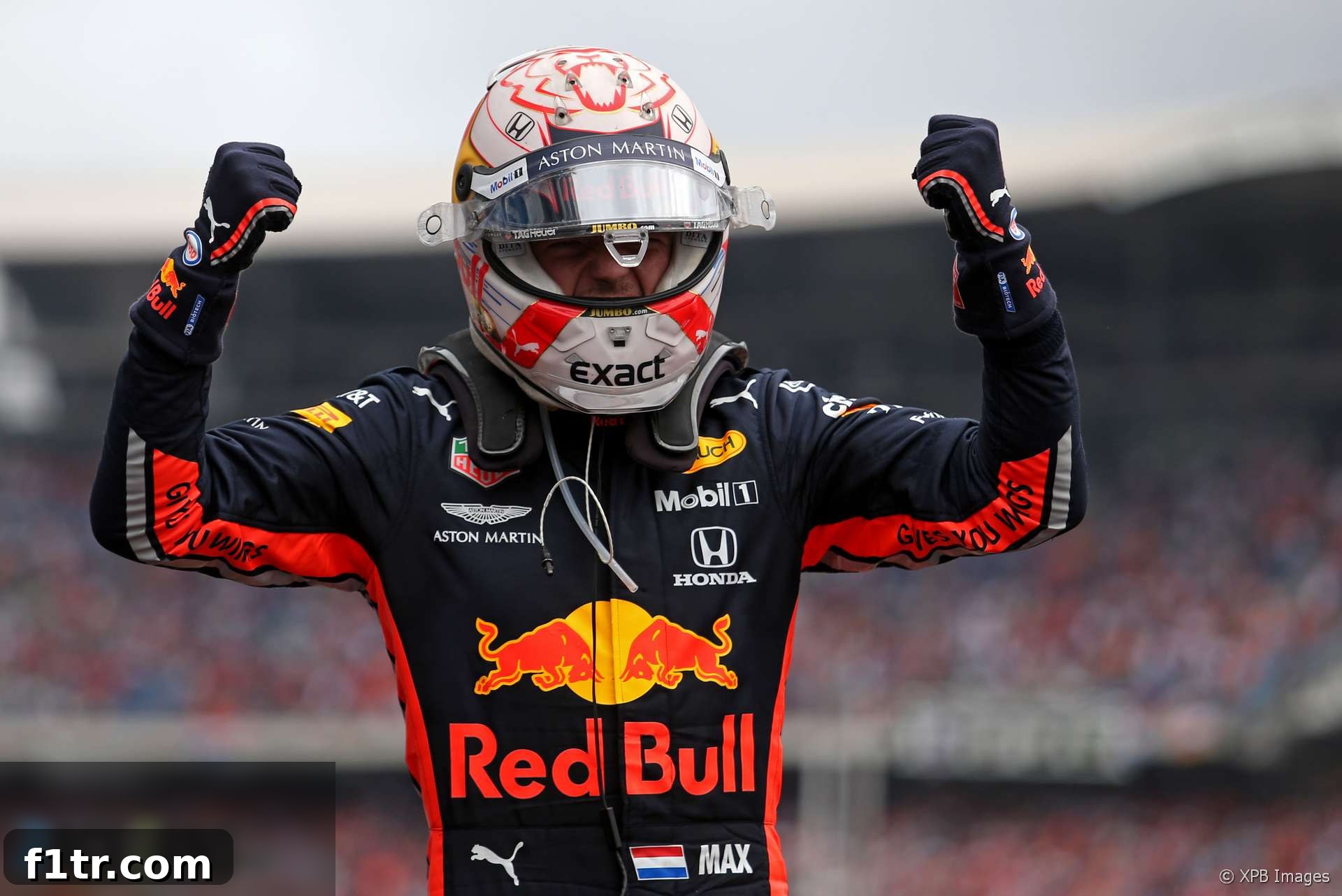
Max Verstappen Dominates Chaotic 2019 German Grand Prix at Hockenheimring
The 2019 Formula 1 German Grand Prix at the iconic Hockenheimring will forever be etched in the annals of motorsport history as one of the most unpredictable and drama-filled races of the modern era. Torrential rain showers transformed the challenging circuit into a treacherous aquatic battleground, leading to a string of spectacular crashes, strategic gambles, and exhilarating comeback drives. Emerging victorious from the chaos was Max Verstappen, who delivered a masterclass in wet-weather driving, securing a well-deserved win for Red Bull Racing amidst truly extraordinary circumstances.
Verstappen’s Wet-Weather Masterclass: A Display of Dominance
From the outset, it was clear that the conditions favored drivers with exceptional car control and a daring spirit. Max Verstappen, already renowned for his prowess in the rain, demonstrated exactly why he is considered one of the sport’s brightest talents. Despite an initial slow getaway from the grid, which saw him momentarily drop positions, Verstappen quickly found his rhythm. He expertly navigated the slippery track, making crucial overtakes and maintaining a cool head when many of his rivals faltered under pressure.
His race was a testament to both aggressive driving and strategic brilliance. Numerous safety car periods, brought out by the relentless crashes, created a constantly evolving strategic landscape. Verstappen and his Red Bull team perfectly timed their pit stops, switching between intermediate and full wet tires, and crucially, making the decisive call to switch to slick tires at the optimal moment as the track began to dry in the latter stages. This foresight, combined with Verstappen’s flawless execution, allowed him to seize and consolidate the lead, pulling away from the chasing pack with remarkable confidence. His victory was not just about speed, but about an unparalleled ability to adapt and thrive in the most challenging conditions imaginable.
Mercedes’ Home Grand Prix Nightmare: Hamilton and Bottas Stumble
For the reigning champions Mercedes, their home Grand Prix turned into an unmitigated disaster, a stark contrast to the celebratory mood expected at the Hockenheimring. Dressed in special retro livery to commemorate 125 years in motorsport, the team endured a day that saw both their drivers succumb to the treacherous conditions, finishing without a single point – a rare and shocking occurrence for the dominant Silver Arrows.
Championship leader Lewis Hamilton, who started from pole position, appeared to be in control for significant portions of the race. However, the relentless rain eventually claimed him as a victim. Hamilton suffered two major offs, the first of which was particularly costly. While running in the lead, he slid off at the penultimate corner, hitting the barriers and damaging his front wing. This necessitated an unscheduled and slow pit stop for repairs, compounded by confusion in the pit lane where his team wasn’t entirely ready, costing him valuable time and dropping him down the order. A subsequent five-second time penalty for entering the pits on the wrong side of a bollard further hampered his efforts. Despite his characteristic fighting spirit, a second spin later in the race sealed his fate, and he ultimately took the chequered flag in a disappointing 11th place, just outside the points.
His teammate, Valtteri Bottas, fared no better. The Finn was also running strongly, battling for podium positions, when he too lost control of his car in a similar manner to Hamilton. Sliding off track and into the barriers, his W10 suffered irreparable damage, leading to his retirement from the race. Bottas’s exit compounded Mercedes’ misery, marking a truly forgettable day for the powerhouse team at their most significant event of the season.
Ferrari’s Tale of Two Drivers: Vettel’s Heroics Amidst Leclerc’s Misfortune
Ferrari experienced a day of extreme highs and lows, encapsulating the very essence of the 2019 German Grand Prix’s drama. While one driver’s promising run ended in heartbreak, the other delivered a performance nothing short of sensational, thrilling the home crowd.
Charles Leclerc, starting in the top ten, had been demonstrating superb pace and car control throughout the challenging initial phases of the race. He steadily climbed up the order, at one point looking like a strong contender for victory. However, the notoriously slippery penultimate corner, which claimed several victims throughout the race, eventually caught out the Monegasque driver. While running in second position, Leclerc aquaplaned and slid into the barriers, ending his race prematurely and extinguishing a genuine opportunity for a significant points haul or even a maiden victory. It was a cruel blow for the talented youngster, who had shown immense potential.
In stark contrast, Sebastian Vettel delivered one of the most memorable comeback drives of his career. Starting from a lowly 20th and last position on the grid due to a qualifying issue, the four-time world champion put on a masterclass of determined and strategic racing. As others crashed out or made errors, Vettel remained focused, patiently picking off rivals lap after lap. In the closing stages, as the track dried and chaos ensued around him, he truly came alive. Displaying incredible skill and composure, he stormed through the midfield, culminating in daring overtakes on both Lance Stroll and Daniil Kvyat in the final laps to snatch an astonishing second place. Despite a minor slide in the Mercedes arena section, he held his nerve to secure an unexpected and hugely popular podium finish, salvaging Ferrari’s weekend and delighting his home fans.
Midfield Miracles and Drama: Kvyat’s Podium, Stroll’s Charge, and Sainz’s Recovery
Beyond the battles at the very front, the 2019 German Grand Prix was a race where many midfield teams and drivers capitalized on the chaos, delivering standout performances and unexpected results that will be long remembered.
Perhaps the most heartwarming story of the day belonged to Daniil Kvyat and Toro Rosso. In a race of attrition, Kvyat drove a superb and composed race, making the most of every opportunity presented. Crucially, his team made a brilliant strategic call to pit for slick tires early, allowing him to gain track position and hold off his rivals. He fiercely defended his position against a charging Lance Stroll in the final laps, ultimately claiming a sensational third place, a mere six-tenths of a second ahead. This marked Toro Rosso’s second-ever podium finish, sparking emotional celebrations within the team and serving as a poignant moment for Kvyat, who had only recently returned to the sport after a period away. It was a fairytale return to the podium for the “Torpedo.”
Lance Stroll also enjoyed an incredibly strong performance for Racing Point. Capitalizing on the rapidly changing conditions and strategic decisions, Stroll found himself in an incredible position to fight for a podium. While he couldn’t quite hold off Vettel’s late charge and was narrowly beaten by Kvyat for third, his fourth-place finish was a phenomenal result for himself and the Racing Point team, demonstrating their ability to seize opportunities in chaotic races.
Carlos Sainz Jnr continued his impressive season for McLaren with a resilient recovery drive. After an early off-track excursion that threatened to derail his race, Sainz meticulously worked his way back through the field, showcasing excellent car control and consistent pace. His determination paid off with a commendable fifth-place finish, adding valuable points to McLaren’s constructors’ championship tally and solidifying their “best of the rest” position.
Other Noteworthy Incidents and Performances
The German Grand Prix was a tapestry woven with countless individual stories of triumph and despair. The treacherous surface at the exit of the penultimate corner emerged as a recurring villain throughout the race. Beyond Charles Leclerc, other notable drivers, including Nico Hulkenberg, fell victim to its slippery grasp. Hulkenberg, driving for Renault, had enjoyed a spectacular run, briefly holding an incredible second position, igniting hopes for a rare podium for his team. However, his race ended abruptly at that very corner, demonstrating just how fine the margins were.
Veteran driver Kimi Raikkonen also went off at the same notorious corner but managed to continue, showcasing his vast experience. He brought his Alfa Romeo home in a strong seventh place, ahead of his teammate Antonio Giovinazzi, delivering solid points for the Swiss-Italian outfit.
Even the Haas drivers managed to complete the points-paying positions, albeit with their characteristic flair for internal drama. Kevin Magnussen and Romain Grosjean made contact with each other at the hairpin, a not-uncommon occurrence for the pair, but ultimately survived the incident to finish in ninth and tenth respectively. This meant that despite their ongoing internal struggles and the contact, both cars scored points in a race where many frontrunners failed, highlighting the unpredictable nature of the event. Magnussen, in particular, demonstrated superb defensive driving to keep Lewis Hamilton less than a second behind him at the flag, ensuring Mercedes left their home race entirely point-less.
Further up the order, an incident between Alexander Albon and Pierre Gasly in the final laps of the race saw the Red Bull driver out of contention, while Albon continued to finish a respectable sixth for Toro Rosso, securing more vital points for the sister team.
The Role of Strategy and Safety Cars
Strategy played an even more critical role than usual at the 2019 German Grand Prix. The constant switching between full wet, intermediate, and eventually slick tires required lightning-fast decisions from the pit wall, and perfect execution from the pit crews. Each safety car period, of which there were several, presented both an opportunity and a risk for teams. Those who gambled correctly on tire choices and pit stop timing, like Red Bull and Toro Rosso, reaped immense rewards. Conversely, those who faltered, or whose drivers made errors under pressure, saw their races unravel dramatically. The varying levels of grip as the rain came and went, coupled with multiple safety car deployments, ensured that no lead was safe and no position guaranteed until the very last lap.
Implications and Aftermath: A Race for the Ages
The 2019 German Grand Prix delivered an unforgettable spectacle that transcended mere motorsport. It was a chaotic symphony of human error, strategic brilliance, sheer driving skill, and raw luck. While Lewis Hamilton’s championship lead remained substantial despite his point-less finish, the race served as a dramatic reminder that even the most dominant teams can be humbled by the unpredictable nature of Formula 1. For Max Verstappen, it further solidified his reputation as a formidable talent, especially in challenging conditions. Sebastian Vettel’s incredible comeback offered a much-needed morale boost for Ferrari, while Daniil Kvyat’s podium was a testament to perseverance and a fairytale moment for Toro Rosso.
Conclusion: Hockenheim Delivers Unforgettable Drama
The 2019 German Grand Prix at Hockenheimring will undoubtedly be remembered as one of the most thrilling and dramatic races in recent memory. From the relentless rain and the string of high-profile crashes to the incredible recovery drives and unexpected podium finishes, every moment was packed with tension and excitement. Max Verstappen’s composed and masterful drive secured a well-deserved victory, cementing his place as one of F1’s elite. The race served as a powerful reminder of Formula 1’s enduring allure: a high-stakes blend of technology, strategy, and raw human talent, all capable of being turned upside down in an instant by the whims of nature. It was a race that had everything, leaving fans breathless and eager for more.