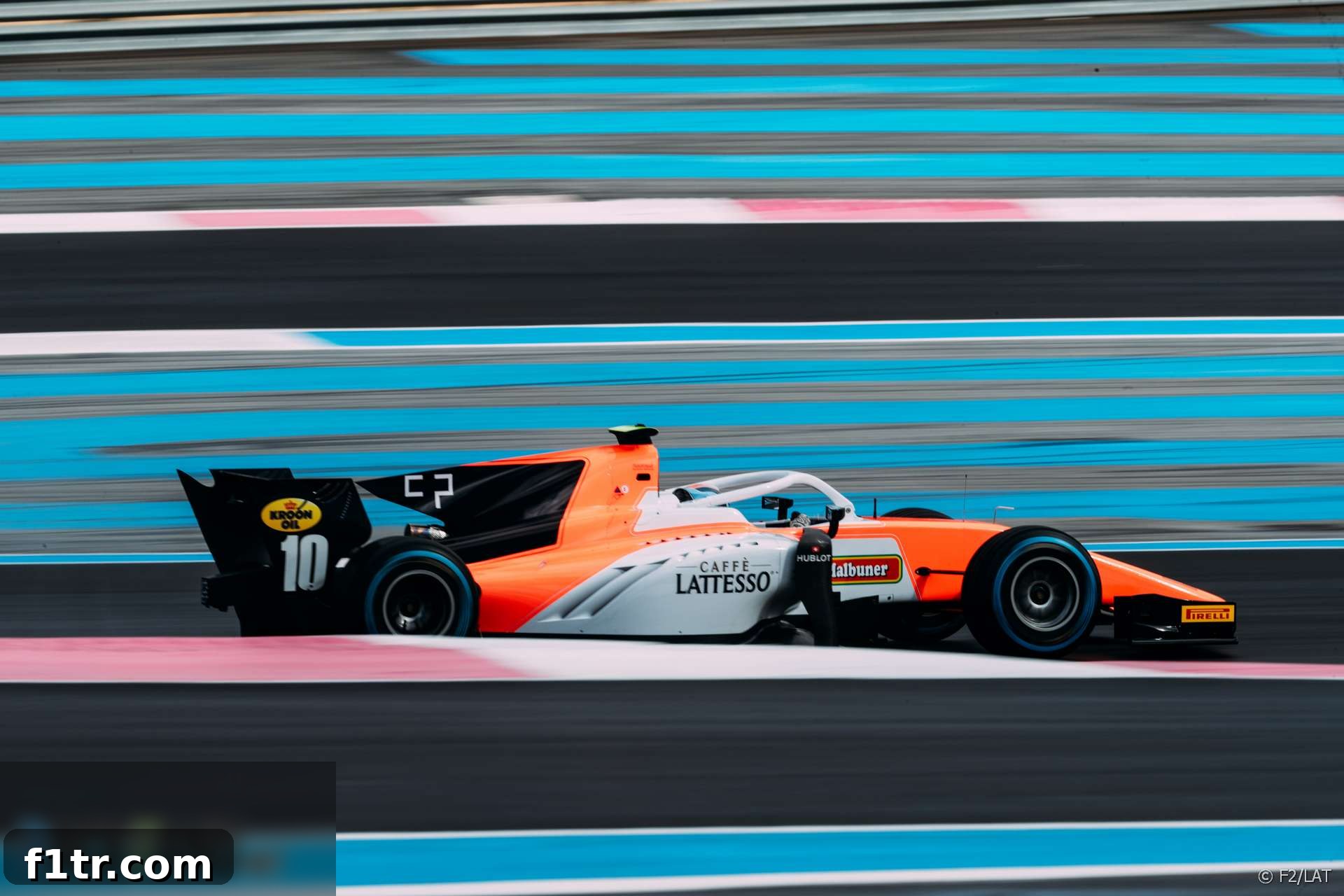
Formula Two, the premier feeder series to Formula 1, officially resumed crucial testing of its eagerly anticipated 2018 challenger at the iconic Circuit Paul Ricard today. This significant session follows the initial shakedown runs of the new chassis held last month at Magny-Cours, marking a pivotal phase in the development of the championship’s next-generation machine. The introduction of a brand new car is always a momentous occasion for any racing series, and for Formula Two, it represents a commitment to innovation, safety, and providing the ultimate proving ground for aspiring Grand Prix drivers.
The 2018 F2 car, designed by Dallara, represents a substantial evolution from its predecessor, incorporating numerous advancements aimed at making the racing more competitive, relevant to Formula 1, and crucially, safer. Among the most discussed additions is the Halo safety device, a mandatory inclusion across several single-seater categories for 2018, which dramatically alters the car’s aesthetics and protective capabilities. This round of testing at Paul Ricard is not merely about mechanical reliability; it’s about understanding how the new aerodynamic package performs, how the Pirelli tyres interact with the updated chassis, and how drivers adapt to the comprehensive changes, particularly the Halo’s visual impact and the car’s refined dynamics.
Unveiling the Future: The 2018 Formula Two Car
The introduction of the new Formula Two car for the 2018 season was a landmark event, designed to push the boundaries of performance and safety within the junior motorsport landscape. Replacing the long-serving Dallara GP2/11 chassis, the 2018 model, designated as the Dallara F2 2018, brought with it a host of significant changes. At its core, the car featured a new Mecachrome 3.4-litre V6 turbocharged engine, a departure from the naturally aspirated V8 units of previous generations. This shift to turbocharging brought F2 more in line with contemporary Formula 1 power unit technology, offering drivers a more complex and relevant driving experience with increased torque and a different power delivery characteristic. This change alone presented a steep learning curve for engineers and drivers alike, requiring comprehensive calibration and adaptation during early test sessions.
Advanced Aerodynamics and the Halo Device
Beyond the engine, the F2 2018 boasted a completely revised aerodynamic package. The design aimed to create a more stable and predictable car while still offering a significant challenge to the drivers. The updated aero was intended to improve overtakes and promote closer racing, crucial elements for a feeder series whose primary goal is to hone racing talent. However, the most visually striking and functionally significant change was the integration of the Halo cockpit protection device. For the 2018 season, the FIA mandated the Halo across Formula 1 and its main support categories, including Formula Two, to enhance driver head protection. While lauded for its safety benefits, the Halo presented new challenges: it impacted aerodynamic flow, added weight, and altered driver visibility, particularly in tight corners or elevation changes. These initial tests at Paul Ricard were therefore critical for understanding how the Halo integrated with the car’s overall performance and how drivers adjusted to its presence.
Chassis Enhancements and Performance Targets
The new Dallara F2 2018 chassis was stiffer and lighter than its predecessor, contributing to improved handling and responsiveness. The car was designed to be faster, more physically demanding, and more akin to the driving experience of a modern Formula 1 car, thereby better preparing drivers for the next step in their careers. Key performance targets included reducing lap times and improving overall reliability throughout a race weekend. The test programme, commencing with shakedowns at Magny-Cours and progressing to more intensive running at Paul Ricard, was meticulously planned to validate these design objectives and ensure the car was robust enough for the rigours of a full championship season. Every lap turned during these early tests provided invaluable data for Dallara, Mecachrome, and the teams themselves, allowing for fine-tuning and problem identification before competitive action began.
Paul Ricard: The Proving Ground for 2018
The decision to conduct this crucial phase of testing at the Circuit Paul Ricard was no coincidence. Located in Le Castellet, France, Paul Ricard is renowned for its state-of-the-art facilities and its incredibly versatile track layout. With multiple configurations available, including long straights, fast sweeping corners, and technical chicanes, the circuit offers an ideal environment for comprehensive vehicle development. Teams and drivers can test various aspects of the car’s performance, from high-speed stability to low-speed traction, and evaluate tyre degradation across different sections of the track. The track’s distinctive blue and red runoff areas, while visually striking, also provide unparalleled safety, allowing drivers to push the limits of the new car without severe consequences, which is vital during early development stages.
Objectives of the Testing Session
For the Formula Two teams participating, these Paul Ricard tests served multiple critical objectives. Firstly, it was an intensive shakedown to identify any unforeseen mechanical issues or reliability concerns with the new chassis and engine. Pushing the cars over extended runs and different setup configurations helps stress-test every component. Secondly, it allowed engineers to gather extensive baseline data on the car’s aerodynamic performance, suspension characteristics, and engine mapping. This data forms the foundation for all subsequent setup work throughout the season. Thirdly, and perhaps most importantly, these sessions were about driver familiarisation. Aspiring F1 stars needed to understand the nuances of the turbocharged power unit, master the new aero package, and crucially, adapt to driving with the Halo device. Getting comfortable with these changes early on would be paramount for a successful 2018 campaign.
The track conditions at Paul Ricard often provide a mix of challenges, from varying temperatures to potential wind shifts, which are excellent for evaluating a car’s performance envelope. The data collected from sensors on every part of the car, combined with driver feedback, forms a comprehensive picture that guides development and setup choices. Ensuring the car is well-balanced and responsive across all types of corners is a continuous process during these early tests, as teams seek to unlock its full potential.
Faces Behind the Wheel: Key Drivers and Teams
The gallery of images from the Paul Ricard test vividly captures the excitement and intensity of the session, featuring a host of talented young drivers who would go on to shape the 2018 Formula Two season and beyond. Drivers like Oliver Rowland (DAMS), Luca Ghiotto (Campos), Arjun Maini (Trident), Nyck De Vries (Prema), Sean Gelael (Prema), Artem Markelov (Russian Time), Santino Ferrucci (Trident), Nirei Fukuzumi (Arden), Sergio Sette Camara (Carlin), George Russell (ART), Maximilian Gunther (Arden), Tadasuke Makino (Russian Time), Antonio Fuoco (Charouz), Roberto Merhi (MP Motorsport), Lando Norris (Carlin), Ralph Boschung (MP Motorsport), Louis Deletraz (Charouz), Alexander Albon (DAMS), and Roy Nissany (Campos) were all present, gaining valuable mileage in the new machine.
Many of these names would become prominent figures in motorsport. George Russell and Lando Norris, for instance, were both rookies in F2 in 2018 and quickly showed their immense potential, battling for the championship and subsequently making their way into Formula 1. Nyck De Vries and Alexander Albon also demonstrated exceptional skill during the season, further solidifying their reputations as future motorsport stars. The opportunity to test the new car extensively before the season opener provided these drivers with an invaluable head start, allowing them to refine their driving styles and work closely with their engineers to develop optimal car setups.
The presence of such a strong lineup of talent underscores Formula Two’s role as a critical stepping stone. These tests are not just about the car; they are about evaluating the drivers under pressure, observing their feedback capabilities, and watching them adapt to new technology. The insights gained from how these drivers handled the new turbo engine characteristics and the Halo device were as crucial as the technical data itself. Teams like Prema, DAMS, Carlin, and ART Grand Prix, consistently at the sharp end of F2, were particularly focused on maximising their track time to ensure they had a competitive package from day one.
The Road Ahead: Preparing for the 2018 F2 Season
Following these intensive sessions at Paul Ricard, the teams and drivers will have further opportunities for pre-season testing, usually at circuits that feature prominently on the F2 calendar. These subsequent tests will build upon the foundation laid in France, focusing on refining race simulation procedures, optimising pit stop practices, and conducting more detailed performance runs. The primary goal is to arrive at the first race of the season, typically supporting the Formula 1 Australian Grand Prix, with a car that is not only reliable but also competitive straight out of the box.
The 2018 Formula Two season promised to be one of the most exciting in recent memory, not just because of the new car but because of the calibre of talent it attracted. The new F2 2018 chassis, with its turbo engine and Halo protection, was designed to be a more challenging and rewarding car to drive, pushing the limits of the young racers and providing a truer test of their abilities before they potentially make the leap to Formula 1. The tests at Paul Ricard were an integral step in this journey, signaling the dawn of a new era for Formula Two and a thrilling season of wheel-to-wheel action.
As the primary feeder series, Formula Two plays a critical role in the motorsport ecosystem. It’s where future champions are forged, where raw talent is refined, and where the skills necessary to compete at the pinnacle of motorsport are acquired. The successful integration and performance of the new 2018 car were therefore vital for maintaining the series’ reputation and its ability to deliver the next generation of Formula 1 superstars. The rigorous testing at venues like Paul Ricard ensured that when the green lights went out for the first race, both the machinery and the drivers were ready to deliver a spectacular show.
This article captures the essence and excitement surrounding the Formula Two 2018 car testing at Paul Ricard.
Formula Two
- Formula 2 to debut in Miami and Montreal after Iran war cancellations
- Ex-McLaren junior Dunne’s move to Alpine finally confirmed
- Schumacher says his IndyCar feels like ‘an F2 car, just with better tyres’
- The Formula 2 team with an older driver line-up than almost half the F1 grid
- FIA to award more F1 superlicence points to IndyCar drivers from 2026
Browse all Formula 2 articles