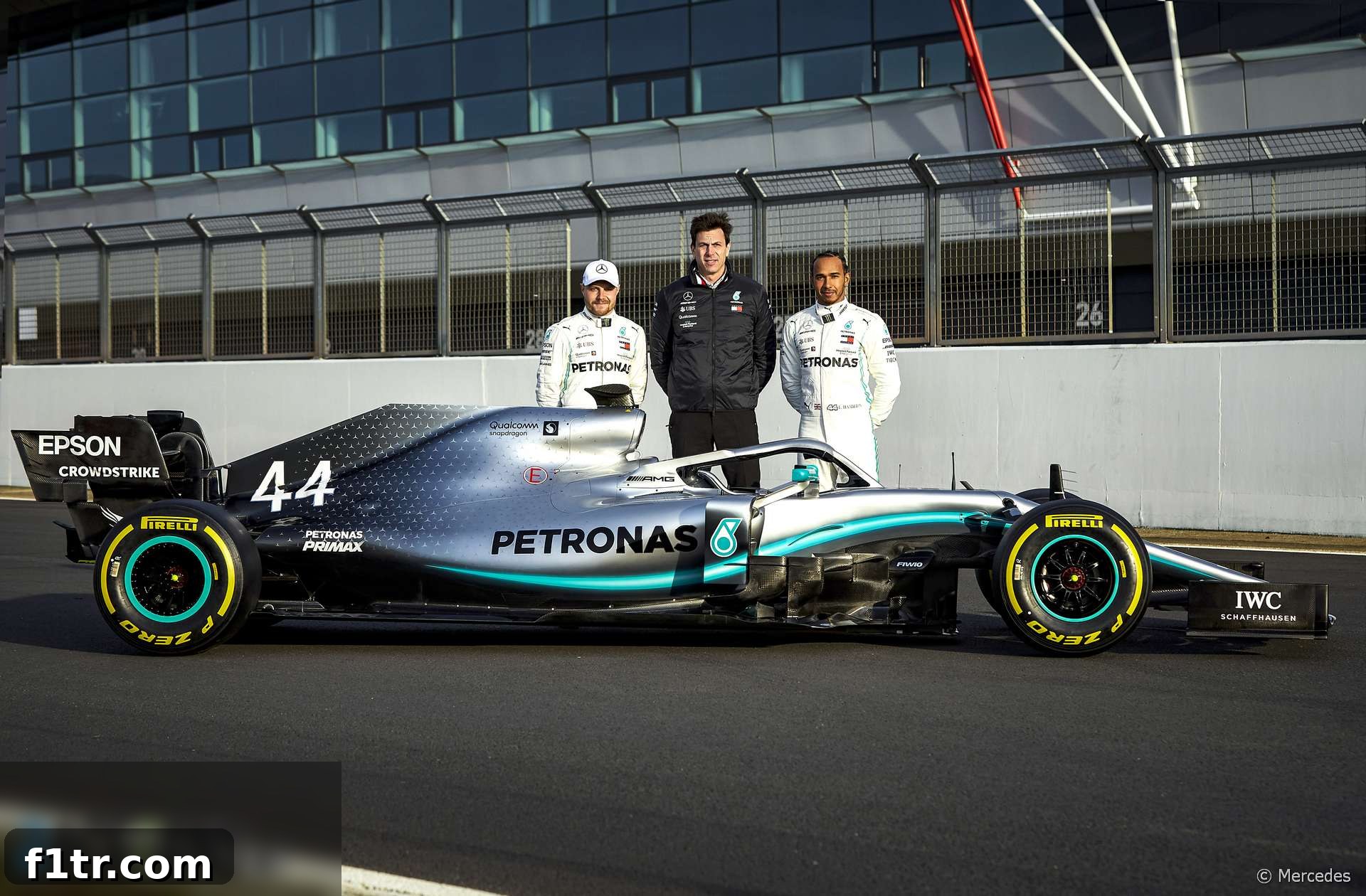
Anticipation builds in the world of Formula 1 as Mercedes-AMG Petronas Motorsport, the reigning champions, prepare to unveil their latest challenger, the Mercedes W11. This pivotal event, marking the formal start of their 2020 F1 season campaign, is scheduled for February 14th at the iconic Silverstone Circuit in the United Kingdom. While the date is set, the team has confirmed a notable change in its launch strategy: the event will not be open to either the media or the public, a policy first adopted in 2019 and now a continued trend for the dominant German outfit.
The decision to host a closed-door launch for the Mercedes W11 underscores a strategic shift in how Formula 1 teams manage their public relations and initial car presentations. Once grand spectacles attended by throngs of journalists and eager fans, these events are increasingly becoming private shakedowns, with teams opting to control the narrative through carefully curated image and video releases. For Mercedes, this approach allows them to focus purely on the technical aspects of the car’s maiden run without the added pressure and logistical complexities of a large media gathering. It ensures that the team’s engineers and drivers can concentrate solely on the critical initial assessment of the W11’s performance on the track.
The world champions, having secured an unprecedented six consecutive constructors’ and drivers’ titles, are acutely aware of the scrutiny their new car will face. The W11 is poised for its inaugural shakedown on the demanding Silverstone International Circuit. This initial run, often referred to as a filming day or shakedown, is crucial for validating basic systems, performing crucial checks, and gathering preliminary data. While the physical event itself will remain exclusive, Mercedes has pledged to release official images and footage shortly thereafter, ensuring fans and media alike get their first glimpse of the car that aims to continue their remarkable run of success in the 2020 F1 season.
The unveiling of the Mercedes W11 is not just another car launch; it represents the latest chapter in a dynasty that has redefined modern Formula 1. Since the start of the hybrid era in 2014, Mercedes has been virtually unstoppable, demonstrating unparalleled engineering prowess, strategic acumen, and driving talent. The W10, its predecessor, was a testament to this dominance, clinching 15 victories out of 21 races in the previous season. This remarkable track record sets an incredibly high bar for the W11, which is tasked with maintaining Mercedes’ position at the pinnacle of motorsport.
Intriguing details have emerged regarding the W11’s design philosophy. Early reports suggest that the team has been diligently working on a “distinctively aggressive packaging arrangement” for the cooling systems surrounding its powerful unit. This indicates a relentless pursuit of aerodynamic efficiency and performance gains, even in areas often considered less glamorous than front wings or floor designs. Aggressive packaging typically refers to tightly integrating components within the car’s bodywork, minimizing the car’s overall frontal area and allowing for cleaner airflow over and around critical sections. Such a design choice hints at Mercedes’ ongoing commitment to innovation and their willingness to push boundaries in pursuit of marginal gains, which are often the difference-makers in the fiercely competitive world of Formula 1.
The stakes for the 2020 F1 season are exceptionally high for Mercedes. The team is not only looking to extend its incredible streak of six consecutive constructors’ titles, but its star driver, Lewis Hamilton, will also be aiming for a record-equalling seventh consecutive drivers’ championship for a Mercedes-powered car. Hamilton, a five-time world champion with Mercedes, forms a formidable partnership with his teammate, Valtteri Bottas, who enters his fourth year with the team. This stable driver lineup provides Mercedes with invaluable continuity, allowing them to fine-tune car development based on consistent feedback from two highly experienced and competitive drivers. Bottas, having shown strong flashes of brilliance and consistency, will undoubtedly be looking to challenge Hamilton more regularly for race wins and potentially even the championship itself.
Adding to the excitement of February 14th, Mercedes won’t be the only team presenting its new machinery. Alpha Tauri, the newly rebranded team formerly known as Toro Rosso, has also confirmed its plans to unveil its 2020 challenger on the very same day. This parallel launch creates a fascinating narrative as fans get to compare the approaches of a championship-winning juggernaut and a dynamic, re-energized midfield contender simultaneously. Alpha Tauri’s launch signifies a fresh start and renewed ambitions for the Faenza-based squad, adding another layer of intrigue to the pre-season build-up.
The 2020 F1 season represents a unique challenge for all teams, standing as it does as the final season before a significant overhaul of technical regulations set for 2021. This means teams like Mercedes must balance the immediate demands of developing a championship-winning car for 2020 with the long-term investment required for the radically different cars of 2021. The W11, therefore, isn’t just a culmination of past successes but also a bridge to the future, embodying the last iteration of a highly successful design philosophy within the current regulatory framework. Every detail, from the engine’s power delivery to the aerodynamic surfaces, must be perfected to extract every ounce of performance. The shakedown at Silverstone will be the first real-world test of these intricate designs.
Get all the 2020 F1 race weekend session times plus test and launch dates on your mobile device using the RaceFans F1 Calendar
The evolution of Formula 1 car design is a continuous process, and the W11 is expected to feature a host of refinements and innovations built upon the highly successful W10 chassis. Engineers will have focused on areas such as improving cornering stability, optimizing tire degradation, and finding further gains in straight-line speed. The ‘aggressive packaging’ of the cooling systems suggests a deeper dive into managing thermal efficiency while minimizing drag, a critical balance in modern F1. These subtle yet significant improvements are crucial for maintaining a competitive edge against formidable rivals like Ferrari and Red Bull, both of whom will undoubtedly be pushing hard to close the gap to Mercedes in the upcoming season.
Exploring the 2020 F1 Season Landscape
As the curtains rise on the 2020 F1 season, the Mercedes W11 launch sets a high benchmark for the grid. The pre-season testing, following closely after the launches, will provide the first indications of true performance and reliability. Fans around the globe will be eagerly dissecting every piece of data, every onboard camera angle, and every lap time from Barcelona. The success of the W11 will hinge not only on its raw speed but also on its adaptability to various circuits and conditions throughout the lengthy championship calendar. With stable driver regulations and refined cars, the 2020 season promises to be a thrilling spectacle, and Mercedes, with their W11, aims to be at the forefront once again, solidifying their legacy as one of the greatest teams in Formula 1 history. The journey for the seventh consecutive double championship begins now.
Browse all 2020 F1 season articles for more insights and updates.