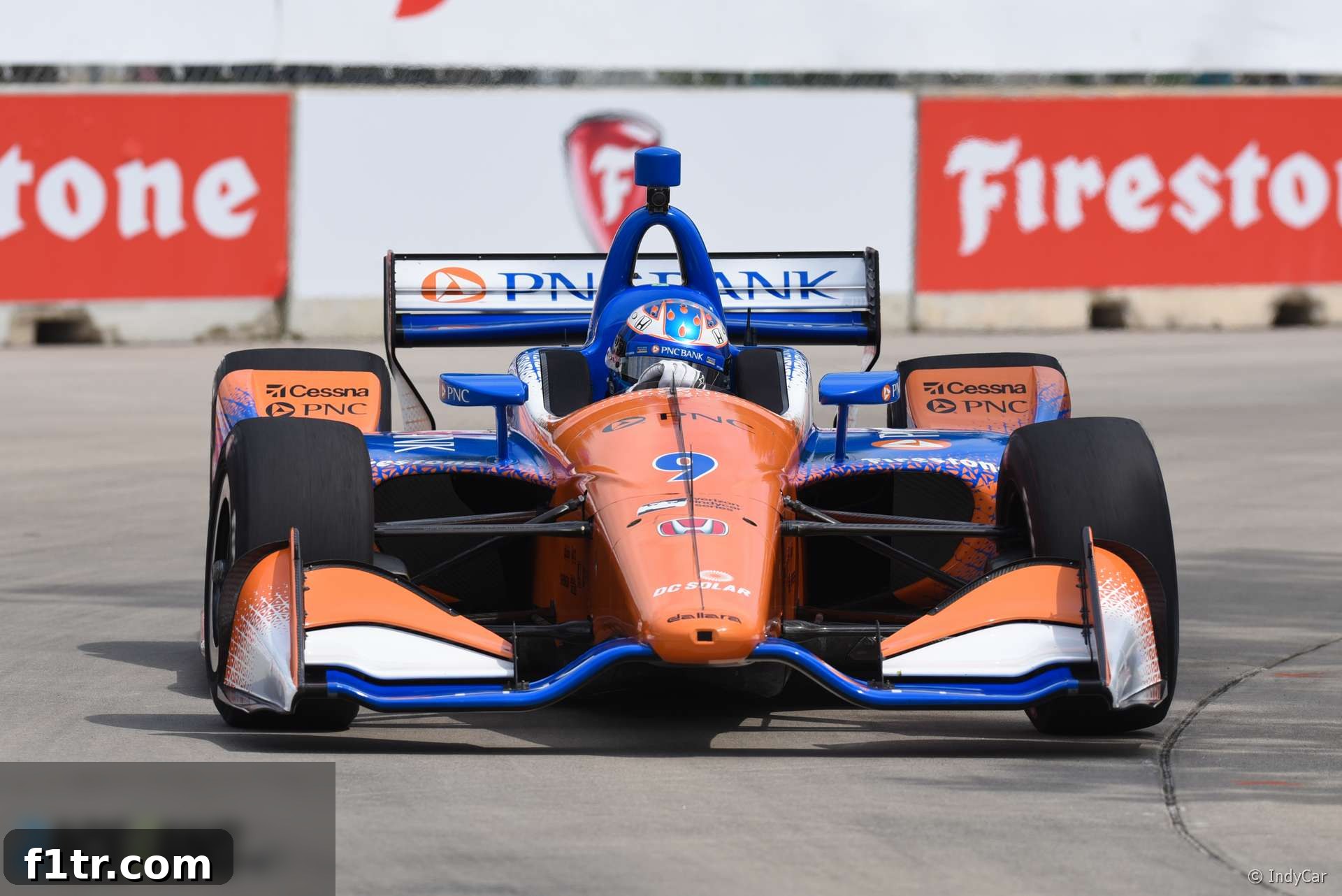
Scott Dixon’s Strategic Masterclass Secures First Ganassi Victory at 2018 Detroit Grand Prix Race 1
The exhilarating street circuits of the NTT IndyCar Series consistently deliver high-octane drama and unpredictable outcomes, and the 2018 Chevrolet Detroit Grand Prix was no exception. Held on the challenging Belle Isle street course, this iconic event featured a unique “Dual at Detroit” format, comprising two fiercely contested races over a single weekend. Race 1 of this double-header saw Chip Ganassi Racing clinch their first victory of the 2018 season, courtesy of a masterful performance by their seasoned driver, Scott Dixon. The four-time champion demonstrated why he is considered one of the sport’s all-time greats, executing a flawless strategy to conquer the demanding urban track and outmaneuver his rivals.
The Prestigious Detroit Grand Prix: A Challenging Urban Battleground
The Detroit Grand Prix, steeped in rich motorsport history, has long been a highlight on the IndyCar calendar. Its temporary street circuit on Belle Isle is renowned for being incredibly challenging, featuring a mix of tight corners, high-speed straights, and unforgiving concrete barriers that leave no margin for error. Drivers must contend with changing grip levels, unpredictable bumps, and the ever-present threat of contact, making clean racing a paramount concern. The “Dual at Detroit” format intensifies the competition, forcing teams and drivers to adapt quickly and perform under immense pressure across two separate races, each carrying full championship points. This unique setup often leads to diverse strategies and thrilling on-track battles, setting the stage for an unforgettable weekend of racing.
Dixon’s Strategic Brilliance: Outsmarting the Competition
Starting from the front row, alongside pole-sitter Marco Andretti, Scott Dixon was immediately in a prime position to challenge for the lead. However, winning on a street circuit requires more than just raw pace; it demands astute strategy and precise execution. Dixon and the Ganassi team opted for a conventional two-stop strategy, meticulously planning their pit windows to maximize track position. The pivotal moment arrived early in the race when Dixon strategically extended his first stint by one lap longer than his immediate rival, Andretti. This calculated move allowed him to build a crucial advantage during the pit cycle, emerging ahead of Andretti and seizing control of the race lead.
The decision to stay out an extra lap showcased Ganassi’s deep understanding of tire degradation and fuel management on the Belle Isle circuit. By maximizing the effectiveness of his initial set of tires, Dixon not only gained track position but also put himself in a commanding psychological position. This intelligent tactical play set the tone for the rest of his race, allowing him to dictate the pace and manage the gap to his pursuers. His ability to maintain consistent speed while conserving tires and fuel proved instrumental in fending off challenges, particularly from those attempting alternative strategies.
Hunter-Reay’s Aggressive Pursuit and Rossi’s Daring Overtake
While Dixon managed his race from the front, the battle behind him was fierce and dynamic. Ryan Hunter-Reay, driving for Andretti Autosport, emerged as a significant threat with an aggressive three-stop strategy. Hunter-Reay pitted earlier than most competitors, opting to maximize fresh tire performance over track position. This high-risk, high-reward approach saw him make impressive gains through the field, showcasing his speed and determination as he relentlessly chased down the leaders. Despite his valiant efforts and a blistering pace, the strategy ultimately placed him third, a commendable result given the demanding nature of the race.
The closing stages of Race 1 delivered another memorable moment as teammates Alexander Rossi and Marco Andretti engaged in a thrilling tussle for position. After a hard-fought battle, Rossi, known for his tenacious driving style, executed a spectacular “muscular pass” on the outside of Turn 3. This bold maneuver demonstrated Rossi’s exceptional car control and courage, as he squeezed past Andretti in a tight section of the circuit. The move was a testament to the competitive spirit within IndyCar, where drivers push the limits to gain every possible advantage, even against their own teammates. Hunter-Reay’s third-place finish ahead of Rossi and Andretti highlighted the strength in depth of the Andretti Autosport team, even as their drivers vied for every point.
Honda’s Commanding Presence Amidst Chevrolet Sponsorship
A fascinating subplot of Race 1 was the manufacturer battle, particularly given that Chevrolet was the primary sponsor of the Detroit Grand Prix. Despite this prominent sponsorship, it was Honda-powered cars that truly dominated the upper echelons of the leaderboard. An impressive six out of the top seven finishers were propelled by Honda engines, showcasing the formidable performance and reliability of the Japanese manufacturer’s power units on the Belle Isle street circuit. Takuma Sato, securing fifth place, and Ed Jones, finishing sixth, were key contributors to Honda’s strong showing, demonstrating the depth of talent within the Honda-powered teams.
The top Chevrolet finisher was Will Power, who brought his car home in seventh position. While a solid points finish for Power and Team Penske, the disparity in the top results underscored Honda’s particular strength on this type of circuit during the 2018 season. Robert Wickens, Josef Newgarden, and Spencer Pigot rounded out the top 10, further highlighting the diversity of strong competitors in the IndyCar field and the relentless competition across different engine manufacturers. This Honda dominance at a Chevrolet-sponsored event added an extra layer of intrigue to the rivalry, setting the stage for continued battles throughout the remainder of the season and indeed, Race 2 of the Detroit Grand Prix.
Race-Altering Incidents and Caution Periods
As is often the case on unforgiving street circuits, Race 1 was punctuated by significant incidents that brought out the caution flags and reshaped the race dynamics. One of the most dramatic moments involved Graham Rahal, who had enjoyed a stellar weekend at Detroit in the previous year, winning both races of the double-header. Tragically, Rahal’s hopes for a repeat performance were dashed early when he crashed out heavily at Turn 12. Hitting the inside kerb aggressively, his car was sent spiraling into the unforgiving concrete barriers, an unfortunate end to his race and a stark reminder of the circuit’s challenging nature. His early exit was a bitter pill for Rahal and his team, impacting their championship aspirations.
A second caution period was triggered later in the race following an incident involving Charlie Kimball and rookie Santino Ferrucci. Kimball ran into the back of Ferrucci, sending the newcomer’s car into the barriers at Turn 7. This collision prematurely ended Ferrucci’s race, a disappointing outcome for the young driver in his debut season. Caution periods on street circuits are particularly impactful, as they typically bunch up the entire field, neutralizing any strategic advantages gained and setting the stage for frenetic restarts. These incidents underscored the fine line between triumph and disaster on Belle Isle, adding layers of drama and unpredictability to an already thrilling race.
The Wider Context: 2018 IndyCar Season Implications
Scott Dixon’s victory at Race 1 of the 2018 Detroit Grand Prix was more than just a single race win; it carried significant weight for the ongoing championship battle. Securing Ganassi’s first win of the season, it provided crucial momentum and points, firmly placing Dixon as a primary contender for the IndyCar Series title. The demanding nature of the Detroit street circuit meant that any points gained here were hard-earned and highly valuable. For teams like Andretti Autosport, despite not securing the win, the strong finishes from Hunter-Reay, Rossi, and Andretti highlighted their collective strength and their potential to challenge for the championship.
Conversely, the incidents involving drivers like Graham Rahal and Santino Ferrucci had immediate implications for their respective seasons, potentially setting them back in the standings and requiring significant recovery efforts. The dynamic nature of the 2018 IndyCar season meant that every race, especially a double-header like Detroit, could drastically alter the championship narrative. Dixon’s strategic brilliance and his team’s execution laid down a marker for the rest of the competition, signaling that the “Ice Man” was very much in contention for another championship crown.
Looking Ahead: The Duel Continues
The conclusion of Race 1 merely marked the halfway point of the exhilarating “Dual at Detroit.” Scott Dixon’s victory was a resounding testament to his unparalleled skill and the strategic prowess of Chip Ganassi Racing, setting a high benchmark for the weekend. The intense battles, strategic gambles, and unexpected incidents provided a compelling preview of the excitement yet to come. With another full race looming on the challenging Belle Isle street circuit, the stage was perfectly set for more drama, more overtakes, and another chance for drivers to stake their claim in the 2018 IndyCar Series championship. Fans eagerly anticipated Race 2, knowing that the fight for supremacy was far from over, and that new heroes could emerge, or existing rivalries could intensify on the unforgiving streets of Detroit.
IndyCar: Related Articles
- IndyCar driver McLaughlin cleared of injury after crashing through barrier at Barber
- Schumacher says his IndyCar feels like ‘an F2 car, just with better tyres’
- IndyCar “way faster than Formula 1” in some corners, says Grosjean
- FIA to award more F1 superlicence points to IndyCar drivers from 2026
- Schumacher to race full-time in IndyCar with RLL in 2026
Browse all IndyCar articles