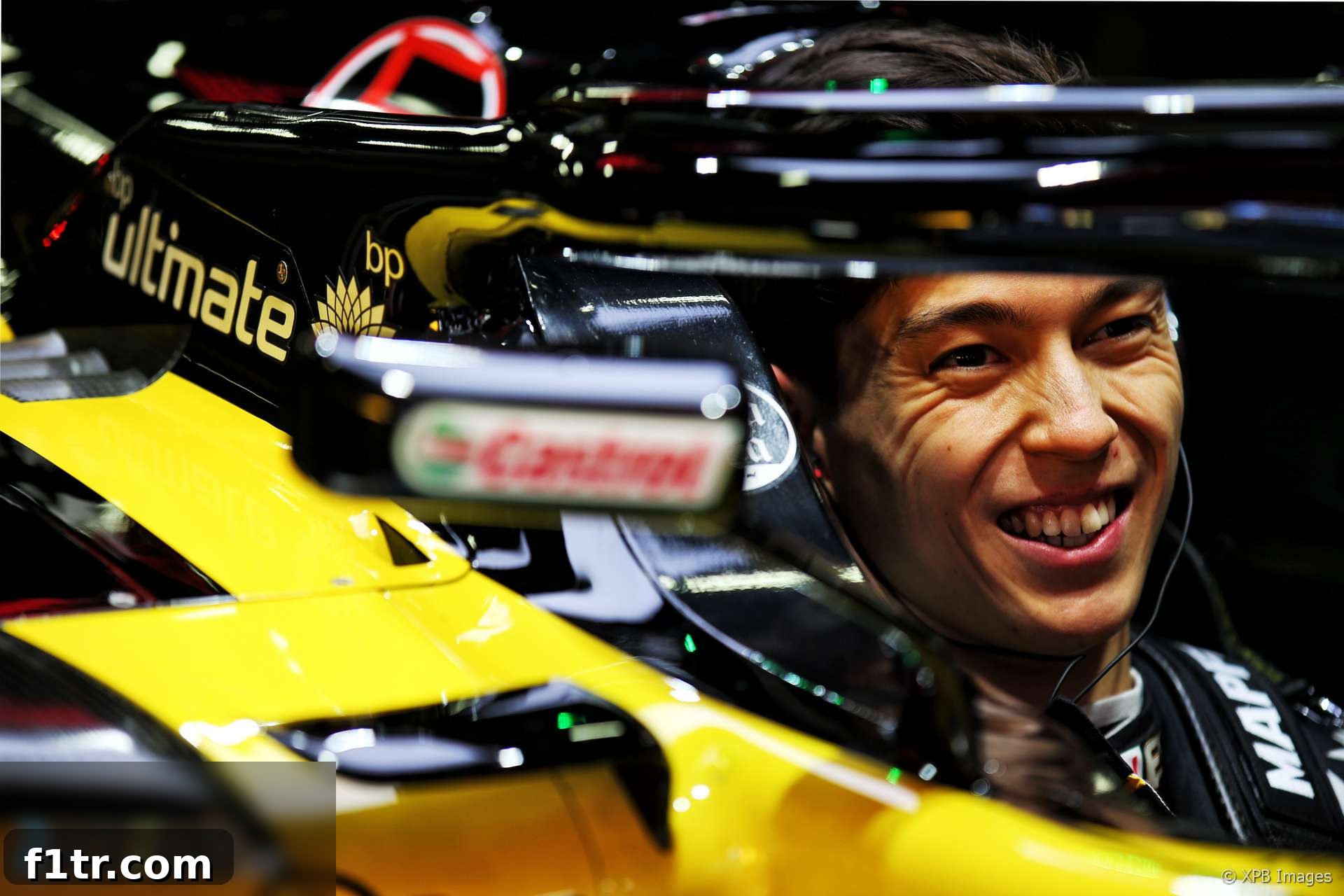
In a significant stride towards his Formula 1 aspirations, Formula Two prodigy Jack Aitken recently completed an exceptionally productive test session as an official F1 test driver for Renault. The 22-year-old British-Korean racer successfully navigated 128 laps in the formidable RS18 at the iconic Circuit de Catalunya, a remarkable feat that saw him just four laps shy of completing a double Grand Prix distance. This extensive mileage provided Aitken with invaluable experience and offered Renault crucial data, underscoring the success of his inaugural official outing.
Reflecting on the intensity of the day, Aitken shared his surprise at the sheer volume of work accomplished. “It was a lot,” Aitken revealed. “We even managed to squeeze an extra run in compared to what we planned, so we did even more than the programme. I think at one stage you could have been forgiven for all of us forgetting it was my first day because certainly at lunchtime in the middle of the day we were full-on with trying to get through the programme and do the best job we could.” This relentless focus, he noted, was a positive indicator. “Which is good in a way because it shows I settled in well and the team obviously got on with me.” His swift integration into the team and immediate productivity highlighted his professionalism and natural talent, impressing the Renault engineering crew.
Stepping Up: The Immense Performance Leap from F2 to F1
The transition from a Formula Two car to a modern Formula 1 machine is a monumental leap in performance, a fact Aitken keenly observed and thoroughly enjoyed. “It was huge fun,” he enthused, acknowledging the sheer exhilaration of driving an F1 car. “Those cars are just so quick now.” The difference, he explained, extends far beyond raw speed, encompassing every aspect of the driving experience.
“It’s hard not to be impressed,” Aitken continued, trying to articulate the overwhelming sensation. “It’s just everything coming at you pretty much in fast-forward compared to Formula Two.” The acceleration is brutal, the braking G-forces are immense, and the cornering speeds are on an entirely different plane. Every input, from steering to throttle, elicits an immediate and amplified response. He particularly highlighted a unique characteristic of the F1 car: “The power steering adds to that effect because it almost feels like a video game.” While sophisticated power steering aids driver comfort and precision, it can initially mask the immense physical forces at play, creating an almost surreal experience for those unaccustomed to it.
Aitken’s preparation for the test day was aided by observing his then-Renault teammate, Carlos Sainz Jnr, on the preceding day. “I’d had a chance to watch Carlos [Sainz Jnr] the day before so I had some prior warning what the car was capable of,” he added. This observation allowed him to mentally prepare for the staggering speeds and demands of the RS18, helping him to minimize mistakes and maximize his learning curve. Despite the formidable nature of the car and the pressure of his first official F1 test, Aitken maintained remarkable control and consistency.
His impressive command of the machine was evident in his near-flawless performance. “I think the closest we came to having an off was locking up at turn 10 and running wide. Even then it wasn’t a big issue,” Aitken recounted. Such minor incidents are par for the course in high-performance testing, and his ability to quickly recover and avoid significant errors was a testament to his skill and composure. “I think they were definitely happy that I was able to be consistent,” he concluded, highlighting one of the most crucial attributes a test driver can possess: the ability to deliver repeatable laps and provide reliable feedback to engineers.
The Strategic Importance of an F1 Test
For Jack Aitken, this test was more than just an exhilarating drive; it was a critical milestone in his motorsport journey. As a member of the prestigious Renault Sport Academy, opportunities like these are meticulously planned to nurture young talent and prepare them for a potential future in Formula 1. The extensive laps allowed him to gain invaluable insight into the operational procedures of an F1 team, the intricacies of the car’s systems, and the relentless pace of development required at the pinnacle of motorsport.
From Renault’s perspective, testing young drivers like Aitken is a strategic investment. It enables them to evaluate the potential of their academy prospects in a real-world F1 environment, assess their feedback capabilities, and gather data on their ability to manage the car over long runs. Aitken’s consistency, speed (evidenced by setting the sixth-quickest time during the test), and mature approach undoubtedly solidified his standing within the team’s hierarchy.
Momentum in Formula Two: Building a Foundation for F1
The timing of Aitken’s F1 test was particularly opportune, coming on the heels of his most successful Formula Two weekend to date. Just days prior, at the very same Circuit de Catalunya, he achieved a breakthrough victory in the F2 sprint race, a significant achievement that marked a turning point in his season. This triumph, coupled with other strong performances, had infused him with considerable confidence and momentum.
“We’ve had two podiums in the last couple of races,” Aitken noted, underscoring his upward trajectory in the highly competitive F2 championship. This consistent front-running form is crucial for any driver aspiring to F1, demonstrating not only raw speed but also race craft and the ability to manage pressure. The next challenge on his F2 calendar was the legendary streets of Monaco, a circuit he had not yet raced on.
“We’re going to Monaco next so it’s not the easiest place for a rookie but rookies did well there in the past,” he acknowledged. Monaco demands extreme precision, bravery, and an intimate understanding of the circuit, making it a formidable test for even experienced drivers, let alone a rookie. However, Aitken remained optimistic, drawing confidence from historical precedents and the performance of his ART Grand Prix team. “I think ART are doing a pretty good job as well in terms of pace, we have been missing a little bit in qualifying sometimes.” While qualifying pace is vital in F2, especially on tracks like Monaco where overtaking is notoriously difficult, Aitken’s strong race pace and consistency had often allowed him to recover positions during the races.
The Power of Momentum and Future Aspirations
For Aitken, the current phase of his career was defined by progress and positive energy. “But we’ve got momentum, that’s always a great thing to have on your side,” he emphasized. In motorsport, momentum can be a powerful psychological advantage, fostering belief within the driver and team, and often translating into improved performance. “We’re getting into a busy part of the season now, just have to roll with it and keep doing what we’re doing, it’s clearly getting results.” This pragmatic approach, focusing on consistent effort and execution, is characteristic of drivers destined for higher echelons.
Jack Aitken’s journey highlights the challenging yet rewarding path from junior categories to the pinnacle of Formula 1. His impressive F1 test with Renault, combined with his burgeoning success in Formula Two, firmly establishes him as one of the most promising young talents in motorsport. With continued dedication, strong performances in F2, and the unwavering support of the Renault Sport Academy, Aitken is steadily building a compelling case for a future seat in Formula 1. Each lap, each podium, and each test brings him closer to realizing his ultimate dream, cementing his status as a driver to watch in the coming seasons.
Related Reads: Exploring the 2018 F1 Season
- F1 feared “death knell” for Drive to Survive after Ferrari and Mercedes snub
- McLaren staff told us we were “totally crazy” to take Honda engines in 2018 – Tost
- ‘It doesn’t matter if we start last’: How Red Bull’s junior team aided Honda’s leap forward
- Honda’s jet division helped F1 engineers solve power unit problem
- McLaren Racing losses rise after Honda split
Browse all 2018 F1 season articles