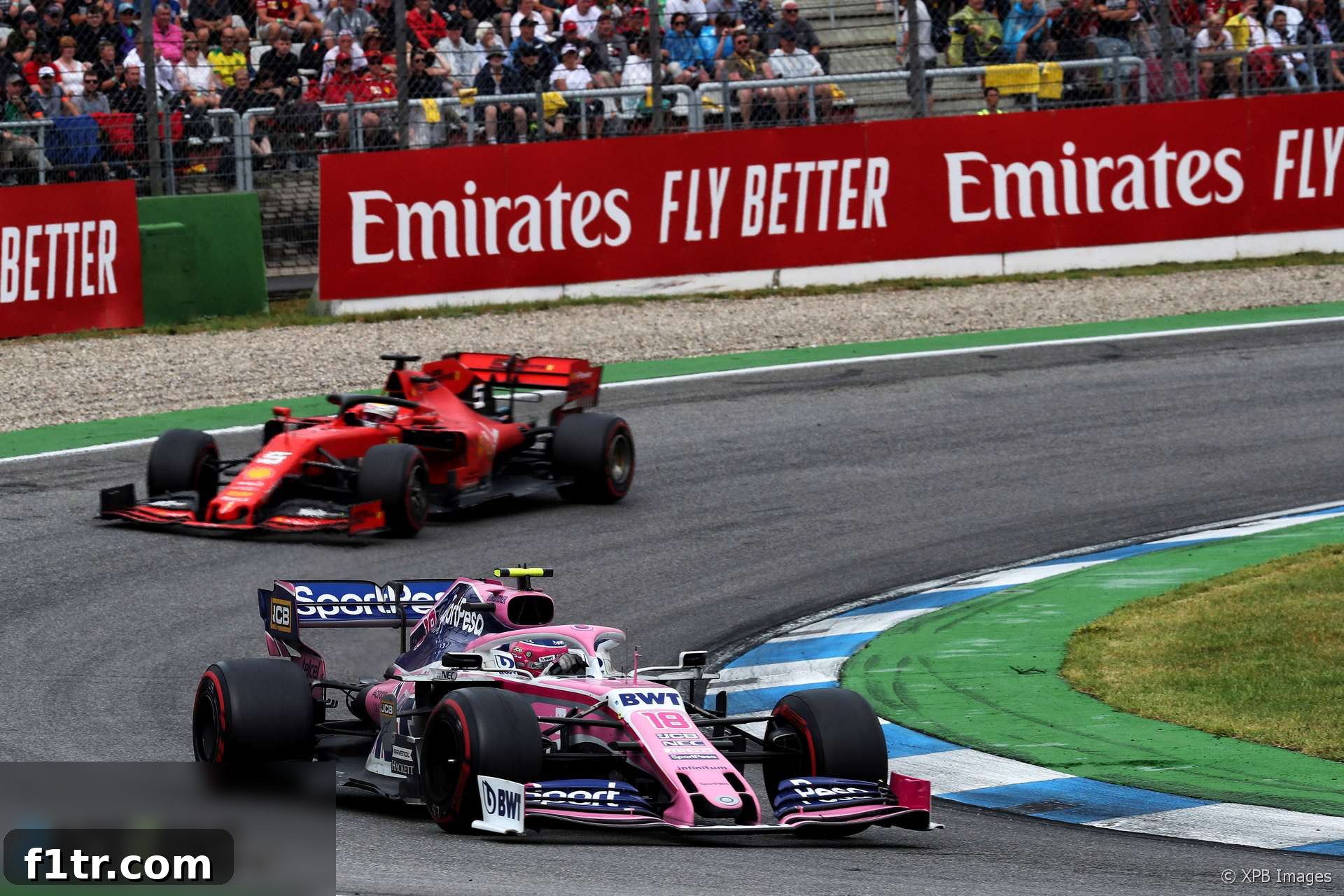
Lance Stroll, a prominent figure in Formula 1, found himself at the heart of one of the most unpredictable and chaotic races in recent memory: the 2019 German Grand Prix. Amidst a deluge of rain and rapidly changing track conditions at Hockenheim, Stroll made a singular strategic call that, in his own words, was the only one that truly paid off for him throughout the tumultuous event. This bold decision, a calculated gamble on slick tyres towards the race’s dramatic conclusion, saw him briefly catapulted into the lead, showcasing a remarkable blend of driver instinct and strategic foresight in a race where misfortune seemed to cling to him.
The 2019 German Grand Prix will forever be remembered for its sheer unpredictability. As the weather shifted from heavy rain to a damp but drying track, making tyre choices an absolute lottery, Lance Stroll, driving for Racing Point, was one of the first to take a decisive risk. With just 20 laps remaining and most of the grid still navigating the treacherous conditions on intermediate tyres, Stroll made a bold call from the cockpit. “I actually said it, at that stage,” he recalled, referring to his suggestion to switch to slick tyres. “We were last, it was a team decision, but I said ‘it’s good enough for slicks’ and it was.” This driver-initiated strategy, born out of a position with seemingly little to lose, would prove to be a masterstroke, significantly altering the complexion of the race for many contenders.
The Defining Gamble: Stroll’s Intuition on Slick Tyres
The moment Lance Stroll’s Racing Point car exited the pits on slick tyres marked a pivotal turning point in the race. Despite the still-damp patches across the Hockenheimring, Stroll immediately began to demonstrate blistering pace. His sector times lit up the timing screens, signalling to the entire paddock that the track had reached the crossover point – the moment where dry weather tyres become faster than intermediates, even with lingering moisture. This audacious move, driven by a deep understanding of grip levels and track evolution, quickly put pressure on the rest of the field. Before long, Stroll’s rivals, including seasoned champions and championship contenders, were compelled to follow suit, flocking into the pits to emulate his tyre choice. This collective switch underlined the validity and sheer brilliance of Stroll’s initial, brave call, transforming his race from a backmarker’s struggle into a potential points-scoring opportunity.
However, the journey to that decisive slick tyre call was anything but straightforward for Stroll and his team. The German Grand Prix was a relentless test of nerve and strategy, characterized by a series of unfortunate missteps for the Canadian driver. Reflecting on the chaos, Stroll admitted, “We got it wrong four out of the five times.” This candid assessment highlights the immense difficulty teams faced in making correct calls during a race plagued by intermittent showers and variable grip levels. The sequence of events unfolded like a strategic nightmare, showcasing the razor-thin margins between triumph and despair in Formula 1’s most challenging conditions.
A Tumultuous Race: From Spins to Strategic Errors
Stroll’s race began with an ill-fated attempt at slick tyres that quickly backfired. As he recounted, “We went on slicks and then it started raining.” This premature switch to dry weather rubber on a still-wet track proved disastrous, leading to immediate grip loss. The consequences were severe: “And then I spun twice in one lap so I was limping back to the pit lane,” he explained. These two rapid spins not only cost him valuable track position but also damaged his tyres, forcing him to pit once again for intermediate tyres – the correct choice at that specific moment, but only after significant time had been lost.
Yet, the unpredictability of Hockenheim persisted. No sooner had Stroll fitted a set of intermediates than the rain eased, and the track began to dry once more. This shifting dynamic quickly rendered his new intermediate tyres less effective as they overheated and degraded on the increasingly abrasive surface. “Then it started to dry up so we fit another set of inters because we were destroying those inters,” Stroll elaborated. This second intermediate tyre change, while necessary due to the wear on the first set, further underscored the team’s struggle to find a stable and effective strategy amidst the fluctuating conditions. Each pit stop represented lost track time and the risk of emerging into traffic, compounding the challenges faced by the Racing Point driver.
It was only after this series of strategic errors and unfortunate incidents that the opportunity for the final, decisive slick tyre gamble arose. Having cycled through multiple tyre compounds and positions at the very back of the pack, Stroll’s call for dry tyres was less a desperate throw of the dice and more a calculated move born out of observation and accumulated experience during the chaotic race. This final strategic pivot was the one shining moment of clarity in an otherwise bewildering afternoon.
The Elusive Podium: A Moment of Leading Glory and a Costly Spin
The immediate aftermath of Stroll’s bold switch to slick tyres was nothing short of exhilarating. As he re-joined the race on the new compound and began to exploit the drying track, he rapidly scythed through the field. In an incredible turn of events, and with other drivers still grappling with their own pit stops and tyre choices, Lance Stroll briefly found himself in the lead of the 2019 German Grand Prix. The prospect of an unexpected victory or, at the very least, a sensational podium finish, suddenly loomed large for the Canadian and his Racing Point team. “They told me I was P1 and I was still kind of exploring the grip,” he recounted, describing the surreal experience of leading a Formula 1 race.
However, maintaining that lead proved to be an immense challenge. The dynamic nature of tyre performance on a drying track meant that those who had just exited the pits had a distinct advantage. “I was on my tyres for two laps at that stage and the other guys came out of the pits with warmer tyres and I was still losing temperature,” Stroll explained. The critical difference in tyre temperature meant that while Stroll had been instrumental in discovering the slick tyre window, his initial pace was not optimal. Fresh tyres, especially on a delicate surface, offer superior grip and immediate performance, a factor that quickly saw him relinquish the top spot. Despite this, his subsequent pace on the slicks was strong: “Initially I didn’t have very good pace on the slicks but then once everyone settled in I had quite good pace and we were in the hunt for a podium.”
The dream of a podium finish, however, ultimately slipped through Stroll’s fingers due to a small but costly error. While fighting fiercely for a top-three spot, he made a crucial mistake. “Unfortunately it slipped away from us today. I made an error in turn eight on my second or third lap on slicks and that allowed Daniil Kvyat to overtake me,” Stroll revealed. This spin in Turn 8, a tricky section of the circuit, cost him vital seconds and, more significantly, position. The sting of the missed opportunity was palpable: “If only that wouldn’t have happened we had the podium today.” It was a cruel twist of fate in a race already full of them, denying him what would have been only his second career podium at that point.
Significance of P4: A Glimmer of Success for Racing Point
Despite the lingering disappointment of a lost podium, Stroll was quick to acknowledge the impressive outcome. “But it’s still a great result, P4.” For Racing Point, a midfield team with more limited resources compared to the sport’s giants, a fourth-place finish in such a high-profile and challenging race was a monumental achievement. It represented a significant points haul and a massive boost to team morale. The 2019 German Grand Prix highlighted Stroll’s capacity for making high-pressure decisions and showcasing raw speed, even if the ultimate reward of a podium was tantalizingly out of reach.
The race as a whole was a spectacle of attrition and strategic brilliance, and Stroll’s performance stood out as a testament to the importance of driver intuition in chaotic conditions. While the ‘what ifs’ of the podium will always remain a topic of discussion, his decisive call for slick tyres undeniably shaped the final laps and showcased a moment of genuine strategic genius. This P4 finish remains one of the most memorable races of his career, encapsulating the highs and lows, the gambles and the near-misses, that define the unpredictable world of Formula 1.
2019 F1 Season Highlights
The 2019 F1 season delivered numerous dramatic moments and surprising results, with the German Grand Prix standing out as one of its most iconic. Beyond Lance Stroll’s performance, the season offered a rich tapestry of stories, strategic battles, and individual triumphs. From career lows to unexpected successes, here are some related narratives from that captivating year:
- Crying in the Melbourne car park at 2019 grand prix was my career low – Ocon
- McLaren Racing reports reduced £71 million loss in 2019
- Kvyat: Hockenheim podium last year was “my biggest achievement” so far
- How the FIA’s new encrypted fuel flow meter targets Ferrari’s suspected ‘aliasing’ trick
- “He smashed my office door”: 23 must-see moments from ‘Drive to Survive’ season two
Browse all 2019 F1 season articles