The high-stakes world of Formula 1 is often as captivating off the track as it is on it, with driver contract negotiations frequently dominating headlines. One of the most talked-about sagas recently revolved around seven-time world champion Lewis Hamilton’s future with the Mercedes-AMG Petronas F1 Team. While a renewal was widely anticipated, former F1 driver and respected pundit Mark Webber suggested that unforeseen circumstances, particularly Hamilton’s absence from a crucial race, likely complicated and even compromised his bargaining position.
Advertisement: Support Independent F1 Journalism – Become a Supporter & Go Ad-Free
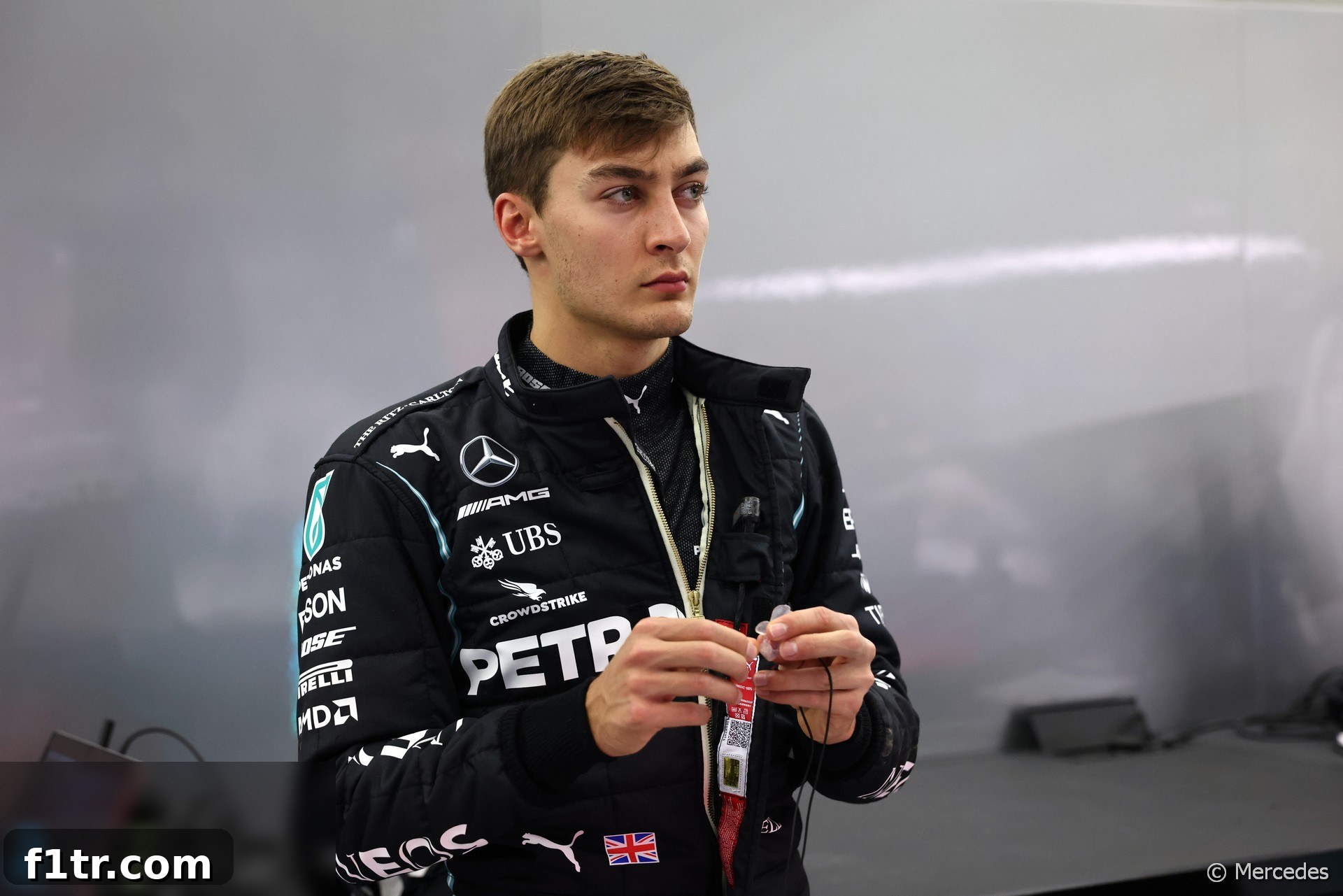
Hamilton’s unfortunate positive test for Covid-19 forced him to miss the penultimate race of the 2020 season, the Sakhir Grand Prix. This unexpected turn of events paved the way for Mercedes junior driver George Russell to step into the coveted W11 machine. Russell’s performance was nothing short of sensational; he led a significant portion of the race, showcasing remarkable pace and adaptability, before a pit stop error and an unfortunate puncture derailed his maiden victory charge. This electrifying display, according to Webber, significantly altered the dynamics of Hamilton’s ongoing contract talks with Mercedes.
While the broader expectation remained that Hamilton would ultimately agree to terms with Mercedes for the 2021 F1 season and beyond, Webber acutely observed that Russell’s stellar showing provided Mercedes team principal Toto Wolff with an unexpected and powerful negotiating chip. In a sport where every advantage is exploited, seeing another driver perform so competently in Hamilton’s championship-winning car could, in theory, weaken Hamilton’s ability to demand the absolute maximum financial package for his unparalleled services.
The Cutthroat Nature of Formula 1: A Driver’s ‘Share Price’
“The timing for Lewis was just horrible,” Webber candidly shared on the At The Controls podcast. His perspective, forged over a long and successful career in F1, offers a deep insight into the psychological and commercial pressures drivers face. Webber explained his own philosophy during his racing days: “I drove 1,000 days in a Formula 1 car with testing and practice and grands prix and weekends. The whole thing put together over 12 years, if you look at how many actual physical days in the car, I think I had three days off, because I don’t want anyone near my car.”
This sentiment highlights a fundamental truth in Formula 1: a driver’s worth is inextricably linked to their perceived indispensability. “You’re just trying to look out for your own share price. You don’t want people to have exposure to your material and your people. And it’s such a cutthroat industry,” Webber emphasized. Even for a driver of Hamilton’s legendary stature, this principle holds true. Any demonstration that another talent can seamlessly slot in and perform at a high level introduces an element of doubt, however slight, into the equation. “Even someone like Lewis, that was all downside for him, generally,” Webber concluded, articulating the strategic disadvantage Hamilton faced.
Russell’s performance was not just about raw speed; it was about his immediate adaptation to a new car, new team procedures, and the immense pressure of stepping into the shoes of the reigning world champion. His composure and maturity under such intense scrutiny undoubtedly impressed the Mercedes hierarchy, reinforcing the depth of talent within their driver development program.
George Russell’s Impact: A Timely Display of Talent
Webber was quick to praise Russell’s capabilities, acknowledging the context of his breakthrough drive. “George drove well. Yes, it was the easiest track in the world. It wasn’t exactly Suzuka,” he conceded, referencing the notoriously challenging Japanese circuit. However, he quickly added, “But he still drove brilliantly in a compromised, ergonomically, environment in the car.” Russell, being significantly taller than Hamilton, had to endure a somewhat cramped and unconventional seating position, further highlighting his impressive adaptability and commitment. His ability to perform at the highest level despite these physical constraints underscored his exceptional talent and mental fortitude.
The implications of this performance were not lost on observers, especially concerning Toto Wolff’s reputation as a master negotiator. “Toto certainly likes the tightrope in terms of playing the game with lots of different things in the pit lane. And that was another one where it looks like it’s come out in his favour,” Webber noted. Wolff, known for his shrewd business acumen and strategic approach to team management, would undoubtedly have registered Russell’s performance as a valuable asset, potentially using it to subtly influence the terms of Hamilton’s new deal.
The Looming Shadow of a Driver Salary Cap
Beyond the immediate impact of Russell’s drive, Hamilton’s contract negotiations were also complicated by a more systemic issue: the possible introduction of a driver salary cap in the future. This proposal, aimed at further controlling costs in Formula 1 and promoting financial sustainability across the grid, would have profound implications for top-earning drivers like Hamilton.
“Obviously him and Toto enjoy a very good relationship. I think that they would have liked to have been nipped in the bud by now,” Webber commented, referring to the protracted nature of the negotiations. The ideal scenario for both parties would have been a swift resolution, but external factors conspired to prolong the discussions. “But obviously the timing around certain things, particularly his virus right at the end and this [salary] cap, which is coming in for drivers in the future, whether that’s going to clip him in the back part of his [deal] – depending on how long the term of the contract is of course, it’s not going to be starting next year – but looking at how that would potentially challenge the back end of his contract in terms of how the numbers would look. So I’m sure that’s all on the table.”
The potential implementation of a salary cap necessitates careful strategic planning for long-term contracts. Drivers and their management teams must consider how future regulations could impact earnings, leading to discussions about front-loaded deals or shorter contract durations to navigate an uncertain financial landscape. For Hamilton, whose annual earnings are among the highest in the sport, this cap represents a significant consideration that undoubtedly factored into the complexity and duration of his negotiations with Mercedes.
Lewis Hamilton’s Undeniable Value and Box Office Appeal
Despite these external pressures and the strategic advantages potentially gained by Mercedes, Lewis Hamilton’s intrinsic value to the team and to Formula 1 as a whole remains immeasurable. He is not merely a driver; he is a global icon, a brand ambassador, and a powerful voice for change within and beyond motorsport. His record-breaking achievements – seven world championships, over 100 pole positions, and more than 100 race wins – speak for themselves.
Beyond the statistics, Hamilton brings an unparalleled level of commercial appeal. His presence elevates viewership, attracts major sponsors, and generates immense media interest. He is a ‘box office’ sensation in every sense of the term, drawing in new audiences and representing the pinnacle of sporting excellence. This unique blend of on-track dominance and off-track influence makes him an incredibly valuable asset, one that Mercedes would be loath to lose.
As Webber aptly put it, Hamilton “wants to [extract] every single opportunity you can, financially, out of the situation because he believes he has a value and he does. He brings a lot to the sport, he brings a lot to Mercedes. He is box office and he wants that to be recognised.” This desire for fair recognition of his immense contribution to the team’s success and the sport’s global appeal is a powerful driver in any negotiation. While factors like Russell’s performance and a potential salary cap introduced complexities, the fundamental value proposition that Lewis Hamilton offers to Mercedes is undeniably strong.
Advertisement: Support Independent F1 Journalism – Become a RaceFans supporter andgo ad-free
Ultimately, the prolonged nature of Hamilton’s contract discussions underscored the intricate dance between sporting performance, commercial value, and evolving regulatory landscapes in modern Formula 1. Each element, from a standout performance by a young prodigy to the specter of future financial caps, played a role in shaping the dialogue between a legendary driver and his championship-winning team.
Related Articles: 2020 F1 Season & Beyond
- Grosjean to make F1 test return tomorrow for first time since Bahrain horror crash
- Pictures: Wrecked chassis from Grosjean’s Bahrain fireball crash to go on display
- Bottas vs Rosberg: Hamilton’s Mercedes team mates compared after 78 races each
- F1 revenues fell by $877 million in Covid-struck 2020 season
- Hamilton and Mercedes finally announce new deal for 2021 season
Browse all 2020 F1 season articles