Ferrari Unveils 2021 F1 Challenger: The SF21
In a highly anticipated announcement for Formula 1 enthusiasts and the Tifosi worldwide, Ferrari has officially revealed the designation for its contender in the upcoming 2021 F1 season. The illustrious Maranello-based team, Scuderia Ferrari, will compete with a car named the SF21, signaling a considered and strategic approach to what promises to be a pivotal year in the sport’s landscape.
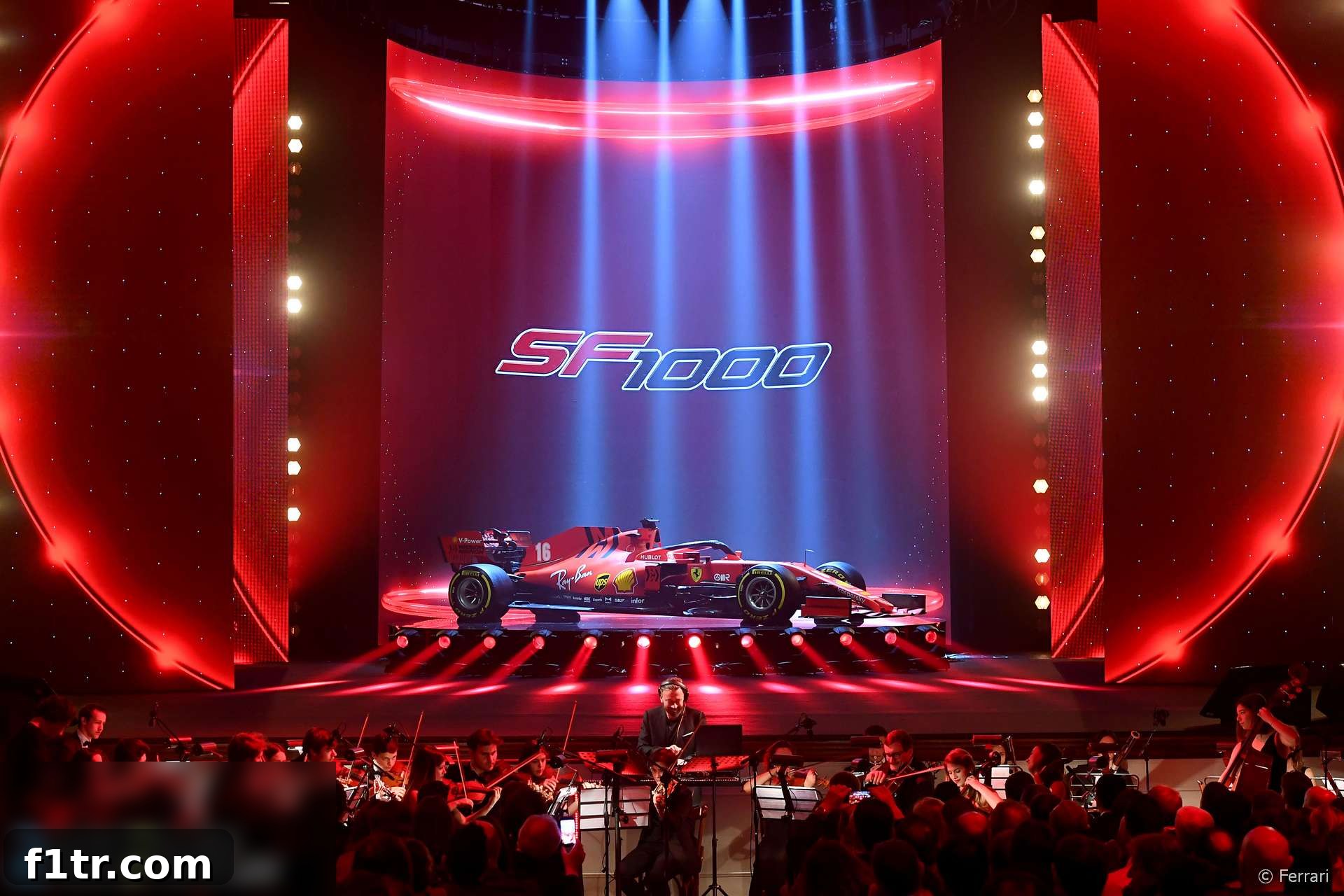
The confirmation came directly from Team Principal Mattia Binotto, who stated that the successor to the 2020 season’s SF1000 will be known simply as the SF21. This naming convention, while straightforward, carries deeper implications for the team. Binotto alluded to the transitional nature of the upcoming season, indicating that the SF21 represents an important bridge year for Ferrari as they prepare for the significant technical overhauls expected in 2022.
The SF21: Navigating a Year of Transition and Regulatory Constraints
The SF21 is more than just a new name; it represents Ferrari’s adaptation to a unique and challenging regulatory environment. Due to new rules that severely limit the extent to which teams can modify their car designs, the 2021 challenger will be closely based on Ferrari’s 2020 chassis. These restrictive regulations were initially introduced as an urgent cost-cutting measure in response to the global pandemic, which forced the postponement of a planned comprehensive overhaul of technical rules from 2021 to 2022.
Mattia Binotto further elaborated on the rationale behind the car’s “very simple name,” explaining, “because we believe that next year is a transition to 2022, so let’s keep ‘SF21’ the name. It will be certainly partially a frozen car, the same chassis from 2020. That’s the way it is.” This “partially frozen” concept is critical to understanding the SF21’s development path. While core components such as the chassis, gearbox, and some suspension elements remain largely unchanged from the SF1000, teams are permitted to spend a limited number of “tokens” to develop specific areas of their car. Crucially, aerodynamic development remains largely open, providing a vital avenue for performance improvement. For Ferrari, this presents a challenging yet focused task: maximizing the potential from an existing platform while simultaneously channeling significant resources into the radically different car mandated by the 2022 regulations.
Understanding the “Frozen Car” Regulations and Their Impact on Development
The decision to freeze major components like the chassis and gearbox was an unprecedented move in modern Formula 1, driven primarily by financial prudence during a period of global economic uncertainty. The aim was to drastically reduce development costs for teams, preventing a full redesign cycle that would have been financially demanding and resource-intensive, especially with the monumental changes slated for 2022 just around the corner. Under these rules, each team was allocated two ‘tokens’ which they could strategically use to modify specific areas of the car. These tokens allowed for targeted upgrades, offering a delicate balance between essential cost-saving measures and competitive development.
For Ferrari, a team that endured a profoundly difficult 2020 season with the SF1000, these regulations mean they cannot simply scrap their previous design and start afresh. Instead, they must diligently identify the weaknesses of the SF1000 – particularly its aerodynamic efficiency and the performance of its power unit – and address them within the confines of the token system and the open aerodynamic development rules. The onus will be on optimizing every possible aspect, from redesigned aerodynamic surfaces that can yield substantial lap time gains, to refining and upgrading the power unit. The engine, in particular, was an area where Ferrari significantly lagged behind its rivals in 2020. Developing a more potent, reliable, and efficient engine, within the existing regulations, will be absolutely paramount for the SF21’s overall competitiveness and for laying foundations for the future.
A Young and Dynamic Driver Line-up: Charles Leclerc and Carlos Sainz Jnr
Powering the SF21 will be the highly anticipated and dynamic pairing of Charles Leclerc and the team’s newest recruit, Carlos Sainz Jnr. Sainz, making a high-profile move from McLaren, recently made his first official appearance as a Ferrari driver before the media, marking the dawn of a significant new era for the Scuderia. This partnership is not just new but also historically significant for Ferrari, pointing towards a clear vision for the future.
Binotto proudly highlighted the remarkable youthfulness of his driver roster, noting, “It’s the youngest line-up of Scuderia Ferrari since 1968.” This statistic underscores a clear strategic shift towards nurturing long-term talent and building a future-proof team capable of challenging for championships for years to come. Despite their relative youth, both drivers bring a wealth of experience and demonstrable talent to Maranello. Charles Leclerc, already a multi-race winner with Ferrari, has firmly established himself as one of the sport’s brightest stars, celebrated for his raw speed, aggressive racing style, and exceptional qualifying prowess. His natural leadership and insightful feedback will be invaluable in shaping the SF21’s development and guiding the team forward.
Carlos Sainz Jnr arrives at Ferrari having built a formidable reputation as a consistent, intelligent, and highly adaptable driver. His impressive performances at McLaren, which included multiple podium finishes and consistently leading the team’s charge in the fiercely competitive midfield, have proven his capabilities at the highest level. Binotto’s confidence in the pair is palpable: “But I know as well that we’ve got two drivers [who are] very young but very talented, and also with already some experience. Carlos is not in the first year [with] an F1 team at the moment.” Sainz’s meticulous analytical approach, strong technical feedback, and ability to integrate quickly into new environments will be absolutely crucial for Ferrari as they strive to bounce back from a challenging season and develop the SF21 to its full potential.
The synergy and collaborative efforts between Leclerc and Sainz will be a key factor in Ferrari’s 2021 campaign. While competitive on track, their combined off-track efforts in terms of car development and constructive feedback will be vital for improving the SF21 and, critically, for laying robust foundations for the much-anticipated 2022 regulation changes. This youthful yet experienced duo represents Ferrari’s renewed commitment to building a winning team from the ground up, with an eye firmly on sustained future success.
A Phased Unveiling: Strategic Launches for Team and Car
Breaking away from traditional single-event launch formats, Ferrari is planning a unique, two-stage unveiling for its 2021 season presence. The SF21 itself will not make its public debut until the crucial pre-season testing at the iconic Circuit de Catalunya in Barcelona.
Mattia Binotto outlined this innovative approach: “We will organise differently the unveiling of the car next year. We will organise at first an event where we will present the team, our drivers, to our fans, to our partners, to yourself, journalists.” This initial event, focusing predominantly on the human element – the team personnel, the strategic vision, and critically, the new and exciting driver line-up – allows Ferrari to build anticipation and engage with its immense global fanbase on a more personal and emotive level before the technical reveal of the actual racing machine.
He further elaborated on the strategic second phase: “So while I think very early we may present our team and the drivers we may organise a second event, that could be directly at Barcelona, winter testing, where we may unveil the car and that will be done in a different way.” Unveiling the car directly at pre-season testing offers several significant strategic advantages. It maximizes the invaluable time available for development, manufacturing, and final preparations, keeping the car under wraps for as long as possible. It also guarantees significant global media attention at a critical period for Formula 1, as all teams hit the track for the very first time. The Circuit de Catalunya, a familiar and highly regarded testing ground for F1 teams, provides a fitting and practical backdrop for the SF21’s grand entrance, allowing for immediate comparison with rivals and initial insights into its on-track performance.
This phased launch strategy reflects Ferrari’s meticulous planning and their strong desire to control the narrative around its 2021 campaign. By separating the team and driver presentation from the car’s technical reveal, they can create two distinct opportunities for powerful engagement, maximizing media coverage and fan excitement leading up to the official start of the season. This holistic approach to their season emphasizes not just the sophisticated machinery, but also the passionate people and the renewed spirit driving the Scuderia forward as they look to overcome past challenges and build towards a brighter future.
Ferrari’s Ambitions and the Road Ahead for 2021
Following a profoundly disappointing 2020 season, which saw Ferrari slump to a lowly sixth in the Constructors’ Championship – their worst performance in decades – the 2021 campaign with the SF21 is nothing short of critical for the Italian giants. While the “frozen car” regulations limit radical improvements, the team is intensely focused on leveraging every allowed development avenue. The primary areas of focus will undoubtedly be a significant recovery in power unit performance, which is essential, and a substantial improvement in aerodynamic efficiency, which was a major hindrance on the SF1000 chassis.
Mattia Binotto and the entire Ferrari contingent at Maranello understand the immense pressure to perform, not just from the Tifosi but from the legacy of the brand itself. The SF21 represents not merely a 2021 challenger but a crucial development platform and learning tool for the monumental regulation changes arriving in 2022. The team’s ambition for 2021 will likely be a significant step forward from their 2020 woes, aiming to return to the front of the midfield pack and challenge for podiums more consistently. Crucially, it’s about re-establishing a winning mentality, fostering team cohesion, and building undeniable momentum for the truly transformative year ahead.
The combination of a streamlined car development strategy, a vibrant and exceptionally talented driver lineup, and a carefully orchestrated public relations approach signals Ferrari’s unwavering determination to turn a new page in its storied history. The SF21, despite its constrained development cycle, carries the hopes of millions of passionate fans and the enduring legacy of Formula 1’s most iconic and successful team. All eyes will be on Barcelona for its official debut, as Ferrari embarks on a crucial journey to reclaim its rightful place at the pinnacle of motorsport, with the ultimate goal of championship contention firmly in sight.