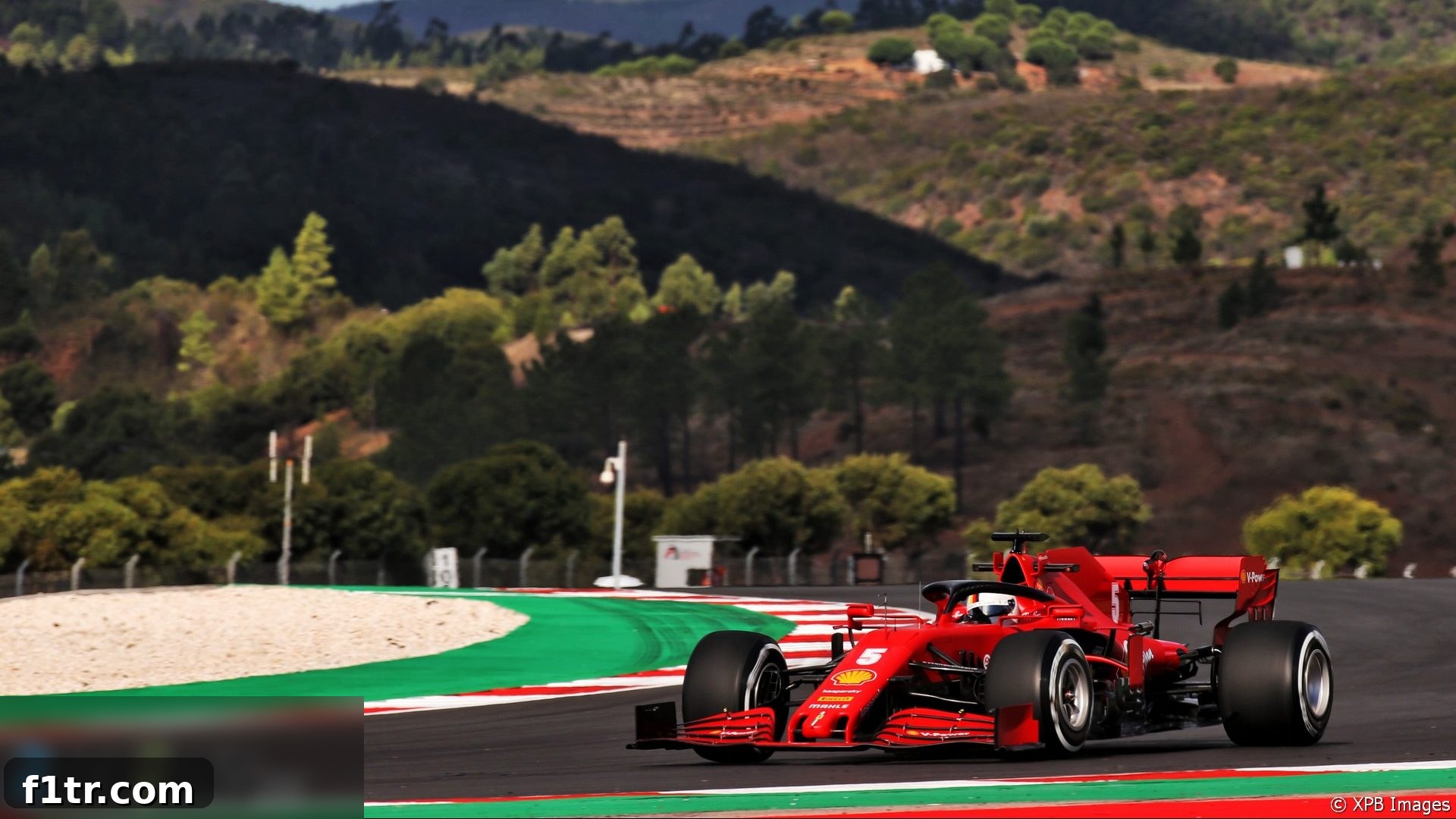
The exhilarating world of Formula 1 descended upon a fresh challenge this weekend, making its debut at the Autodromo do Algarve circuit in Portugal. Following the initial two practice sessions on Friday, drivers universally lauded the track, expressing immense excitement for its unique characteristics and demanding nature. This highly anticipated return to Portuguese soil, at a circuit famed for its dramatic elevation changes and technical layout, has already proven to be a captivating addition to the F1 calendar, igniting enthusiasm among competitors and fans alike.
Drivers Mesmerized by Algarve’s Undulating Layout
The Autodromo do Algarve, often referred to as Portimão, offered a truly distinct experience, immediately captivating the Formula 1 grid. Its stunning, undulating topography, reminiscent of classic European circuits, presented a refreshing change from many of the flatter, more modern venues. The blend of high-speed sweeps, intricate low-speed sections, and significant gradient variations left a strong impression on the drivers, who praised its ability to push both car and driver to their limits. This initial feedback underscores the potential of Portimão to become a fan-favorite, delivering thrilling and unpredictable racing action.
Pierre Gasly, the AlphaTauri driver, was particularly effusive in his praise, describing a sensation he had never before experienced in a Formula 1 car. “It was really cool,” he exclaimed, his words echoing the sentiment of many. “The first few laps when I went out I got this feeling like you get in your stomach when you’re on a rollercoaster. After turn eight, going up the hill and down I really had the same feeling and I was like, ‘wow, I’ve never felt that in a Formula 1 car.'”
Pierre Gasly’s “Rollercoaster” Revelation
Gasly’s vivid description of the “rollercoaster” sensation perfectly encapsulates the circuit’s dramatic elevation changes. These aren’t just minor dips and rises; they are significant climbs and descents that induce genuine G-force shifts, adding an entirely new dimension to the driving experience. The section after Turn 8, leading uphill before a sharp drop, evidently provided a visceral thrill, challenging drivers’ perception and balance. This unique characteristic forces drivers to recalibrate their braking points and cornering lines, as the track literally disappears and reappears from view.
Despite a challenging day marred by stoppages in both sessions and a minor fire in the second practice, Gasly remained thoroughly impressed by the Algarve track’s distinctive character. “It’s quite challenging – there’s a lot of blind corners, high-speed, low-speed corner braking. It’s quite unusual in that way,” he noted. The presence of numerous blind corners, where the apex or even the track exit is hidden until the last moment, demands absolute precision, courage, and meticulous setup. This blend of high-speed commitment and intricate low-speed technicality ensures that every lap is a test of a driver’s mettle, rewarding those who can master its complex rhythm. “I like when tracks are unique and I think this is so it’s pretty cool,” Gasly concluded, highlighting the circuit’s individuality as a key factor in its appeal.
The Low-Grip Challenge: Off-Camber Corners and New Asphalt
A significant talking point among the drivers was the freshly laid asphalt ahead of F1’s arrival, which contributed to unusually low grip levels. This new surface, still lacking the accumulated rubber and characteristic “grip” of an established track, presented an additional layer of complexity. However, Lando Norris of McLaren found this challenge to be part of the fun, allowing the unique aspects of the track to shine through despite the slipperiness.
“It’s good fun,” said Norris, “it’s just different compared to other ones.” He drew a fascinating comparison with another circuit known for its unique camber characteristics. “The Nurburgring I liked a lot because of how up and down the cambers on the corners are. Here the cambers are more off-camber.”
Lando Norris Deconstructs Off-Camber Corners
Norris’s distinction between cambered and off-camber corners provides valuable insight into the circuit’s technical demands. Cambered corners, like those found at the Nurburgring, feature a banking that leans into the turn, effectively generating more mechanical grip and allowing higher cornering speeds. Conversely, off-camber corners at Algarve lean away from the turn, actively reducing the available grip and making the car feel much more unsettled and prone to sliding. This design choice dramatically increases the difficulty, requiring drivers to be exceptionally smooth and precise with their inputs, managing throttle and braking with exquisite care to avoid losing control. “Comparing the cambered corners, like the Nurburgring, which are cool and going to give you more grip, the off-camber corners here give you a lot less grip and it makes it tricky,” Norris elaborated, highlighting the fine line between adhesion and oversteer that drivers had to navigate.
“It’s a good mix of high speed and low speed,” Norris added, further emphasizing the track’s comprehensive challenge. “Quite up and down, a lot more than most tracks. So it’s cool in a Formula 1 car, I just wish we had a little bit more grip.” This sentiment underscores that while the unique design is thrilling, the lack of initial grip from the new surface presented a significant hurdle, pushing teams to find optimal setups in unfamiliar conditions. As the weekend progresses and more rubber is laid down, grip levels are expected to improve, potentially unlocking even greater performance and allowing drivers to push the limits further.
Sebastian Vettel’s Vision for F1’s Future Venues
Sebastian Vettel, a four-time world champion and one of several experienced drivers experiencing the Algarve circuit for the first time this weekend, also shared his positive impressions. His perspective, as a seasoned veteran who has raced on countless circuits worldwide, carries significant weight. “I think it’s slippery probably mostly because of the resurfacing but it’s very smooth and it’s quite a nice track,” Vettel observed, acknowledging the prevailing low grip but still appreciating the fundamental quality of the circuit design.
The smoothness of the new asphalt, despite its slipperiness, indicated a high-quality surface beneath the initial lack of adhesion. Vettel looked forward to adapting further: “I think that tomorrow will be better, just waking up and knowing where you need to go, it’s good.” This speaks to the crucial process of learning a new track, memorizing braking points, turn-in points, and throttle application, which becomes second nature over time. For drivers like Vettel, who thrive on precision and confidence, every lap of practice is an investment in understanding the circuit’s nuances.
Algarve: A Blueprint for Exciting New F1 Destinations?
Perhaps the most profound insight from Vettel came regarding the broader implications of F1’s visit to Algarve. He suggested that the circuit serves as a prime example that Formula 1 has an abundance of exciting venues available that it hasn’t explored in recent history. “It probably proves that we have plenty of tracks that are exciting, we just need to pick the right ones,” Vettel asserted. This statement carries significant weight in the context of F1’s evolving calendar, where new and challenging circuits like Portimão could offer a refreshing alternative to some of the more established, and at times predictable, race locations. It opens up a discussion about diversity in circuit design and the value of bringing the pinnacle of motorsport to fresh, thrilling landscapes that can genuinely test drivers and cars in unique ways. The success of Algarve’s debut could pave the way for other untapped gems to join the Formula 1 roster, promising a more varied and exciting future for the sport.
Anticipating an Unpredictable Race Weekend
The initial practice sessions at the Autodromo do Algarve have set the stage for what promises to be an electrifying Portuguese Grand Prix. The combination of a highly technical, undulating circuit, challenging off-camber corners, and the low-grip conditions of a new asphalt surface creates a unique dynamic. Drivers will need to demonstrate exceptional adaptability, precise car control, and astute tire management to master this formidable track. As more rubber is laid down and teams fine-tune their setups, the performance envelope will undoubtedly expand, leading to even closer and more dramatic racing.
The universal praise from the drivers, despite the inherent difficulties, speaks volumes about the quality and excitement that the Autodromo do Algarve brings to Formula 1. It’s a circuit that rewards bravery, punishes mistakes, and offers a visual spectacle unlike many others on the calendar. Fans can look forward to a thrilling qualifying session and a strategic, hard-fought race, as the best drivers in the world battle to conquer this impressive new addition to the Formula 1 circuit roster. The Portuguese Grand Prix is shaping up to be a weekend where raw talent and meticulous preparation will be key to success on a track that has already captured the imagination of the entire paddock.
2020 Portuguese Grand Prix
- Norris apologises following Stroll and Hamilton comments
- Norris: ‘Hamilton’s car should win every race, he only has to beat two drivers’
- Racing Point expect better performance from Stroll at Imola after troubled return
- Mercedes set to win constructors’ title at Imola, Hamilton’s coronation will have to wait
- Everyone knows Hamilton is quick but his strength is his consistency – Verstappen
Browse all 2020 Portuguese Grand Prix articles