In a recent development from the fast-paced world of Formula 1, plans for a dedicated one-off, non-championship rookie race initially slated for the end of the current year have been officially postponed. While the highly anticipated event will not take place in 2024, the exciting concept remains firmly on the agenda, with discussions continuing for its potential introduction at the close of the 2025 F1 season. This decision reflects the complexities of integrating new initiatives into Formula 1’s demanding schedule, even as the sport strives to nurture emerging talent and refine its future regulations.
Advert | Become a Supporter & go ad-free
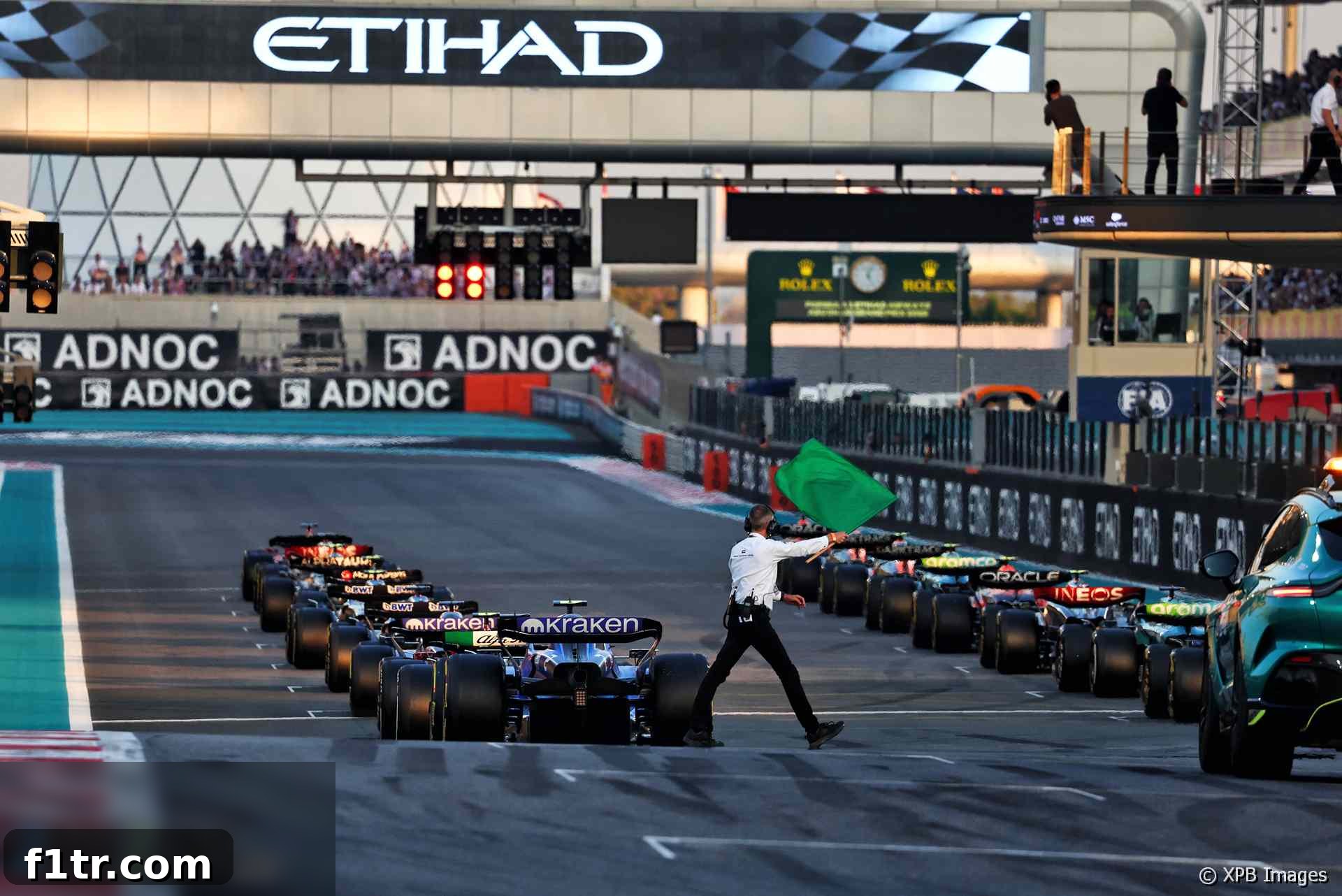
The idea of a dedicated Formula 1 rookie race garnered significant support from various F1 team principals last month, highlighting a collective desire within the paddock to provide a more structured platform for young drivers. The initial blueprint envisioned each of the ten Formula 1 teams entering a single car, piloted by an eligible rookie driver, in a sprint race format. This would have followed the traditional end-of-year testing session at the iconic Yas Marina circuit in Abu Dhabi, offering a thrilling conclusion to the season and an invaluable opportunity for future stars.
Such an event would have presented a golden opportunity for some of the sport’s brightest young prospects to showcase their abilities on the grandest stage. Drivers like Andrea Kimi Antonelli and Jack Doohan, both of whom are strongly tipped to make their full F1 debuts in the coming years, would have been prime candidates. Furthermore, Ferrari’s highly-regarded protege, Oliver Bearman, who has already made an impressive two substitute F1 starts, would likely have been eligible to participate, given his limited championship experience. The prospect of these talents battling it out in a dedicated non-championship race generated considerable excitement among fans and pundits alike, eager to glimpse the next generation of Formula 1 heroes in action.
The Vision Behind the Rookie Race: Nurturing Future F1 Stars
The concept of a Formula 1 rookie race goes beyond simply providing entertainment; it represents a strategic initiative to address some fundamental challenges in driver development. Breaking into Formula 1 is notoriously difficult, with limited opportunities for young drivers to gain crucial track experience in current-generation machinery. While the existing Young Driver Test offers some mileage, a full-fledged, albeit non-championship, race environment provides an entirely different level of pressure, competition, and learning.
Such a race could serve multiple purposes:
- **Talent Identification and Validation:** It offers a clearer performance benchmark for upcoming drivers, allowing teams to assess their race craft, adaptability, and performance under competitive conditions rather than just test scenarios.
- **Bridging the Gap:** It helps bridge the significant gap between feeder series like Formula 2 and Formula 3 and the pinnacle of motorsport. The sheer complexity and speed of modern F1 cars require extensive familiarisation, which a dedicated race could provide.
- **Enhanced Fan Engagement:** A rookie race would undoubtedly captivate fans, offering a glimpse into the future of F1 and allowing them to connect with rising stars before they become household names. It adds an extra layer of excitement to the post-season activities.
- **Marketing and Sponsorship Opportunities:** For teams and the sport itself, a rookie race creates new avenues for marketing young talent and attracting sponsors interested in the developmental aspects of Formula 1.
The F1 Commission’s decision to postpone the 2024 event was attributed to “timing and organisational constraints.” This highlights the intricate logistical challenges involved in adding any new event, even a standalone one, to an already packed and rigorously planned Formula 1 calendar. With less than two months remaining until the end of the current season, the complexities of coordinating team personnel, car availability, track allocation, and ensuring all necessary safety and operational protocols could not be adequately addressed in such a short timeframe. The official statement from the FIA confirmed this, noting that “While the concept received widespread support, it was determined that due to timing and organisational constraints, the event would not take place in 2024, and discussions will continue to formulate a potential concept and plan for 2025.” This commitment to continued discussions underscores the value the sport places on this initiative.
Shaping the Future: Revisions to the 2026 Formula 1 Regulations
Beyond the discussions surrounding the rookie race, the F1 Commission also addressed crucial changes to Formula 1’s eagerly anticipated regulations for the 2026 season. These revised regulations, which are set to usher in a new era for the sport, will be further discussed and potentially ratified by the World Motor Sport Council in the coming weeks. The 2026 regulations are poised to bring about one of the most significant overhauls in recent F1 history, particularly concerning power units and aerodynamic principles, aiming for a more sustainable, efficient, and equally thrilling racing spectacle.
A key focus of these revisions has been on the technical rules, specifically concerning the aerodynamic performance of the cars. Initial drafts of the 2026 regulations had raised concerns among some teams that the proposed rules might lead to cars that were too slow, particularly through corners. Such an outcome could potentially detract from the high-speed spectacle that defines Formula 1 and reduce the overall driving challenge and excitement. In response to these critical observations, the technical rules have been revised, and the new vision now “envisages an increase of the expected aerodynamic performance of the cars.”
This adjustment is vital for ensuring that the 2026 generation of Formula 1 cars maintains the blistering pace and downforce levels expected of top-tier motorsport machinery. By refining the aerodynamic targets, the sport aims to strike a delicate balance between new technologies, sustainability goals (such as fully sustainable fuels and increased electrical power from the hybrid system), and the fundamental requirement for cars to be incredibly fast and challenging to drive. Achieving optimal aerodynamic performance is not just about raw speed; it’s about creating cars that are responsive, agile, and capable of delivering thrilling on-track battles, which is paramount for the sport’s appeal to global audiences.
Sporting Regulations and the Return to Extensive Pre-Season Testing
In addition to the technical adjustments, “significant” changes have also been made to the 2026 sporting regulations. One of the most notable amendments is the allowance for nine days of pre-season testing. This represents a substantial increase from the mere three days allocated for testing in the current year. The decision to expand pre-season testing periods is a direct reflection of the comprehensive nature of the upcoming regulatory changes.
For teams, especially with a completely new power unit architecture and significantly revised chassis and aerodynamic concepts, extensive testing is not just beneficial but absolutely critical. More testing days allow:
- **Reliability Proving:** New engines and car designs invariably come with unforeseen teething problems. More track time allows teams to identify and rectify these issues before the first race.
- **Data Collection and Analysis:** Engineers require vast amounts of data to understand how the new cars behave in real-world conditions, optimize setups, and develop strategies.
- **Driver Adaptation:** Pilots need ample time to adapt to the characteristics of new cars, particularly with active aerodynamics and different power delivery. This ensures they are comfortable and competitive from the outset of the season.
- **System Integration:** The complex interplay between the new power unit, chassis, and electronic systems needs thorough validation.
The shift towards more comprehensive pre-season testing for 2026 also subtly acknowledges the diminishing returns of pure simulation, emphasizing that while computational tools are invaluable, there is no substitute for real-world track time when validating entirely new car generations. This move is likely welcomed by all teams, from the largest manufacturers to the smaller outfits, as it provides a more equitable opportunity to prepare for what promises to be a transformative season.
The Future Landscape of Formula 1: Innovation and Development
These recent decisions and ongoing discussions within Formula 1 underscore the sport’s dynamic nature and its continuous pursuit of improvement. The postponement of the rookie race, while a minor setback for 2024, signals a deeper commitment to integrating such an event properly and effectively into the sport’s ecosystem for 2025. This reflects a careful balance between immediate desires and long-term strategic planning for driver development.
Similarly, the swift adjustments to the 2026 technical regulations, particularly concerning aerodynamic performance, demonstrate Formula 1’s proactive approach to ensuring the quality and excitement of its racing product. By listening to team feedback and refining the rules, the FIA and F1 management aim to prevent potential issues and guarantee that the sport remains at the cutting edge of automotive technology while delivering a compelling spectacle. The increased pre-season testing allocation further solidifies this commitment to thorough preparation for a new era.
Ultimately, Formula 1 continues to evolve, balancing its rich heritage with a relentless drive for innovation, sustainability, and competitive integrity. These latest developments are crucial steps in shaping a future where new talent can thrive, technological advancements push boundaries, and the racing remains as exhilarating as ever, cementing F1’s position as the pinnacle of global motorsport.
Advert | Become a RaceFans supporter andgo ad-free
Related Formula 1 Articles
- F1 returning to India soon after 2027 sounds like wishful thinking
- Verstappen loathes F1’s new generation of cars – but what do his rivals reckon?
- The ‘throwback weekend’ is back in fashion. But it’s a flawed concept – especially for F1
- Is Formula 1’s double race cancellation a blessing in disguise?
- Todt admits Schumacher crashed on purpose – but did it really cost two titles?
Browse all Formula 1 articles