The Relentless Pursuit of Safety in Motorsport: A Deep Dive into FIA Initiatives
Modern motorsport, at its core, is a delicate balance between pushing the boundaries of speed and upholding the highest standards of safety. While the thrill of speed captivates audiences worldwide, the paramount concern for driver and spectator safety invariably takes precedence. This steadfast commitment to protection has not always been the norm, evolving dramatically from an era where pioneering drivers competed in simple shirt sleeves and cloth caps, to modern Formula 1 cars where even the slightest detail is engineered for maximum security.
Looking back, the early days of racing presented a stark contrast to today’s meticulously regulated environment. Photographs from motorsport’s nascent years reveal drivers with minimal protective gear, and as recently as the 1980s, car designs often placed drivers’ feet ahead of the front axle, a layout that offered little protection in frontal impacts. Key safety innovations we now take for granted, like the Head and Neck Support (HANS) device or the Halo cockpit protection system, were unimaginable concepts. Fire safety was rudimentary, with standard supermarket extinguishers considered adequate, leading to tragic outcomes when equipment failed or ill-trained marshals struggled to combat significant blazes. Far too many lives were lost due to insufficient fire-fighting capabilities and a lack of proper safety protocols.
Despite early efforts, notably Jackie Stewart’s tireless campaigns for enhanced safety in the 1970s, widespread adoption of stringent measures proved challenging. Safety, unfortunately, was a hard sell until a pivotal and tragic weekend in 1994. The deaths of Roland Ratzenberger and the legendary Ayrton Senna on consecutive days at the Imola circuit sent shockwaves through the Formula 1 community and the wider world, fundamentally altering the trajectory of the sport forever.
The Imola Turning Point: A Catalyst for Change
The events of 1994 thrust motor racing into an existential crisis. Governments globally threatened to ban the sport, unwilling to tolerate such inherent risks within their borders. Major manufacturers, once proud to associate with motorsport, grew wary of the negative publicity and potential legal repercussions. Teams and suppliers faced intense scrutiny and the daunting prospect of lengthy litigations, mirroring the eleven-year legal battle endured by Senna’s Williams team before its members were ultimately acquitted. The public nature of Senna’s death, widely considered one of the most visible fatalities in history despite his official passing in hospital, amplified the pressure.
Television broadcasters, fearing offense to their viewers, threatened to cancel lucrative contracts. Sponsors, likewise, sought immediate exit clauses to protect their brands from association with what was increasingly perceived as a lethal pastime. This pressure was further intensified by a series of fatalities in other high-profile racing series, including IndyCar, endurance racing, and rallying. It became undeniably clear that comprehensive and immediate action was required to safeguard the future of motorsport.
While it would be inaccurate to suggest the FIA, as the sport’s governing body, had been entirely negligent regarding safety prior to 1994, the reality was that thorough safety research was, and remains, incredibly expensive. Historically, the sport was largely run by dedicated but amateur committees, funded primarily by memberships. This structure meant the FIA lacked the substantial financial resources necessary for extensive, cutting-edge safety investigations and advancements. Furthermore, a lingering “World War II mentality” towards the inevitability of death, particularly among older generations of followers, contributed to a slower embrace of radical safety overhauls.
Funding a Safer Future: The Rise of FIA Safety Initiatives
A significant shift occurred at the turn of the century with the explosive growth in global television ratings and the (initially contentious) sale of commercial rights for all FIA championships. These developments provided the governing body with unprecedented funding, finally enabling it to embark on a concerted, well-financed campaign of safety research and implementation. This newfound financial stability transformed the FIA’s capacity to innovate and enforce higher safety standards across all categories of motorsport.
The first major projects to benefit from this funding included the introduction of wheel tethers in 1998, designed to prevent wheels from detaching and becoming dangerous projectiles during accidents. This was followed by the mandatory adoption of the Head and Neck Support (HANS) device in 2003, which significantly reduces severe head and neck injuries. More recent innovations include reinforced visor panels, developed in the wake of Felipe Massa’s harrowing 2009 crash at the Hungaroring, where he was struck by a wayward spring. The most visible and perhaps most debated recent innovation is the Halo cockpit protection system, introduced in 2018, which has demonstrably saved lives by deflecting large debris and preventing severe head impacts. Beyond these prominent examples, countless other low-key or unseen innovations are continually integrated into cars and circuits, elevating safety standards to levels unimaginable in Jackie Stewart’s era.
By its very nature, motorsport can never be rendered 100% risk-free. However, achieving this absolute safety remains the ultimate, unwavering target of the FIA. Until the end of 2017, safety studies were largely funded by the FIA Foundation and the FIA Institute, entities established through the commercial rights sale. Subsequently, under the leadership of President Jean Todt, the FIA launched the FIA Innovation Fund (FIF), leveraging proceeds from the sale of a 1% shareholding in the commercial rights holder. This strategic move solidified a dedicated funding stream for ongoing safety advancements.
The FIF, starting with an initial grant of €45 million from Todt’s administration, has grown to hold a reserve of €63 million. To date, it has funded 25 projects valued at over €20 million, with motorsport safety and allied activities accounting for a significant quarter of the total approved project value. These substantial contributions effectively complement the ongoing financial support from the FIA Foundation and the governing body itself, creating a robust ecosystem for continuous safety development.
The FIA Safety Department: Expertise and Collaboration
At the heart of the FIA’s safety efforts is its dedicated Safety Department, meticulously led by Director Adam Baker, an experienced motorsport engineer who previously headed track and test operations at BMW Motorsport. Baker reports directly to Peter Bayer, FIA Secretary-General for Sport, ensuring direct oversight and strategic alignment. A recent key appointment is Tim Malyon, an accomplished ex-Sauber and Red Bull engineer with extensive experience in Formula E and DTM, now responsible for spearheading safety research. This depth of in-house expertise is further augmented by a collaborative approach that draws on external knowledge.
Beyond its internal team, the FIA Safety Department actively consults with a broad network of industry working groups, independent accident specialists, and key bodies such as the Grand Prix Drivers’ Association (GPDA). It also meticulously monitors and analyzes every fatal and serious accident occurring in global motorsport through its comprehensive World Accident Database. Close collaboration is maintained with the recently established FIA Industry Working Group, which acts as a crucial forum for collective safety advancements.
The Industry Working Group, managed by the FIA Safety Department and reporting directly to the FIA Safety Commission, boasts a diverse membership of over 50 experts. This includes representatives from leading helmet and racing apparel manufacturers, circuit safety specialists, fuel system and electronics suppliers, applied technology companies, motor and allied manufacturers, and the renowned Cranfield Impact Centre, an off-shoot of Cranfield University, which specializes in impact research. This broad spectrum of expertise ensures a holistic approach to safety development, covering all critical aspects of motorsport.
FIA protocols mandate that National Sporting Authorities (ASNs) meticulously report all fatal accidents within their respective regions. This encompasses incidents occurring not only in FIA-governed world championship events but also at national and grassroots levels. This comprehensive reporting mechanism provides the Safety Department with an exceptionally broad and detailed database, allowing for thorough analysis across the entire pyramid of motorsport.
Findings from these investigations are regularly reviewed by the FIA Serious Accident Study Group (SASG), a formidable body chaired by Jean Todt himself and comprising the heads of all FIA sporting commissions and relevant sporting/technical departments. Once approved, the appropriate commission president(s) – spanning Formula 1, Single Seater, WRC, WEC, and other categories – commit to implementing the findings and corrective measures within their respective championships, typically through amendments to regulatory clauses. As Gerard Saillant, FIA Medical Commission president and SASG deputy president, eloquently states, “The aim of this Group is eventually to reduce the risk of accidents, and when an accident does occur, to reduce the physical consequences for the people concerned.”
The SASG works in tandem with the FIA Research Working Group, which rigorously evaluates potential safety measures to complement the work of the Safety Commission. The Safety Commission, currently led by former Williams technical director Sir Patrick Head, then tables its recommendations to the World Motor Sport Council, which serves as the FIA’s ultimate regulatory body. Saillant clarifies the distinct roles: the Safety Commission holds a regulatory function, representing “The last step before the World Motorsport Council,” while the SASG is “more ‘on the ground,’ plus works in liaison with various research groups within the FIA,” indicating its role in practical investigation and data collection.
Recent Findings and Future Directives
Following a significant meeting in March, the SASG recently published its detailed findings from 28 serious and fatal accidents that occurred in circuit racing during 2019, based on reports from ASNs in each country. While the FIA policy prohibits the release of individual accident details due to sensitivities, the comprehensive recommendations issued in May of this year clearly underscore the diligent research and thorough analysis conducted into each specific set of circumstances.
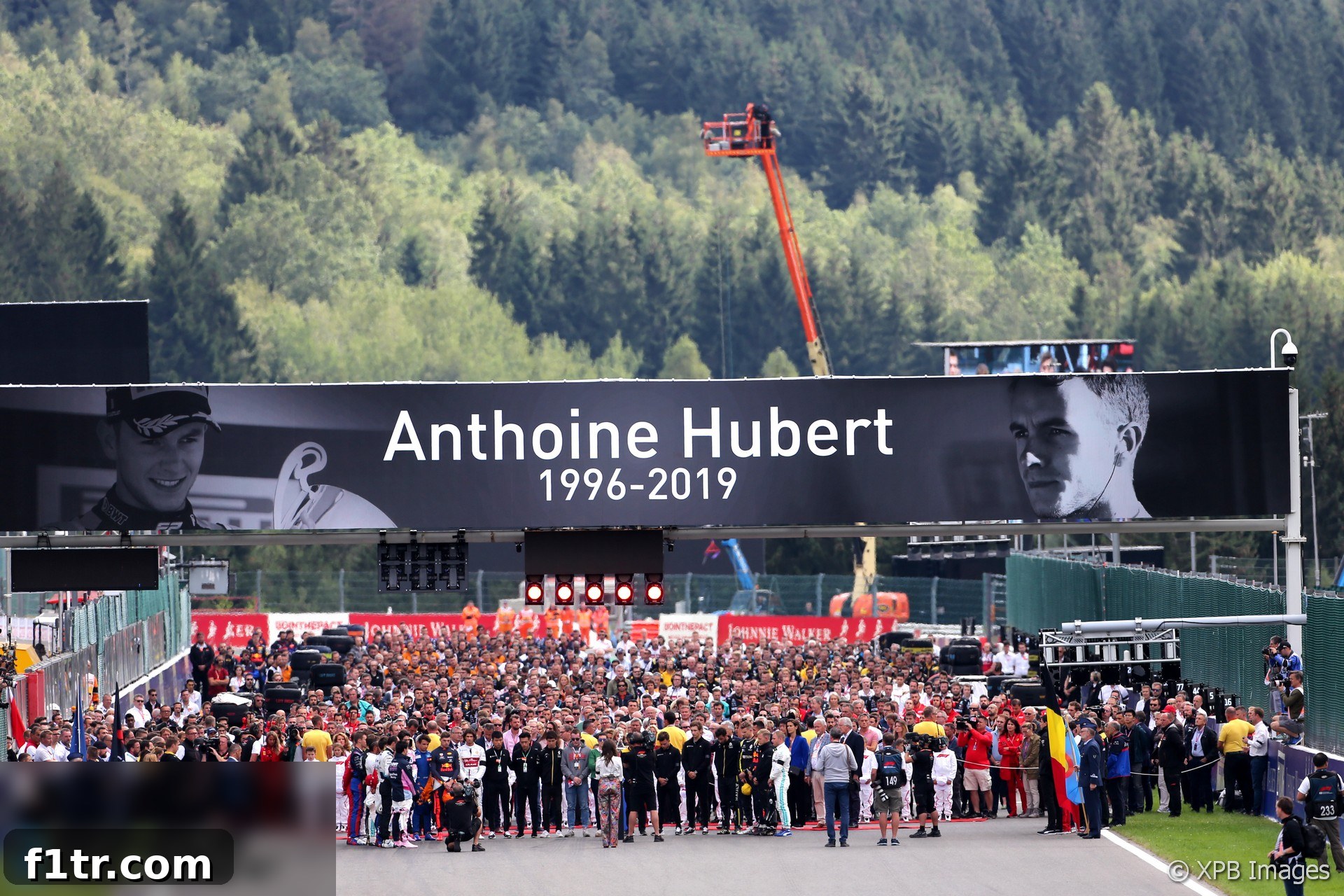
Though not explicitly named in the SASG recommendations, it is evident that the tragic F2 accident at Spa-Francorchamps in 2019, which claimed the life of Anthoine Hubert and left Juan Manuel Correa with severe leg injuries, was thoroughly examined. As previously reported, the FIA found no individual driver responsible for the initial chain of events, although a deflating tire on another car (believed to be punctured by debris from an earlier incident) triggered the devastating multi-car impact. Alex Peroni’s spectacular aerobatic F3 crash at Monza just a week later, which resulted in significant back injuries, is another highly probable candidate for this comprehensive analysis. The FIA’s studies are exhaustive, covering all categories of motorsport, from grassroots karting and closed-cockpit series like touring cars and rallycross, to closed-road events such as rally and cross-country, and all single-seater formulae.
The recommendations applicable to single-seater cars, which represent the pinnacle of racing technology, are detailed below. It’s important to note that the FIA does not specify which measures arose from which particular incidents, nor are there implied suggestions that specific accidents directly resulted in certain measures. Rather, these are holistic improvements based on cumulative data.
FIA Recommendations for Single-Seater Safety:
The FIA recommendations for single-seater cars include:
- Debris containment: Implementing enhanced tethering and advanced design solutions to mitigate and/or prevent critical components from detaching and becoming dangerous debris during accidents. This directly addresses the risk of flying parts impacting drivers or spectators.
- Passive safety structure and survival cell: A thorough review of front and side impact structures is underway, focusing on improving energy absorption capabilities, optimizing directional performance during impacts, and ensuring compatibility with car-to-car collision scenarios. This process is actively being implemented for Formula 1, Formula 4, and Formula E, with solutions for Formula 2 and Formula 3 slated for incorporation into their next car updates.
- Front wing design and attachment: A comprehensive review of front wing designs and their attachment systems to the nose of the car aims to mitigate the loss of these assemblies during incidents. Investigations are also exploring the feasibility of incorporating “controlled failure” points into future wing designs, allowing them to break away predictably and safely.
- Headrest design: Continuous iteration of headrest designs and specifications is mandated to increase their retention robustness and significantly improve the probability that the headrest remains securely in situ during high-G impacts, further protecting the driver’s head and neck.
- Front anti-intrusion panel: Following the successful retrofit upgrades to current cars, the latest specifications of front anti-intrusion panels will be incorporated as standard into next-generation cars. These panels are crucial for preventing objects from penetrating the survival cell in frontal impacts.
Broader Safety Considerations Across All Categories:
Beyond single-seaters, the following initiatives are under consideration or active development for all motorsport categories:
- Electronic safety systems: Enhancing driver notification systems for incidents on track is a key focus. A two-step approach is proposed: an initial step to improve immediate driver alerts, followed by the deployment of advanced marshalling systems incorporating automated yellow flag generation, direct car-to-car notifications, and coordinated power reduction mechanisms to slow cars approaching incident zones.
- Tyre pressure monitoring systems: Already standard in senior racing series, these systems are slated for deployment in additional categories. Accurate real-time tire pressure data can prevent catastrophic failures and enhance overall vehicle stability.
Other Potential Operational Changes Under Examination:
- Race neutralisation: Development of advanced in-car marshalling systems that can be easily installed and removed from cars during events, providing more direct and immediate communication to drivers.
- Low-angle barrier impact: Revising the FIA safety barrier standard to specifically account for impact angles between zero and 20 degrees. This ensures effective energy absorption and protection even in oblique collisions, which are often challenging for traditional barrier designs.
“As with all accident investigation work, our findings related to circuit racing form the basis of a range of technical and operational initiatives, both to prevent serious accidents occurring and to mitigate the consequences if they do,” remarked Adam Baker, underscoring the proactive and reactive nature of the FIA’s safety strategy. He also highlighted a critical point: an alarming 98% of fatal accidents in contemporary motorsport occur at the amateur level. The most commonly identified contributory factors in these incidents point directly to a pressing need for improved marshalling training and more effective race neutralisation procedures in circuit racing – emphasizing the human element in accident prevention and mitigation.
A Never-Ending Quest for Zero Fatalities
It is unequivocally clear that motorsport safety has advanced in leaps and bounds since Jackie Stewart’s pioneering crusades. The sophisticated methodologies of meticulous reporting, rigorous analysis, and advanced simulation now form the cornerstones of what remains a perpetual work in progress – a never-ending quest for ultimate safety. This ambitious endeavor could not exist without a pervasive “safety-first” culture ingrained at all levels of the sport, and crucially, the generous and consistent funding derived from the sale of the FIA’s commercial rights to various championships, with Formula 1 being by far the largest benefactor.
Jean Todt, who presides over a comprehensive portfolio encompassing both motorsport and mobility (road transportation), holds a fervent belief in the symbiotic link between motorsport safety and road safety. He contends that lessons learned and innovations developed in one discipline can, and indeed should, be effectively applied to the other, creating a virtuous cycle of mutual benefit. “For me,” he shared in an exclusive interview earlier this year, “if we can make it safer, circuits safer, motor racing safer, there is no [let-up] on this side. It will never be enough. Maybe the difference, we must optimise more [in] motor racing, not only on safety but on technology as well, to have some [relevance] on mobility. On road safety, road cars, whatever.”
Todt, who also serves as the UN Special Envoy for Road Safety, further elaborated on the economic imperative for such integration: “I don’t think now even manufacturers can afford to move into motor racing if it is not linked with other consequences.” This perspective highlights how motorsport safety initiatives are not just about protecting drivers on the track, but also about driving technological innovation that ultimately benefits everyday road users and aligns with manufacturers’ broader corporate social responsibility and product development goals.
While the FIA’s focus will always remain strong on motorsport’s premier categories, the sheer depth and breadth of research undertaken by the FIA Safety Department demonstrate an unwavering commitment. The governing body leaves no stone unturned in its relentless mission for zero fatalities across all categories of what is, by definition, an inherently dangerous activity. Motorsport today is immeasurably safer than in Stewart’s era and is poised to become even safer in the future, thanks to a culture of continuous improvement, rigorous scientific investigation, and strategic investment.
RacingLines
- The year of sprints, ‘the show’ – and rising stock: A political review of the 2021 F1 season
- The problems of perception the FIA must address after the Abu Dhabi row
- Why the budget cap could be F1’s next battleground between Mercedes and Red Bull
- Todt defied expectations as president – now he plans to “disappear” from FIA
- Sir Frank Williams: A personal appreciation of a true racer
Browse all RacingLines columns