Max Verstappen’s Masterclass: A Strategic Triumph at the French Grand Prix
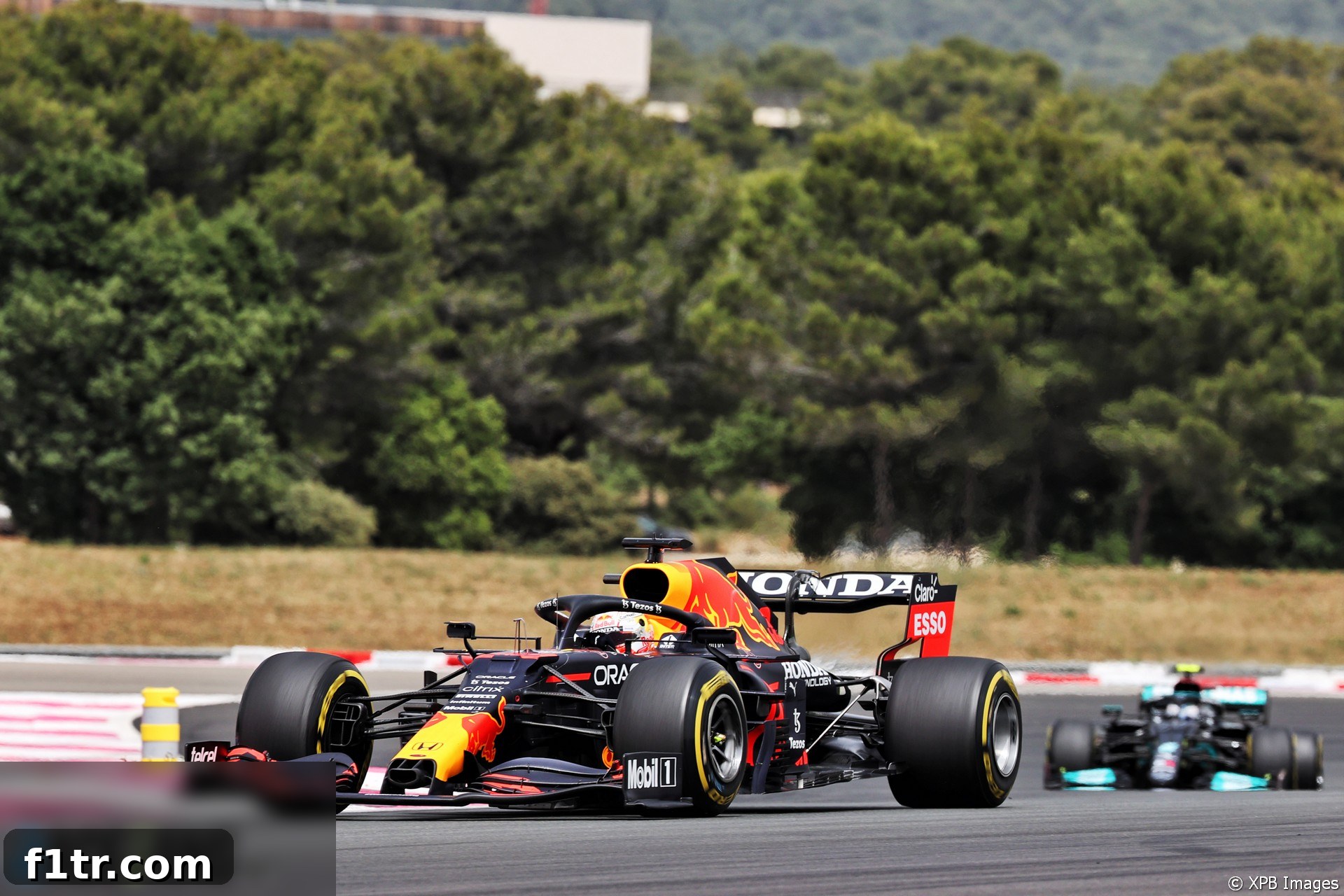
The 2021 Formula 1 season delivered yet another thrilling chapter at the French Grand Prix, where Max Verstappen showcased a masterful blend of aggressive driving and strategic brilliance to snatch victory from the grasp of Lewis Hamilton. In a race that epitomized the intense championship battle, the Red Bull Racing driver executed a flawless two-stop strategy to reclaim the lead on the penultimate lap, cementing his position at the forefront of the drivers’ standings.
Verstappen’s triumph at Circuit Paul Ricard was anything but straightforward. From pole position, the Dutchman appeared poised for a dominant drive, but a crucial error on the opening lap immediately turned the race into a high-stakes pursuit. This victory, hard-fought and meticulously planned, was a testament to Red Bull’s strategic prowess and Verstappen’s unwavering determination, setting the stage for what promises to be an unforgettable season.
Early Drama and a Crucial Undercut
The race began under bright French skies with Max Verstappen leading the pack, having secured a crucial pole position. However, the initial moments quickly descended into high drama. As the cars streamed into Turn 2, Verstappen made a rare unforced error, running wide and allowing his championship rival, Lewis Hamilton, to sweep past and seize the lead. This immediate setback put Red Bull on the back foot, transforming their planned race into an urgent chase.
“I just lost the rear, tried to correct it, correct it, correct it, but it kept going,” Verstappen explained after the race, detailing the frustrating moment that cost him the lead. This early slip meant a significant part of the grand prix would be spent pursuing the formidable Mercedes of Hamilton, who quickly established a rhythm at the front.
However, Red Bull’s response was swift and decisive. Recognizing the difficulty of overtaking on the Paul Ricard circuit, the team opted for an aggressive undercut strategy during the first round of pit stops. Verstappen was called in a lap earlier than Hamilton, switching to the hard compound tyres. This bold move paid dividends, as Hamilton, pitting a lap later, emerged from the pits just behind the Dutchman. The gap was razor-thin, but Verstappen had regained the track position that had been so crucial. This initial strategic move not only put Verstappen back in control but also signaled Red Bull’s intent to proactively dictate the race’s flow rather than react to Mercedes.
The Strategic Masterstroke: A Two-Stop Gamble
With Verstappen leading again, the race settled into a tense equilibrium. Both Red Bull and Mercedes assessed their options, weighing the advantages of a one-stop versus a two-stop strategy. Mercedes, with Hamilton and Valtteri Bottas, seemed committed to a single pit stop, aiming to manage their tyres to the end. Red Bull, however, saw an opportunity to exploit tyre degradation and a pace advantage with fresh rubber.
On Lap 31, Red Bull made their audacious call, pitting Max Verstappen for a second time. This decision was a significant gamble, as it dropped him behind both Mercedes drivers on track. With Hamilton now leading and Bottas in second, Verstappen faced a daunting task: to close a considerable gap and overtake two of the sport’s most accomplished drivers on the notoriously challenging Paul Ricard circuit. The final stint would require relentless pace and precision.
“Once we made the first pit stop then you could clearly see, on the hard tyres, they were pushing me hard from behind,” Verstappen commented, highlighting the pressure he faced. “But then when we made the call to do the two-stop then in the end that paid off. We had to work hard for it but, of course, very rewarding.”
Armed with significantly fresher hard tyres, Verstappen began his charge. His pace was electrifying, consistently faster than the Mercedes cars ahead. The strategic advantage of the fresh rubber became increasingly evident as the laps ticked down. He rapidly began to reel in Valtteri Bottas, executing a decisive overtake on Lap 47, demonstrating his superior grip and speed. With Bottas dispatched, only Lewis Hamilton stood between Verstappen and victory.
The Penultimate Lap Showdown
The final laps of the French Grand Prix transformed into a captivating chase. Max Verstappen, fueled by the fresh tyres from his second stop, relentlessly closed the gap to Lewis Hamilton. The tension was palpable as the distance between the two championship protagonists dwindled with each passing corner. Hamilton, on older, more worn tyres, was doing his utmost to defend, but Verstappen’s pace was simply too potent.
As the race entered its penultimate lap, Verstappen was finally within DRS (Drag Reduction System) range of Hamilton. Heading into the chicane, he made his move, diving to the inside with clinical precision. Hamilton offered little resistance, recognizing the tyre disadvantage. The pass was clean, decisive, and marked the climax of a perfectly executed strategic play by Red Bull Racing.
Verstappen’s exhilaration was evident as he crossed the finish line to claim a sensational victory. This win wasn’t merely about speed; it was a testament to mental fortitude, strategic courage, and the ability to extract maximum performance under immense pressure. The closing stages of the race were complicated by backmarkers, which Verstappen acknowledged: “It was difficult because there were quite a lot of backmarkers to go through but luckily they did well and we could have a good fight to the end.” Despite these challenges, Verstappen maintained his composure and delivered the decisive blow.
Verstappen’s Post-Race Reflections: A Hard-Fought Reward
Reflecting on his hard-earned victory, Max Verstappen admitted the race was a rollercoaster of emotions and challenges. He highlighted the capricious nature of the Circuit Paul Ricard, particularly the impact of the wind. “At the beginning it was super-difficult with the wind, so one lap you had an okay balance and the next lap you were just sliding everywhere, so [it was] really difficult to keep the car stable,” he recounted. This unpredictable element added another layer of complexity to an already high-pressure situation, demanding constant adaptation from the drivers.
Despite the early setback and the tricky conditions, Verstappen found immense satisfaction in the strategic triumph. He emphasized the collective effort required: “We had to work hard for it but, of course, very rewarding.” This victory was not just a personal achievement but a significant boost for Red Bull Racing in their quest for both the Drivers’ and Constructors’ Championships.
Looking ahead, Verstappen painted a clear picture of what the rest of the season holds. The battle with Lewis Hamilton and Mercedes is far from over, and the French Grand Prix was a stark reminder of the razor-thin margins separating the two teams. “As you could see, the whole race we were fighting each other so I think it will be like this for the rest of the season,” he predicted. This expectation sets the stage for a compelling remainder of the Formula 1 calendar, with every race promising high-octane drama and strategic chess matches.
Implications for the Championship Battle
Max Verstappen’s victory at the French Grand Prix carried significant weight in the ongoing Formula 1 World Championship. It allowed him to extend his lead over Lewis Hamilton in the Drivers’ standings, providing crucial momentum in what has been a tit-for-tat battle throughout the season. The win underscored Red Bull’s growing confidence and their ability to challenge Mercedes not only on raw pace but also through audacious strategic calls.
For Mercedes, the French Grand Prix was a lesson in humility and a wake-up call regarding Red Bull’s strategic flexibility. While their single-stop strategy was a plausible approach, it ultimately proved to be the slower option against Verstappen’s aggressive two-stop. The team will undoubtedly analyze where improvements can be made, both in race day strategy and tyre management, as they seek to regain their dominant form.
This result firmly established the 2021 season as one of the most exciting and closely contested in recent memory. The tactical duel between Red Bull’s Christian Horner and Mercedes’ Toto Wolff is as engaging as the on-track battles between Verstappen and Hamilton. Every race weekend is now a critical juncture, with teams pushing the boundaries of car development, driver performance, and strategic innovation. The French Grand Prix confirmed that Red Bull Racing has truly emerged as a formidable championship contender, capable of outmaneuvering the reigning champions.
Conclusion: A Defining Moment in the 2021 Season
The 2021 French Grand Prix will be remembered as a pivotal race in Max Verstappen’s championship campaign. It was a victory forged in adversity, defined by a critical early error, redeemed by courageous strategy, and sealed by relentless driving. Verstappen’s ability to recover from an initial setback and execute a complex two-stop strategy to perfection showcased his maturity and unwavering focus.
This triumph at Paul Ricard not only bolstered Verstappen’s championship lead but also sent a clear message to his rivals: Red Bull Racing is here to fight for both titles, employing every tool at its disposal, including aggressive strategy. As the Formula 1 circus moves to the next races, the intensity of the Verstappen vs. Hamilton rivalry is set to escalate further, promising fans an exhilarating conclusion to an already legendary season. The stage is set for an epic showdown, with every point and every strategic decision potentially making the difference.
2021 French Grand Prix Related Content
- The potentially crucial differences in how Bottas and Perez help their team mates
- How much-maligned Paul Ricard produced “one of the most exciting races for five years”
- Todt would “prefer less controversy” in Formula 1
- Wolff encouraged by ‘real progress’ from Bottas in French GP
- Red Bull’s French GP win disproves accusations over tyres and wings – Horner
Browse all 2021 French Grand Prix articles