The Untapped Advantage: Why Formula 1’s Front-Row Drivers Get a Head Start on Practice Starts
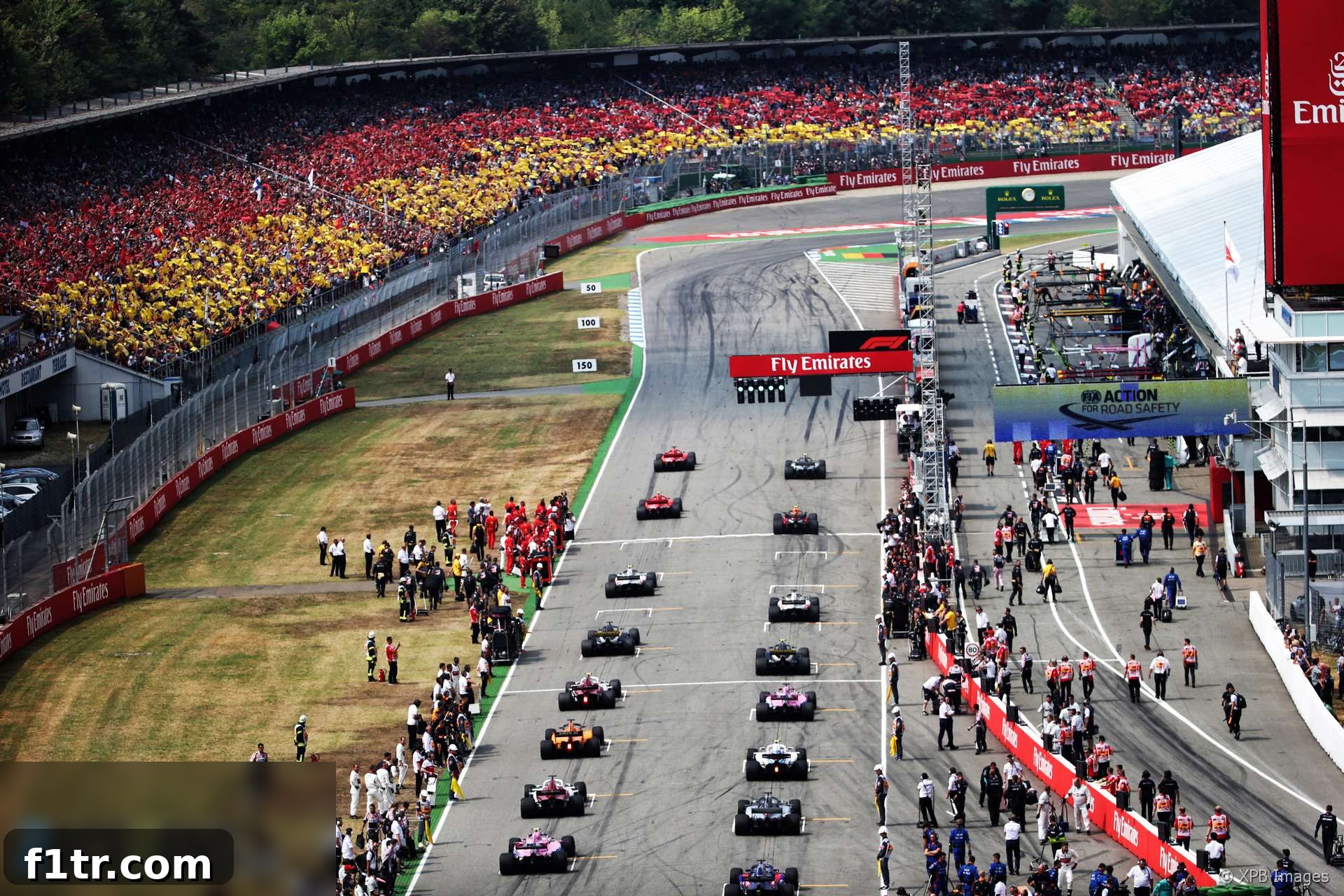
Formula 1 is a sport meticulously governed by rules designed to ensure fair competition and driver safety. Yet, even within this highly regulated environment, subtle nuances can create distinct advantages. One such area of ongoing discussion revolves around practice starts on the formation lap, where an intriguing “loophole” allows the drivers positioned on the front row of the grid to gain a competitive edge over their rivals.
The core of the issue stems from a rule primarily intended to enhance safety: drivers are generally prohibited from performing practice starts on the formation lap until they have passed the pole position slot and disengaged their pit lane speed limiter. This regulation was introduced to mitigate potential risks to team personnel and other circuit staff who might still be near the cars during the initial phase of the formation lap. Unexpected acceleration or abrupt movements could lead to dangerous situations, making this a critical safety measure.
However, this well-intentioned rule inadvertently creates a disparity. The driver starting from pole position, and often the driver alongside them on the front row, are already past the designated “safe” point by virtue of their starting location. This geographical advantage means they can perform a practice start from the very spot where they will launch their race, while those further down the grid are constrained by the pit lane speed limit, preventing them from replicating race-start conditions.
Understanding the Criticality of a Perfect Start in Formula 1
In a sport where fractions of a second can determine victory or defeat, the race start is undeniably one of the most critical phases of any Grand Prix. A flawless launch can see a driver gain multiple positions, dictate strategy, and even set the tone for the entire race. Conversely, a poor start can undo hours of preparation, costing valuable track position and forcing a more challenging recovery drive.
Practice starts are not merely a formality; they are an essential component of a driver’s pre-race routine. During these brief but intense moments, drivers fine-tune their reaction times, calibrate their clutch bite point, manage engine torque delivery, and internalize the precise feel of their car launching off the line. This repetition builds muscle memory and confidence, allowing them to execute a near-perfect start when the red lights go out. The ability to perform this practice from the actual starting position, mirroring the exact track conditions and gradient, offers an invaluable data point and psychological boost.
The Sochi Scenario: Magnussen’s Frustration and the Practical Disadvantage
The competitive implications of this rule were vividly highlighted at the 2018 Russian Grand Prix. Haas driver Kevin Magnussen, having qualified an impressive fifth on the grid, found himself in a position where gaining an extra advantage could be crucial. During the formation lap, he radioed his team, inquiring if he could perform a practice start. The pit lane speed limit at the Sochi Autodrom was set at 60 kilometers per hour. Magnussen’s team informed him that attempting a practice start would inevitably lead him to exceed this speed limit before passing the pole position slot, thus incurring a penalty.
This incident perfectly encapsulated the disadvantage faced by drivers not on the front row. While Magnussen, like every other driver further back, was eager to optimize his race start preparation, the existing regulation prevented him from doing so effectively from his actual grid slot. This hands the leading drivers, particularly those in the coveted first two positions, a distinct, tangible advantage over their rivals who are unable to conduct an extra, highly representative practice start from their specific race-day location.
FIA’s Stance: A “Perk” of Pole Position
Despite the clear competitive imbalance, the sport’s governing body, the FIA, has indicated no immediate plans to revise the rules to address this perceived loophole. Charlie Whiting, the late and long-serving FIA Race Director, addressed the matter directly when questioned by RaceFans, offering a pragmatic, albeit somewhat controversial, perspective.
“They get an advantage from being at the front anyway,” Whiting remarked, acknowledging the inherent benefits of a higher grid position. He then went further, stating, “So it’s another perk of being on pole position, I would say.” This statement frames the ability to perform an unfettered practice start as a justifiable reward for qualifying well, rather than an unintended regulatory oversight that requires rectification.
Whiting’s observations further confirmed this consistent advantage. He explained how onboard camera feeds clearly show when drivers have their pit limiter engaged – indicated by a ‘mauve light’ on the dash. “You can see on the lights on their [onboard] camera when they’ve got their pit limiter engaged, you’ll see every car except the front two, every time. They’ve all got their pit limiter engaged, you see the mauve light and then the front two don’t.” This technical detail underscores that the front-row drivers are indeed operating under different parameters during the critical initial moments of the formation lap, allowing them a freedom of movement and acceleration that is denied to their counterparts.
The Debate: Fairness, Safety, and Competitive Balance
The FIA’s stance sparks an interesting debate within the Formula 1 community regarding the principles of fairness, driver opportunity, and the ongoing balance between safety protocols and competitive integrity. On one hand, the “perk” argument could be seen as a natural consequence and reward for superior qualifying performance. Achieving pole position is already a testament to a team’s and driver’s speed, and perhaps minor additional benefits are simply part of the package that comes with being at the very front of the grid.
However, critics argue that rules should ideally apply equally to all competitors, especially when they directly impact such a crucial aspect as the race start. While the safety rationale for the pit lane speed limit on the formation lap is undeniable, the current implementation creates an uneven playing field. Should a safety measure designed for the whole grid inadvertently confer a competitive advantage to a select few? Some might propose alternative solutions, such as designating a specific, safe zone further along the track where all drivers, regardless of grid position, could perform a representative practice start. This would level the playing field while still maintaining the primary focus on personnel safety.
The impact of this minor advantage might seem negligible in isolation, but in the cutthroat world of Formula 1, every millisecond and every subtle edge can be pivotal. A perfectly executed start can mean the difference between leading into Turn 1 or being caught in the midfield skirmish. For drivers vying for championships, such small, consistent advantages could potentially accumulate and influence outcomes over a season.
Looking Ahead: The Evolving Landscape of F1 Regulations
As Formula 1 continues to evolve, so too do its regulations. While Charlie Whiting’s perspective was clear at the time, the leadership of the FIA and F1 itself continues to assess and refine the rulebook. The discussion around practice starts highlights the intricate challenges of crafting rules that are simultaneously safe, fair, and conducive to thrilling competition. For now, the ability to perform a free practice start on the formation lap remains a unique privilege of the front-row occupants, a testament to the advantages of pure pace and qualifying prowess, and a subtle detail that underscores the relentless pursuit of perfection in Formula 1.
2018 F1 season
- F1 feared “death knell” for Drive to Survive after Ferrari and Mercedes snub
- McLaren staff told us we were “totally crazy” to take Honda engines in 2018 – Tost
- ‘It doesn’t matter if we start last’: How Red Bull’s junior team aided Honda’s leap forward
- Honda’s jet division helped F1 engineers solve power unit problem
- McLaren Racing losses rise after Honda split
Browse all 2018 F1 season articles