Red Bull to Test Max Verstappen’s Salvaged Power Unit at Hungaroring Amidst Championship Pressure
Red Bull Racing is taking a calculated risk at the Hungarian Grand Prix, opting to run the power unit salvaged from Max Verstappen’s dramatic 51G crash at the British Grand Prix during Friday’s first practice session at the Hungaroring. This crucial test aims to determine the integrity and reliability of the Honda RA621H power unit, a pivotal component in Verstappen’s bid for the 2021 Formula 1 World Championship.
The Aftermath of Silverstone: A 51G Impact
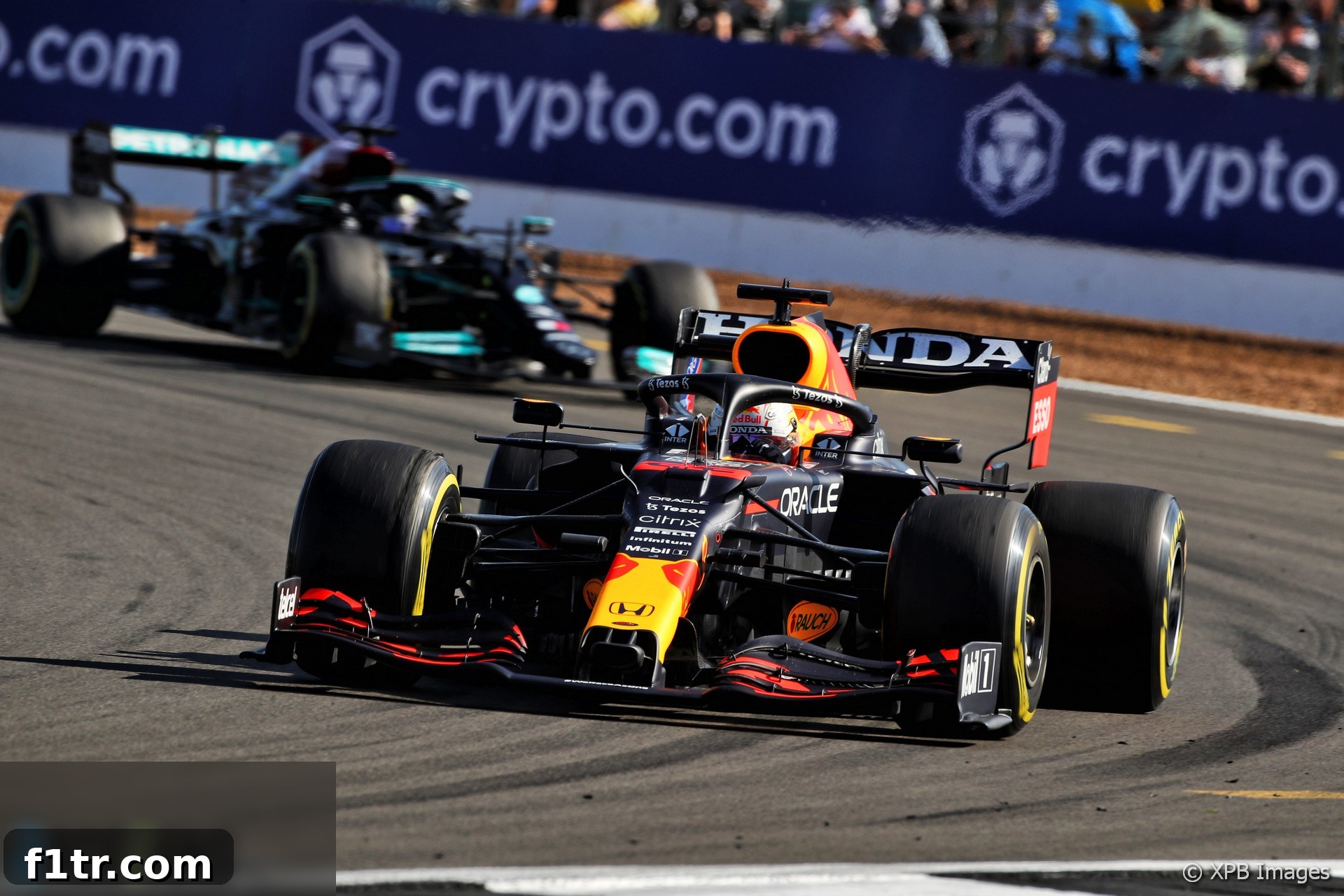
The incident at Silverstone’s high-speed Copse corner during the opening lap of the British Grand Prix sent shockwaves through the Formula 1 community. Verstappen’s collision with rival Lewis Hamilton resulted in a monumental 51G impact, the force of which completely “written off” the rest of the car, according to Red Bull team principal Christian Horner. While Verstappen himself walked away relatively unscathed, a testament to modern F1 safety, the fate of his crucial power unit remained uncertain.
Modern Formula 1 cars are marvels of engineering, designed to withstand immense forces while protecting the driver. However, the sheer energy dissipated in an impact of this magnitude puts every component under extreme stress. The power unit, a complex hybrid system combining a V6 internal combustion engine (ICE), turbocharger (TC), two Motor Generator Units (MGU-H and MGU-K), an Energy Store (ES), and Control Electronics (CE), is particularly vulnerable to such forces. Its intricate internal mechanisms, sensitive electronics, and high-precision components can suffer micro-fractures or misalignments that are not immediately visible.
The Salvage and Initial Inspection: A Glimmer of Hope
Following the Silverstone race, Verstappen’s Honda RA621H power unit, which was his second allocation for the season, was meticulously removed from the chassis. It was then transported to Honda’s advanced R&D facility in Sakura, Japan. Here, engineers conducted a thorough initial inspection, adhering strictly to the FIA’s regulations concerning power unit testing and component integrity checks. RaceFans understands that this preliminary analysis did not uncover any immediate red flags or overt damage that would deem the unit unusable.
However, an initial visual and diagnostic inspection, while comprehensive, often cannot replicate the dynamic stresses and operational demands of a Formula 1 race. Hidden damage, such as slight distortions in the combustion chambers, compromised bearings in the turbocharger or MGU-H, or even subtle cracks in critical structural elements, might only manifest under the extreme temperatures, vibrations, and rotational speeds experienced on track. Therefore, a real-world test is not merely a formality but an absolute necessity to ascertain the unit’s true reliability and capacity to withstand further high-performance use throughout the demanding F1 season.
F1 Power Unit Regulations: The ‘Three-Engine Rule’ and its Consequences
The decision to test the salvaged power unit underscores the stringent and strategically vital F1 power unit regulations. For the 23-race 2021 season, drivers are permitted a maximum of three examples of each of the primary power unit components: the internal combustion engine (ICE), turbocharger (TC), MGU-H (Motor Generator Unit – Heat), and MGU-K (Motor Generator Unit – Kinetic). Exceeding this allocation comes with severe penalties, designed to encourage reliability, cost control, and a level playing field.
Should Max Verstappen require a fourth example of any of these components, it would automatically trigger a minimum 10-place grid penalty for the race in which the new component is introduced. Further new components (e.g., a fifth ICE) would result in additional grid penalties, potentially sending a driver to the back of the grid. Given the incredibly tight championship battle between Verstappen and Hamilton, a 10-place grid penalty at any point in the season could have catastrophic implications for Verstappen’s title aspirations, costing precious points and momentum.
The strategic management of power unit lifecycles is a dark art in Formula 1. Teams meticulously monitor mileage, performance degradation, and potential stress points, planning their engine changes around track characteristics and championship scenarios. An unplanned incident like the Silverstone crash can throw these finely tuned plans into disarray, forcing difficult decisions and heightening the risk of penalties.
Strategic Implications for Red Bull and Verstappen
For Red Bull Racing, the stakes couldn’t be higher. The 2021 season marks a fierce rivalry, and every point is crucial. Deciding whether to reuse the damaged power unit, or to take a new, third unit, is a significant strategic gamble. If the unit proves unreliable during FP1, it could fail later in the weekend, costing valuable track time and potentially necessitating a premature engine change, thus bringing Verstappen closer to a grid penalty.
Conversely, if the unit passes the test and is deemed fit for continued use, it could provide Red Bull with invaluable flexibility later in the season. Saving a fresh unit for critical, power-sensitive tracks or for the final push in the championship would be a significant advantage. The team typically aims to introduce new power units strategically, often coinciding with circuits like Spa-Francorchamps and Monza, which demand maximum power for extended periods.
This year, these two iconic tracks form part of a challenging triple-header, immediately following the Hungarian Grand Prix and separated by Verstappen’s home race at Zandvoort. Introducing a new engine at the Hungaroring, a tighter circuit where engine power is slightly less critical than outright downforce, might be a more palatable option for incurring a penalty compared to Spa or Monza. However, Red Bull’s clear preference is to avoid any penalties whatsoever, hence the meticulous test in Hungary.
The Hungaroring Test: What Red Bull Hopes to Learn
The decision to fit the salvaged power unit for the first practice session at the Hungaroring is a calculated move. FP1 provides a controlled environment to assess the unit’s functionality. Engineers will be monitoring a vast array of telemetry data in real-time, looking for any anomalies in engine performance, temperature, vibrations, or power output. They will simulate various operational scenarios, pushing the unit through different rev ranges and load conditions to mimic race conditions as closely as possible.
The Hungaroring, often dubbed “Monaco without the walls” due to its tight and twisty nature, offers a unique testing ground. While it doesn’t have the high-speed straights that relentlessly stress engine components like Monza, its constant acceleration and braking cycles, combined with high ambient temperatures typically experienced in Hungary, will thoroughly test the power unit’s responsiveness, cooling systems, and overall durability. A successful run in FP1 will give Red Bull the confidence to potentially reintegrate the unit into their pool for future deployment, thereby preserving their remaining allocation.
The Bigger Picture: Championship Momentum and Reliability
Beyond the immediate technicalities, this power unit saga is deeply intertwined with the intense 2021 F1 World Championship narrative. Max Verstappen and Red Bull were locked in an epic battle with Lewis Hamilton and Mercedes, a contest characterized by fierce on-track duels, strategic masterstrokes, and often, controversial incidents. Every decision, every risk, and every potential penalty could tip the scales in such a finely balanced championship.
Engine reliability is a cornerstone of championship success. History is replete with examples of title challenges derailed by unforeseen mechanical failures or grid penalties. Red Bull and Honda are acutely aware of this and will leave no stone unturned in their efforts to ensure Verstappen has the most reliable and competitive package for the remainder of the season. The outcome of this FP1 test will not only dictate Red Bull’s immediate strategy for the Hungarian Grand Prix but could also cast a long shadow over their approach to engine management for the crucial races that lie ahead, potentially influencing the very trajectory of the championship.
Ultimately, the Hungaroring FP1 session will be far more than a routine practice for Red Bull and Max Verstappen; it will be a high-stakes examination, providing vital insights that could profoundly impact their championship aspirations in one of Formula 1’s most thrilling seasons.
2021 F1 Season Insights
- Masi ‘basically gifted the championship’ to Verstappen says 2021 FIA steward Sullivan
- Las Vegas race backers looking to extend F1 deal beyond 2025
- Why Mercedes put ‘a reminder of joy and pain’ on display in their factory lobby
- Verdict on error in GT race suggests Mercedes would have lost 2021 Abu Dhabi GP appeal
- Title ‘stolen’ from Mercedes made us ‘underdogs people cheer for’ – Wolff
Browse all 2021 F1 season articles