Singapore Grand Prix Circuit Set for Major Overhaul: Faster Laps and Enhanced Spectator Experience Expected
The iconic Marina Bay Street Circuit, renowned globally for hosting the thrilling Singapore Grand Prix, is on the cusp of a significant transformation. Next year, the circuit will shed four of its corners within the final sector, marking a pivotal change to one of Formula 1’s most demanding urban layouts. This dramatic alteration is necessitated by the extensive construction work slated for the stadium section of the course, promising a fresh dynamic for both drivers and fans.
The Evolution of Marina Bay: A Closer Look at the Track Changes
A revised track map, officially released by the race promoter, clearly indicates that the upcoming edition of the Singapore Grand Prix will proceed without the intricate sequence of turns 16 through 19. These four corners, integral to the 23-turn street circuit, traditionally guided cars past a unique floating platform on the marina before diving underneath the grandstand at turn 18. Their removal signals a fundamental redesign of a previously technical and visually stunning segment of the track.
For the 2023 event, spectators can anticipate a distinctly different layout. The circuit will transition directly from the tight, right-hand hairpin of turn 14, navigate the subtle left-hand kink of turn 15, and then open into a protracted straight leading directly to the chicane currently identified as turns 21-22. This temporary configuration effectively bypasses the entire stadium section, a measure taken to facilitate the extensive renovations. This modification aims to maintain the integrity of the race while accommodating crucial urban development.
NS Square: The Catalyst for Circuit Redesign
The primary driver behind these significant track modifications is the ambitious redevelopment of the floating platform area, which will culminate in the creation of the new ‘NS Square’. This monumental construction project is scheduled to commence in March and is projected to reach completion by mid-2026. Initially, the NS Square project was earmarked for a 2025 finish; however, the global pandemic regrettably caused delays, pushing the timeline back. The NS Square is envisioned as a permanent, versatile venue for national events, cultural performances, and sporting activities, underscoring Singapore’s commitment to enhancing its urban landscape and public amenities.
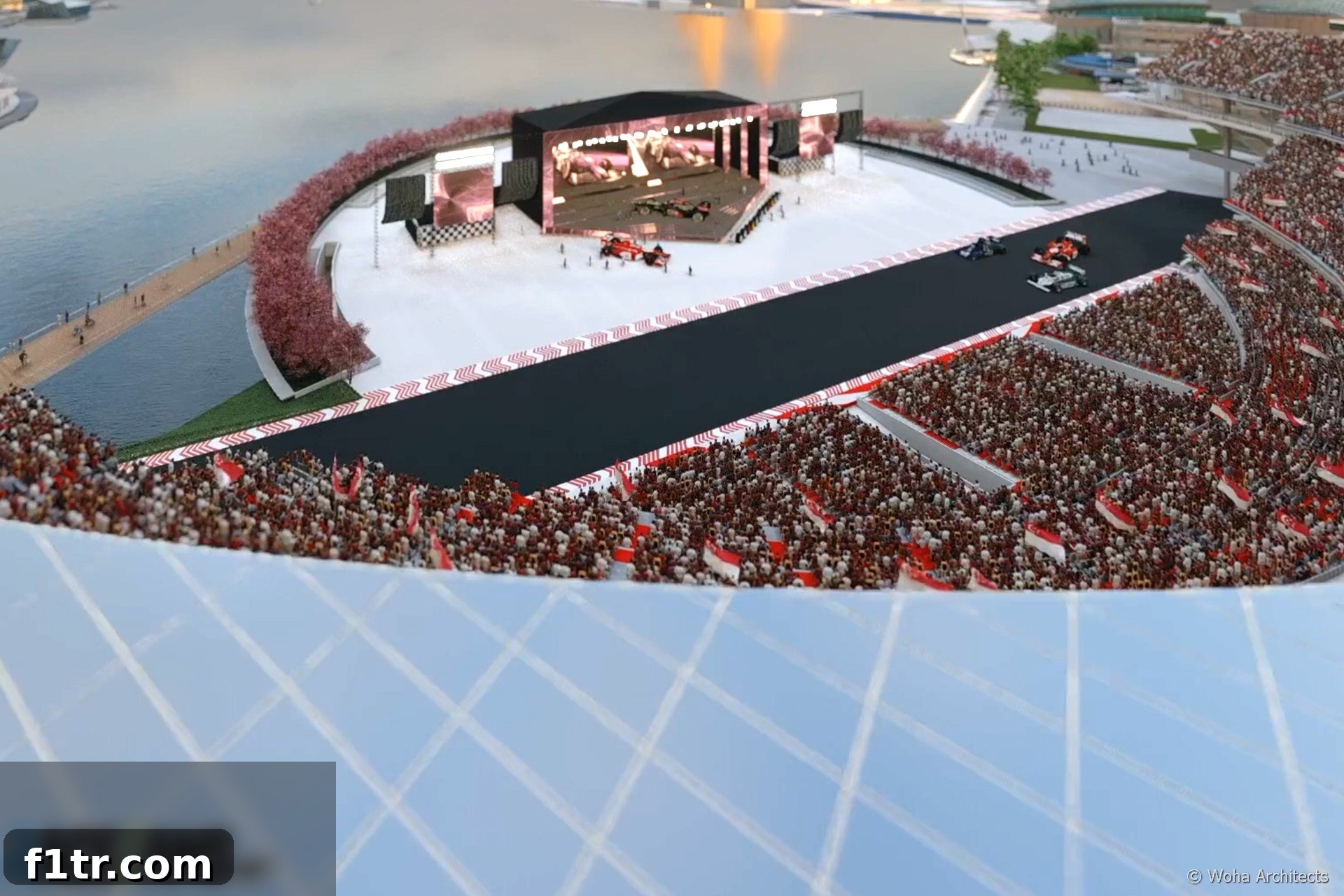
Upon its grand completion, the grandstand overlooking the new NS Square will undergo substantial expansion. Plans include increasing its seating capacity to an impressive 30,000 spectators. Renderings provided by the acclaimed architects Woha offer a tantalizing glimpse into the future: once construction concludes, Formula 1 cars are depicted racing past these vastly expanded grandstands, exiting underneath them, much as they did in the circuit’s original design. This suggests a thoughtful integration of the circuit into the new urban infrastructure, ensuring the enduring spectacle of the Singapore Grand Prix.
A New Spectacle: Drawing Parallels with Foro Sol
The revised section of the Marina Bay circuit is poised to cultivate an atmosphere reminiscent of the electrifying Foro Sol stadium section at the Autodromo Hermanos Rodriguez in Mexico City. The Mexican Grand Prix is renowned for its unique stadium sequence, a fan-favorite element that transforms a standard race track into an immersive arena experience. The Foro Sol stadium, primarily utilized for baseball matches and vibrant music concerts, seamlessly integrates into the circuit for both Formula 1 and Formula E races. In both series, cars power through the stadium in the latter stages of the lap before approaching the pit lane, creating an unparalleled visual and auditory experience for the thousands of fans gathered within its confines.
Furthermore, the Foro Sol stadium section holds a special place as the traditional site for the Formula 1 podium ceremony, where trophies are proudly awarded to the top three finishers at the conclusion of the grand prix. This iconic moment unfolds directly in full view of the jubilant spectators in the grandstands, amplifying the post-race celebration. The ambition for Marina Bay is to replicate this potent blend of high-octane racing and intimate fan engagement, leveraging the new NS Square to create a comparable, unforgettable spectator zone that elevates the Singapore Grand Prix experience to new heights.
Profound Impact on Racing Dynamics and Lap Times
The modifications to the Marina Bay circuit are not merely cosmetic; they are expected to have a profound and significant impact on lap times and the overall racing dynamics during the Singapore Grand Prix. Historically, this race has earned a reputation as one of the longest and most physically demanding events on the Formula 1 calendar. This characteristic stems from the notoriously slow average lap speed across its many corners and the high frequency of Safety Car interventions, which often push the race duration perilously close to the maximum two-hour time limit allowed by regulations.
The strategic removal of the four corners that previously navigated the floating platform over the marina will undoubtedly achieve several key objectives. Firstly, it will significantly reduce the overall lap times around the circuit. A shorter, faster lap means fewer laps completed within the two-hour window, potentially leading to more racing action and less risk of the race ending prematurely due to the time limit. Secondly, and perhaps more excitingly from a racing perspective, this simplification of the final sector could create entirely new opportunities for overtaking. The revised approach into the right-hander of turn 20, now preceded by a much longer and faster straight, may become a prime braking zone and a critical point for drivers to challenge their rivals. This change could introduce an element of unpredictability and heightened excitement to a race already celebrated for its dramatic moments.
From a driver’s perspective, a faster, less complex final sector could reduce driver fatigue over the course of the gruelling race, allowing them to push harder for longer. For teams, the altered layout will necessitate a complete re-evaluation of car setups, tire strategies, and fuel consumption models. The balance between aerodynamic downforce for the remaining technical sections and straight-line speed for the new, extended straight will be a critical consideration. This adaptation presents a fascinating challenge, adding another layer of strategic depth to the Singapore Grand Prix.
The Evolution of Street Circuits in Formula 1
The impending transformation of the Marina Bay Street Circuit is also indicative of a broader trend within Formula 1: the continuous evolution and adaptation of its venues, particularly urban street circuits. Unlike purpose-built tracks, street circuits operate within the constraints and opportunities of existing city infrastructure. This often means they are subject to urban development projects, requiring track layouts to adapt. Singapore has been a pioneer in night racing and showcases the unique challenges and excitement of bringing F1 into the heart of a bustling metropolis. The decision to integrate the racing experience with a major public infrastructure project like NS Square demonstrates a commitment to both city development and sporting spectacle.
Street circuits, by their very nature, offer a unique blend of glamour, challenge, and accessibility for fans. Their temporary or semi-permanent nature means they are constantly evolving. The changes at Marina Bay highlight the dynamic relationship between Formula 1 and its host cities, where the circuit can be both an iconic racing venue and a catalyst for urban renewal. This iterative process ensures that as cities grow and modernize, their respective Grand Prix events can evolve alongside them, offering fresh challenges for drivers and renewed experiences for spectators.
A Glimpse into the Future: What to Expect
It is important to note that both the temporary modifications for the upcoming race and the final, post-construction layout of the section are subject to the stringent approval processes of the FIA (Fédération Internationale de l’Automobile). The FIA’s rigorous safety and technical standards must be met to ensure the circuit remains fit for Formula 1 racing. This multi-stage approval process guarantees that any changes enhance, rather than compromise, the safety and integrity of the event.
The long-term vision for the Singapore Grand Prix, post-2026, promises a unique spectacle where cutting-edge racing unfolds against the backdrop of a state-of-the-art urban development. The integration of NS Square with its expansive grandstands will undoubtedly cement Singapore’s reputation as a premier destination for motorsport and entertainment. This forward-thinking approach underscores the commitment to keeping the Marina Bay Street Circuit at the forefront of Formula 1 circuits, offering a blend of speed, strategy, and breathtaking spectator engagement for decades to come.
Conclusion: Singapore’s Bold Move for F1’s Future
The forthcoming changes to the Marina Bay Street Circuit represent a bold and strategic move by the Singapore Grand Prix organizers. By embracing the necessary urban development of NS Square, they are not only modernizing a crucial part of the city’s infrastructure but also actively shaping the future of their Formula 1 event. The temporary layout for 2023 promises an immediate shift in racing dynamics, while the long-term vision of an integrated stadium section, drawing inspiration from successful models like Foro Sol, hints at an even more spectacular and fan-engaging experience. As the circuit prepares for this significant transformation, the anticipation builds for faster laps, new overtaking challenges, and an enhanced spectacle at one of Formula 1’s most iconic night races.
Related Articles: Exploring the 2022 F1 Season
- Mercedes told me “you’re wrong” about 2022 car’s problems – Hamilton
- FIA confirms all 10 F1 teams complied with 2022 cost cap
- Steiner “not ashamed” of panning “slow” Schumacher in Drive to Survive
- Albon believes year out of F1 improved him as a driver
- Hamilton sees diversity gains in F1 years on from his ‘traumatising’ experience of racism
Browse all 2022 F1 season articles