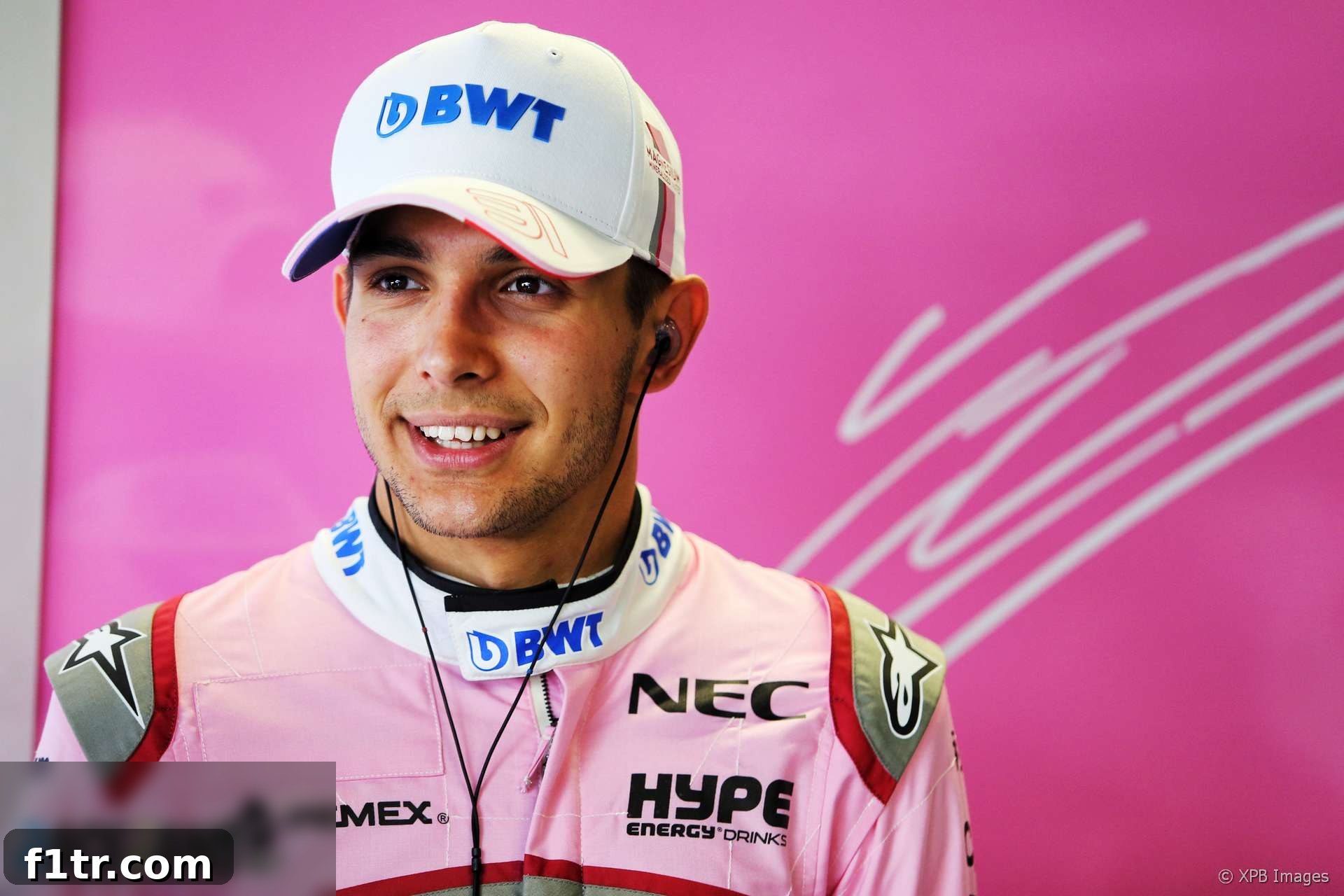
Esteban Ocon’s F1 Future: Navigating the 2019 Driver Market Labyrinth
The 2019 Formula 1 season presented a significant crossroads for highly-touted talent Esteban Ocon. As the driver market solidified, Ocon found himself precariously positioned, with his only realistic shot at a race seat hinging on a decision from Williams Racing. Should that opportunity not materialize, the prospect of a year on the sidelines loomed large, a difficult pill to swallow for a young driver with such immense potential.
For Ocon, the Mercedes-backed protégé, securing the second seat alongside rookie George Russell at Williams was paramount. However, the intricacies of Formula 1’s driver landscape, often intertwined with commercial and financial considerations, meant his destiny was not entirely in his own hands. Mercedes team principal Toto Wolff, a staunch advocate for Ocon, openly acknowledged the diminishing likelihood of a race seat for his junior driver in 2019, hinting at a potential reserve role across multiple teams.
The Williams Conundrum: A Pivotal Decision
Williams Racing, a team with a storied history but facing significant financial and performance challenges at the time, was central to Ocon’s fate. Their decision for the second driver slot was a complex one, balancing driving talent, experience, and crucially, sponsorship. While Ocon brought undeniable skill and the backing of Mercedes-Benz, Williams’ deputy team principal Claire Williams and chief technical officer Paddy Lowe had to weigh all options, including other drivers who potentially offered crucial financial backing.
Toto Wolff articulated the situation clearly, stating, “It’s not in our hands.” He emphasized that the ultimate choice rested with Williams’ leadership. “If, miraculously, a door opens at Williams, he’s going to take it. But it’s in Claire and Paddy’s hands and not in ours.” This statement underscored the delicate balance of power within F1, where even a driver backed by a championship-winning team like Mercedes could be subject to the independent decisions of a rival constructor.
The pressure on Williams was immense. After a challenging 2018 season, the team needed a strong driver lineup to aid development and boost morale. Ocon, with his two seasons of F1 experience and consistent performances, represented a low-risk, high-reward option from a pure talent perspective. However, the financial realities often dictate such decisions, making the choice between a highly-rated, externally funded driver and one bringing direct sponsorship a perpetual dilemma for independent teams.
The Force India Departure: A Foregone Conclusion
Ocon’s place at Force India, where he had impressed significantly over the previous two seasons, was already destined for change. The team, which had faced administration in mid-2018, was subsequently acquired by a consortium led by Canadian billionaire Lawrence Stroll. This acquisition naturally paved the way for his son, Lance Stroll, to move from Williams to Force India (which would later be rebranded as Racing Point). This move, driven by the new ownership, created a ripple effect in the driver market, directly displacing Ocon from his competitive seat.
Despite the change in ownership and the clear trajectory for Lance Stroll, Force India’s management maintained a degree of professional courtesy. They stated that they would not officially confirm the identity of their second driver alongside Sergio Perez until Ocon’s future plans had been formally announced. This gesture, while not altering Ocon’s fate, highlighted the sensitivity surrounding such high-stakes career transitions within the sport.
For Ocon, losing his seat at Force India was a particularly bitter blow. He had demonstrated his speed, race craft, and consistency, often going head-to-head with his experienced teammate Perez. His performances had cemented his reputation as one of F1’s brightest young stars, making the prospect of a year out of the cockpit even more frustrating for him and his supporters.
The Reserve Driver Role: A Necessary Evil for a Promising Career
With a full-time race seat looking increasingly improbable, the role of a reserve driver emerged as Ocon’s most likely path for the 2019 F1 season. Toto Wolff outlined Mercedes’ plan: “I think we have pretty much have [Ocon] set for an off-season supporting us and Force India. Doing lots of simulator work, being a reserve driver for maybe us and Force India. And getting ready for the year after.”
While not ideal for a driver of Ocon’s caliber, a reserve driver position offers critical benefits. It keeps the driver deeply integrated within the Formula 1 ecosystem, maintaining vital connections with engineers, strategists, and team personnel. Simulator work is invaluable, allowing the driver to hone their skills, understand new car developments, and stay sharp without the pressure of race weekends. This constant engagement ensures that when an opportunity arises, the driver is fully prepared to step back into the cockpit.
However, the drawbacks are equally significant. The lack of actual race mileage means a loss of competitive edge, the thrill of wheel-to-wheel combat, and the crucial experience gained from battling on track. For a driver whose career momentum was building, a year on the sidelines could be perceived as a stagnation, a pause in an otherwise upward trajectory. Yet, for many young talents unable to secure a permanent slot, it’s often the best available option to remain relevant and visible within the sport.
Advert | Become a Supporter & go ad-free
Mercedes’ Junior Driver Program: Balancing Talent and Opportunity
Esteban Ocon’s situation also highlighted the challenges faced by top teams like Mercedes in managing their vast pool of junior talent. Despite nurturing and developing drivers through feeder series, finding them a permanent home in Formula 1 can be incredibly difficult due to the limited number of seats and the complex interplay of team politics, sponsorships, and performance requirements. Mercedes’ commitment to Ocon was clear, with Wolff repeatedly expressing his desire to see him race.
The strategic placement of Ocon as a potential reserve driver for both Mercedes and Force India (soon to be Racing Point) demonstrated a clever approach to keeping him engaged and valuable to both outfits. It provided Mercedes with a top-tier backup driver for their own team while also offering a familiar and highly capable option to a partner team, maintaining Ocon’s exposure to different engineering philosophies and environments.
Ultimately, the plan was always for Ocon to use 2019 as a springboard for a return in 2020. This strategic “gap year” was designed to strengthen his ties with Mercedes, ensure he remained at peak performance through rigorous simulator and testing duties, and position him favorably for future openings in the competitive F1 landscape. His talent was never in doubt, only the immediate availability of a suitable seat.
The Broader Impact on the 2019 F1 Driver Market
Ocon’s challenging predicament was emblematic of a highly competitive 2019 F1 driver market, where musical chairs played out with significant consequences for many. The ripple effects of Lawrence Stroll’s acquisition of Force India, coupled with Williams’ financial considerations, created a bottleneck for talented drivers. While George Russell, another Mercedes junior, secured a seat at Williams, it came at the expense of others, including Ocon and potentially Sergey Sirotkin.
This period underscored the harsh realities of Formula 1: raw talent, even when undeniable, is not always sufficient. Commercial interests, team politics, and the sheer scarcity of opportunities often dictate who gets a chance and who is forced to wait. For fans, Ocon’s potential absence from the grid was a source of frustration, as many recognized his immense promise and believed he deserved a permanent place among the elite.
Looking Ahead: Ocon’s Resilience and Future Prospects
The 2019 season, therefore, represented a temporary setback rather than a definitive end for Esteban Ocon. His resilience, determination, and unwavering commitment to Formula 1 were evident throughout this challenging period. The backing of Mercedes-Benz, a powerful force in the sport, provided a crucial safety net, ensuring he remained within the F1 family and well-prepared for any future opportunities.
His story became a testament to the cutthroat nature of securing a spot at the pinnacle of motorsport, where even the most gifted drivers might have to endure a period of waiting. However, the expectation from within the paddock and among fans alike was clear: Esteban Ocon was too good to stay out of a race seat for long. His time as a reserve driver would serve as an intense preparation period, sharpening his skills and solidifying his resolve for an inevitable return to the Formula 1 grid.
View the current list of 2019 F1 drivers and teams
Stay Connected with RaceFans for the Latest F1 News
Don’t miss anything new from RaceFans! Follow us on social media for real-time updates and in-depth analysis:
- Join RaceFans on Facebook
- Follow RaceFans on Twitter
- Get daily email updates from RaceFans
Advert | Become a RaceFans supporter andgo ad-free
Related Articles: Insights into the 2019 F1 Season and Beyond
Explore more articles related to the 2019 F1 season and key events:
- Crying in the Melbourne car park at 2019 grand prix was my career low – Ocon
- McLaren Racing reports reduced £71 million loss in 2019
- Kvyat: Hockenheim podium last year was “my biggest achievement” so far
- How the FIA’s new encrypted fuel flow meter targets Ferrari’s suspected ‘aliasing’ trick
- “He smashed my office door”: 23 must-see moments from ‘Drive to Survive’ season two
Browse all 2019 F1 season articles