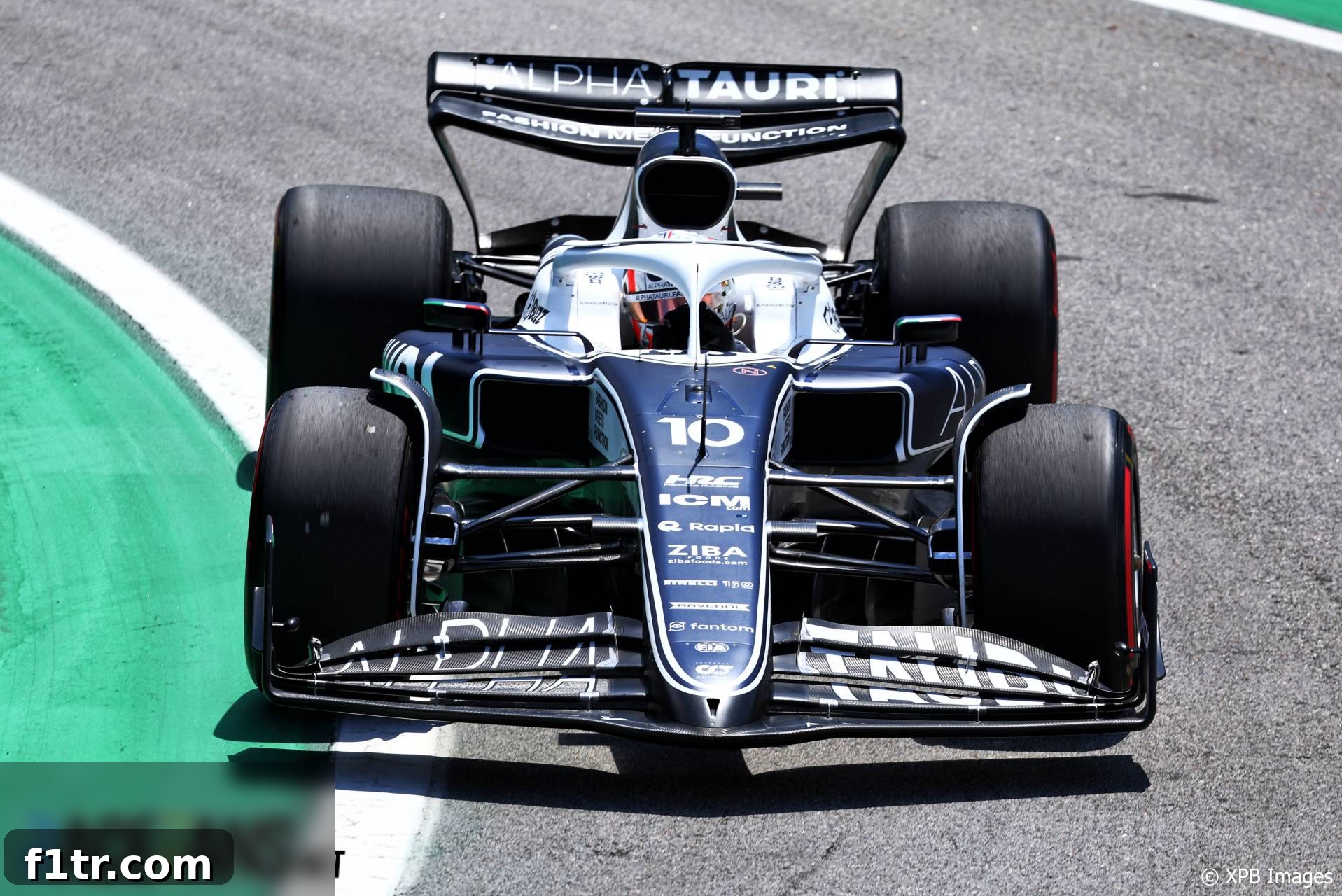
Pierre Gasly, a prominent figure in Formula 1, expressed profound disappointment regarding AlphaTauri’s performance throughout the 2022 F1 season, attributing their struggles primarily to a “massively overweight” car. The French driver, reflecting on a challenging year, highlighted how the team’s inability to shed crucial kilograms had fundamentally compromised their competitive edge, turning what was hoped to be a breakthrough season into a period of consistent underachievement.
AlphaTauri’s Weight Burden: A Decisive Performance Handicap
According to Gasly, the AlphaTauri AT03 car carried an estimated 12 to 13 kilograms of excess weight throughout the entire season. This substantial deviation from the F1 minimum weight limit of 798kg (for 2022) proved to be a critical disadvantage. In the high-stakes world of Formula 1, where tenths of a second separate success from mediocrity, such a weight penalty is catastrophic. Gasly estimated that this additional mass translated to a performance deficit of approximately “three and a half tenths per lap.”
The impact of this weight penalty on a Formula 1 car is multifaceted and profound. Every extra kilogram demands more energy to accelerate, requires stronger braking forces, and places greater stress on tires and suspension components. It affects the car’s balance, agility, and overall aerodynamic efficiency. For AlphaTauri, this meant a constant battle against physics, struggling to unlock the car’s true potential when burdened by such a significant handicap. Engineers strive relentlessly to bring their cars as close to the minimum weight as possible, as every gram saved can be reinvested in ballast placement for optimal weight distribution, or simply contribute to raw lap time. The inability to achieve this fundamental target put AlphaTauri at a severe disadvantage from the very first race.
Qualifying Setbacks and Race Day Struggles: The Snowball Effect
The consequences of the AT03’s excessive weight were most acutely felt in qualifying sessions. Gasly lamented the “number of times we missed Q3 by a tenth or two,” estimating this occurred roughly “10 times this season.” Accessing Q3 is not merely about prestige; it provides a significant advantage in grid position, allowing drivers to start higher up the field, avoid midfield skirmishes, and execute more effective race strategies. Consistently missing out on the top 10 due to a fractional time deficit had a cumulative negative effect on AlphaTauri’s weekend outcomes.
The “snowball effect” of being overweight extended deep into race days. Gasly vividly described it as “running with a backpack,” carrying 13 to 14 kilos of unnecessary load for the entire duration of a Grand Prix. This excess weight directly led to increased tire degradation, as the tires were subjected to greater forces and temperatures. Overheating tires not only reduce grip and performance but also limit strategy options, often forcing drivers to make additional pit stops or manage their pace more conservatively. Compared to the previous year, where Gasly finished in the points 15 times, the 2022 season saw him achieve points finishes on only six occasions. This stark reduction underscores the profound impact the weight issue had on the team’s ability to convert potential into tangible results, often relegating them to the fringes of the points-scoring positions despite valiant efforts.
Shattered Expectations: The 2022 Regulations and AlphaTauri’s Hopes
The team’s slump was particularly bitter for Gasly, who had harbored exceptionally high hopes for the 2022 season. The radical overhaul of technical regulations, primarily centered around the return of ground effect aerodynamics, was intended by Formula 1 to “put the field closer together” and create more competitive racing. Many midfield teams, including AlphaTauri, saw this as an unprecedented opportunity to close the gap to the front-runners and challenge for higher positions.
Furthermore, the introduction of a budget cap was expected to level the playing field, preventing larger teams from simply outspending their rivals on development. Gasly openly stated, “My hopes to have the best year for AlphaTauri were never as high as they were at the start of the season. I really thought, okay, we have our chances, budget caps are coming in, so we have no reasons not to outperform all the midfield teams.” This optimism stemmed from AlphaTauri’s strong performance in 2021, where they often showcased impressive pace and secured valuable points. The team had built considerable momentum, and with Gasly himself delivering stellar performances, the stage seemed set for an even more successful campaign under the new rules. The reality, however, proved to be a crushing disappointment, failing to capitalize on the regulatory reset that was designed to benefit teams like theirs.
The Stalled Development Race: A Missed Opportunity
While an unpromising start to the championship didn’t immediately concern Gasly, he acknowledged the critical importance of in-season development in a year with entirely new regulations. “I knew it would be a race of development through the year,” he remarked. “I just knew it doesn’t really matter where you start, you just needed to put this development on the car, race after race.” In Formula 1, the car that starts the season is rarely the same car that finishes it, as teams constantly introduce upgrades to improve performance. The 2022 season, with its completely new car philosophy, placed an even greater emphasis on effective and rapid development.
Unfortunately, AlphaTauri failed to keep pace in this crucial development race. While other teams managed to bring significant upgrades that improved their cars throughout the year, AlphaTauri struggled to deliver meaningful performance enhancements that could address their fundamental issues, particularly the chronic overweight problem. This lack of successful in-season development compounded their initial disadvantage, leaving them further behind as the season progressed. The failure to bring effective updates meant that the AT03 remained hindered by its weight, unable to exploit any potential improvements in other areas. This stagnation was a key factor in their inability to climb the constructors’ standings and consistently challenge their midfield rivals.
The AT03: A Fundamentally Sound Design Hampered by One Flaw
Despite the overwhelming challenges, Pierre Gasly remains convinced that the basic design of the AT03 held genuine promise. “I do believe the core of the car is not bad,” he stated. “The core of the car is great, but we’ve just been massively overweight all season.” This suggests that the fundamental aerodynamic concepts, chassis design, and mechanical packaging of the car were potentially competitive. However, the inability to meet the minimum weight target effectively nullified any inherent strengths the design might have possessed.
The problem of being overweight can stem from various factors, including material choices, structural reinforcement requirements, or even design compromises made early in the development cycle. Regardless of the specific cause, for Gasly, this issue was unequivocally the “main issue this season.” It overshadowed everything else, preventing the team from performing anywhere near their desired level or his personal expectations. The talent of the driver, the strategic acumen of the pit wall, and the dedication of the mechanics can only go so far when the very foundation of the car is compromised by a critical flaw like excessive weight. Gasly’s comments paint a picture of a season where a potentially good car was consistently held back by a single, unresolvable engineering challenge.
Pierre Gasly’s Farewell: A Challenging End to an Era
The 2022 Abu Dhabi Grand Prix marked Pierre Gasly’s final race for AlphaTauri, bringing an end to a significant chapter in his Formula 1 career. After seasons filled with memorable performances, including a sensational victory at the 2020 Italian Grand Prix, this challenging year provided a bittersweet farewell. His move to Alpine for the 2023 F1 season represents a new beginning, but his parting comments undoubtedly serve as a crucial reflection on the hurdles AlphaTauri faced. The season will be remembered as one where the team failed to capitalize on regulatory changes, largely due to a persistent and unaddressed engineering flaw, impacting not just the team’s standing but also Gasly’s final performances with them.
2022 Abu Dhabi Grand Prix
- Norris dissatisfied with solitary podium finish: “One isn’t enough”
- Verstappen achieves most dominant title win since Vettel in 2013
- Magnussen’s experience makes him ‘positive’ ousted Schumacher can return to F1
- Overtaking still difficult at Yas Marina despite 2021 track changes, say drivers
- Depressing to consider points lost says Gasly after AlphaTauri slump to ninth
Browse all 2022 Abu Dhabi Grand Prix articles