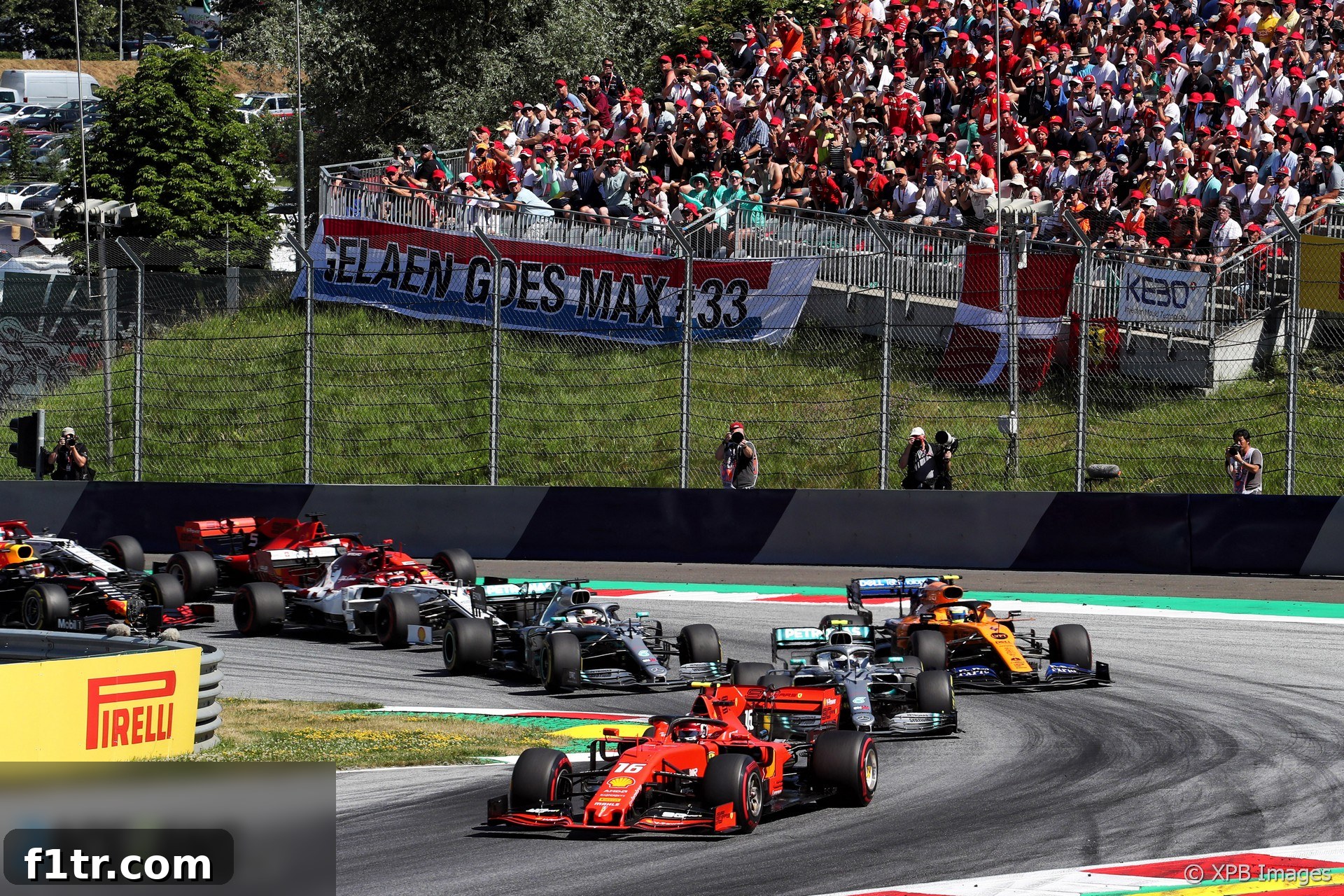
The highly anticipated 2020 Formula 1 season, which faced unprecedented delays, is now preparing for a long-awaited launch. With its projected start just weeks away, the motorsport world is buzzing with questions: What will the revised championship calendar ultimately look like? How will the sport navigate the complexities of a global pandemic to deliver a thrilling season for fans worldwide?
The initial hopes for the season were dashed just moments before lights out, as teams assembled in Melbourne for what was intended to be the opening Grand Prix. The abrupt cancellation of that event, followed by the indefinite postponement of the subsequent nine rounds, created one of the longest gaps between consecutive races in Formula 1 history. Fans and competitors alike have endured a hiatus stretching over 200 days since the final chequered flag of the previous season, a stark reminder of the global challenges faced by all major sports.
The last Grand Prix to be officially called off was the prestigious French Grand Prix on April 27th. However, Formula 1 management remains optimistic, with plans for the Austrian Grand Prix to kickstart the season, albeit under strict conditions and without spectators. This marks a significant shift for a sport known for its vibrant crowd atmosphere, highlighting the extraordinary measures being taken to ensure the championship can proceed. The proposed Austrian double-header, taking place at the Red Bull Ring, will serve as a critical test case for the feasibility of behind-closed-doors events in F1.
Advert | Become a Supporter & go ad-free
In contrast to Formula 1’s international logistical hurdles, other racing series like NASCAR have already resumed competition, demonstrating the varying degrees of complexity involved in restarting different sports. NASCAR, primarily operating within a single country, faces fewer international travel restrictions and quarantine protocols, allowing for a quicker return to racing. F1, with its global footprint, featuring teams and events scattered across multiple continents, confronts a far more intricate web of national regulations, border controls, and health mandates, making its restart a monumental undertaking.
Building on the Austrian initiative, Silverstone, the historic home of British motorsport, has also confirmed its intention to host two Formula 1 races back-to-back. This strategy of holding multiple events at a single venue is designed to condense the calendar and minimize international travel, significantly reducing logistical and health risks. F1 is reportedly aiming for a minimum of 15 races to fulfill crucial television broadcasting contracts, making these double-headers indispensable. The potential for an unprecedented “quadruple-header” of races, combining the Austrian and British rounds, underscores the sport’s innovative approach to salvage the season.
Following this intensive start, the original calendar included the Hungarian Grand Prix at the Hungaroring. While a quintuple-header might be pushing the limits for teams, the proposed schedule would offer a much-needed two-week break after Silverstone. The promoter of the Hungarian Grand Prix has confirmed that their event, if it goes ahead, will also be held behind closed doors. This commitment from various European circuits demonstrates a collective willingness within the sport to adapt to the new reality, prioritizing the safe resumption of racing over traditional fan attendance. The summer break, typically a fixed period for factory shutdowns, has been strategically scrapped to create more flexibility for rescheduling additional European rounds.
Among the European races vying for a slot, the Spanish Grand Prix at Circuit de Catalunya previously faced uncertainty, having only secured a one-year contract extension last year. However, the recent announcement of Carlos Sainz Jnr’s move to Ferrari for 2021 could significantly boost Spain’s importance to Formula 1. The market, already strong during Fernando Alonso’s prime, could regain its lucrative status, making the Spanish Grand Prix a priority for rescheduling. Similarly, Formula 1 is keen to stage the highly anticipated return of the Dutch Grand Prix at Zandvoort, its first in 35 years. Despite potential restrictions preventing stands from being packed with the devoted throngs of Max Verstappen fans, the symbolic importance of this event for the sport’s growing popularity makes it a strong contender for a rescheduled date.
The Belgian Grand Prix, originally set for August 30th, faced jeopardy following an extension of sporting event restrictions in the country. Yet, positive indications from the president of the Wallonia region, where Spa-Francorchamps is located, suggest a potential exemption for the race, provided it proceeds without spectators. This nuanced approach, balancing public health with economic and sporting interests, is characteristic of the challenges F1 faces across Europe. If Italy’s round at Monza, scheduled one week later, can also proceed, Formula 1 will have successfully reinstated the majority of its traditional European season, a critical achievement given the initial widespread cancellations.
Nevertheless, some high-profile omissions remain. The Monaco Grand Prix, a jewel in the F1 crown, will not be rescheduled due to the immense logistical difficulties of constructing its temporary street circuit within the revised timeframe. The French Grand Prix, while officially ‘cancelled’, presented a curious case. The carefully worded statement left open a fascinating possibility: Paul Ricard could potentially host a race this year, provided it is not formally titled the ‘French Grand Prix’, perhaps a contractual workaround to deliver an event at the venue without triggering specific contractual obligations or penalties tied to the official GP designation.
Advert | Become a RaceFans supporter andgo ad-free
Adding another layer of intrigue, Formula 1 Chairman and CEO Chase Carey recently disclosed that multiple venues not originally featured on the 2020 F1 calendar are now under consideration for hosting races. This proactive search for alternative locations underscores F1’s commitment to delivering a robust championship. Hockenheim, a historic German circuit, emerges as an obvious and popular option, with German media reports even suggesting the possibility of hosting two races there. Such a move would not only revive Germany’s presence in F1 but also provide another reliable, permanent venue capable of hosting events under current restrictions.
This flexibility could prove crucial, particularly for events like the Singapore Grand Prix. The complexities of establishing a temporary street circuit in the heart of a bustling city, coupled with stringent urban restrictions and international travel limitations, make it highly improbable that Singapore could proceed if not on its original September 20th date. While permanent circuits can more readily accommodate behind-closed-doors events, street circuits pose numerous additional logistical and public health challenges that often make them unviable in the current climate.
Beyond the European leg and potential new additions, the precise structure of the latter part of the calendar remains highly speculative. However, recent insights from Chase Carey indicate a strategic shift for the season’s conclusion. The finale at Yas Marina in Abu Dhabi is expected to be postponed from its original November 29th date to December 13th. The highly lucrative Bahrain Grand Prix, also postponed, is anticipated to take place on the weekend immediately preceding the Abu Dhabi showdown, creating a thrilling Middle Eastern double-header to cap off the extraordinary 2020 season. This strategy aims to maximize revenue from key regions and ensure a climactic end to the championship.
While other racing series have managed to publish more definitive schedules for their restructured calendars, Formula 1’s plans, by necessity, remain far more fluid and dynamic. This adaptability is a direct consequence of the sport’s inherently global nature and the continuing uncertainties surrounding how effectively different countries have contained the pandemic. The virus forced the complete abandonment of every Grand Prix originally scheduled for the first half of 2020, compelling F1 to constantly re-evaluate and adjust its strategy based on evolving global health guidelines and national travel restrictions. The challenge for F1 is not just to race, but to do so safely and sustainably across diverse international landscapes, making the 2020 calendar a constantly evolving puzzle.
Advert | Become a RaceFans supporter andgo ad-free
Where can F1 accommodate postponed races? A Dynamic Calendar Outlook
The following table outlines the current understanding of the potential 2020 Formula 1 calendar, highlighting confirmed multi-race venues, original dates for key events, and other postponed races seeking a slot. Please note that this schedule remains highly provisional and subject to change based on evolving global health and travel advisories.
| Sunday | Venue | Notes |
|---|---|---|
| 05/07/2020 | Red Bull Ring | Race one |
| 12/07/2020 | Red Bull Ring | Race two |
| 19/07/2020 | Silverstone | Race one |
| 26/07/2020 | Silverstone | Race two |
| 02/08/2020 | ||
| 09/08/2020 | Hungaroring | Original race date (Behind closed doors) |
| 16/08/2020 | ||
| 23/08/2020 | ||
| 30/08/2020 | Spa-Francorchamps | Original race date (Exemption possible, without spectators) |
| 06/09/2020 | Monza | Original race date |
| 13/09/2020 | ||
| 20/09/2020 | Singapore | Original race date (Unlikely to proceed) |
| 27/09/2020 | Sochi Autodrom | Original race date |
| 04/10/2020 | ||
| 11/10/2020 | Suzuka | Original race date |
| 18/10/2020 | Circuit of the Americas | Original race date |
| 25/10/2020 | ||
| 01/11/2020 | Autodromo Hermanos Rodriguez | Original race date |
| 08/11/2020 | ||
| 15/11/2020 | Interlagos | Original race date |
| 22/11/2020 | ||
| 29/11/2020 | ||
| 06/12/2020 | Bahrain International Circuit | Postponed (Expected prior to finale) |
| 13/12/2020 | Yas Marina | Postponed (Expected season finale) |
| 20/12/2020 | ||
| 27/12/2020 | ||
| 03/01/2021 | ||
| 10/01/2021 | ||
| 17/01/2021 | ||
| 24/01/2021 | ||
| 31/01/2021 | ||
| Other key venues looking to reschedule | ||
| Hanoi | ||
| Shanghai International Circuit | ||
| Zandvoort | ||
| Circuit de Catalunya | ||
| Baku City Circuit | ||
| Circuit Gilles Villeneuve | ||
| Paul Ricard* | ||
*Paul Ricard’s potential return may involve a specific non-‘Grand Prix’ title to circumvent contractual issues.
Go ad-free for just £1 per month>> Find out more and sign up
More on the 2020 F1 season
- Grosjean to make F1 test return tomorrow for first time since Bahrain horror crash
- Pictures: Wrecked chassis from Grosjean’s Bahrain fireball crash to go on display
- Bottas vs Rosberg: Hamilton’s Mercedes team mates compared after 78 races each
- F1 revenues fell by $877 million in Covid-struck 2020 season
- Hamilton and Mercedes finally announce new deal for 2021 season
Browse all 2020 F1 season articles