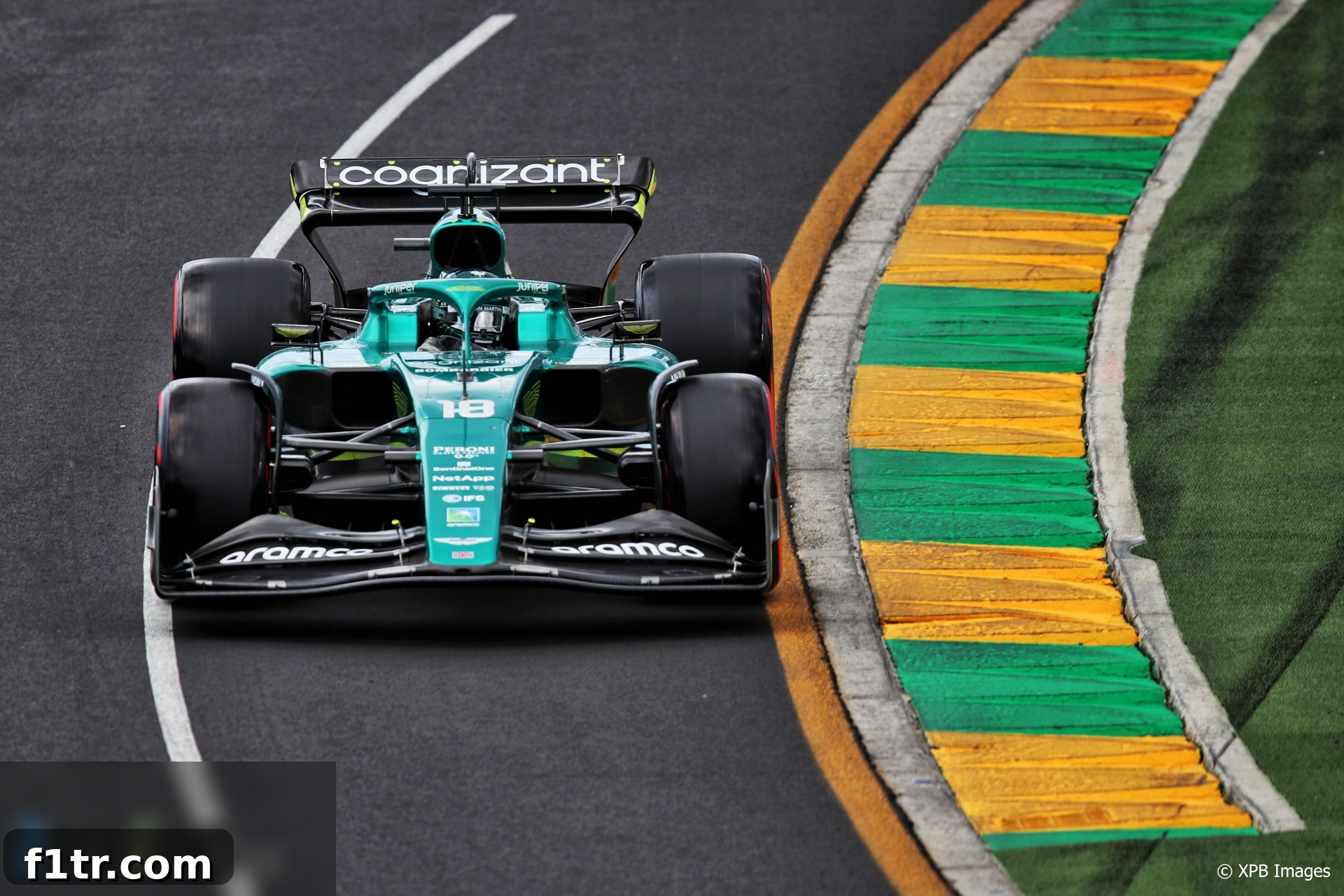
Lance Stroll Nears Race Ban After Controversial Australian GP Penalty
Lance Stroll, the Aston Martin driver, found himself in hot water at the Australian Grand Prix, receiving his eighth penalty point from the Formula 1 stewards. The decision came after an incident involving Valtteri Bottas, where Stroll was judged to have breached F1’s stringent defensive driving regulations. This latest penalty brings him dangerously close to a potential one-race ban, a significant concern for both the driver and his team.
The Incident: A Double Move Against Bottas
The core of the issue stemmed from Stroll’s defensive maneuvers against Alfa Romeo’s Valtteri Bottas on the main straight during the race. According to the stewards’ official explanation, Stroll, who was ahead of Bottas at the time, made two distinct moves to defend his position. Initially, he shifted to the right to block a potential overtake from Bottas. He then returned to the racing line before moving right a second time to counter another perceived threat from the Finnish driver.
The stewards’ statement detailed: “On the main straight, car 18 (Lance Stroll) was ahead of car 77 (Valtteri Bottas). Stroll moved right to defend against a potential overtake from Bottas. Stroll returned to the racing line and then moved to the right for a second time to defend from another move by Bottas. The second move breaches the regulation which prohibits more than one change of direction to defend a position.”
Understanding F1’s Defensive Driving Rules
Formula 1 regulations are meticulously designed to ensure fair play, promote exciting racing, and, crucially, maintain driver safety. The rule specifically prohibiting more than one change of direction when defending a position is a cornerstone of this framework. Its primary purpose is to prevent overly aggressive or unpredictable defensive driving that could lead to dangerous collisions, especially at high speeds on long straights. Drivers are allowed one move to defend their line, but once they commit to that move, they must hold it or return to the racing line without another defensive shift. This ensures that the attacking driver has a clear understanding of their opponent’s trajectory, allowing for safer overtaking attempts.
Implications of Stroll’s Eighth Penalty Point
Beyond the immediate five-second time penalty issued to Stroll during the race, which ultimately had no bearing on his finishing position, the penalty point carries far greater significance. This is Stroll’s eighth penalty point accumulated within the current 12-month period. Under Formula 1 regulations, any driver who accrues 12 penalty points within a rolling 12-month timeframe automatically receives a one-race ban. Stroll is now just four points away from this critical threshold, meaning any further infractions could see him sidelined for a Grand Prix weekend.
The F1 penalty point system was introduced to hold drivers accountable for repeated infringements of sporting regulations. It serves as a deterrent against consistent rule-breaking, aiming to foster a higher standard of driving conduct across the grid. Each penalty point remains on a driver’s super license for 12 months from the date of issuance. As points expire, drivers can gradually reduce their tally, but until then, they race with the constant threat of a ban looming.
Stroll’s Perspective: Penalty Without Impact on Position
When questioned about the penalty, Lance Stroll acknowledged its occurrence but downplayed its effect on his race result. “I don’t think the penalty made a difference,” he stated. “We had like 20 seconds to the car behind or something. I don’t know exactly how much, but it cleared the car behind, so didn’t make a difference, the penalty.” This sentiment highlighted that while the infraction occurred, the five-second addition to his race time didn’t alter his final classification, as he had a significant gap to the car behind him.
However, Stroll’s comments also painted a broader picture of a challenging race for the Aston Martin team. He admitted to a lack of pace and ongoing balance issues with his AMR22, particularly with tyre management. “We tried to pick up a point. We just didn’t really have the pace. The balance was not great, we were eating up the front tyres and got swallowed up at the end.” This indicates that the team’s struggles ran deeper than just the single incident with Bottas, suggesting underlying performance challenges with the car.
The Wider Context of the 2022 Australian Grand Prix
The 2022 Australian Grand Prix was a race filled with drama, strategic battles, and a dominant performance from Ferrari’s Charles Leclerc. For many teams, including Aston Martin and Mercedes, it also exposed significant engineering challenges, particularly with the “porpoising” phenomenon. Aston Martin’s AMR22, like Mercedes’ W13, visibly struggled with the high-frequency vertical oscillation, which severely hampered driver confidence and overall performance. This issue, as highlighted in related discussions, prevented teams from fully exploiting their car’s potential, impacting their ability to compete for points.
Other notable storylines from the race included Mercedes’ ongoing struggles, with team principal Toto Wolff candidly assessing their championship odds. There was also discussion surrounding the FIA’s response to Max Verstappen’s criticism of the safety car performance, and the unfortunate luck experienced by Fernando Alonso, whose race unravelled due to various issues. Even Lewis Hamilton’s radio messages about his “difficult position” were attributed to nuanced factors like temperature changes. These broader narratives underline the intense competitive environment in which Stroll’s incident took place.
Stewards’ Decisions and Consistency in F1
The role of the Formula 1 stewards is consistently under scrutiny, with drivers, teams, and fans often debating the consistency and fairness of their decisions. Incidents like Stroll’s penalty highlight the fine line drivers must tread when defending their position, particularly in the heat of battle. The stewards rely on telemetry, video evidence, and driver testimonies to make their judgments, striving to apply the sporting regulations impartially. However, the subjective nature of some racing incidents inevitably leads to ongoing discussions about penalty outcomes and their impact on the championship.
Looking Ahead: Stroll’s Season Under Scrutiny
With eight penalty points, Lance Stroll faces a critical period in the remainder of the 2022 Formula 1 season. While his immediate focus will be on improving Aston Martin’s performance and securing valuable points, he will also need to exercise extreme caution in his racing conduct. Any further infringements, even minor ones, could push him over the 12-point threshold, forcing him to miss a Grand Prix. This added pressure could influence his driving style and decision-making on track, potentially impacting his and the team’s overall season objectives. The looming threat of a ban adds another layer of intrigue to an already challenging season for Stroll and Aston Martin.
Ultimately, the Australian Grand Prix penalty serves as a stark reminder of the tightrope walk F1 drivers perform between aggressive racing and adherence to strict regulations. For Lance Stroll, it’s a call to be more disciplined, not just in outright pace, but also in managing track situations according to the rules, ensuring he stays on the grid for every upcoming race.
2022 Australian Grand Prix Related Articles
- Aston Martin’s porpoising “does not allow us to exploit the progress the guys have made”
- Wolff puts Mercedes’ odds of championship victory at “two to eight”
- FIA responds to Verstappen’s criticism of Safety Car performance
- “So this is the end of our race, I guess?” How Alonso’s luckless Australian GP unfolded
- Two-degree temperature rise led to Hamilton’s “difficult position” radio message
Browse all 2022 Australian Grand Prix articles