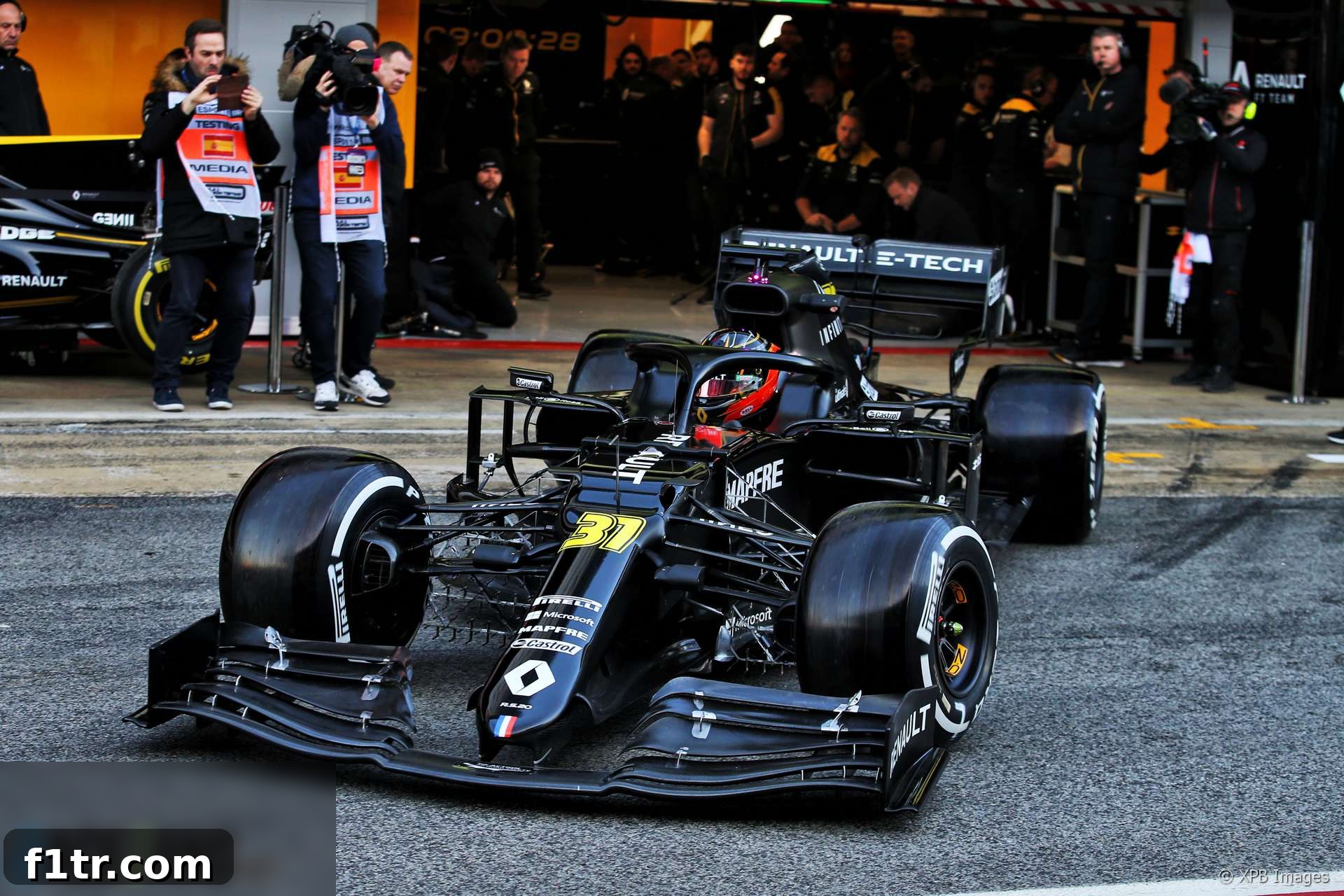
The dawn of a new Formula 1 season is always met with immense anticipation, and the initial pre-season testing sessions are often the first real glimpse into a team’s potential. This year, all eyes were on the Renault F1 Team as their brand-new challenger, the **Renault RS20**, made its eagerly awaited debut on the demanding Circuit de Catalunya. Piloting the powerful machine for its inaugural laps was the team’s returning driver, Esteban Ocon, marking a significant milestone for both the driver and the French constructor.
The RS20, a crucial step in Renault’s ambition to reclaim a top-tier position in the fiercely competitive world of Formula 1, hit the track adorned in a distinctive **black testing livery**. This stark, understated design is a common sight during early test runs, allowing teams to conceal intricate aerodynamic details while focusing purely on performance data gathering. Renault has confirmed that this temporary aesthetic will be replaced by the team’s vibrant, full-colour race livery in time for the season’s grand opening in Australia next month. This strategic reveal builds excitement, offering fans a staggered preview of what’s to come, from the raw engineering to the final polished racing identity.
Ocon’s Initial Impressions: A Promising Start for the Renault RS20
For Esteban Ocon, this marked a pivotal moment – his first official outing with his new team and in their latest machinery. Understandably, the young Frenchman was brimming with enthusiasm following his initial stint behind the wheel of the RS20. Speaking to media outlets, including RaceFans, Ocon expressed genuine satisfaction, highlighting a tangible improvement in the car’s handling characteristics. He confidently stated that he experienced “more grip than ever before” in the new RS20, a crucial indicator of a well-balanced and aerodynamically efficient car.
The concept of “grip” in Formula 1 is paramount. It refers to the total force generated by the tires and aerodynamics that pushes the car into the track surface, allowing it to corner faster and brake later. More grip translates directly into greater speed and driver confidence. Ocon’s positive feedback suggests that the engineering and design choices made by the Renault technical team over the winter break have started to pay dividends. For a driver returning to competitive F1 after a year on the sidelines, such immediate positive reinforcement from the car is invaluable, boosting morale and laying a solid foundation for the intense development work that lies ahead.
This early validation from Ocon is a critical first step for the **Renault F1 Team**. Pre-season testing isn’t just about setting lap times; it’s about validating simulation data, understanding the car’s real-world behaviour, and identifying areas for immediate improvement. A driver’s subjective feeling, especially regarding fundamental attributes like grip, is incredibly important for guiding engineers in refining the car’s setup and aerodynamic package.
Team Synergy: Ocon and Ricciardo Share Testing Duties
The testing schedule is meticulously planned to maximize data collection and driver familiarization. Following Ocon’s productive morning session, the experienced Daniel Ricciardo took over the driving duties for the afternoon. This rotation is standard practice, allowing both drivers to provide feedback on the new car, compare notes, and accelerate the learning process for the entire team.
Ocon emphasized the importance of this collaborative approach, stating he would be paying close attention to his team mate’s progress throughout the session. “Not closer than normal, just as I would normally do to see what the other guy’s doing and how it’s progressing because they are taking over from what we did this morning, just moving forward,” Ocon explained. This insight highlights the symbiotic relationship between F1 team mates, especially during testing, where collective progress outweighs individual lap times. Sharing data and observations is key to unlocking the car’s full potential.
The demands on an F1 driver during testing extend beyond just driving. Ocon playfully acknowledged the balancing act: “Hopefully I won’t be too busy with marketing so I can follow closely! But as soon as I’m free, I will be there.” This humorous remark underscores the multifaceted role of modern F1 drivers, who are not only athletes and engineers but also brand ambassadors. However, when it comes to the crucial initial development phase of a new car, every moment spent understanding its nuances is golden. Ocon’s dedication to observing Ricciardo’s feedback further demonstrates the team-first mentality essential for success in Formula 1.
The Road Ahead for the Renault RS20 in the 2020 F1 Season
The **Renault RS20** represents a significant evolution from its predecessor, designed under new regulations aimed at fostering closer racing. Teams invest hundreds of millions in developing these complex machines, integrating cutting-edge aerodynamics, powerful hybrid powertrains, and sophisticated electronics. The goal for Renault in the 2020 F1 season is clear: to consistently challenge for podiums and close the gap to the front-running teams. Ocon’s early feedback on enhanced grip is a very positive sign that the team is moving in the right direction, addressing areas that might have held them back in previous seasons.
Pre-season testing in Barcelona is not just about raw speed; it’s also about reliability. The grueling schedule demands that the cars complete hundreds of kilometres, pushing components to their limits. A reliable car that can consistently rack up laps provides engineers with invaluable data, allowing them to fine-tune setups, test new parts, and understand tire degradation characteristics over long runs. Both Ocon and Ricciardo will be instrumental in this process, providing both qualitative feedback and quantitative data.
The black testing livery is a temporary disguise, but the underlying performance hints delivered by Ocon are real. The excitement builds as fans eagerly await the full reveal of the RS20’s race livery and the official start of the 2020 F1 season in Melbourne, Australia. The journey of the RS20 has only just begun, but its initial steps on the track offer a promising glimpse into Renault’s ambitions for a successful campaign.
The collaboration between Esteban Ocon and Daniel Ricciardo will be a cornerstone of Renault’s development efforts throughout the season. Both drivers bring unique perspectives and driving styles, which, when combined, provide a comprehensive understanding of the car’s strengths and weaknesses. This initial test session is just the tip of the iceberg, but it provides a foundation upon which the team will build, refine, and optimize the RS20 in pursuit of their championship aspirations.
Pictures: 2020 Renault F1 car on Track
19.02.2020. Formula One Testing, Day One, Barcelona, Spain. Wednesday.
– www.xpbimages.com, EMail: [email protected] © Copyright: Charniaux / XPB Images
19.02.2020. Formula One Testing, Day One, Barcelona, Spain. Wednesday.
– www.xpbimages.com, EMail: [email protected] © Copyright: Moy / XPB Images
Advert | Become a RaceFans supporter andgo ad-free
Explore More from the 2020 F1 season
- Grosjean to make F1 test return tomorrow for first time since Bahrain horror crash
- Pictures: Wrecked chassis from Grosjean’s Bahrain fireball crash to go on display
- Bottas vs Rosberg: Hamilton’s Mercedes team mates compared after 78 races each
- F1 revenues fell by $877 million in Covid-struck 2020 season
- Hamilton and Mercedes finally announce new deal for 2021 season
Browse all 2020 F1 season articles