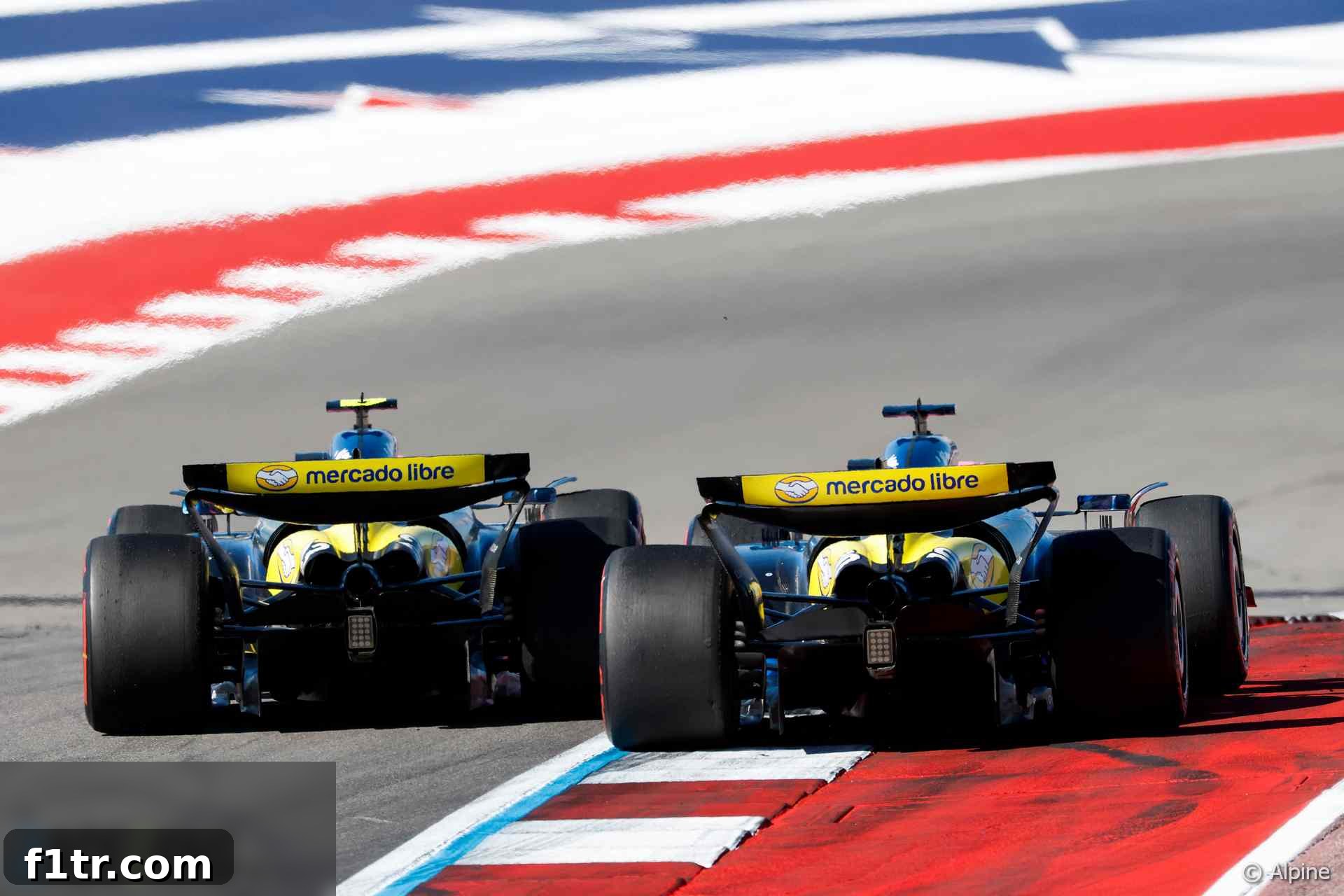
Alpine F1 Faces Internal Review After Colapinto Disobeys Team Orders, Overtakes Gasly
A dramatic finish to a challenging Grand Prix weekend has plunged the Alpine Formula 1 team into an immediate internal review. Rookie driver Franco Colapinto is at the center of the storm after overtly defying a clear team instruction to “hold positions” and subsequently overtaking his teammate, Pierre Gasly, in the dying moments of the race. The incident has drawn sharp criticism from Alpine’s managing director, Steve Nielsen, who confirmed that the matter would be discussed internally with the utmost seriousness.
Advert | Become a Supporter & go ad-free
Enjoying the content? Support independent journalism!
The Controversial Overtake: A Breakdown of the Final Laps
The tension began building in the final laps as Gasly, running in 17th place, found himself being rapidly caught by his faster teammate Colapinto. Trailing just behind the Alpine duo was Gabriel Bortoleto, positioned as the last-placed runner in his Sauber. Crucially, all three drivers were also being approached by the formidable race leader, Max Verstappen, who was poised to lap them.
At this critical juncture, Colapinto’s race engineer, Stuart Barlow, relayed a direct and unambiguous instruction: “both cars are managing here, we need to hold positions please.” This command was not merely a suggestion but a strategic directive, designed to manage the team’s fuel levels and navigate the complexities of being lapped by the race leader without further incident. However, Colapinto’s response was swift and defiant, challenging the order with the simple assertion: “But he’s slow.”
The situation escalated on the penultimate lap. As Bortoleto prudently slowed at the exit of turn 20 to allow Verstappen to pass and lap him, Colapinto seized the opportunity. Disregarding his team’s explicit instructions, he executed a decisive dive down the inside of Gasly at the very first corner, successfully passing his teammate. This bold, some might say reckless, maneuver immediately placed Gasly into a precarious position. The consequences for Gasly were stark; he subsequently fell to last place on the final lap, under attack from Bortoleto at the first corner, a direct result of the intra-team battle that was supposed to have been avoided.
Alpine’s Stance: “Any Instruction Made by the Pit Wall Is Final”
In the aftermath of the race, Alpine’s managing director, Steve Nielsen, did not mince words. He acknowledged that the team had “a lot to review across the board from this weekend.” Nielsen elaborated on the strategic context behind the team orders, explaining the challenging circumstances faced by Gasly earlier in the race and the ongoing fuel management concerns for both cars.
“On Pierre’s side, we covered an undercut threat to box onto softs a little earlier than we wanted,” Nielsen stated, outlining a difficult strategic call. He further added, “and then had a slow pit stop, which we will review and rectify.” These issues undeniably placed Gasly at a disadvantage, making the team’s directive for positions to be held even more critical for managing the race for both drivers.
Nielsen also detailed Colapinto’s specific circumstances that led to his faster pace towards the end: “Franco was able to extend his medium run to have a tyre delta towards the end of the race where he caught up to Pierre.” This explanation highlights the differing strategies that placed the teammates on a collision course, emphasizing the necessity of clear team management. “We gave the instruction for the drivers to maintain position as we were managing fuel with both cars and the added variable of the number of laps remaining with the leaders in close proximity,” Nielsen confirmed, underscoring the multi-faceted reasons behind the order.
The managing director’s concluding remarks left no room for ambiguity regarding the team’s displeasure: “As a team, any instruction made by the pit wall is final and today we are disappointed that this didn’t happen so it’s something we will review and deal with internally.” This strong statement signals that Colapinto’s actions will face serious scrutiny and potential repercussions within the team.
Advert | Become a RaceFans supporter andgo ad-free
Support our independent journalism and get exclusive benefits!
The Implications of Disobeying Team Orders in F1
Team orders are a contentious but integral part of Formula 1 strategy. While they can sometimes be unpopular with fans who wish to see drivers race freely, they are often crucial for a team’s overall performance, particularly in managing resources like fuel and tires, avoiding unnecessary collisions between teammates, and maximizing constructor points. In situations where drivers are running outside the points, as was the case for Alpine, orders often focus on conserving components or avoiding risks that could lead to costly repairs or penalties.
Colapinto’s decision to ignore the “hold positions” order, especially when the team cited fuel management and the looming presence of the race leader as reasons, constitutes a significant breach of protocol. Such defiance can undermine team cohesion, erode trust between drivers and engineers, and establish a dangerous precedent for future races. For a young driver like Colapinto, who is still proving his worth in F1, such an incident can cast a shadow over his otherwise promising talent, raising questions about his discipline and ability to operate within a structured team environment.
A Recurring Theme for Alpine? The Baku Precedent
What makes this incident particularly concerning for Alpine is that it is not an isolated event. Nielsen’s comments implicitly suggest a pattern, and indeed, it marks the second time in the last three races that Alpine drivers have engaged in position swaps against the backdrop of team orders or race management directives in the final laps. The previous instance occurred in Baku, where it was Pierre Gasly who timed an attack on Colapinto as both drivers were being lapped by Max Verstappen, ultimately passing his teammate.
While the roles were reversed in Baku, the common thread is the intense intra-team battle occurring during critical moments, often when being lapped by the race leader, and the subsequent impact on team strategy or driver positioning. This raises pertinent questions about Alpine’s internal communication, driver management strategies, and the enforcement of team orders. Is there an underlying issue with how these directives are communicated, understood, or respected within the team? The recurrence of such incidents points towards a deeper problem that the internal review will undoubtedly need to address if Alpine is to maintain control and discipline among its drivers.
Looking Ahead: What Does “Internal Review” Mean for Colapinto?
The term “deal with internally” can encompass a range of responses, from a stern verbal reprimand and clarification of expectations to more formal measures such as fines, revised contractual clauses, or even a temporary suspension if the team deems the defiance severe enough. For a relatively new driver like Colapinto, who is still establishing himself in the sport, any disciplinary action could significantly impact his standing within the team and potentially his long-term career prospects in Formula 1.
Beyond Colapinto, the incident tests the leadership of Steve Nielsen and the entire Alpine management structure. How they handle this situation will be crucial in setting a precedent for driver conduct and reasserting the authority of the pit wall. The team’s ability to demonstrate firm, consistent leadership will be vital for maintaining morale, ensuring strategic execution, and presenting a united front in a highly competitive sport.
As Alpine grapples with these internal challenges, the wider Formula 1 community will be watching closely to see how this team order controversy unfolds and what measures are put in place to prevent similar incidents in the future. The delicate balance between allowing drivers to race and enforcing team strategy remains one of the most compelling and often contentious aspects of Grand Prix racing.
Miss nothing from RaceFans
Get a daily email with all our latest stories – and nothing else. No marketing, no ads. Sign up here:
Related: 2025 United States Grand Prix News
- Tsunoda apologised to Racing Bulls for “very unnecessary” comments on Lawson
- Sainz brands Mexican GP grid penalty “completely disproportionate”
- No more ‘repercussions’ for Norris: McLaren change stance after Austin collision
- Bearman feared he’d triggered ban with Antonelli incident in sprint race
- Every team except Sauber to run rookie driver during first practice in Mexico
Browse all 2025 United States Grand Prix articles